
Winery in Mendooran, Australia
Black Gate Distillery
500ptsInland Grain Distilling
About Black Gate Distillery
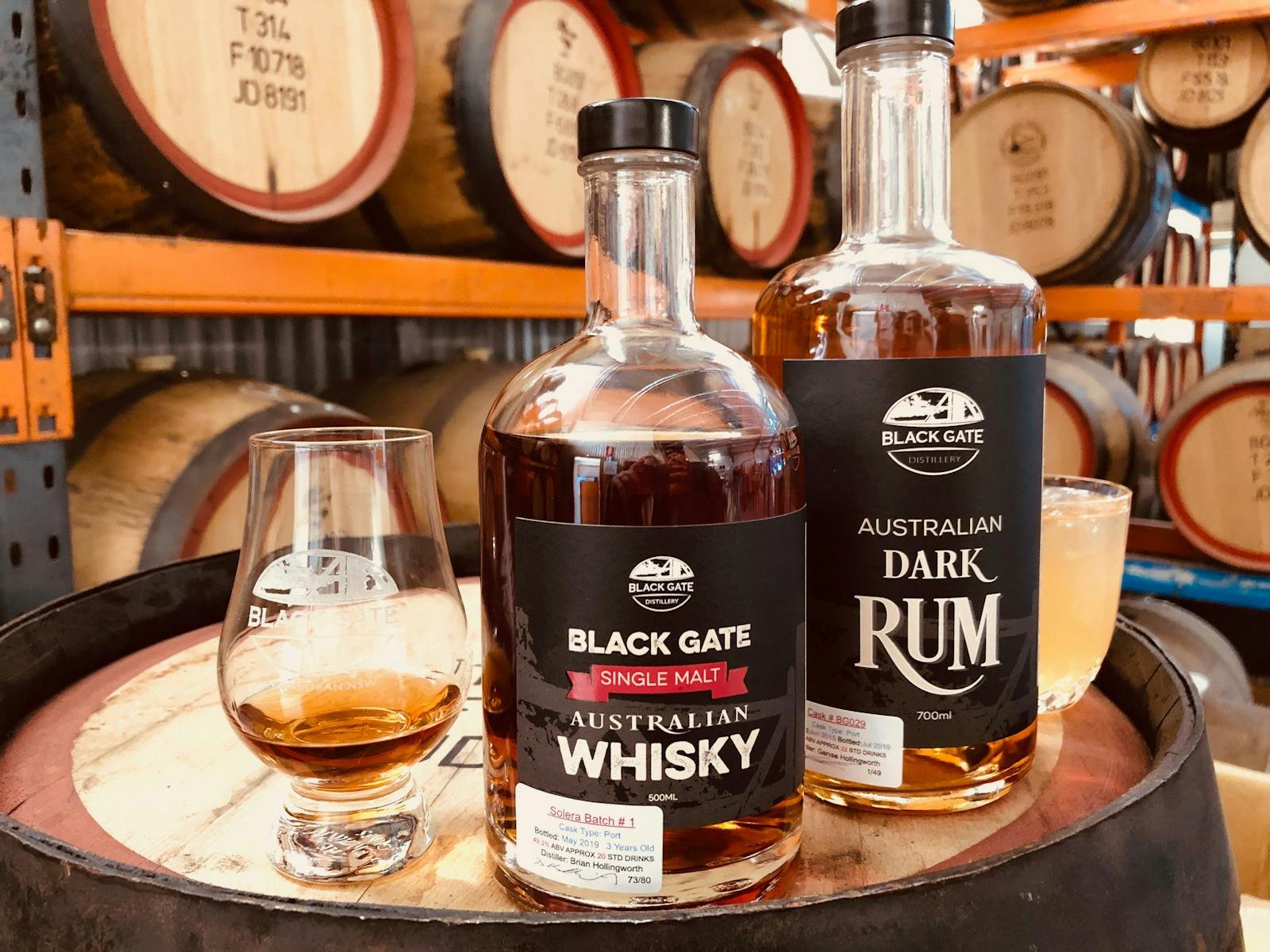
Black Gate Distillery operates out of Mendooran in the Central West of New South Wales, a region better known for dryland grain farming than craft spirits. Recognised with a Pearl 2 Star Prestige rating in 2025, it represents the quieter, production-focused end of Australia's small-batch distillery movement, where the raw materials of the land drive what ends up in the bottle.
Grain Country and the Case for Inland Distilling
The Central West of New South Wales does not announce itself with the drama of a wine region. There are no volcanic ranges or maritime fog lines, no marketing committees pushing a protected designation. What the country around Mendooran offers instead is more functional: dry heat, hard soils, and centuries of dryland cereal farming that have made this part of the continent one of Australia's most productive grain belts. It is precisely that agricultural plainness that gives a distillery operating here a different kind of credibility. The raw materials are not imported or romantically sourced from somewhere more photogenic. They come from the paddocks visible from the road.
Black Gate Distillery, based at 72 Forrest Road in Mendooran, sits within this logic. In a national craft spirits conversation that has been dominated by urban operations in Sydney and Melbourne warehouses, a working distillery in a town of a few hundred people in the Central Tablelands represents a different proposition entirely. The terroir argument here is not about elevation or aspect in the wine sense. It is about provenance in a harder, more agricultural register: what the land grows, what the water tastes like, what the climate does to maturation.
Where Black Gate Sits in the Australian Spirits Field
Australia's independent distillery sector has expanded sharply since the mid-2010s, with producers like Archie Rose Distilling Co in Sydney and Bundaberg Rum Distillery in Bundaberg anchoring opposite ends of a spectrum that runs from metropolitan craft to regional institution. Black Gate occupies neither pole. It operates in the quieter middle ground of small-batch, rurally situated production, where the emphasis falls on what happens before and during distillation rather than on visitor experience as a primary commercial product.
The 2025 Pearl 2 Star Prestige rating places Black Gate in a recognised tier of quality within the EP Club evaluation framework. That designation is not handed to facilities that are merely operational. It signals production at a level where the spirit itself carries enough distinction to warrant serious attention, and it puts Black Gate in conversation with producers whose work is measured against national and international benchmarks rather than local novelty. For a distillery based in a town that does not appear on most food and drink itineraries, that is a meaningful credential.
The comparison set here is usefully instructive. Australia's premium drinks producers with the strongest regional identities tend to share a commitment to place that goes beyond labelling. Brokenwood in Hunter Valley built its reputation on site-specific expression within a region that had an established critical language. Bass Phillip in Gippsland did the same in a region that barely had one. Black Gate is working in terrain closer to the latter situation: making a case for a place that the drinks world has not yet fully mapped.
The Terroir of the Central West: What the Land Contributes
To talk about terroir in a distillery context requires shifting the frame slightly from how wine critics use the term. In spirit production, the influence of place operates through grain varieties, water mineral profiles, ambient temperature swings during maturation, and the microclimate of the warehouse itself. New South Wales's Central West experiences pronounced seasonal temperature variation, with summer heat that can exceed 40 degrees Celsius and winters that drop sharply overnight. That diurnal range, applied over months and years to spirit resting in wood, accelerates the interaction between liquid and barrel in ways that produce a different maturation curve than, say, a cooler Tasmanian facility or a climate-controlled urban warehouse.
This is not a minor consideration. The Australian spirits producers who have drawn the most serious international attention, including those in warmer inland zones, have often pointed to climate as a defining variable in their house character. The heat of the Central West does not replicate the conditions of Scotland or Kentucky, but it does produce something distinctly its own: faster extraction, bolder colour development, and a maturation profile that can achieve in fewer years what cooler climates take longer to build. Whether that is an advantage depends entirely on what the distiller is trying to make, and on how the resulting spirit reads in the glass.
Mendooran as a Drinks Destination
Mendooran itself is a small rural community in the Warrumbungle Shire, several hours northwest of Sydney by road. It is not a town with an established visitor infrastructure built around food and drink. That is, in some ways, the point. The distilleries that have built the strongest reputations from unlikely locations, from the hill towns of Scotland to the grain plains of the American Midwest, have generally done so by making the inconvenience of visiting feel proportionate to the reward. Black Gate operates in that category of destination: you go because the product is reason enough, not because it is surrounded by a curated experience economy.
For visitors planning a trip to the Central West more broadly, Mendooran sits within reasonable driving distance of the Warrumbungle National Park and the regional centre of Dubbo. A journey that combines Black Gate with a broader understanding of the region's agricultural identity makes sense as an editorial itinerary. See our full Mendooran restaurants guide for context on what else the area offers.
The broader New South Wales inland drinks scene draws useful comparison with how other Australian regions have built credibility from grain and fruit grown far from coastal attention. Casella Family in Griffith represents one model: scale-driven volume production from an inland irrigation district. Black Gate represents nearly the opposite: small-batch, place-committed production where the point is specificity rather than reach.
Planning a Visit
Black Gate Distillery is located at 72 Forrest Road, Mendooran NSW 2842. Specific visiting hours, booking requirements, and tasting formats are not published in current listings, which is consistent with many small-batch producers at this scale who manage visits on a more direct enquiry basis. Contacting the distillery ahead of any planned visit is the practical approach, particularly given the distance involved for most travellers. The 2025 Pearl 2 Star Prestige recognition suggests the operation is producing at a level where advance interest from serious spirits visitors is warranted. For comparable regional producers and a sense of what the premium end of Australian drinks production looks like across different categories and geographies, All Saints Estate in Rutherglen, Angove Family Winemakers in Renmark, Leading's Wines in Great Western, Bird in Hand in Adelaide Hills, Blue Pyrenees Estate in Pyrenees, Brown Brothers in King Valley, Cape Mentelle in Margaret River, and Aberlour in Aberlour offer useful reference points across wine and spirits. For a Napa Valley comparison in the premium small-producer register, Accendo Cellars in St. Helena is worth examining.
Frequently Asked Questions
What is the atmosphere like at Black Gate Distillery?
Black Gate Distillery operates in rural Mendooran, a working agricultural town in the New South Wales Central West, and the atmosphere reflects that setting. This is not a metropolitan tasting room designed around the hospitality mechanics of urban craft spirits. The environment is defined by the land around it: flat, open country with the functional character of a working property rather than a curated destination. For visitors who have earned their Pearl 2 Star Prestige-tier spirits in polished Sydney or Melbourne venues, the contrast is deliberate and informative. Given the limited published visitor information, contacting the distillery directly before making the journey is advisable.
What should I taste at Black Gate Distillery?
The 2025 Pearl 2 Star Prestige rating from EP Club indicates production at a level where the spirits themselves are the primary reason to visit. Black Gate operates in the Central West grain belt, and the most direct way to understand what the region contributes to the liquid is to focus on products where local grain and the area's pronounced climate play the most audible role in the finished character. In warm-climate inland distilling generally, aged expressions tend to show the most marked regional signature, as the temperature variation of New South Wales's interior accelerates wood interaction in ways that distinguish the resulting spirit from cooler-climate equivalents. Specific current expressions and availability are leading confirmed directly with the distillery.
Related editorial
- Best Fine Dining Restaurants in ParisFrom three-Michelin-star icons to the next generation of Parisian chefs pushing boundaries, these are the restaurants that define fine dining in the world's culinary capital.
- Best Luxury Hotels in RomeFrom rooftop terraces overlooking ancient ruins to Michelin-starred hotel dining, these are the luxury hotels that make Rome unforgettable.
- Best Cocktail Bars in KyotoFrom sleek lounges to hidden speakeasies, Kyoto's cocktail scene blends Japanese precision with global influence in ways you won't find anywhere else.
Save or rate Black Gate Distillery on Pearl
Keep this venue in your Pearl passport, rate it after you visit, and track it alongside every other place you collect.