

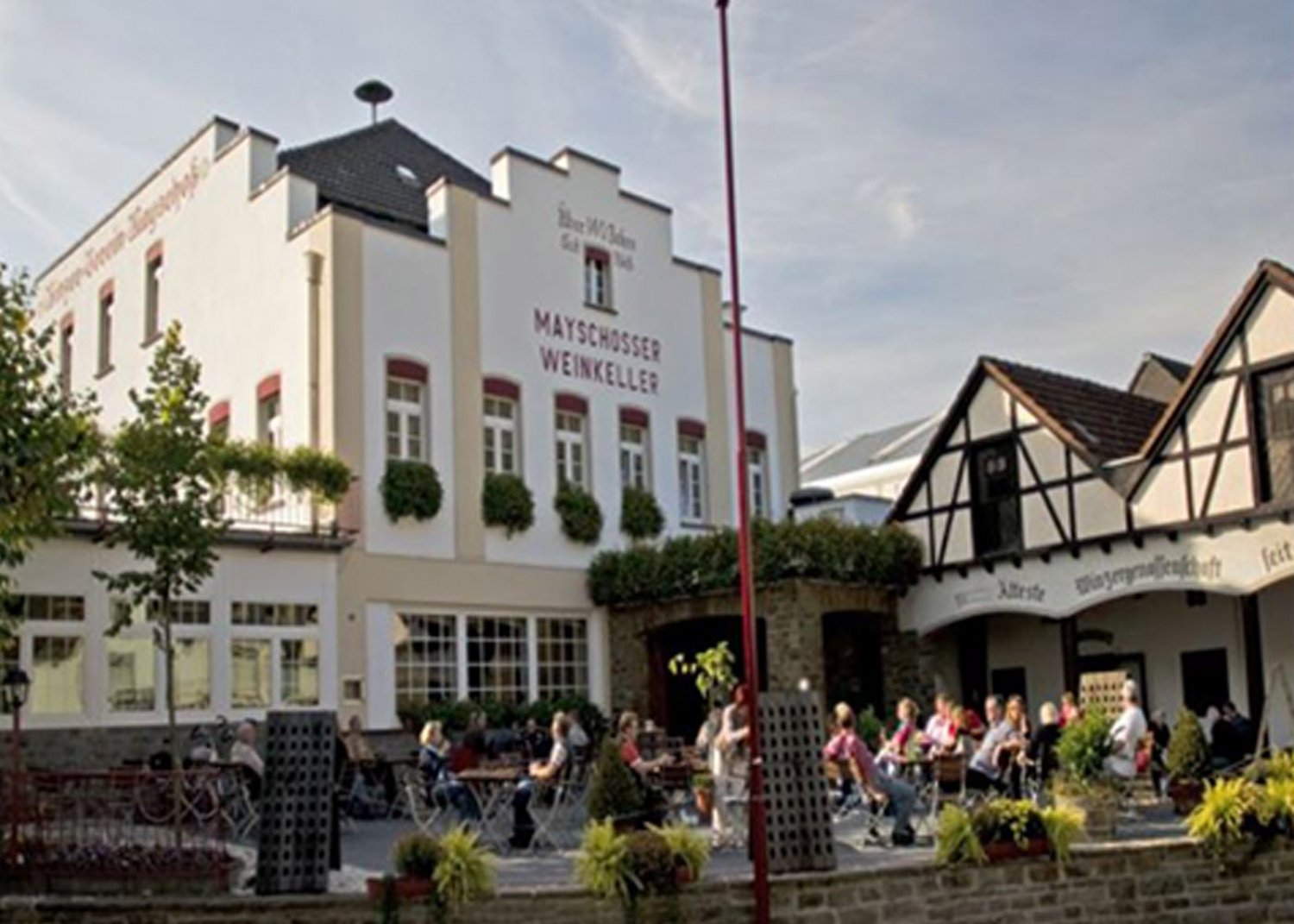
Winzergenossenschaft Mayschoss-Altenahr
Mayschoß
Winery in Mayschoß, Germany
 Book with Pearl
The Read
Cooperative Spätburgunder Precision
Price
$20–30tasting
Why go
Book Winzergenossenschaft Mayschoss-Altenahr if you want a practical Ahr-region benchmark in Mayschoß rather than a single-estate deep dive. It works well as part of a wider winery day, but verify tasting, food, shipping, and timing details before making it the whole plan.
About Winzergenossenschaft Mayschoss-Altenahr
Winzergenossenschaft Mayschoss-Altenahr is a Mayschoß venue to consider when you want a direct, casual stop rather than a formal occasion. Casual dress is appropriate, and the venue is recognized with Pearl 2 Star Prestige (2025).
Plan around it only after checking current details directly, including visit format, food service, shipping, opening hours, prices, and host arrangements.
Mayschoß context matters more here than ceremony
A strong reason to keep Winzergenossenschaft Mayschoss-Altenahr on a shortlist is its Mayschoß identity and Pearl 2 Star Prestige (2025) recognition. Treat the visit as a grounded local stop, with expectations kept flexible unless the venue provides more specific arrangements for your date.
Use this as part of a broader Mayschoß plan rather than the only reason to travel. For wider planning, consider other Mayschoß dining, hotel, bar, and experience resources where relevant.
Plan it as a regional reference point, then cross-shop carefully
If you are comparing other venues, consider Weingut Jean Stodden, Weingut Meyer-Näkel, Weingut J.J. Adeneuer, and Weingut Heymann-Löwenstein as separate reference points. Keep the comparison practical: do not assume the same format, setting, or availability without checking each venue directly.
For a broader itinerary beyond a single Mayschoß stop, Jacquart can also serve as another comparison point. Otherwise, focus on Winzergenossenschaft Mayschoss-Altenahr and other Mayschoß options generically, then confirm the details that matter most for your visit before you go.
Planning details
- Location
- Ahr-Rotweinstraße 42, 53508 Mayschoß
- Website
- wg-mayschoss.de
- Phone
- +49 2643 93600
The take
The Take
The Vibe
Winzergenossenschaft Mayschoss-Altenahr sits squarely in the Ahr Valley’s steep, site-driven landscape, where south-facing slopes and basalt-and-slate soils compress ripening and favor concentrated Spätburgunder. The cooperative’s position on the valley’s red wine route and its recent Pearl 2 Star Prestige award frame it as a producer that bridges collective winemaking and serious site expression. The tone is measured and terroir-focused rather than flashy: readers can expect a place rooted in regional geology and viticultural rigor, where the story of Ahr Pinot — its northern, slope-driven intensity — is the primary attraction.
Best For
This winery is best approached by visitors curious about regional terroir and the distinctiveness of Ahr Spätburgunder. It suits wine-education outings and solo exploration alike: groups can discuss slope, soil and microclimate while individuals can trace how a cooperative translates many sites into focused Pinot expressions. The cooperative’s industry recognition makes it a logical stop for those seeking producers that earn critical attention without the broader promotional spotlight, and for travelers who want to understand how a narrow river valley produces characterful red wine at Germany’s cooler latitude.
Tasting Tips
When engaging with Mayschoss-Altenahr, prioritize their Pinot offerings and any Prestige-identified bottlings, since the description highlights Spätburgunder and the cooperative’s Pearl award. Ask about site-specific or single-vineyard expressions that demonstrate the valley’s basalt and slate influence; inquiries about how the cooperative sources and vinifies fruit will illuminate differences between collective and estate bottlings. Avoid assuming broad stylistic trends — focus questions on ripening windows, slope exposition and the cooperative’s approach to translating distinct sites into finished wines.
Venue details
Ambiance
Historic vaulted cellars with warm, welcoming atmosphere; charming wine shop settings with knowledgeable staff creating an educational yet relaxed environment.
Tags
Vibe
Best For
Experience
Sourcing
View
At the Vineyard
- Appellation
- Ahr Valley
- Varietals
- Pinot Noir, Riesling, Pinot Madeleine, Pinot Gris, Blauer Portugieser
- Tour Duration
- 60-90 minutes
- Tour Languages
- German, English
- Visits
- Walk-ins welcome
- Farming
- Sustainable
- Wine Styles
- Still Red, Still White, Still Rose, Sparkling
- Food Pairing
- Offered
- Shipping
- Available
- Wine Club
- Not available
Know before you go
Know Before You Go
- Getting there
- Ahr-Rotweinstraße 42, 53508 Mayschoß
Planning details
Location
Also consider
If this is hard to plan
If timing does not work, try Weingut Jean Stodden or Weingut Meyer-Näkel for a more estate-specific Ahr visit. If the day needs a second producer with less cooperative emphasis, Weingut J.J. Adeneuer is the cleaner cross-shop.
Winery context
How It Compares in and around the Ahr
Choose Winzergenossenschaft Mayschoss-Altenahr when value and regional context matter more than producer intimacy. Against Weingut Jean Stodden and Weingut Meyer-Näkel, the draw is breadth: a cooperative visit can help frame the Ahr before committing tasting time to more estate-specific appointments.
If the priority is a quieter, more focused winery plan, cross-shop Weingut J.J. Adeneuer and Weingut Heymann-Löwenstein. They are stronger fits for travelers who want the visit to revolve around one producer's point of view rather than a broader regional cooperative model.
Jacquart is the outlier in this set and makes more sense as a separate drinks itinerary than a direct Ahr substitute. For Mayschoß, keep Winzergenossenschaft Mayschoss-Altenahr as the benchmark stop, then add one estate appointment if availability allows.
Explore Mayschoß
Around this place
Discover more on Pearl
Unlock the full Winzergenossenschaft Mayschoss-Altenahr guide in Pearl, including awards, comparisons, FAQs, planning details, and nearby places.
Compare Winzergenossenschaft Mayschoss-Altenahr
| Venue | Location | Awards |
|---|---|---|
| Winzergenossenschaft Mayschoss-Altenahr | Mayschoß | No published awards |
| Weingut Jean Stodden | Rech | 2026 Falstaff Winery Guide |
| Weingut Meyer-Näkel | Dernau | No published awards |
| Jacquart | Grafschaft | 2025 Pearl 2 Star Prestige |
| Weingut J.J. Adeneuer | Bad Neuenahr-Ahrweiler | 2026 Falstaff Winery Guide |
| Weingut Heymann-Löwenstein | Winningen | 2026 Falstaff Winery Guide |


How Winzergenossenschaft Mayschoss-Altenahr compares with similar nearby venues.
FAQ
Frequently Asked Questions
Do I need a reservation at Winzergenossenschaft Mayschoss-Altenahr?
What other venues should I compare with Winzergenossenschaft Mayschoss-Altenahr?
For comparison, consider Weingut Jean Stodden, Weingut Meyer-Näkel, Weingut J.J. Adeneuer, Weingut Heymann-Löwenstein, and Jacquart as separate reference points. Confirm each venue's current format and availability directly before planning around it.
Is there a membership program at Winzergenossenschaft Mayschoss-Altenahr?
If you are interested in ongoing access, ask Winzergenossenschaft Mayschoss-Altenahr directly about current options before committing.
Does Winzergenossenschaft Mayschoss-Altenahr serve food?
Do not count on food service unless the venue confirms it for your visit. Approach it as a casual Mayschoß stop with Pearl 2 Star Prestige (2025) recognition rather than assuming a restaurant setup or menu.