



Domaine Jean-Louis Chave
Mauves
Winery in Mauves, France
 Book with Pearl
The Read
Granite-Rooted Hermitage Blending
Why go
Domaine Jean-Louis Chave is a wine estate in Mauves in France's Northern Rhône.
About Domaine Jean-Louis Chave
Domaine Jean-Louis Chave is a Mauves venue associated with chef/owner Jean-Louis Chave. It is best approached as a focused stop, with key practical details checked directly before you go.
The venue holds Pearl 5 Star Prestige (2025) recognition, and the listed dress code is smart casual. For hours, pricing, booking format, visit style, menus, tastings, shipping, and group handling, check current official channels before making plans.
Worth pursuing if Domaine Jean-Louis Chave is the point
The clearest reason to prioritize Domaine Jean-Louis Chave is its Pearl 5 Star Prestige (2025) recognition. If your Mauves plans are built around this specific venue, keep the schedule flexible until current details are confirmed directly.
Avoid building the rest of the day around assumptions about access, service format, or timing. For the rest of a Mauves itinerary, you can also use our full Mauves restaurants guide and compare the name with other regional references such as Chapoutier, Delas Freres, Domaine Auguste Clape, E. Guigal, and Paul Jaboulet Aîné.
Plan backups before making the trip
The practical verdict is cautious: Domaine Jean-Louis Chave may be a strong priority for travelers specifically interested in the venue, but check current public hours, prices, reservation procedures, visit structure, and group capacity before committing transport or lodging around the visit.
If your plans need predictable timing, build a backup itinerary in Mauves and keep other regional names in mind for comparison. Dress smart casual if you go, and rely on current official information for any visit-specific details.
Planning details
- Location
- 37 Av. du Saint-Joseph, 07300 Mauves
- Website
- domainejlchave.fr
- Phone
- +33 4 75 08 24 63
The take
The Take
The Vibe
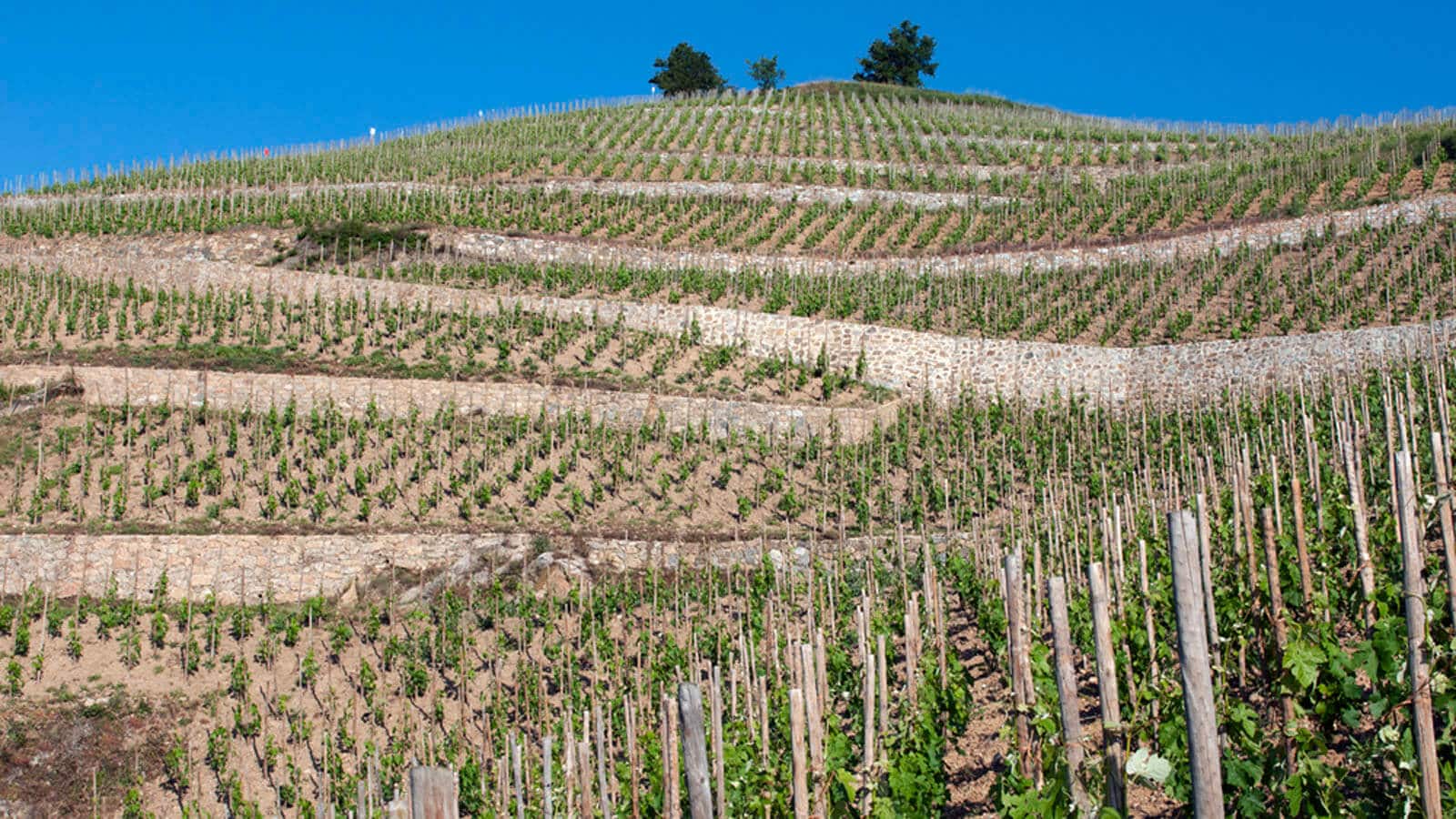
Domaine Jean‑Louis Chave reads like a working map of northern Rhône geology and family continuity. The estate’s voice is quiet and unassuming: stone walls, near‑vertical old vines and a lineage that stretches back to 1481 frame every impression. Visitors encounter a landscape-first identity where granite terroir is the point of reference and the human activity—farming steep slopes generation after generation—feels inevitable rather than theatrical. The result is a serene, historic place that foregrounds mineral clarity and agricultural craft; its gravitas comes from geology and time more than from architectural flourish or showy hospitality.
Best For
This domaine is best for travelers who come to learn as much as to taste. It suits wine education and serious study of northern Rhône terroir: the property and its Hermitage hill are presented as the primary reference for understanding Syrah here. The quiet, scenic setting also lends itself to low‑key special occasions and romantic getaways where the emphasis is on contemplative tasting and the landscape. It’s less about nightlife or loud group partying and more about measured moments with ageworthy wines and the story of place.
Tasting Tips
When engaging with Chave’s wines, prioritize expressions that demonstrate the granite-driven profile the text highlights: look for Hermitage bottlings or cuvées that reference specific slopes or soils. Taste with an eye toward structure and mineral complexity—the description emphasizes full physiological ripeness paired with retaining acidity and long aging potential. If possible, compare wines from different parcels or appellations (Hermitage versus nearby slopes) to trace how granite translates into the glass. Ask staff about single-vineyard expressions or estate bottlings to better understand the domaine’s interpretation of terroir.
Venue details
Ambiance
Historic 16th and 17th century cellars with traditional stone architecture, minimal intervention philosophy creating an understated, authentic winemaking environment focused on terroir expression rather than modern aesthetics.
Tags
Vibe
Best For
Experience
Sourcing
View
At the Vineyard
- Appellation
- Hermitage AOC
- Varietals
- Syrah, Marsanne, Roussanne, Grenache, Mourvèdre
- Visits
- By appointment only
- Farming
- Organic
- Wine Styles
- Still Red, Still White
- Shipping
- Available
- Wine Club
- Available
Know before you go
Know Before You Go
- Getting there
- 37 Av. du Saint-Joseph, 07300 Mauves
Planning details
Location
Recognition and awards

Also consider
Where to Try If This Is Too Hard to Arrange
If access does not line up, start with E. Guigal for a more practical Rhône alternative with broader appeal. For travelers who still want a serious producer-led target, Domaine Auguste Clape is the sharper cross-shop than a general visitor-center stop.
Winery context
How It Compares
Paul Jaboulet Aîné, Delas Freres, and Chapoutier are stronger fallback choices if the priority is a more legible visitor experience. Choose them over Domaine Jean-Louis Chave when the group needs easier planning, clearer logistics, or a broader introduction to the Northern Rhône rather than a producer-specific pursuit.
Domaine Auguste Clape is the closest match for travelers who care about producer reputation and a serious, appointment-led feel. If the goal is collector-level context, cross-shop these two first; if the goal is ambience, convenience, or a lower-friction day, shift toward the larger regional names instead.
E. Guigal is the better practical comparison for travelers who want Rhône credibility with a more scalable format. Domaine Jean-Louis Chave is the splurge of effort rather than the easy value play: pursue it for depth, not for predictability.
Explore Mauves
Around this place
Discover more on Pearl
Unlock the full Domaine Jean-Louis Chave guide in Pearl, including awards, comparisons, FAQs, planning details, and nearby places.
Compare Domaine Jean-Louis Chave
| Venue | Location | Awards |
|---|---|---|
| Domaine Jean-Louis Chave | Mauves | 2026 Falstaff Winery Guide2025 Pearl 5 Star Prestige |
| Paul Jaboulet Aîné | Tain-l'Hermitage | 2026 Falstaff Winery Guide2025 Pearl 4 Star Prestige |
| Delas Freres | Tain-l'Hermitage | 2026 Falstaff Winery Guide2025 Pearl 3 Star Prestige |
| Chapoutier | Tain-l'Hermitage | 2025 World's 50 Best Vineyards · #772025 Pearl 4 Star Prestige2024 World's 50 Best Vineyards · #42 |
| Domaine Auguste Clape | Cornas | 2026 Falstaff Winery Guide2025 Pearl 4 Star Prestige |
| E. Guigal | Ampuis | 2026 Falstaff Winery Guide2025 Pearl 4 Star Prestige2019 World's 50 Best Vineyards · #42 |

How Domaine Jean-Louis Chave Mauves compares with similar nearby venues.
FAQ
Frequently Asked Questions
What should I know about Domaine Jean-Louis Chave?
Domaine Jean-Louis Chave is in Mauves and is associated with chef/owner Jean-Louis Chave. The listed dress code is smart casual, and the venue holds Pearl 5 Star Prestige (2025) recognition.
Do I need a reservation at Domaine Jean-Louis Chave?
Are membership options available at Domaine Jean-Louis Chave?
When is the best time to visit Domaine Jean-Louis Chave?
Plan around current information from the venue, and keep your Mauves schedule flexible until details are current.