
Winery in Litteau, France
Domaine du Vieux Donjon
1,250ptsQuiet-Terroir Precision

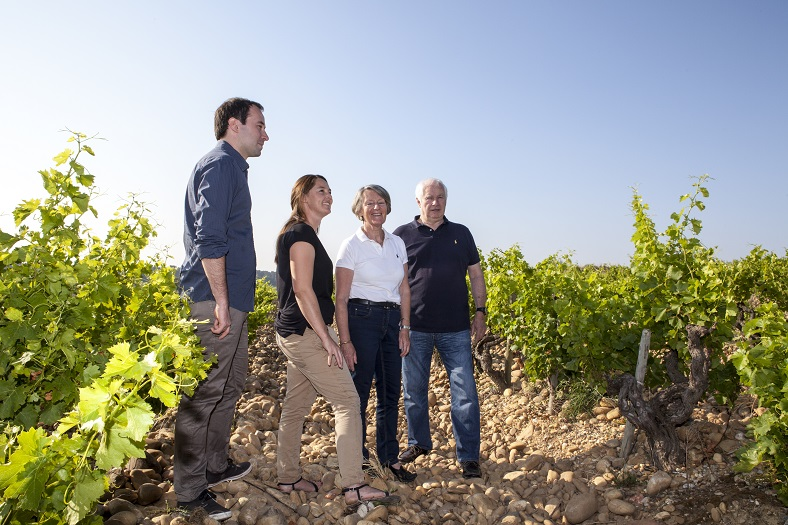
About Domaine du Vieux Donjon
Domaine du Vieux Donjon has produced wine from its Litteau estate since 1979, with winemaker Lucien Michel overseeing a program that earned a Pearl 4 Star Prestige rating in 2025. The domaine occupies the quieter, producer-focused end of French wine, where terroir expression and vineyard longevity carry more weight than public visibility. It rewards the visitor prepared to seek it out.
Where the Land Does the Talking
There is a category of French wine estate that operates almost entirely without noise. No restaurant partnerships, no celebrity endorsements, no glossy tasting rooms designed for social media. Domaine du Vieux Donjon, situated in Litteau in the Calvados department of Normandy, belongs to that tradition. The address places it within the Domaine de Litteau grounds, and the setting reads less like a destination cellar door than a working property that has been quietly accumulating history since its first vintage in 1979. That longevity is not incidental. In French wine culture, a four-decade-plus continuous production record is itself a form of argument, a signal that the estate has survived vintage variation, market shifts, and generational change without reinventing itself for each new audience.
For visitors who have spent time at high-traffic Loire or Burgundy estates, where the tasting room choreography can feel more theatrical than instructive, a property like this offers a different register entirely. The physical environment at Litteau is agricultural and unforced. Approaching the estate, the surrounding Normandy terrain shapes expectations: this is cooler, greener France, far from the Mediterranean warmth that drives most of the country's premium wine narrative. That context matters when assessing what winemaker Lucien Michel is working with, and what the wines can and cannot be.
Terroir in a Cooler Register
French wine's most discussed terroir stories tend to cluster in Burgundy, the Rhône, and Bordeaux, where centuries of documentation have built interpretive frameworks that visitors can draw on. Normandy sits outside that canon almost entirely. It is cider and Calvados country, a region where the apple has historically outcompeted the grape as the agricultural anchor of local fermentation culture. Producing wine from a Normandy base since 1979 therefore represents a particular kind of commitment, one that operates against the grain of regional convention rather than with it.
What the Litteau terroir offers in place of the limestone complexity of Chablis or the clay-gravel profiles of Pomerol is a cooler, Atlantic-influenced growing environment. The maritime influence that moderates temperatures along the Normandy coast introduces a different set of possibilities and constraints for vine cultivation. Yields, ripening windows, and the natural acidity profile of fruit from this latitude all differ materially from what producers face further south. Lucien Michel's work at the domaine, across more than four decades of production history, constitutes a sustained attempt to understand and express what that specific environment produces rather than to approximate the styles associated with France's better-known regions. That distinction is the editorial point worth sitting with: the wine here is not trying to be Rhône, or Bordeaux, or anything else. It is shaped by where it comes from.
For context on how French producers across different regions approach terroir expression with similarly long institutional histories, estates like Albert Boxler in Niedermorschwihr and Château Bélair-Monange in Saint-Emilion offer instructive comparisons, both operating from deeply specific sites with production philosophies shaped by decades of accumulated knowledge.
The 2025 Pearl 4 Star Prestige Recognition
The Pearl 4 Star Prestige award, received in 2025, places Domaine du Vieux Donjon within a recognised tier of quality acknowledgement. In a region where external validation is less structurally embedded than in classified Bordeaux or appellation-governed Burgundy, third-party recognition carries particular weight as a navigational signal for visitors and buyers who lack the local knowledge to assess an estate independently.
The award year matters here. Recognition arriving in 2025, for a property with a first vintage of 1979, is not the story of a newcomer announcing itself. It is more usefully read as confirmation that a long-running program has reached, or maintained, a standard that warrants the attention of visitors approaching the broader French wine scene systematically. Estates with comparable award trajectories in adjacent categories, including Château Bastor-Lamontagne in Preignac, Château Batailley in Pauillac, and Château Branaire Ducru in St-Julien, tend to draw visitors who prioritise producer history and consistency over novelty. Domaine du Vieux Donjon fits that profile.
Planning a Visit: What to Know Before You Go
Litteau is a small commune, and Domaine du Vieux Donjon's address within the Domaine de Litteau grounds means visitors should confirm access arrangements directly before arriving. No booking platform, phone number, or website is listed in the publicly available record for this estate, which is itself informative: this is not a property that has built an infrastructure for high-volume visitor flow. The appropriate approach is to treat it as a specialist destination requiring advance contact and flexibility, rather than a cellar door built for drop-in traffic.
The location within the Calvados department positions the domaine as a viable component of a broader Normandy itinerary, particularly for visitors combining wine with the region's more documented food and drink traditions. Calvados distilleries, cider producers, and the regional cheese culture collectively define the area's culinary identity at a scale and visibility that wine production in Normandy has not yet matched. Framing the domaine visit within that wider context, rather than treating it as a standalone wine destination, reflects how the property actually sits within the regional offer. For those interested in how French producers in other categories handle similar geography-driven distinctiveness, Chartreuse in Voiron provides an interesting parallel in terms of production rooted in a specific, non-canonical French place.
Price range data is not available in the current record. Visitors with specific enquiries about acquisition or tasting should plan to contact the estate through whatever channel proves accessible on arrival. For a broader view of what Litteau's food and drink scene currently offers, our full Litteau restaurants guide maps the wider options across the area.
Other French wine producers worth cross-referencing when building an itinerary that touches on terroir-driven estates across the country include Château Boyd-Cantenac in Cantenac, Château Cantemerle in Haut-Médoc, Château Clinet in Pomerol, Château d'Arche in Sauternes, Château d'Esclans in Courthézon, and Château Dauzac in Labarde. For those whose wine travel extends beyond France, Accendo Cellars in St. Helena and Aberlour in Aberlour represent the kind of long-established, place-specific producers that share a comparable sensibility to what Lucien Michel has built at Vieux Donjon.
Frequently Asked Questions
- How would you describe the overall feel of Domaine du Vieux Donjon?
- The property operates as a working estate rather than a visitor destination, and the atmosphere reflects that. Given its Litteau address within a camping and domaine complex, and its 2025 Pearl 4 Star Prestige recognition, this is a place where the focus is firmly on the wine and the land rather than on hospitality infrastructure. Visitors should expect an agricultural, low-key environment rather than a curated tasting experience.
- What's the must-try wine at Domaine du Vieux Donjon?
- Specific wines and current releases are not documented in the available record, and inventing tasting notes would not serve you well. What is confirmed is that winemaker Lucien Michel has overseen production since the domaine's founding vintage in 1979 and that the estate earned a Pearl 4 Star Prestige award in 2025. Any visit should start with a direct conversation about what is currently available and representative of the program's direction.
- What makes Domaine du Vieux Donjon worth visiting?
- The combination of a continuous production record from 1979 and a Pearl 4 Star Prestige award in 2025 places it in a small category of Normandy wine estates with both longevity and current external recognition. For visitors interested in wine production outside France's canonical regions, the domaine's terroir context and Lucien Michel's sustained engagement with it represent a more substantive proposition than most comparable regional addresses.
- Can I walk in to Domaine du Vieux Donjon?
- No website or phone number is listed in the publicly available record, which suggests walk-in visits may not be structured or reliably accommodated. Given the estate's location within the Domaine de Litteau grounds, arriving without prior contact carries real risk of finding no formal visitor facility in place. The practical approach is to research current contact channels before travelling, and to treat any visit as requiring advance arrangement rather than spontaneous access.
Recognized By

Related editorial
- Best Fine Dining Restaurants in ParisFrom three-Michelin-star icons to the next generation of Parisian chefs pushing boundaries, these are the restaurants that define fine dining in the world's culinary capital.
- Best Luxury Hotels in RomeFrom rooftop terraces overlooking ancient ruins to Michelin-starred hotel dining, these are the luxury hotels that make Rome unforgettable.
- Best Cocktail Bars in KyotoFrom sleek lounges to hidden speakeasies, Kyoto's cocktail scene blends Japanese precision with global influence in ways you won't find anywhere else.
Save or rate Domaine du Vieux Donjon on Pearl
Keep this venue in your Pearl passport, rate it after you visit, and track it alongside every other place you collect.