Château du Breuil
Le Breuil-en-Auge
Winery in Le Breuil-en-Auge, France
 Book with Pearl
The Read
Pays d'Auge Appellation Calvados
Price
$20–30tasting
Why go
Château du Breuil is worth considering for a polished Normandy Calvados stop, especially if the occasion benefits from a château setting. Treat it as a celebration-led visit rather than a proven membership or allocation play, since pricing, shipment, flagship bottle, and group details are not listed here.
About Château du Breuil
Château du Breuil is a Pearl 2 Star Prestige venue in Le Breuil-en-Auge, with a smart casual dress code. This guide focuses on the confirmed essentials, so plan to confirm cuisine, chef, menu, price, hours, seat count, reservation policy, group policy, product details, and membership details directly before you go.
Use Château du Breuil as a considered Le Breuil-en-Auge stop when the confirmed recognition and dress-code expectations fit the occasion. If your plans depend on specific logistics, confirm them directly before building the day around the visit.
A celebration stop for Le Breuil-en-Auge planning
For a date, anniversary, or client itinerary, the safest approach is to treat Château du Breuil as one anchor in Le Breuil-en-Auge rather than assuming details about format or service. Start with the confirmed basics, then use our full Le Breuil-en-Auge restaurants guide and direct venue checks to keep the day realistic.
The main caution is that decisions should not rely on specific logistics that have not been confirmed. There is no posted price, menu, membership model, product detail, or group capacity in the available facts. That does not weaken the listing; it simply means the value judgment should be based on the confirmed Pearl 2 Star Prestige recognition, the Le Breuil-en-Auge setting, and the smart casual expectation.
Where it sits against comparison options
Within the comparison set, Château du Breuil is best evaluated against the few named venues with enough relevance for planning. Busnel Distillery, Christian Drouin, Roger Groult, Palais Bénédictine, and Domaine Dureuil-Janthial may be useful reference points depending on the wider itinerary, and comparing them can help frame the visit.
For practical planning, keep the comparison simple: choose Château du Breuil when its Le Breuil-en-Auge location, Pearl 2 Star Prestige recognition, and smart casual dress code match the occasion. Cross-check directly before relying on it for reservations, large-group logistics, memberships, or any specific product-focused plan.
Quick reference: consider Château du Breuil for a recognized Le Breuil-en-Auge stop; do not assume details about service style, pricing, or logistics without direct confirmation.
For wider trip benchmarking, compare Château du Breuil with your itinerary needs and other named options such as Busnel Distillery, Christian Drouin, Roger Groult, Palais Bénédictine, and Domaine Dureuil-Janthial, plus other Le Breuil-en-Auge dining options generically.
Planning details
- Location
- Le, Les Jourdains, 14130 Le Breuil-en-Auge
- Website
- spiriterie.com
- Phone
- +33 2 31 65 60 00
The take
The Take
The Vibe
Château du Breuil sits gently within the Norman landscape, where half-timbered farmhouses and mature apple orchards set a quietly charming stage. The writing emphasizes a measured, pastoral beauty — a slow accumulation of detail and a persistent soft light that turns the countryside the colour of old cider in autumn. That sense of place translates into an experience that feels serene and intimately tied to the land: the estate’s built fabric and orcharded grounds foreground terroir rather than theatrical spectacle, making visits feel thoughtful and distinctly regional.
Best For
This estate is best for anyone focused on learning about terroir and traditional spirit production: students of place will find the Pays d'Auge context illuminating. The copy foregrounds production rules — Pays d'Auge designation, double distillation in copper pot stills and a minimum two years of ageing — so it suits groups and special-occasion visits that want an educational angle. Small groups or outings that prioritize guided explanation of apple varieties, distillation and maturation will get the most from a visit to Château du Breuil.
Tasting Tips
When tasting here, center your attention on calvados and the estate’s Pays d'Auge expressions. The description highlights the appellation’s mechanics — “double distillation in copper pot stills and a minimum two years of ageing” — so ask for contrasts across age statements and any explanations of the distillation process. Inquire about the apple blends (bittersweet, bitter, sweet and acidic varieties) that form the house character, and prioritize older, well-aged bottles to appreciate how the orchard terroir and maturation influence the spirit.
Venue details
Ambiance
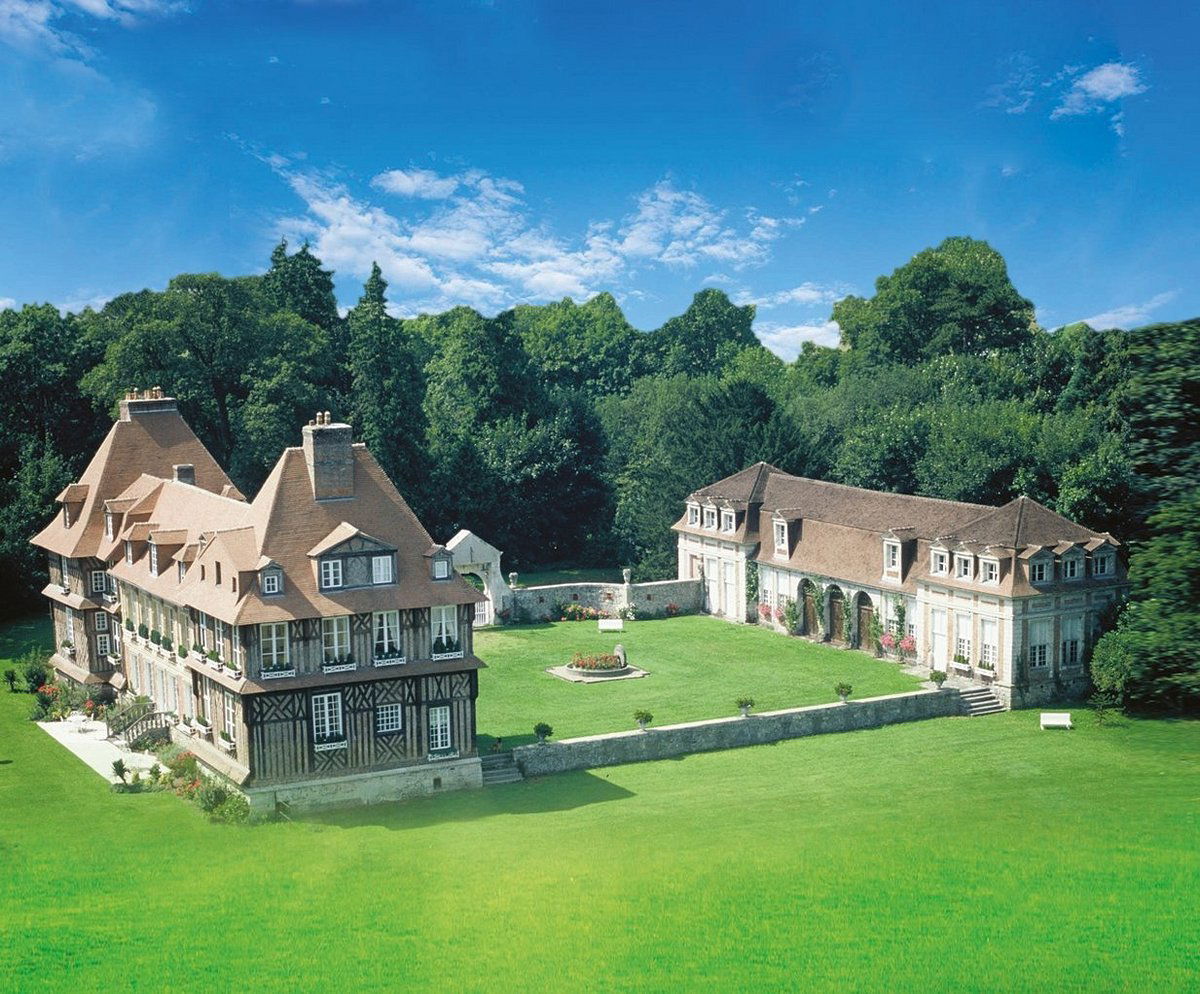
Elegant and historic atmosphere in a half-timbered 16th-century manor with scenic park-like grounds featuring centuries-old trees.
Tags
Vibe
Best For
Experience
Sourcing
View
At the Vineyard
- Appellation
- Pays d'Auge AOC
- Varietals
- Mettais, Rouge Duret, Rambault
- Tour Duration
- 60-90 minutes
- Tour Languages
- French, English
- Visits
- By reservation
- Farming
- Organic
- Wine Club
- Not available
Know before you go
Know Before You Go
- Getting there
- Le, Les Jourdains, 14130 Le Breuil-en-Auge
Planning details
Location
Also consider
Where to go if this does not fit
If the plan needs a direct Calvados alternative, start with Christian Drouin. If the group wants a more practical distillery-style visit, look at Busnel Distillery.
Winery context
How it compares
Château du Breuil is the more occasion-oriented choice in this set: better for travelers who want a château-format Normandy spirits stop than for anyone optimizing around transparent pricing or easy logistics. Christian Drouin is the sharper alternative for a focused Calvados comparison, while Busnel Distillery is the more practical pick if distillery context matters more than setting.
Roger Groult is the better cross-shop for readers who prefer a smaller producer feel. Palais Bénédictine is stronger as a heritage-site outing than as a direct Calvados substitute, so choose it for a broader French spirits day rather than a Le Breuil-en-Auge-specific plan.
Domaine Dureuil-Janthial sits outside the same core use case: it makes more sense when the trip is about wine depth rather than Normandy apple spirits. For a special occasion in Le Breuil-en-Auge, Château du Breuil remains the more formal pick; for value clarity, compare the alternatives first.
Explore Le Breuil-en-Auge
Around this place
Discover more on Pearl
Unlock the full Château du Breuil guide in Pearl, including awards, comparisons, FAQs, planning details, and nearby places.
Compare Château du Breuil
| Venue | Location | Awards |
|---|---|---|
| Château du Breuil | Le Breuil-en-Auge | No published awards |
| Christian Drouin | Coudray-Rabut | No published awards |
| Busnel Distillery | Cormeilles | No published awards |
| Roger Groult | Saint-Cyr du Ronceray | No published awards |
| Palais Bénédictine | Fécamp | No published awards |
| Domaine Dureuil-Janthial | Rully | 2026 Michelin 2 Grapes - Burgundy |

How Château du Breuil compares with similar nearby venues.
FAQ
Frequently Asked Questions
Is there a signature product at Château du Breuil?
Château du Breuil in Le Breuil-en-Auge is a venue listing with confirmed Pearl 2 Star Prestige recognition and a smart casual dress code, not a documented guide to a particular product.
Is there a membership program at Château du Breuil?
Can Château du Breuil handle large groups?
If you are planning for a group, contact Château du Breuil directly before setting it as an itinerary stop in Le Breuil-en-Auge.