

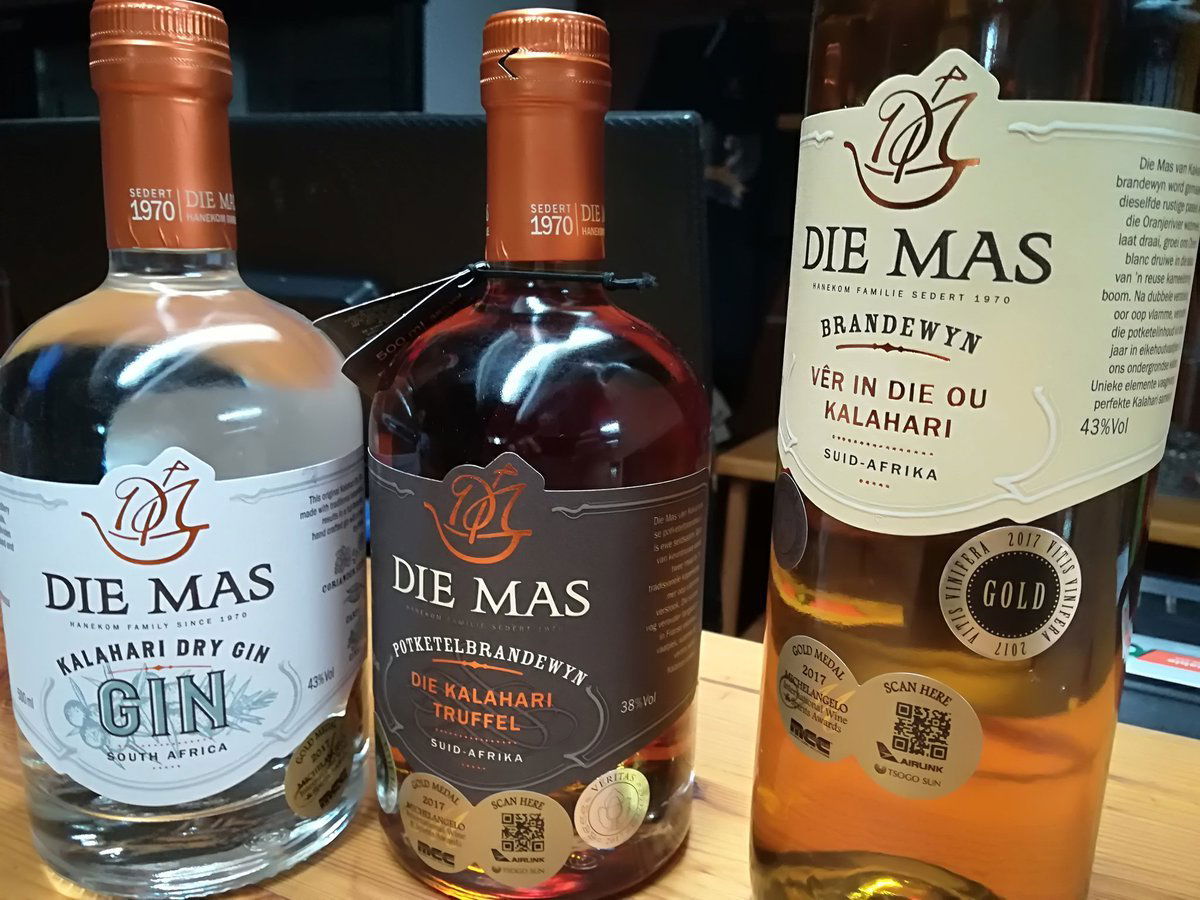
Die Mas Wine & Brandy Distillery
Kakamas
Winery in Kakamas, South Africa
 Book with Pearl
The Read
Orange River Pot-Still
Price
$10–20tasting
Why go
Die Mas Wine & Brandy Distillery is worth considering if Kakamas itself is part of the draw. It is a better fit for wine-and-brandy explorers than for travellers seeking a full-service Cape estate experience, so plan it as part of a regional route and confirm logistics before building the day around it.
About Die Mas Wine & Brandy Distillery
Is Die Mas Wine & Brandy Distillery worth planning into a Kakamas route? It can be, especially for travellers specifically interested in the venue and the surrounding Kakamas area. This is best treated as a stop to confirm directly rather than a venue to build a detailed itinerary around from public information alone.
The clearest details are its Kakamas location, casual dress code, and Pearl 2 Star Prestige recognition for 2025. Use broader Kakamas planning to decide whether the stop fits your route, and confirm current arrangements with the venue before travelling.
Book this for regional context, not a luxury-estate script
The smart reason to prioritise Die Mas Wine & Brandy Distillery is its place in Kakamas and its clearly identified name. Beyond that, avoid assuming a particular menu, tour structure, tasting format, or hospitality setup.
For travellers comparing related venues, Bezalel Wine & Brandy Estate, Blaq Distillery, Cederberg Cellars, Orange River Cellars, and Org de Rac Organic Wines can serve as useful reference points to research separately. Die Mas should be judged on its own facts rather than on assumptions borrowed from other venues.
Plan tightly because on-the-ground details matter here
The practical play is to avoid building an entire day around details that may differ on arrival. If the trip involves a group, a fixed schedule, or a long drive, confirm the current setup directly with Die Mas Wine & Brandy Distillery before committing the day around it.
Cross-shoppers can also research Bezalel Wine & Brandy Estate, Blaq Distillery, Orange River Cellars, Cederberg Cellars, and Org de Rac Organic Wines for broader comparison context. Die Mas remains the Kakamas venue to evaluate here.
Planning details
- Location
- Binnestraat, Kakamas, 8870
- Website
- diemas.co.za
- Phone
- +27 54 431 0245
The take
The Take
The Vibe
Die Mas reads like a working, historically anchored outpost of the South African winelands. It sits on the southern bank of the Orange River amid precise green ribbons of irrigated vineyards, and the prose emphasizes heat, aridity and long-established irrigation canals that date to the late nineteenth century. That context gives the place a quietly notable character: it feels unvarnished rather than polished, a standalone producer whose accomplishments — including recent industry recognition — register all the more strongly because they emerge from a harsh, sun-drenched environment.
Best For
This distillery-winery suits visitors who are curious about terroir and the mechanics of viticulture in extreme conditions. The copy frames Die Mas as a place for learning about how river irrigation and intense heat concentrate sugars and flavors, so it’s particularly appealing to wine-education minded groups and road-trippers exploring the Orange River corridor. The modest, working-street setting also makes it appropriate for family visits and small group outings that prize authenticity over tourist polish.
Tasting Tips
Look for the estate’s standout bottling referenced in the text: the 2025 Pearl, which earned a 2 Star Prestige award. The description stresses that Kakamas vines produce intensely concentrated flavours under extreme heat and river irrigation, so prioritize wines and brandies that highlight ripe, concentrated fruit and distilled expression. If availability is limited, ask staff about that Pearl release and any branded expressions tied to the distillery’s recognition — the award call-out signals a notable place to start.
Venue details
Ambiance
Tranquil and scenic overlooking vineyards, Orange River, and desert landscape, with a welcoming family atmosphere on the terrace.
Tags
Vibe
Best For
Experience
View
Accessibility
At the Vineyard
- Appellation
- Orange River
- Varietals
- Pinotage, Pinot Noir
- Tour Duration
- 60-90 minutes
- Tour Languages
- English
- Production
- Small producer
- Wine Styles
- Still Red, Still White, Fortified
- Food Pairing
- Offered
- Shipping
- Available
- Wine Club
- Not available
Know before you go
Know Before You Go
- Getting there
- Binnestraat, Kakamas, 8870
Planning details
Location
Also consider
If this does not fit the route
For a similar wine-and-brandy decision, cross-shop Bezalel Wine & Brandy Estate. For a broader regional wine stop, consider Orange River Cellars instead.
Winery context
How it compares in the Kakamas wine-and-brandy set
Choose Die Mas Wine & Brandy Distillery when Kakamas context matters and the wine-and-brandy combination is the reason for the stop. Bezalel Wine & Brandy Estate is the closer conceptual cross-shop for travellers prioritising that same dual category, while Orange River Cellars is the more obvious pick for visitors who want a broader regional cellar reference.
Cederberg Cellars and Org de Rac Organic Wines make more sense for travellers building a wine-first itinerary around established South African regions rather than a Kakamas-specific route. Blaq Distillery is the cleaner alternative if spirits matter more than wine.
For value, the safer move is to compare by route efficiency rather than assuming a polished hospitality package. If Kakamas is already on the itinerary, Die Mas Wine & Brandy Distillery earns its slot. If not, Bezalel Wine & Brandy Estate or Orange River Cellars may be easier to justify as part of a broader Northern Cape plan.
Explore Kakamas
Around this place
Discover more on Pearl
Unlock the full Die Mas Wine & Brandy Distillery guide in Pearl, including awards, comparisons, FAQs, planning details, and nearby places.
Compare Die Mas Wine & Brandy Distillery
| Venue | Location | Awards |
|---|---|---|
| Die Mas Wine & Brandy Distillery | Kakamas | No published awards |
| Bezalel Wine & Brandy Estate | Upington | No published awards |
| Orange River Cellars | Upington | 2026 Falstaff Winery Guide |
| Cederberg Cellars | Clanwilliam | 2026 Falstaff Winery Guide |
| Blaq Distillery | Vryburg | No published awards |
| Org de Rac Organic Wines | Swartland | 2026 Falstaff Winery Guide |

How Die Mas Wine & Brandy Distillery Kakamas compares with similar nearby venues.
FAQ
Frequently Asked Questions
How long should I plan for a visit to Die Mas Wine & Brandy Distillery?
Visit length and hospitality format are not listed here. Plan conservatively, especially if you are travelling a long distance, and confirm current arrangements with the venue before setting your schedule.
What should I confirm before visiting Die Mas Wine & Brandy Distillery?
Confirm any details that matter to your visit directly with the venue, because the information here is limited to Kakamas, casual dress code, and Pearl 2 Star Prestige recognition for 2025. Do not assume a specific format, product range, food service, group setup, or purchase option without checking first.
What other venues should I compare with Die Mas Wine & Brandy Distillery?
Bezalel Wine & Brandy Estate, Orange River Cellars, Cederberg Cellars, Blaq Distillery, and Org de Rac Organic Wines can be researched as broader comparison points. Die Mas is the Kakamas venue to consider if you are focusing on this specific stop.
Can Die Mas Wine & Brandy Distillery handle large groups?
Group-capacity detail is not listed here. If you are travelling with a group, contact Die Mas Wine & Brandy Distillery directly before planning around the visit.
Does Die Mas Wine & Brandy Distillery serve food?
Food-service detail is not listed here. If a meal is important to the day, plan separately in Kakamas and confirm directly with Die Mas Wine & Brandy Distillery before visiting.
Does Die Mas Wine & Brandy Distillery offer purchase or shipping options?
Purchase and shipping information is not listed here, so do not count on specific options when planning. If taking items home matters, ask the venue directly in Kakamas and confirm the current options before you rely on them.