
Winery in Horsham, United Kingdom
Leonardslee Family Vineyards
775ptsWealden Terroir Precision

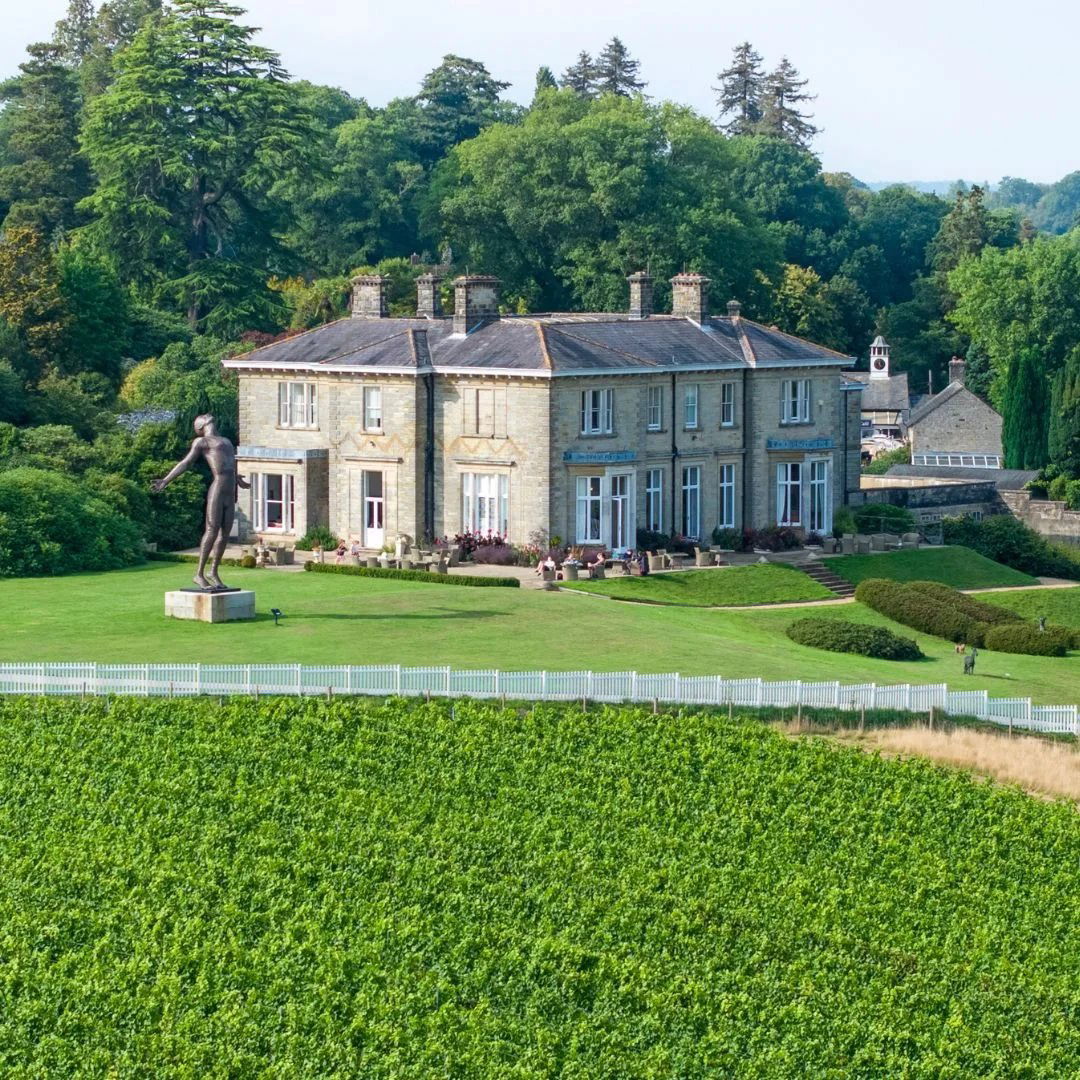
About Leonardslee Family Vineyards
Set within the storied Leonardslee estate in West Sussex, Leonardslee Family Vineyards earned a Pearl 2 Star Prestige rating in 2025, placing it among the county's most closely watched wine producers. The vineyard draws on the estate's distinctive Wealden geology and sheltered microclimate to make a case for Sussex as serious wine country. It belongs to a growing cohort of English producers reframing what the South Downs can produce at a prestige level.
Where the Wealden Clay Meets the Glass
Approach the Leonardslee estate along Hammerpond Road in Mannings Heath and the landscape makes an argument before the wine does. The Wealden hills fold into a series of shallow valleys with a canopy overhead, the kind of topography that traps warmth, deflects prevailing winds, and holds moisture in the clay-laced soils below. This is not incidental scenery. It is the physical substrate from which Leonardslee Family Vineyards draws its identity, and it places the operation within a tradition of English wine production that has been quietly accumulating credibility across West Sussex for two decades.
English wine's modern prestige chapter is largely a Sussex story. The county's combination of chalk and greensand geology, a maritime climate moderated by the Channel, and a latitude that forces slow ripening has produced sparkling wines that now compete seriously in international blind tastings. Leonardslee sits within that context, but the Wealden Clay soils of the estate's particular corner of the county introduce a different set of conditions than the chalkier terroirs further south and east. Clay retains water differently, ripens fruit at its own tempo, and tends to produce wines with a textural density that chalk-grown grapes rarely match. Whether still or sparkling, what comes from this ground carries a physical imprint that links glass to land.
The Estate Setting and What It Signals
Leonardslee as an estate has a long history in English horticulture, leading known for its rhododendron collections and Victorian walled gardens. That depth of ground management matters for viticulture: land that has been cultivated and observed over generations tends to be better understood, its drainage patterns documented, its frost pockets mapped. The vineyard operation works within an estate framework rather than starting from cleared agricultural land, which changes what the winemaking team inherits and what questions they begin with.
The practical implication for a visitor is that tasting here is embedded in a place with material character. The physical surroundings are not decorative backdrop but active context. West Sussex's premium wine addresses tend to sit on working estates or farms where the land is the primary subject, and Leonardslee follows that pattern. For readers building a West Sussex wine itinerary, it pairs productively with a visit to Nyetimber, whose chalk-dominant terroir just a few miles away offers a direct contrast in soil type and stylistic register. Both hold Pearl recognition and both reward the kind of comparative tasting that teaches something beyond what either can demonstrate alone. For broader context on where to eat, drink, and stay in the area, the full Horsham guide maps the options.
Pearl 2 Star Prestige: What the Rating Means in Practice
Leonardslee Family Vineyards carries a Pearl 2 Star Prestige rating for 2025, which is the relevant trust signal for positioning within its peer set. Pearl ratings in the EP Club system operate as editorial distinctions rather than algorithmic aggregates, meaning they reflect a considered assessment of quality, character, and consistency rather than a volume of consumer reviews. A 2 Star Prestige rating places the vineyard in a tier that demands attention beyond local curiosity: it signals that the wines are worth seeking out, that the production has achieved a standard of reliability, and that the operation merits inclusion in a serious conversation about English wine.
That conversation has shifted considerably in recent years. The category that once needed to explain itself to international audiences now holds positions in the cellars of serious London restaurants and appears on fine dining wine lists with increasing frequency. West Sussex producers have been central to that shift. Leonardslee's 2025 recognition arrives within a competitive county field, where the benchmark is set by producers who have been building export profiles and competition results for well over a decade.
Terroir as the Primary Argument
The editorial angle most relevant to Leonardslee is not novelty but specificity. English wine's credibility problem, to the extent one persists, is often a terroir communication problem: too many producers describe themselves in terms of aspiration rather than place. The Leonardslee estate's capacity to articulate its Wealden Clay setting as a distinct character rather than a compromise is the central proposition. Clay-grown English sparkling wine is a smaller category than chalk-grown, and within that category the tonal differences are meaningful: the texture is often broader, the fruit profile can run slightly warmer, and the structure leans on a different kind of mineral signature.
For context on how terroir specificity functions in premium wine culture more broadly, the pattern runs through every serious wine region. Producers in Napa's prestige tier, such as Accendo Cellars in St. Helena, built their reputations on articulating specific hillside blocks rather than valley-floor generalities. In Greece, Achaia Clauss in Patras anchors its identity to the Peloponnese's distinctive growing conditions. The logic is consistent: place before personality, ground before biography. Leonardslee's West Sussex setting provides the raw material for that kind of argument, and the Pearl 2 Star Prestige recognition suggests the wines are making it.
Planning a Visit
Leonardslee Family Vineyards is located at Hammerpond Road, Mannings Heath, Horsham, West Sussex, RH13 6PG. For prospective visitors, the practical approach is to contact the estate directly to confirm current tasting availability, seasonal opening patterns, and booking requirements, as vineyard visit formats at prestige-tier English producers typically operate on scheduled tours or pre-booked sessions rather than casual drop-in. Spring and early autumn are generally the most rewarding periods for vineyard visits in Sussex: late spring shows the growing season in early motion, while September and October align with harvest activity when the relationship between vine and cellar is most visible. Those building a broader tour of English or premium British producers will find it worth examining distillery-focused producers further afield, including Aberlour in Aberlour, Ardnahoe in Port Askaig, Auchentoshan Distillery in Clydebank, Balblair Distillery in Edderton, Bladnoch Distillery in Bladnoch, Cardhu in Knockando, Clynelish Distillery in Brora, Deanston in Deanston, Dornoch Distillery in Dornoch, Dunphail Distillery in Dunphail, and Glen Garioch Distillery in Oldmeldrum for a fuller picture of British terroir-driven production at the prestige tier.
Frequently Asked Questions
What's the vibe at Leonardslee Family Vineyards?
The experience is rooted in the estate's physical character rather than any manufactured hospitality atmosphere. Leonardslee is a working estate with significant horticultural and landscape history in West Sussex, and the vineyard operation sits within that context. The setting is quiet, wooded, and materially grounded. Given the Pearl 2 Star Prestige recognition for 2025, it positions itself in the county's prestige tier alongside producers who take the land seriously as a subject. Visitors should expect an encounter shaped by place rather than event programming.
What's the leading wine to try at Leonardslee Family Vineyards?
With specific current tasting notes and menu details outside the available data, the honest answer points toward the broader terroir logic: the Wealden Clay soils of the Leonardslee site produce conditions that distinguish the estate's wines from the chalk-dominant profiles of neighbours like Nyetimber. For any visit, the wine that most directly expresses the estate's clay geology is the most instructive starting point. The Pearl 2 Star Prestige rating for 2025 confirms that the production has reached a standard where that expression is worth pursuing. Contact the estate for current release details before visiting.
What's Leonardslee Family Vineyards leading at?
The strongest case for Leonardslee rests on terroir specificity within a county that has made Sussex a credible address in English wine. The Pearl 2 Star Prestige rating for 2025 in West Sussex confirms the vineyard's position within the prestige tier of local production. The Wealden Clay geology and the depth of the Leonardslee estate's land management history give the operation a site-specific argument that distinguishes it from producers on less characterful ground. In a county with serious competition, that combination of recognised quality and distinctive place is the clearest point of differentiation.
Recognized By

Related editorial
- Best Fine Dining Restaurants in ParisFrom three-Michelin-star icons to the next generation of Parisian chefs pushing boundaries, these are the restaurants that define fine dining in the world's culinary capital.
- Best Luxury Hotels in RomeFrom rooftop terraces overlooking ancient ruins to Michelin-starred hotel dining, these are the luxury hotels that make Rome unforgettable.
- Best Cocktail Bars in KyotoFrom sleek lounges to hidden speakeasies, Kyoto's cocktail scene blends Japanese precision with global influence in ways you won't find anywhere else.
Save or rate Leonardslee Family Vineyards on Pearl
Keep this venue in your Pearl passport, rate it after you visit, and track it alongside every other place you collect.