
Winery in Greenwood, United States
Pollak Vineyards
500ptsBlue Ridge Foothills Terroir
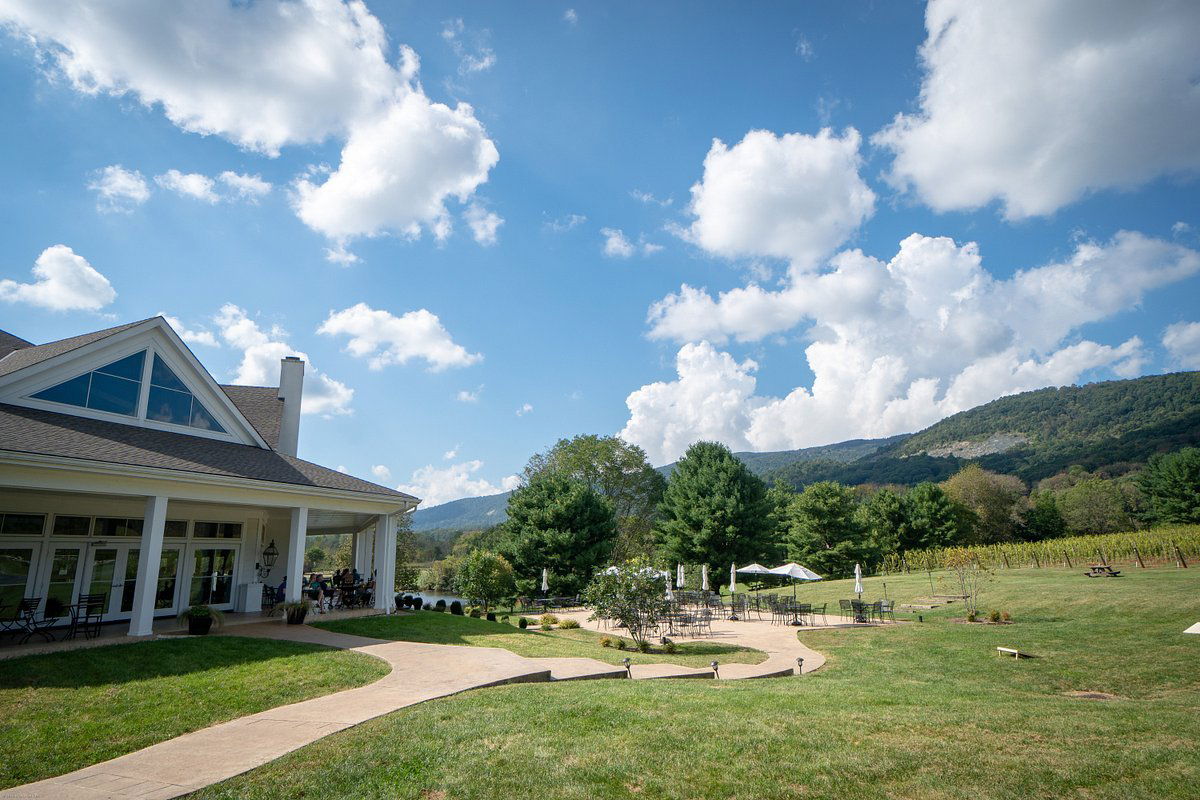
About Pollak Vineyards
Pollak Vineyards sits in the Blue Ridge foothills of Greenwood, Virginia, where the Albemarle County climate and elevation shape a distinctive expression of the region's grape-growing potential. The winery holds a Pearl 2 Star Prestige designation for 2025, placing it among the more seriously regarded producers in Virginia's small but increasingly focused fine-wine tier. A visit here speaks more to place than to production showmanship.
The Blue Ridge Foothills and What They Ask of a Vine
Virginia's wine identity has taken two decades to clarify itself. For a long time, the state's producers leaned on accessibility and tourism — tasting rooms designed to move bottles on weekends, portfolios broad enough to please any palate. What has emerged in the past decade is something more considered: a narrower set of producers, concentrated in Albemarle and Nelson counties, working with the specific character of the land rather than against it. Pollak Vineyards, on Newtown Road in Greenwood, belongs to that more intentional tier.
Greenwood sits in the western reaches of Albemarle County, where the Blue Ridge Mountains create a thermal buffer that moderates summer heat and extends the growing season relative to flatter Virginia terrain. This elevation and aspect are not incidental details. They shape the sugar and acid balance in the fruit, the speed at which grapes accumulate ripeness, and ultimately the structure of the finished wine. Producers working at this altitude across Virginia tend toward wines with more defined acidity and longer phenolic development than those grown closer to sea level in the eastern part of the state. That geological and climatic context is the starting point for understanding what Pollak produces — and why its 2025 Pearl 2 Star Prestige award signals something about quality posture rather than just marketing effort.
Terroir Before Variety: How Albemarle County Frames the Wines
Albemarle County has become Virginia's most closely watched wine-growing area, and for reasons that have less to do with infrastructure than with soil and microclimate. The county's mix of granitic and clay-loam soils, combined with the cooling influence of the Blue Ridge, creates conditions where Bordeaux varieties can achieve a structural precision that is harder to replicate in Virginia's hotter, more humid eastern zones. Petit Verdot, which struggles to ripen in Bordeaux itself, finds unusual expression in this part of Virginia, developing a depth and tannic firmness that makes it a serious single-varietal rather than a blending component. Viognier, long positioned as Virginia's signature white, also takes on a different register at altitude , more restrained in its aromatics, more persistent on the palate.
This is the terroir context that frames a visit to Pollak. The wines here are expressions of a specific geography, not a winemaking aesthetic imposed on neutral raw material. That distinction matters when you're trying to read the region accurately. Comparing Virginia Bordeaux-style reds to their California counterparts , such as the structured output from Accendo Cellars in St. Helena or the scale-driven blends from Alpha Omega Winery in Rutherford , reveals how different the climatic logic can be. Virginia's version is leaner, less fruit-forward, more dependent on site than on intervention.
Pearl 2 Star Prestige: What the Designation Signals
The 2025 Pearl 2 Star Prestige award places Pollak Vineyards within a clearly defined quality bracket. In the context of Virginia's growing roster of serious producers, that kind of external recognition functions as a sorting mechanism , it distinguishes wineries operating at a consistent, critically acknowledged level from those still in the visitor-experience-first phase of development. Prestige-tier designations in any wine region carry weight precisely because they require sustained performance, not a single standout vintage or a well-photographed estate.
For readers oriented to how Virginia compares to other American wine regions: the state's leading producers now occupy a tier that bears closer resemblance to the focused, estate-driven model found in parts of Central Coast California , think the Rhône-focused work at Alban Vineyards in Arroyo Grande or the Burgundy-trained approach at Au Bon Climat in Santa Barbara , than to the industrial-scale volume model. Pollak sits in that estate-focused category, where the land and the vintage are the primary variables, not production scale.
Greenwood as a Wine Destination
Greenwood is not a wine town in the way that Napa or Sonoma are wine towns. There is no main street lined with tasting rooms, no infrastructure built primarily for wine tourism. What the area offers instead is concentration of quality in a compact geography. Several serious producers operate within a short drive of each other, which makes the area function more like a small appellation within Albemarle County than a destination resort zone. Septenary Winery at Seven Oaks Farm is among the nearby producers worth pairing with a visit to Pollak if you are spending time in the area.
The surrounding countryside runs to farmland and forest, with the Blue Ridge forming the western horizon. The approach to most Greenwood properties involves rural roads and agricultural land rather than manicured wine-country corridors. That physical context is not a shortcoming. It reinforces the impression that the wines here come from a working landscape, not from a hospitality set designed for photography. For context on the broader Greenwood area, our full Greenwood restaurants guide covers the wider range of dining and drinking options in the region.
How Pollak Fits the Virginia Wine Conversation
Virginia is at an interesting inflection point as a wine region. The state's producers have spent years arguing for recognition alongside more established American appellations, and the argument is becoming easier to make. The combination of Albemarle County's specific terroir advantages, a generation of winemakers with serious European or West Coast training, and the willingness to accept lower yields in exchange for quality has shifted the baseline of what serious Virginia wine looks like.
Pollak Vineyards occupies a position in that conversation that is defined by its Pearl 2 Star Prestige recognition and its location in one of the county's better-regarded growing zones. The comparison set is not the mid-Atlantic tourism circuit but rather producers in other American regions working with similar intentionality at estate scale. Oregon's leading Pinot houses, such as Adelsheim Vineyard in Newberg, have long operated in that disciplined, terroir-first mode. So have Paso Robles estates like Adelaida Vineyards, which work with a different set of varieties but a similar commitment to site expression. The fact that Virginia producers are now drawing those comparisons credibly is a recent development, and Pollak's award standing is part of that evidence.
For readers exploring other regions in parallel, the Rhône-focused estates of Andrew Murray Vineyards in Los Olivos offer a useful California counterpoint to Virginia's Viognier tradition. Further afield, the architectural and production ambition at Artesa Vineyards and Winery in Napa represents a different scale of operation , useful context for understanding just how estate-focused the Virginia model tends to be. Sonoma Valley producers like Alexander Valley Vineyards in Geyserville and B.R. Cohn Winery in Glen Ellen also illustrate how established California appellations handle the balance between estate identity and visitor accessibility , a balance Virginia producers are still calibrating. Those curious about how terroir-expressive winemaking operates at the Napa prestige level can look at Aubert Wines in Calistoga for a Chardonnay and Pinot point of comparison. For context outside American viticulture entirely, Achaia Clauss in Patras and Aberlour in Aberlour each demonstrate how deeply historical wine and spirits regions build identity through place rather than variety alone , a model Virginia's leading producers are beginning to replicate on a shorter timeline.
Planning a Visit
Pollak Vineyards is located at 330 Newtown Road, Greenwood, Virginia 22943. Current hours, tasting formats, and booking arrangements are leading confirmed directly through the winery before visiting, as rural Virginia estates frequently adjust their visitor programming seasonally and operational details are not always maintained through third-party listings. The drive from Charlottesville , Virginia's closest urban base with meaningful dining and hotel infrastructure , covers the distance through Albemarle County countryside and takes roughly twenty to thirty minutes depending on your starting point in the city. Visiting in spring or autumn typically offers the leading combination of moderate weather and vineyard visibility: spring brings the dormant vine's first growth push, while autumn, particularly late September and October during harvest, connects the landscape directly to the wine in the glass.
Frequently Asked Questions
- What is the atmosphere like at Pollak Vineyards?
- Pollak Vineyards sits in the rural Blue Ridge foothills of Greenwood, within Albemarle County. The setting is agricultural and unhurried rather than resort-styled. For a winery holding a Pearl 2 Star Prestige designation for 2025, the atmosphere reflects the serious, land-focused character common to Virginia's quality-tier producers: the land and its wines are the primary interest, not spectacle or volume hospitality.
- What wine is Pollak Vineyards known for?
- Specific current varietals are leading confirmed directly with the winery, as production details were not available at time of writing. However, Albemarle County's terroir , granitic and clay-loam soils at Blue Ridge elevation , is particularly well-suited to Petit Verdot, Viognier, and Bordeaux-style blends. Pollak's Pearl 2 Star Prestige recognition for 2025 places it among the more seriously regarded estates in Virginia, a designation typically associated with consistent quality across the estate's primary range rather than a single standout bottling.
Related editorial
- Best Fine Dining Restaurants in ParisFrom three-Michelin-star icons to the next generation of Parisian chefs pushing boundaries, these are the restaurants that define fine dining in the world's culinary capital.
- Best Luxury Hotels in RomeFrom rooftop terraces overlooking ancient ruins to Michelin-starred hotel dining, these are the luxury hotels that make Rome unforgettable.
- Best Cocktail Bars in KyotoFrom sleek lounges to hidden speakeasies, Kyoto's cocktail scene blends Japanese precision with global influence in ways you won't find anywhere else.
Save or rate Pollak Vineyards on Pearl
Keep this venue in your Pearl passport, rate it after you visit, and track it alongside every other place you collect.