
Winery in Gardiner, United States
Tuthilltown Spirits (Hudson Whiskey)
500ptsNew York Grain Distilling
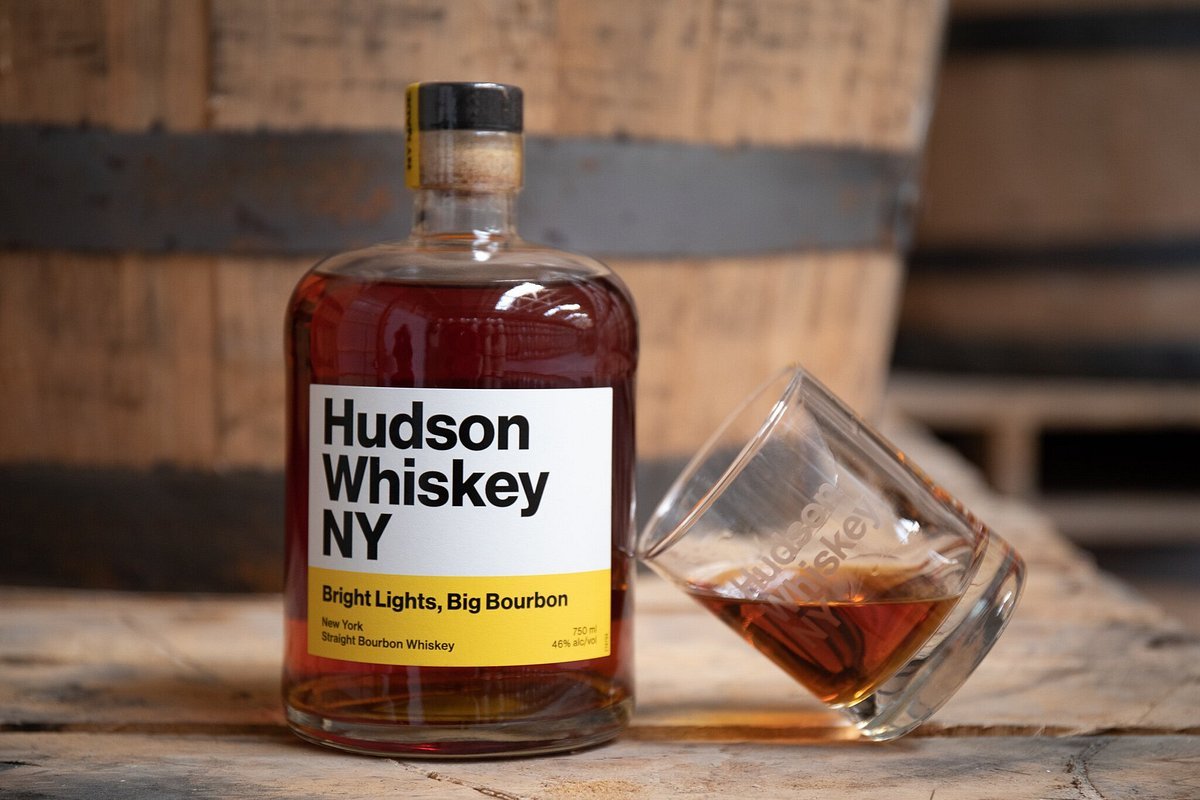
About Tuthilltown Spirits (Hudson Whiskey)
Tuthilltown Spirits, operating under the Hudson Whiskey label from a converted grist mill in Gardiner, New York, holds a Pearl 2 Star Prestige rating for 2025. The distillery sits within the Hudson Valley's agricultural corridor, drawing on regional grain traditions to produce American whiskey at a site with genuine historical character. It occupies a distinct position among craft spirits producers in the northeastern United States.
Where the Hudson Valley Meets the Still
The drive into Gardiner along Route 44/55 moves through apple orchards, hayfields, and low ridgelines that define the Shawangunk foothills. By the time the white clapboard buildings of 14 Grist Mill Lane come into view, the setting has already told you something about what Tuthilltown Spirits makes and why it makes it here. This is working agricultural country, not a sanitized tasting-room corridor, and the distillery reads that way: a converted grist mill with operational history that predates the American whiskey revival by roughly two centuries. The physical environment is not decorative; it is the argument.
American craft distilling has, over the past two decades, split into two recognizable camps. One camp chases volume and distribution, building category-sized brands that move away from their founding geography as quickly as logistics allow. The other stays close to the land, regional grain supply, and the slower rhythms of small-batch production. Tuthilltown, operating under the Hudson Whiskey label, belongs firmly to the second group, and the Pearl 2 Star Prestige recognition it carries into 2025 reflects that positioning within a competitive set where sourcing transparency and provenance carry real critical weight. For context on how American grain-based spirits producers are assessed against their international counterparts, comparisons with established producers like Aberlour in Aberlour help frame what regional terroir expression looks like when it achieves formal recognition.
Terroir in the Still House
The concept of terroir travels awkwardly from viticulture into distilling, but it is not meaningless there. In whiskey, grain variety, local water chemistry, climate-driven maturation conditions, and warehouse orientation all contribute to a spirit's character in ways that are measurable and, increasingly, articulable to a serious tasting audience. The Hudson Valley offers a specific set of conditions: a continental climate with genuine seasonal swing, which accelerates the interaction between spirit and oak; mineral-carrying water from the Shawangunk Ridge watershed; and proximity to farms that have grown grains on this specific soil since the early colonial period.
Hudson Whiskey's production philosophy anchors to New York grain, which means the agricultural decisions made in the surrounding counties — what varieties are planted, how they are malted or milled — show up in the glass in ways that a sourced-grain operation cannot replicate. This is the same logic that governs how serious wine producers in the West Coast consider their appellations. Adelaida Vineyards in Paso Robles and Adelsheim Vineyard in Newberg each make the case that provenance of raw material is a prerequisite for genuine regional expression. The distillery at Gardiner makes the same argument for grain spirits, and in the northeastern United States context, it was among the first to make it credibly.
Seasonality matters on this site in a way it does not at climate-controlled industrial facilities. Barrels warehoused in the Hudson Valley cycle through genuine winters and humid summers, which means the spirit pulls oak compounds at a rate determined by actual weather rather than controlled variables. This accelerated interaction is why small-format Hudson Valley barrels can achieve complexity in shorter aging windows than Kentucky warehouses operating in more moderate temperature ranges.
The Grist Mill Setting as Context
Tuthilltown's physical site functions as an extension of its production argument. The grist mill at Gardiner dates to the eighteenth century, and its continued operation as a working site rather than a museum or retail space gives the distillery a material connection to regional agricultural processing that few American craft producers can match. The buildings are not restored to a period aesthetic; they are used, which is a meaningful distinction when the brand's core claim is agricultural continuity.
Within the broader range of American craft spirits tourism, this kind of site occupies a specific tier. The experience is closer to visiting a working farm than a designed hospitality venue. What you observe at Tuthilltown is production logic first, hospitality second, which suits a visitor who wants to understand how the spirit is made rather than simply receive a curated pour. For readers familiar with estate-focused producers in wine , say, Accendo Cellars in St. Helena or Alban Vineyards in Arroyo Grande, where the land is visible from the tasting room , the logic of Tuthilltown's site will feel immediately legible.
How It Fits the Northeastern Craft Spirits Scene
New York State's Farm Distillery Act, passed in 2007, created the regulatory framework that allowed Tuthilltown to operate, and the distillery's early years are part of the documented history of how that legislation shaped a category. By the time the act opened the market, Tuthilltown had been producing and selling Hudson Whiskey for approximately two years, establishing itself ahead of the wave of New York craft producers that followed. That first-mover position within the state's craft spirits category is a verifiable historical fact, not a marketing claim, and it explains why the brand carries a different kind of authority than producers who entered the market a decade later.
The Pearl 2 Star Prestige rating for 2025 places Tuthilltown within a recognized prestige tier for the region. For comparison, producers at this recognition level in wine, such as Alpha Omega Winery in Rutherford or Artesa Vineyards and Winery in Napa, operate in categories where formal critical recognition translates directly into allocation demand and visitor interest. The dynamics in craft spirits are structurally similar: recognition at the 2 Star Prestige level signals that the product has cleared a credibility threshold that distinguishes it from the wider field of boutique producers. More information on the range of producers earning this kind of critical attention is available through our full Gardiner restaurants guide.
What to Taste and How to Approach a Visit
Hudson Whiskey's range is built around American whiskey categories: bourbon, rye, and corn whiskey expressions that use New York grain as the throughline. The specific bottles available at any given time reflect production volume constraints that are intrinsic to small-batch distilling, so the selection on a given visit will depend on what has been bottled and released from active aging programs. This variability is not a limitation; it is evidence that the production is genuinely seasonal and batch-constrained rather than continuously topped up from external sources.
Visitors approaching the tasting with a background in fine wine will find the evaluative framework transferable. The same attention to how climate and geography express themselves in a fermented and aged agricultural product applies; the sensory vocabulary is different, but the underlying logic is the same. Producers like Au Bon Climat in Santa Barbara or Aubert Wines in Calistoga work with similar questions about how a specific place expresses itself in a glass; Tuthilltown asks the same question through a different medium.
For context on other serious producers working within defined regional identities, Andrew Murray Vineyards in Los Olivos, Alexander Valley Vineyards in Geyserville, Babcock Winery and Vineyards in Lompoc, and B.R. Cohn Winery in Glen Ellen each illustrate how agricultural provenance becomes a legible quality signal across different categories and geographies. Achaia Clauss in Patras adds a useful international data point on how long-established producers build regional authority over time.
Planning a Visit to Tuthilltown
Tuthilltown Spirits sits at 14 Grist Mill Lane in Gardiner, New York, 12525, in Ulster County in the mid-Hudson Valley. Gardiner is approximately ninety miles north of New York City by road, accessible via the New York State Thruway or the Taconic State Parkway. The site is set back from the main road and is reachable by car; public transit access to Gardiner is limited, which means most visitors traveling from New York City will need to plan for a driving excursion or arrange private transport. The surrounding area, including the Shawangunk Ridge and the town of New Paltz two miles to the north, offers sufficient infrastructure for a half-day or full-day visit. Tasting room hours, current booking requirements, and available expressions should be confirmed directly through the distillery's own channels before travel, as operational details for small producers change with production cycles and seasons.
Related editorial
- Best Fine Dining Restaurants in ParisFrom three-Michelin-star icons to the next generation of Parisian chefs pushing boundaries, these are the restaurants that define fine dining in the world's culinary capital.
- Best Luxury Hotels in RomeFrom rooftop terraces overlooking ancient ruins to Michelin-starred hotel dining, these are the luxury hotels that make Rome unforgettable.
- Best Cocktail Bars in KyotoFrom sleek lounges to hidden speakeasies, Kyoto's cocktail scene blends Japanese precision with global influence in ways you won't find anywhere else.
Save or rate Tuthilltown Spirits (Hudson Whiskey) on Pearl
Keep this venue in your Pearl passport, rate it after you visit, and track it alongside every other place you collect.