
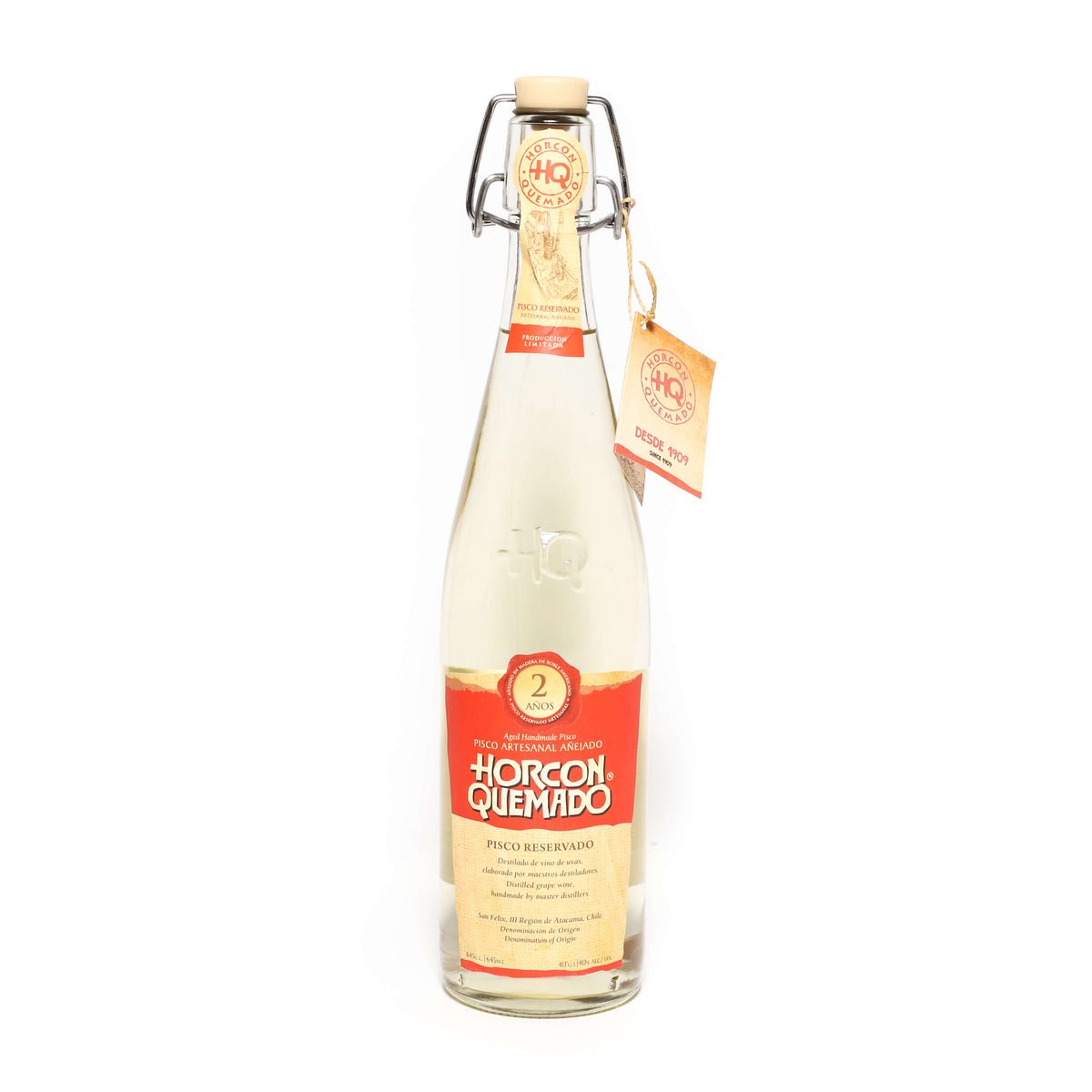
    Winery in Combarbalá, Chile

    Pisco Horcón Quemado

    250pts

    Limarí Terroir Pisco

    Pisco Horcón Quemado, Winery in Combarbalá

    About Pisco Horcón Quemado

    Pisco Horcón Quemado operates out of Combarbalá, a small city in Chile's Limarí Province where extreme diurnal temperature shifts and granitic soils define the character of the region's distilled spirits. The producer earned a Pearl 1 Star Prestige award in 2025, placing it among a select group of Chilean pisco operations recognised at this level. For travellers building an itinerary around Chile's northern distilling traditions, this is a serious stop.

    Where the Atacama Meets the Still

    Combarbalá sits in a bowl of semi-arid hills in Chile's Limarí Province, roughly 400 kilometres north of Santiago, at an elevation where the sky is dark enough that the municipality hosts an observatory. The town is not a wine-circuit destination in the way that Colchagua or Maipo are. It does not have the tasting-room infrastructure of the Central Valley, nor the international profile of Viña Seña in Panquehue or the broad distribution network of Viña Undurraga in Talagante. What it has is a specific terroir that shapes everything grown and distilled here, and Pisco Horcón Quemado is the producer most associated with that proposition.

    Approach Combarbalá from the south and the character of the land announces itself before the town does: thin soils over mineral-dense substructure, scrub vegetation adapted to drought, and a light that comes off the hillsides differently than it does anywhere in the irrigated Central Valley. This is the northern fringe of where Muscat of Alexandria and Pedro Jiménez grapes grow for pisco production, and the altitude and aridity here produce fruit with a concentration that lower, more temperate zones cannot replicate.

    Terroir as Production Argument

    Chile's pisco appellation covers two regions: Atacama and Coquimbo. Combarbalá falls within Coquimbo, but it occupies a distinct sub-character within that broader designation. Limarí as a whole has attracted serious attention over the past two decades for exactly the terroir argument that producers here have been making about their grapes: granite and limestone soils, Pacific influence funnelled up the river valley, and thermal amplitude between daytime highs and overnight lows that can exceed 20 degrees Celsius in the growing season.

    That thermal range is not incidental. In spirit production, as in winemaking, it slows sugar accumulation relative to aromatic development, meaning grapes harvested here tend to carry more complex volatile compounds at a given sugar level than fruit from warmer, more equable sites. For pisco, where the grape variety is required by law and the aromatic profile of the distillate is the primary quality differentiator, this matters considerably. It is the same logic that draws attention to high-altitude producers across South America and explains why operations like Pisco Alto del Carmen Distillery in Huasco and Atacamasour Distillery in San Pedro de Atacama each make a point of elevation and site in their positioning.

    Horcón Quemado, as a name, references a place: a specific locality that carries geographic identity into the product. This is a pattern seen elsewhere in the pisco and spirits world when a producer wants to signal that their product is not merely a category expression but a location-specific one. The decision to name the pisco after a place, rather than a family or a brand construct, is a positioning statement about where the character of the spirit originates.

    Pearl 1 Star Prestige: What the Award Signals

    Pisco Horcón Quemado received a Pearl 1 Star Prestige award in 2025. In the context of Chilean spirits, that recognition positions it within a tier of producers whose output has been assessed and ranked above the commodity and export-volume segment. The award does not function like a Michelin star for a restaurant, where anonymised critics assess experience against a consistent rubric, but it operates as a trust signal in a category where quality differentiation has historically been difficult for consumers to parse from the outside.

    For comparison: producers like Viña Falernia in Vicuña have built international recognition through consistent quality markers in their wine programme, and the trajectory for premium pisco follows a similar logic. Recognition at the prestige tier in 2025 places Horcón Quemado in a different competitive set than mass-market Chilean pisco, and closer to the small group of producers making a quality-first argument for the category.

    Chile's wine producers have demonstrated that appellation-specific, quality-led positioning works in international markets. Viña De Martino in Isla de Maipo and Viña MontGras in Palmilla have both built their reputations on terroir differentiation within established Chilean appellations. The premium pisco segment is attempting the same structural argument, and Horcón Quemado is one of the producers doing that work from the Limarí end of the appellation.

    Combarbalá in the Northern Chile Circuit

    Travellers moving through northern Chile's spirits and wine corridor tend to route through Ovalle (the provincial capital of Limarí), with Combarbalá as a less-visited branch off that circuit. The town itself is small, with limited hospitality infrastructure compared to larger Coquimbo region hubs like La Serena. That means a visit to Horcón Quemado is most naturally combined with other stops along the Limarí Valley rather than treated as an endpoint destination in isolation.

    The broader Coquimbo region has producers working across both wine and pisco, and an itinerary that takes in the distilling tradition alongside the vineyards gives a more complete picture of what high-altitude, arid-climate agriculture produces here. From a practical standpoint, visitors should confirm opening hours and visit formats directly before travelling, as rural Chilean producers at this scale often operate with limited public-facing infrastructure and do not always maintain consistent tasting-room schedules. Check our full Combarbalá restaurants and producers guide for updated logistics and what else the area offers.

    For those planning a longer Chilean spirits route, the comparison points extend south. El Gobernador (Miguel Torres Chile) in Curicó represents how international investment has shaped the Central Valley's premium segment, while Viña Casa Silva in San Fernando and Viña Valdivieso in Lontué demonstrate the depth of the Colchagua and Maule regions. The northern pisco belt, where Horcón Quemado operates, is a genuinely different proposition: drier, higher, older in its relationship to distillation as a tradition.

    Planning a Visit

    Combarbalá is roughly a four-to-five-hour drive from Santiago via Route 5 north and the secondary road inland from Ovalle. There is no commercial air service to the town. The practical recommendation is to base in Ovalle or La Serena and build Combarbalá as a day excursion, pairing it with other Limarí Valley producers if the itinerary supports it. Because specific opening times, tasting formats, and booking requirements for Horcón Quemado are not publicly confirmed through this platform, contacting the producer in advance is the only reliable way to ensure a visit is possible. The 2025 Pearl 1 Star Prestige recognition suggests an operation serious about its product, which in turn suggests some form of structured visitor engagement is likely, but this should be verified rather than assumed. See also: Viña Ventisquero in Santiago, Viña Santa Rita in Buin, and for international reference points on prestige-tier spirit and wine production, Aberlour in Aberlour and Accendo Cellars in St. Helena.

    Frequently Asked Questions

    What's the vibe at Pisco Horcón Quemado?

    Combarbalá is a small, rural town with minimal tourist infrastructure, so the experience here sits firmly in the working-producer category rather than the polished tasting-room format found at larger Chilean wine estates. If you are arriving with a 2025 Pearl 1 Star Prestige award as your reference point, expect a production-focused environment rather than hospitality theatre. That is appropriate to the region and the tradition.

    What is Pisco Horcón Quemado known for?

    The producer is associated with pisco made from grapes grown in the Limarí Province, a zone within the Coquimbo appellation where high elevation, granitic soils, and significant day-to-night temperature variation distinguish the terroir from lower-altitude production areas. The 2025 Pearl 1 Star Prestige award is the principal external quality signal currently on record. The wine region context connects to the broader Coquimbo designation, which also produces table wine through producers like Viña Falernia in Vicuña.

    What is Pisco Horcón Quemado leading at?

    Based on available data, the producer's case rests on terroir specificity: a named locality (Horcón Quemado), a distinctive growing environment in Limarí, and a 2025 prestige-tier award that separates it from commodity pisco production. For travellers who follow Chilean distilling traditions rather than the mainstream wine circuit, that combination makes it a reference point for what high-altitude, northern-appellation pisco can express.

    Should I book Pisco Horcón Quemado in advance?

    Given the rural location in Combarbalá and the absence of publicly listed booking infrastructure, advance contact is strongly recommended. The Pearl 1 Star Prestige recognition (2025) indicates a serious producer, but small-scale Chilean distillers in this region do not always maintain walk-in visitor operations. Confirming directly before building a travel day around the visit is the practical approach. No phone or website is currently listed in this platform's database, so outreach through regional tourism contacts or social channels is the likely first step.

    Keep this place

    Save or rate Pisco Horcón Quemado on Pearl

    Keep this venue in your Pearl passport, rate it after you visit, and track it alongside every other place you collect.