
Winery in Champagne, Switzerland
Dom Pérignon
2,000ptsVintage-Only Terroir Commitment

About Dom Pérignon
Dom Pérignon, rooted in the chalk hillsides of Hautvillers in the Marne Valley, holds a 2025 Pearl 5 Star Prestige award and represents Champagne's most studied terroir expression. Under winemaker Vincent Chaperon, the house pursues vintage-only production from its first release year of 1921. For those engaging directly with the estate, timing and advance planning are essential.
Chalk, Cold, and the Marne Valley Floor
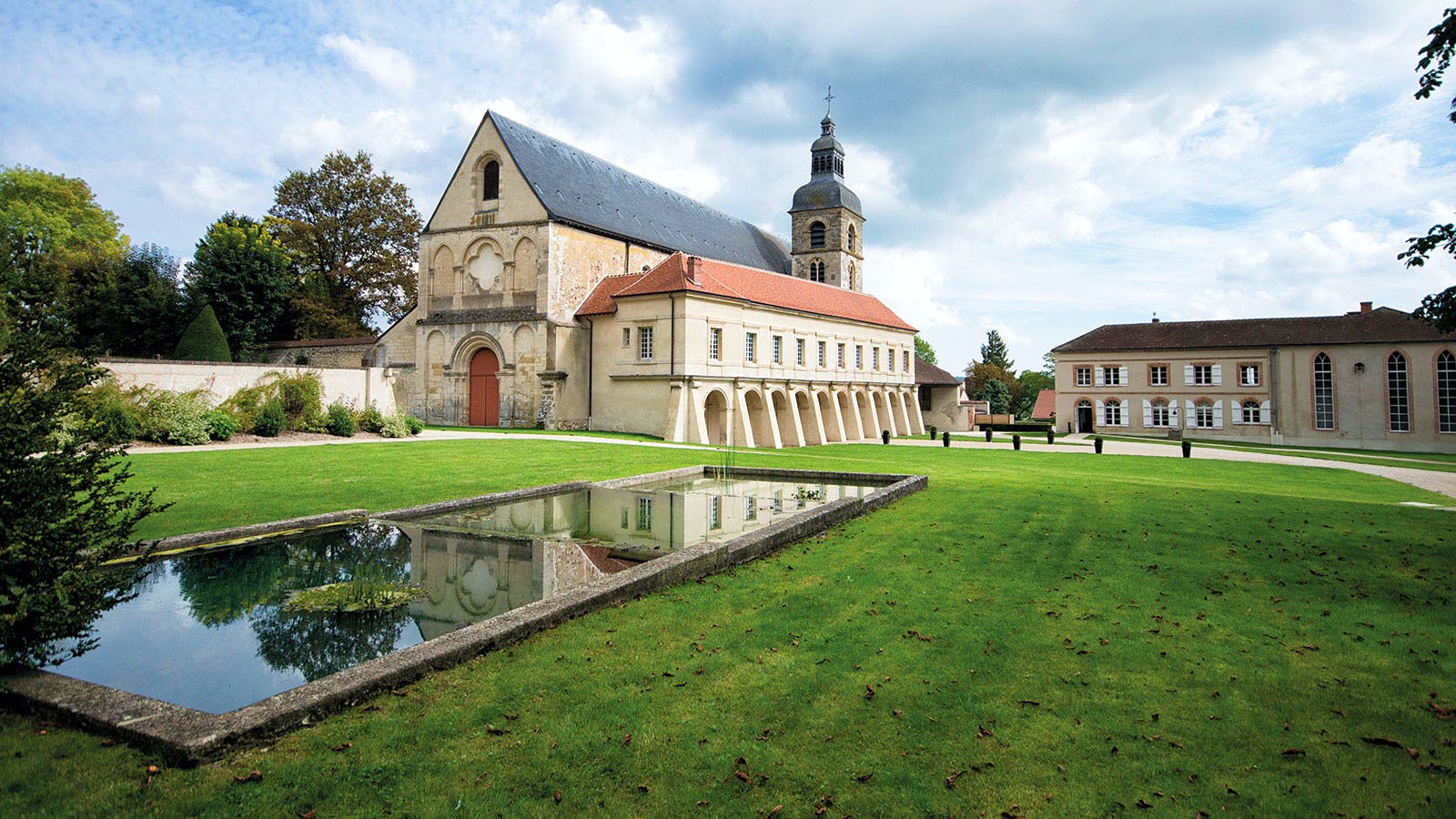
The village of Hautvillers sits on a ridge above the Marne River, its vineyards draped across slopes that geologists trace back sixty-five million years to a shallow marine basin. The chalk here is not incidental. It is the argument. It drains excess water while retaining just enough moisture at depth to sustain the vine through dry summers, and it reflects light upward through the canopy in ways that accelerate ripening on what would otherwise be marginal northern latitude land. Walking the Rue de Cumières toward the estate at 226, the terrain announces itself before any building does: pale soil at the vineyard edges, a brightness in the light, a particular stillness that chalk-dense land tends to produce. This is the physical context into which Dom Pérignon — holding a 2025 Pearl 5 Star Prestige award — places every vintage it releases.
For broader context on the Champagne region's producers and what distinguishes this appellation from other sparkling wine regions, our full Champagne restaurants and producers guide maps the area's key names and visiting logistics.
What Terroir-Only Production Actually Means
Dom Pérignon does not produce a non-vintage blend. Every release is a declared vintage year, meaning the house commits its entire output to the character of a single harvest rather than averaging across years to achieve a consistent house style. This is an unusually exposed position in Champagne, where the non-vintage blend exists precisely to protect producers from the volatility of a northern climate. By choosing vintage-only production since its first commercial release in 1921, the estate has wagered continuously on the Marne Valley's capacity to deliver complete fruit in any given year , and on the winemaker's ability to read what each harvest offers rather than correct it toward a fixed target.
Vincent Chaperon holds that winemaker position today. His role is less about imposition than about tracking what the chalk, the clay lenses within it, and the specific slope exposures across the estate's sourced parcels have produced in each growing season. In a year where the northern frosts arrive late and the harvest comes in with high natural sugar and firm acidity, the wine records that. In a cooler, later year, it records something else. The vintage range across the house's history spans radically different growing conditions, and comparing bottles across declared years is one of the more instructive exercises available to anyone studying how climate expresses through a single appellation.
This approach places Dom Pérignon in a specific peer context within prestige Champagne. Houses like Accendo Cellars in St. Helena , though operating in a categorically different climate , share the underlying logic of site-committed production, where the wine's identity derives from place rather than from formula. Similarly, Adelaida Vineyards in Paso Robles builds its program around calcareous soils in ways that echo the chalk-driven philosophy at work in Hautvillers, even across hemispheres.
The Hautvillers Location in Practical Terms
The estate address , 226 Rue de Cumières, 51160 Hautvillers , places it in one of the Marne Valley's most-visited villages, approximately four kilometres northwest of Épernay. Épernay itself is the operational hub of the Champagne region, reachable by TGV from Paris in around 1 hour 20 minutes to Reims, then a short regional connection or taxi. Visitors approaching Hautvillers from Épernay follow the river valley road before climbing into the village, which sits on refined ground above the valley floor. The drive through the Cumières road is one of the more illustrative routes in the region for understanding the slope orientation and chalk exposure that makes the Marne's right bank distinct from the Côte des Blancs further south.
No phone number or website is listed in EP Club's current data for direct booking or tour enquiries; those planning visits should confirm arrangements through the LVMH hospitality channels or Épernay-based tour operators before travel. The region's visit season runs from late spring through harvest in September and October, when the combination of vine activity and cooler temperatures makes the terroir most legible to a first-time visitor.
The 2025 Pearl 5 Star Prestige Award in Context
The Pearl 5 Star Prestige designation awarded in 2025 sits at the leading of EP Club's producer ratings. What this signals, in practical terms, is a combination of production consistency, sourcing depth, and critical recognition that places Dom Pérignon within a narrow tier of global wine producers. Prestige-tier awards at this level are not given on the basis of a single strong vintage but reflect a pattern of performance across declared years and the house's positioning within its appellation peer set.
Across EP Club's broader coverage, several other producers carry comparable recognition for terroir-committed programs. Albert Boxler in Niedermorschwihr represents a similarly focused, site-specific approach in Alsace. Aldo Conterno in Monforte d'Alba holds comparable standing in Barolo. Alban Vineyards in Arroyo Grande has built a Rhône-focused program on similarly chalk-adjacent calcareous soils. The point is not equivalence across styles but a shared commitment to letting geology, not winemaker correction, drive the wine's character.
Other producers across EP Club's global coverage , including Adelsheim Vineyard in Newberg, Alexander Valley Vineyards in Geyserville, and Alpha Omega Winery in Rutherford , operate in the same tier of recognized, long-established estates where the land's character is readable across vintages rather than averaged away.
What the Vintage Archive Reveals About Champagne's Climate
Because Dom Pérignon has declared vintages consistently since 1921, its production history functions as a temperature and precipitation record for the Marne Valley across more than a century. The years when the house chose not to declare , gaps in the archive , correspond to growing seasons that failed to meet the threshold for a vintage-quality harvest. Those gaps are, in some ways, as informative as the releases themselves. They make visible the climate risk that every Champagne producer absorbs each year and that the non-vintage category was designed to mask.
For collectors and serious wine visitors, this history is part of what the estate represents. Studying the declared vintage years against documented growing season records is a more specific exercise than most Champagne tourism allows, but it is the exercise that Hautvillers' terroir leading supports. The chalk's consistency across parcels means that vintage variation shows up as climate signal rather than site variation, making Dom Pérignon's archive unusually clean as a climate dataset.
For those building out a broader itinerary across wine regions, EP Club also covers producers working in very different terroir contexts: Achaia Clauss in Patras, All Saints Estate in Rutherglen, Amrut in Bengaluru, Aberlour in Aberlour, Ravines Wine Cellars in Geneva, and Andrew Murray Vineyards in Los Olivos each demonstrate how differently soil composition and latitude shape a wine's structure when winemakers commit to terroir-led production.
Planning a Visit
Hautvillers is a working wine village, not a large hospitality campus. Visitors arriving expecting a resort-scale experience will find instead a concentrated, historically dense environment where the abbey that gives the village much of its fame sits alongside family estates and vineyard parcels in close proximity. For Dom Pérignon specifically, visit logistics currently require direct enquiry through LVMH channels, as no public booking portal or contact number appears in EP Club's verified data. The optimal visiting window for terroir-focused travel is the harvest period in September and October, when vine and soil activity are most visible, though the valley roads are also at their most congested. Off-season visits in March and April offer a quieter approach to the same ground at the cost of dormant vines and closed secondary facilities.
Frequently Asked Questions
- What is the general atmosphere at Dom Pérignon?
- The estate is rooted in the historic village of Hautvillers in the Marne Valley, the chalk-rich heart of the Champagne appellation. The tone is serious and production-focused rather than resort-like. The 2025 Pearl 5 Star Prestige award reflects a long-standing commitment to vintage-only Champagne at the prestige tier of the market. Pricing is consistent with that positioning within the luxury Champagne category.
- What wine is Dom Pérignon known for?
- The house produces exclusively vintage Champagne, drawing on the chalk terroir of the Marne Valley under winemaker Vincent Chaperon. The first vintage release dates to 1921. The 2025 Pearl 5 Star Prestige award from EP Club recognises the house's standing within the prestige tier of the global sparkling wine category.
- What should I know before visiting Dom Pérignon?
- The estate is located in Hautvillers, approximately four kilometres from Épernay, which is the region's main hub and accessible by train from Paris via Reims. The surrounding Champagne appellation context is covered in our full Champagne guide. No public booking contact appears in EP Club's current data, so confirming visit arrangements in advance through LVMH hospitality is advisable. The 2025 Pearl 5 Star Prestige award places this at the premium end of the regional visit circuit.
- Do they accept walk-ins at Dom Pérignon?
- EP Club's current data does not include a public phone number or website for Dom Pérignon, and no walk-in policy is confirmed. Given the estate's prestige-tier positioning and the 2025 Pearl 5 Star Prestige recognition, advance arrangements through LVMH or an authorised tour operator are the prudent approach before making the journey to Hautvillers.
Recognized By

Related editorial
- Best Fine Dining Restaurants in ParisFrom three-Michelin-star icons to the next generation of Parisian chefs pushing boundaries, these are the restaurants that define fine dining in the world's culinary capital.
- Best Luxury Hotels in RomeFrom rooftop terraces overlooking ancient ruins to Michelin-starred hotel dining, these are the luxury hotels that make Rome unforgettable.
- Best Cocktail Bars in KyotoFrom sleek lounges to hidden speakeasies, Kyoto's cocktail scene blends Japanese precision with global influence in ways you won't find anywhere else.
Save or rate Dom Pérignon on Pearl
Keep this venue in your Pearl passport, rate it after you visit, and track it alongside every other place you collect.