

Talisker
Carbost
Winery in Carbost, United Kingdom
 Book with Pearl
The Read
Coastal Peat Provenance
Price
$30–50tasting
Why go
Talisker is worth prioritising when the occasion calls for a serious Skye distillery visit rather than a casual tasting stop. The value is tied to setting and scarcity, so plan early and compare mainland alternatives if convenience matters more than island atmosphere.
About Talisker
For planning, treat it as a Carbost stop that merits advance consideration rather than relying on assumptions about format, pricing, menus, drinks, or timing.
Choose it for Carbost and its recognition
Do not build the visit around assumptions about price range, service format, food offering, opening schedule, or booking policy.
If you are comparing the stop with other venues, keep the comparison broad rather than assuming the same format. Oban Distillery may suit a different kind of itinerary, while Dalmore Distillery or Balblair Distillery may be relevant for travellers weighing other options. Talisker itself remains the Carbost reference point here.
Value depends on how much the Carbost setting matters
Judge it as a named Carbost venue rather than as a promise of a particular service style.
Use wider Carbost planning resources to avoid making one venue carry every part of the day. For broader cross-shopping, compare other named options such as Balblair Distillery, Dalmore Distillery, Isle of Harris, Oban Distillery, Talisker, and Tobermory Distillery.
Planning details
- Location
- Carbost, Isle of Skye IV47 8SR, UK
- Website
- malts.com/en-gb/distilleries/talisker
- Phone
- +44 1478 614308
The take
The Take
The Vibe
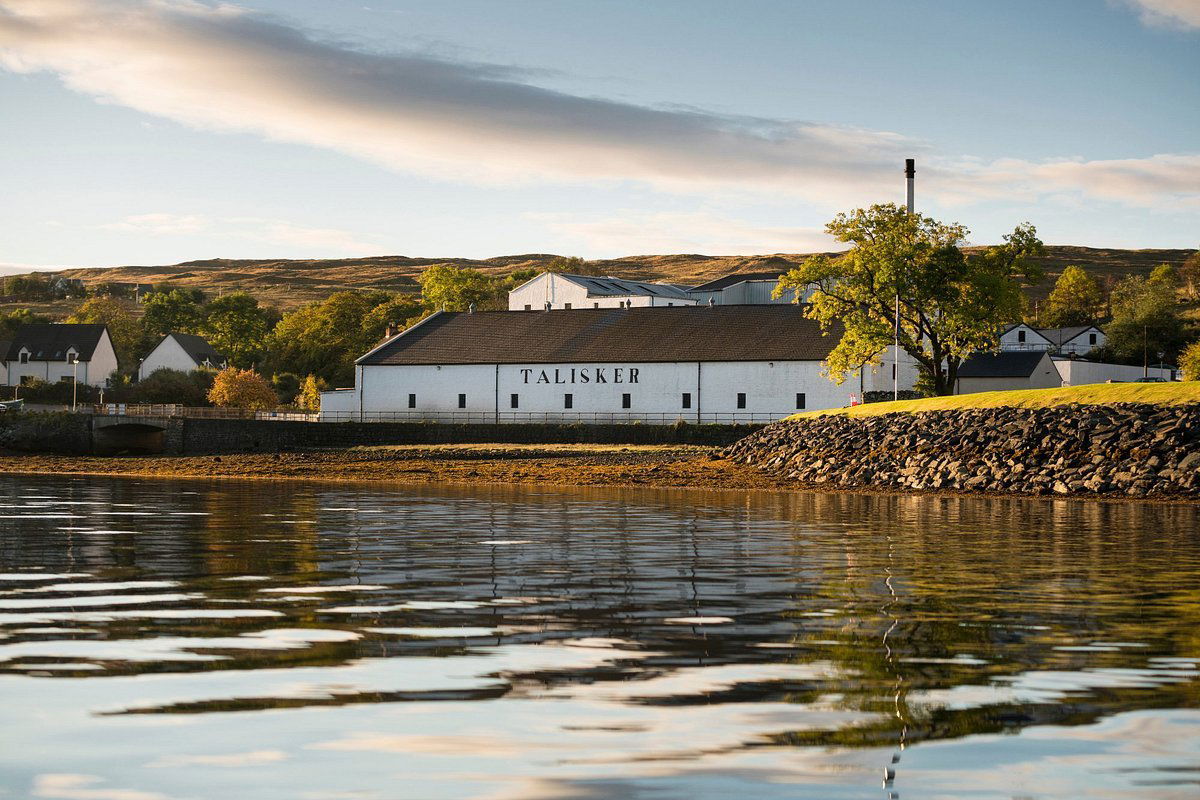
Talisker presents a refined, sophisticated presence rooted in its dramatic island setting. The distillery does little to manufacture ambiance because the landscape provides it: a narrow single-track road, moorland, cloud-draped hills and the grey, tidal waters of Loch Harport frame the whitewashed buildings. Terroir and technical consistency, including maritime salinity, softer peat and seasonal temperature variance, give Talisker a measured, elegant clinicality. The tone is less about convivial hospitality and more about serious craft and place, which appeals to visitors who value substance and provenance.
Best For
Talisker is best for people focused on whisky education, solo exploration and group outings that center on learning. Visitors who want dramatic coastal scenery paired with a technical appreciation of spirit-making find the visit most rewarding; it is less about dining or nightlife and more about context and craftsmanship.
Venue details
Ambiance
Welcoming visitor centre with maritime-themed decor in blues and creams, cozy seating around a fire, and scenic loch views creating an authentic, luxurious yet approachable atmosphere.
Tags
Vibe
Best For
Experience
View
At the Vineyard
- Appellation
- Isle of Skye
- Varietals
- malted barley
- Tour Duration
- 30-60 minutes
- Tour Languages
- English
- Visits
- By reservation
- Food Pairing
- Offered
- Wine Club
- Not available
Know before you go
Know Before You Go
- Getting there
- Carbost, Isle of Skye IV47 8SR, UK
Planning details
Location
Also consider
Where to go if Talisker does not fit the plan
Choose Oban Distillery if the priority is a simpler town-based itinerary with less pressure on timing. Choose Balblair Distillery if the trip is already mainland-focused and the group wants a distillery stop that does not require committing to Skye logistics.
Winery context
How Talisker compares on value, access, and atmosphere
Talisker is the stronger choice for travellers who want the distillery visit to define the day. Compared with Oban Distillery, it asks more from the itinerary but gives back a more destination-led feel. Oban is the safer cross-shop for convenience, especially if the group wants a tasting without committing the day around one stop.
Against Isle of Harris and Tobermory Distillery, Talisker suits a Skye-focused trip rather than a wider island-hopping plan. Choose Isle of Harris if the route already points north-west; choose Tobermory if Mull is the anchor. Talisker makes more sense when the visit needs a quieter, occasion-worthy setting with fewer distractions around it.
For mainland comparison, Dalmore Distillery and Balblair Distillery are better fits for travellers who want easier routing and less dependence on Skye logistics. Talisker is the splurge of time, not necessarily money: book it when place matters, skip it when flexibility matters more.
Explore Carbost
Around this place
Discover more on Pearl
Unlock the full Talisker guide in Pearl, including awards, comparisons, FAQs, planning details, and nearby places.
Compare Talisker
| Venue | Location | Awards |
|---|---|---|
| Talisker | Carbost | No published awards |
| Isle of Harris | Tarbert | No published awards |
| Tobermory Distillery | Tobermory | No published awards |
| Oban Distillery | Oban | No published awards |
| Dalmore Distillery | Alness | No published awards |
| Balblair Distillery | Edderton | No published awards |
How Talisker Carbost compares with similar nearby venues.
FAQ
Frequently Asked Questions
Are specific drinks or products listed for Talisker?
Do not plan around a specific drinks, products, or drinks programme at Talisker.
Does Talisker offer remote purchase or shipping?
If you are considering Talisker, treat it as a Carbost venue and do not rely on remote purchase or shipping services.
Does Talisker serve food?
Do not build plans around a meal at Talisker.
How long should I plan for a visit to Talisker?
Leave enough flexibility in your Carbost plans to account for whatever current arrangements the venue confirms directly.
When is the best time to visit Talisker?
Check current details before you go, and plan around Carbost rather than relying on an assumed schedule.