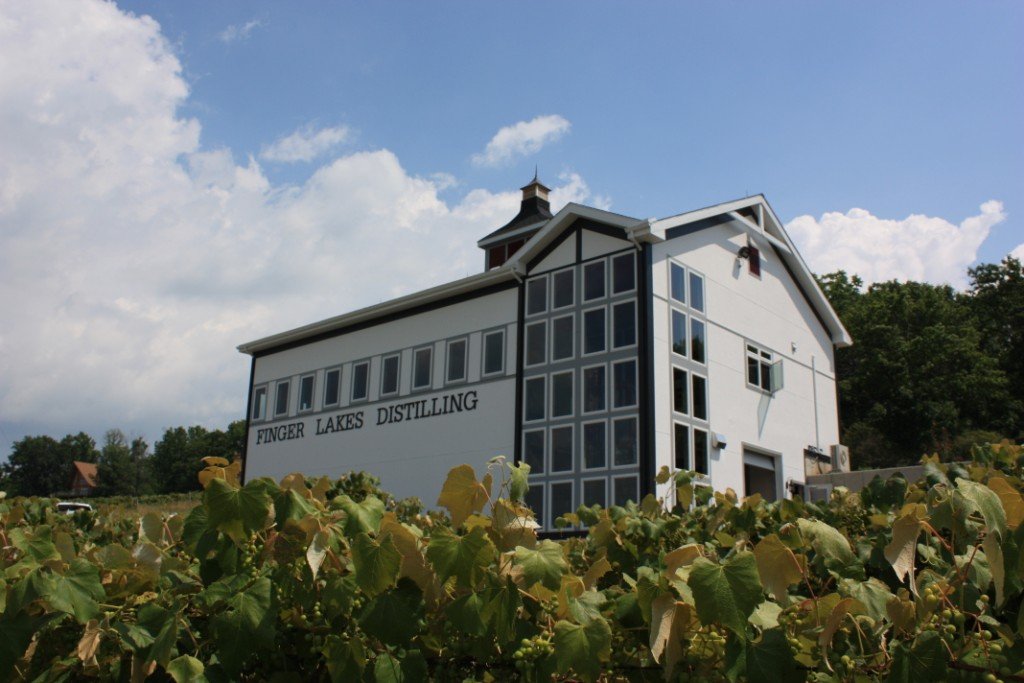
Winery in Burdett, United States
Finger Lakes Distilling
500ptsSeneca Lakeshore Grain Distillation

About Finger Lakes Distilling
Finger Lakes Distilling operates on NY-414 in Burdett, at the southern end of Seneca Lake, where the region's glacially carved terrain and continental climate shape the character of its spirits. The distillery holds a Pearl 2 Star Prestige award for 2025, placing it among a select tier of producers in the broader Finger Lakes craft scene. It is a natural stop for anyone tracing the area's agricultural identity beyond wine.
Where Glacial Geography Meets the Still
The southern end of Seneca Lake sits at the convergence of two forces that define the Finger Lakes as a production region: deep, temperature-moderating water and a glacially sculpted landscape that creates microclimates dramatic enough to support both vineyards and grain agriculture within the same valley. Finger Lakes Distilling, located at 4676 NY-414 in Burdett, occupies that terrain directly. The address puts it on the Seneca Lake wine trail corridor, where distilling and winemaking coexist as parallel expressions of the same agricultural base rather than competing categories.
The Finger Lakes as a spirits region has matured considerably since New York State's farm distillery license came into effect in 2007, which allowed producers to source local grain and fruit and sell directly to visitors. That regulatory shift opened a window for operations that could root themselves in the same land-to-glass logic that had already distinguished the region's leading Riesling and Cabernet Franc producers. What emerged was a cluster of distilleries along the lake corridors that draw on local corn, rye, wheat, and fruit, translating the same terroir argument that wine producers had been making for decades into a spirit context. Finger Lakes Distilling is one of the producers that built its identity inside that framework.
The Terroir Case for Spirits in the Finger Lakes
Terroir argument is easier to make for wine than for distilled spirits, but the Finger Lakes presents a compelling case for both. The region's elongated lakes, carved by Pleistocene glaciers to depths exceeding 600 feet in Seneca's case, retain summer heat and release it slowly through autumn, extending growing seasons in a latitude that would otherwise cut them short. The same thermal effect that allows Riesling to ripen fully on the eastern slope of Seneca Lake also enables grain crops to develop starch complexity that carries through into fermentation and distillation.
Producers in the region who source locally are not simply making a provenance claim for marketing purposes. The grain grown in the valleys around the Finger Lakes reflects specific soil compositions, drainage patterns, and temperature ranges that differ measurably from commodity grain grown in climate-optimized agricultural zones. Whether those differences survive the distillation column and express themselves in the final spirit is a question the craft distilling movement has been working through seriously for the past decade, and the Finger Lakes has been one of the more credible testing grounds for that inquiry.
For reference, the logic is not entirely different from what drives the regional identity at producers like Adelaida Vineyards in Paso Robles or Alban Vineyards in Arroyo Grande, where specific soil types and diurnal temperature swings are treated as active ingredients rather than background conditions. The Finger Lakes version of that argument is colder, wetter, and shaped by water rather than calcium-rich limestone, but the underlying logic of place expressing itself through what gets grown and processed there holds.
Recognition and Peer Context
Finger Lakes Distilling holds a Pearl 2 Star Prestige award for 2025. In the structure of craft spirits recognition, a two-star prestige designation places a producer above baseline quality certification and into a tier associated with consistent technical merit and category-level distinction. It is a meaningful credential in a regional field where many producers operate at a functional but undifferentiated level.
The award positions Finger Lakes Distilling within the smaller cohort of Finger Lakes producers that have moved beyond the initial phase of farm distillery novelty and established a record worth evaluating against peers in other serious craft regions. For context on how regional credentialing works across the broader American craft spirits and winery landscape, it is worth noting that even in well-established wine regions, two-star recognition at the prestige tier tends to correlate with producers that have refined their source material relationships and production discipline over several years rather than a single standout vintage or batch. That pattern applies here.
Producers working in adjacent categories across American craft production, from Adelsheim Vineyard in Newberg to Andrew Murray Vineyards in Los Olivos, have built their regional credibility through sustained commitment to a defined geographic identity. Finger Lakes Distilling's trajectory follows a comparable pattern in the spirits context.
The Burdett Position on the Lake Trail
Burdett is a small community on the western shore of Seneca Lake, south of Watkins Glen and north of the lake's foot. It sits on a stretch of NY-414 that concentrates a notable density of producers relative to its population, a characteristic feature of the Finger Lakes wine and spirits corridor where agricultural operations and tasting rooms exist in close proximity. The drive along NY-414 from Watkins Glen toward Burdett passes through some of the steepest vineyard slopes in the region, where elevation changes within short horizontal distances create the kind of drainage and sun exposure variation that producers treat as significant variables.
For visitors approaching from the west, the lake itself is the most immediate reference point. Seneca Lake's surface creates a visible humidity and thermal presence that distinguishes the microclimate of the immediate shoreline from the plateau above, and that distinction is legible even to a first-time visitor who has spent time in other agricultural wine and spirits regions. The physical environment at this stretch of the lake is not incidental to what gets produced here; it is the operating condition.
For a broader orientation to what the area offers across categories, our full Burdett restaurants guide maps the range of food and drink options along this corridor. Those planning a longer regional circuit can cross-reference producers like Accendo Cellars in St. Helena, Artesa Vineyards and Winery in Napa, or Au Bon Climat in Santa Barbara to understand how the Finger Lakes approach to regional identity compares with other American craft production zones.
Planning a Visit
Finger Lakes Distilling is located at 4676 NY-414 in Burdett, on a route that is direct to drive from Watkins Glen to the south or from Seneca Falls to the north. The Seneca Lake corridor concentrates enough producers in a short distance that a day-long circuit is practical without requiring significant backtracking. Peak season runs from late spring through October, when harvest activity and touring traffic align; visiting in shoulder season, particularly late September through mid-October, tends to offer both harvest context and reduced congestion on the trail. Current hours and booking details are leading confirmed directly before visiting, as hours across Finger Lakes producers vary by season and operational schedule. For additional planning context beyond spirits, producers in adjacent categories such as Alexander Valley Vineyards in Geyserville, Alpha Omega Winery in Rutherford, Aubert Wines in Calistoga, Babcock Winery in Lompoc, B.R. Cohn Winery in Glen Ellen, Aberlour in Aberlour, and Achaia Clauss in Patras offer useful comparative reference points for how agricultural identity translates across different production traditions globally.
Frequently Asked Questions
- What's the vibe at Finger Lakes Distilling?
- The setting is agricultural and lake-adjacent, on a working distillery corridor rather than a polished resort strip. The experience reflects the character of the broader Seneca Lake trail: production-oriented, land-connected, and oriented toward visitors who are interested in how the regional environment shapes what ends up in the bottle. Given its Pearl 2 Star Prestige recognition for 2025 and its location in Burdett, it sits in a tier above casual novelty operations without crossing into the formal tasting-room formality of higher-end wine estates.
- What is Finger Lakes Distilling known for producing?
- The distillery operates within the Finger Lakes farm distillery tradition, which emphasizes locally sourced grain and fruit as primary inputs. The region's agricultural base supports a range of spirit categories, and producers on the Seneca Lake corridor have worked across whiskey, brandy, and fruit-based spirits since the 2007 licensing framework opened direct-to-consumer sales. Specific current offerings are leading confirmed directly with the distillery.
- What is Finger Lakes Distilling leading at?
- Based on available recognition, Finger Lakes Distilling has earned a Pearl 2 Star Prestige award for 2025, which places it in the upper tier of Finger Lakes craft producers for overall quality and consistency. In Burdett specifically, that credential distinguishes it from producers operating at a basic farm-distillery license level without a comparable awards record.
- How hard is it to get in to Finger Lakes Distilling?
- The Finger Lakes distillery trail generally does not require advance reservations for standard tasting room visits, though peak season weekends in July and August can create wait times at popular stops. Finger Lakes Distilling's location on NY-414 in Burdett places it on a well-traveled route; visiting on a weekday or in shoulder season significantly reduces congestion. Current booking requirements should be confirmed directly, as policies vary by season and event programming.
- How does Finger Lakes Distilling compare to Scotch distilleries in terms of regional identity?
- The Finger Lakes farm distillery model shares a conceptual premise with heritage Scotch production in that both treat geographic origin, specifically local grain, water source, and climate, as active variables rather than neutral inputs. Finger Lakes Distilling's Pearl 2 Star Prestige recognition for 2025 signals a level of production discipline that makes the regional identity argument credible rather than merely promotional. The climate and grain profile differ substantially from Scottish production zones, but the underlying logic of place shaping spirit character is a framework both traditions take seriously. For a reference point in Scottish production, Aberlour in Aberlour illustrates how a different geographic context applies comparable terroir reasoning to whisky production.
Related editorial
- Best Fine Dining Restaurants in ParisFrom three-Michelin-star icons to the next generation of Parisian chefs pushing boundaries, these are the restaurants that define fine dining in the world's culinary capital.
- Best Luxury Hotels in RomeFrom rooftop terraces overlooking ancient ruins to Michelin-starred hotel dining, these are the luxury hotels that make Rome unforgettable.
- Best Cocktail Bars in KyotoFrom sleek lounges to hidden speakeasies, Kyoto's cocktail scene blends Japanese precision with global influence in ways you won't find anywhere else.
Save or rate Finger Lakes Distilling on Pearl
Keep this venue in your Pearl passport, rate it after you visit, and track it alongside every other place you collect.