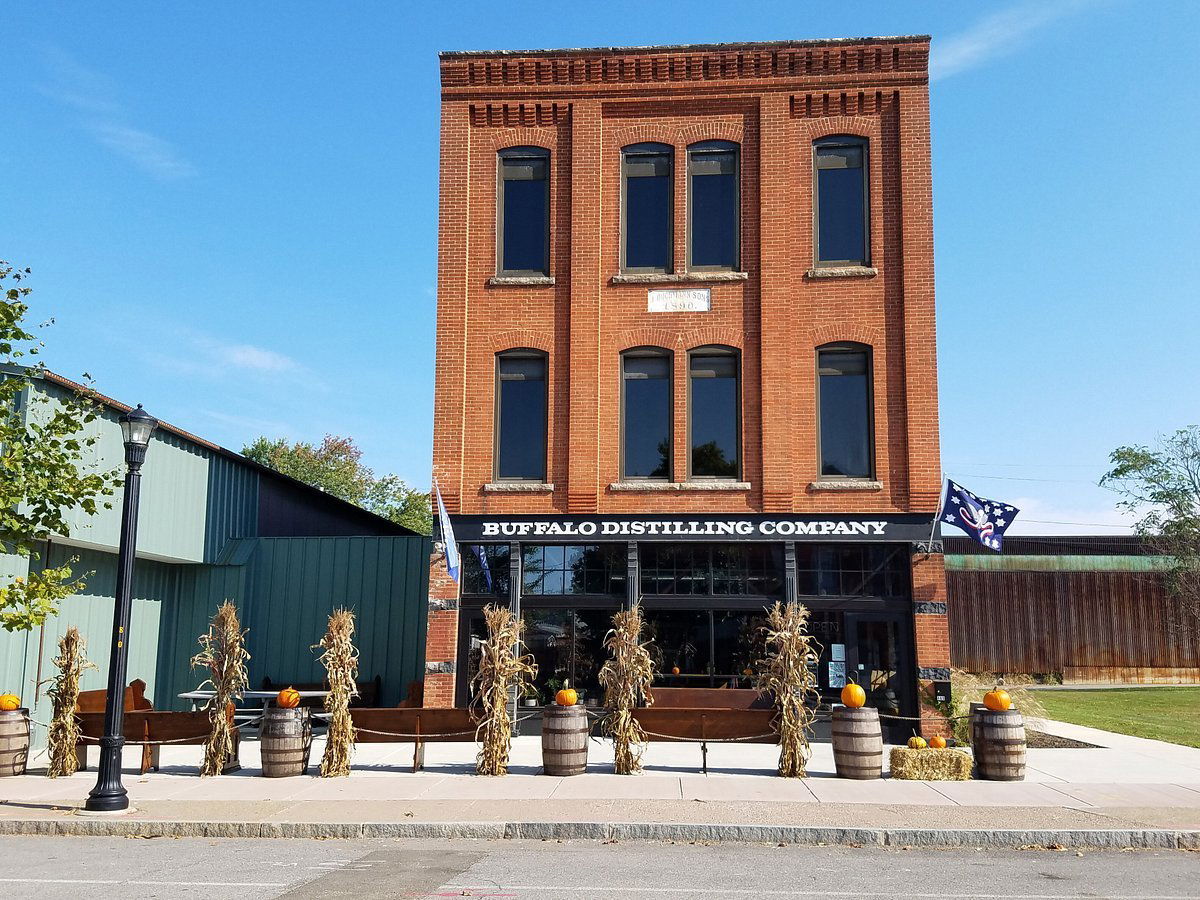
Winery in Buffalo, United States

    Buffalo Distilling Co.

    500pts

    Great Lakes Grain Distillation

    Buffalo Distilling Co., Winery in Buffalo

    About Buffalo Distilling Co.

    Buffalo Distilling Co. on Seneca Street is one of the Fruit Belt and South Buffalo corridor's more serious craft spirits operations, recognized with a Pearl 2 Star Prestige award in 2025. The address places it inside a broader resurgence of production-oriented venues along Buffalo's post-industrial east side, where distilling and brewing have quietly taken root over the past decade.

    A Distillery on Seneca Street and What It Says About Buffalo's Production Revival

    Seneca Street runs through one of Buffalo's more quietly transformed corridors, where former industrial buildings have absorbed a second round of productive life as breweries, distilleries, and workshop spaces. Buffalo Distilling Co., at 860 Seneca St, sits inside that pattern rather than apart from it. This is a neighborhood where the ambient noise is more forklift than foot traffic, and the buildings carry their manufacturing history visibly. Arriving here, you are not approaching a curated lifestyle destination; you are approaching a working production facility that also happens to receive visitors, which tells you something important about its priorities.

    That orientation matters for context. Buffalo's craft spirits scene has developed more slowly than its brewing counterpart, but the distilling operations that have emerged tend to be production-serious in a way that earlier wave craft distilleries, focused primarily on tasting room aesthetics, were not. The 2025 Pearl 2 Star Prestige recognition awarded to Buffalo Distilling Co. places it in a tier that requires demonstrated quality rather than novelty. For a distillery operating out of an east-side Buffalo address rather than a Hudson Valley tourist corridor or a Brooklyn warehouse with a design budget, that credential carries specific weight.

    Western New York as a Spirits Terroir

    The editorial angle most relevant to understanding any distillery in western New York starts with grain sourcing and climate. The Great Lakes basin creates a moderating effect on temperature extremes that is well-documented in its influence on viticulture along the Lake Erie and Niagara escarpment corridors, but the same geography shapes grain agriculture. Winter wheat, rye, and corn production in the region benefits from relatively consistent moisture and defined seasons, and distilleries working with local grain inherit that agricultural character in ways that vary meaningfully from producers sourcing commodity grain from the broader Midwest.

    This is the lens through which the Finger Lakes wine producers several hours east have built credibility arguments for Riesling and hybrid whites, and it applies, with appropriate differences, to spirits production. Producers like Lakeward Spirits in the same city have leaned into the regional grain and water story as a differentiating argument. The question for any serious distillery in this geography is how directly that terroir argument connects to the liquid in the glass, and whether the production choices amplify or obscure what the raw materials bring.

    Distilleries working in this mid-continent, Great Lakes-adjacent zone are in a different position from producers in established American whiskey regions. They are not trading on appellation recognition the way a Kentucky bourbon house does, and they are not inserting themselves into a coastal craft narrative. What western New York offers is a genuine regional grain and water character, combined with a cellar or barrel-aging environment shaped by the area's cold winters and humid summers, which accelerates some aspects of maturation and creates distinct wood-interaction profiles.

    Where Buffalo Distilling Co. Sits in the Craft Spirits Tier

    The Pearl 2 Star Prestige recognition from 2025 positions Buffalo Distilling Co. clearly above the entry tier of craft distilleries, where novelty, local identity marketing, and a tasting room experience often carry more weight than technical production quality. The prestige designation within the Pearl framework implies a level of spirits quality that competes on liquid merit rather than narrative alone.

    For context, the American craft distilling market has stratified significantly over the past decade. The first wave of operations opening in the 2010s competed primarily on the craft story itself; the second and current wave is being evaluated against a higher quality baseline as consumers develop more refined reference points. Distilleries earning recognitions of this type in 2025 are operating in a more demanding environment than their predecessors, which makes the credential more meaningful rather than less.

    Within the broader craft spirits world, the most instructive comparisons are not necessarily geographic. A western New York distillery earning a prestige-tier recognition belongs in a conversation with production-focused operations elsewhere in the Northeast and Great Lakes region, regardless of state lines, because the quality argument is being made on liquid terms. The regional context shapes the raw material story; the award shapes the quality narrative. Both matter to a reader trying to calibrate expectations.

    The Seneca Street Address and What It Signals

    860 Seneca St is a specific kind of Buffalo address. The street connects inner-city neighborhoods to the broader south Buffalo grid, and the blocks around it reflect decades of industrial use followed by selective adaptive reuse. For visitors accustomed to distillery tourism in purpose-built or heavily renovated facilities, the physical approach here requires recalibration. This is not a venue oriented around photogenic copper stills in a renovated barn; the aesthetic register is utilitarian, which is generally a reliable signal that production rather than hospitality is the primary operation.

    That orientation is consistent with how the more serious craft distilling operations in American secondary cities have tended to develop. The production-first model accepts a less polished visitor experience in exchange for the capital and space allocation that serious distilling requires. It also tends to attract a visitor who is more interested in what is being made than in the container it is being made in, which creates a specific kind of on-site conversation that is harder to replicate in a venue where the room itself is the dominant impression.

    For visitors planning a trip around Buffalo's broader food and drinks culture, see our full Buffalo restaurants guide for context on how Seneca Street fits into the city's wider production and hospitality geography.

    Planning a Visit

    Phone and website details are not confirmed in our current database, so contacting Buffalo Distilling Co. directly through verified current listings before visiting is advisable, particularly for hours, tasting availability, and any ticketed formats. The Seneca Street address is accessible by car, and the surrounding neighborhood has no significant parking constraints typical of denser urban districts. Pricing and format details are not confirmed, so treat any third-party references to those specifics as requiring verification before arrival.

    Given the production-focused character of the operation and the prestige-tier recognition earned in 2025, this is a visit oriented toward spirits quality rather than experience theater. Readers who approach it with that frame are more likely to leave with an accurate impression of what Buffalo Distilling Co. is actually doing and why it matters in the context of the region's craft spirits development.

    For reference on the range of serious craft production operations across American wine and spirits geography, the EP Club catalog covers a broad spread of production-quality venues, from Accendo Cellars in St. Helena and Adelaida Vineyards in Paso Robles to Adelsheim Vineyard in Newberg, Alban Vineyards in Arroyo Grande, and Alexander Valley Vineyards in Geyserville. Further afield in the spirits category, Aberlour in Aberlour represents the kind of production-grounded prestige that a 2 Star recognition is signaling in a very different geography. The full catalog also includes Napa producers like Alpha Omega Winery in Rutherford, Artesa Vineyards and Winery in Napa, and Aubert Wines in Calistoga, alongside Santa Barbara producers Au Bon Climat and Andrew Murray Vineyards in Los Olivos, B.R. Cohn Winery in Glen Ellen, and Achaia Clauss in Patras, which together illustrate how prestige-tier recognition functions across very different production traditions and geographies.

    Frequently Asked Questions

    What should I expect atmosphere-wise at Buffalo Distilling Co.?
    The Seneca Street address and production-first character of the operation suggest a utilitarian, working-distillery atmosphere rather than a polished hospitality environment. Buffalo's east-side industrial corridor sets the physical register here. The 2025 Pearl 2 Star Prestige award signals serious spirits quality, which tends to correlate with a visit experience oriented around the liquid rather than the room. Pricing and tasting formats are not confirmed in current data, so verify directly before visiting.
    What spirit is Buffalo Distilling Co. known for?
    Specific product details are not confirmed in our current database. The Pearl 2 Star Prestige recognition in 2025 indicates quality at a prestige tier, but without confirmed winemaker, product range, or sourcing data, specific claims about what they are producing at their highest level require verification from the venue directly. The western New York grain and Great Lakes water geography provides a regional raw-material context that distinguishes local producers from those working with commodity inputs.
    Why do people go to Buffalo Distilling Co.?
    The 2025 Pearl 2 Star Prestige recognition is the clearest external signal of why this operation merits a visit: it represents a quality credential earned in a more demanding craft spirits environment than the novelty-led first wave. Buffalo's broader food and production revival, centered partly along the Seneca Street corridor, provides additional context. For visitors building a wider itinerary, the full Buffalo guide covers the city's drinking and dining geography in more detail.
    How hard is it to get in to Buffalo Distilling Co.?
    Phone and website details are not confirmed in our current data, which makes advance booking verification important. The production-focused character of the operation and its east-side Buffalo location suggest this is not a venue managing demand in the way that a high-profile urban tasting room or reservation-only spirits bar might. That said, format, hours, and walk-in availability should be confirmed through current listings before making a specific trip.
    Keep this place

    Save or rate Buffalo Distilling Co. on Pearl

    Keep this venue in your Pearl passport, rate it after you visit, and track it alongside every other place you collect.