
Winery in Brunn am Gebirge, Austria
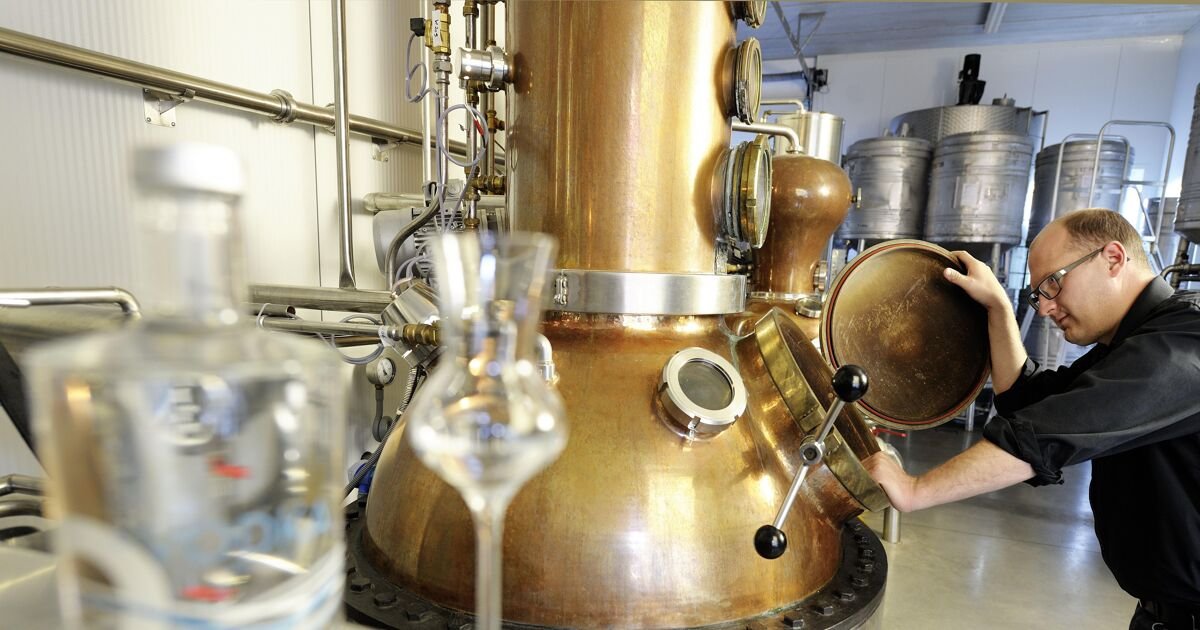
Ginmacher Distillery
250ptsSouthern-Fringe Distillation
About Ginmacher Distillery
Ginmacher Distillery operates from an address in the southern Vienna belt, earning a Pearl 1 Star Prestige in 2025 from EP Club. The operation sits within Austria's growing craft spirits conversation, where proximity to wine-country raw materials and local grain sources shapes the distiller's approach. For those tracing Austria's artisan distilling circuit, this is a credible stop.
Where Vienna's Edge Meets the Distiller's Craft
The southern fringe of Vienna, where the city's postal codes blur into the villages of Lower Austria, has become an unlikely address for serious craft production. Brunn am Gebirge sits at that threshold, close enough to the capital's consumer base to draw attention, but removed enough to operate with the deliberateness that small-batch distilling requires. Ginmacher Distillery works from Perfektastraße 61/8, a 1230 Wien address that places it inside this transitional zone, where industrial-era workshop buildings have gradually given way to the kind of small-production operations that Austria's craft spirits scene has been quietly building for over a decade.
Austria's distilling tradition is older than most outside the country recognise. Obstbrand — fruit brandy — has been produced in farmhouses and licensed Abfindungsbrennerei operations across Styria, Burgenland, and Lower Austria for centuries. What has changed in recent years is the arrival of a more internationally legible craft gin and spirits vocabulary, layered on leading of that agrarian base. Producers working in this newer register tend to draw on the same geographic advantages that make Austrian wine interesting: varied soils, pronounced diurnal temperature shifts, and access to botanicals from vineyards and orchards that have been farmed carefully for generations. Ginmacher Distillery, as the name signals, operates within this newer craft gin frame rather than the traditional Obstler lineage , though the two traditions increasingly inform each other across the Austrian scene.
The 2025 Pearl Star and What It Signals
In 2025, EP Club awarded Ginmacher Distillery a Pearl 1 Star Prestige recognition. Within EP Club's rating architecture, the Pearl tier marks operations that demonstrate consistent craft standards and a clear point of view , producers that have moved beyond novelty and established a repeatable quality signal. For a distillery operating from the Vienna periphery rather than from an established spirits region, this recognition positions Ginmacher within a tier of Austrian craft producers that includes both wine-adjacent operations and dedicated grain-and-botanical houses.
The Austrian craft distilling field is not yet as internationally mapped as its wine equivalent. Producers like Weingut Scheiblhofer Distillery in Andau and 1310 Spirit of the Country Distillery in Sierning have begun building recognition within that space, as has 1404 Manufacturing Distillery in Sankt Peter-Freienstein and 1516 Brewing Company Distillery in Vienna. A. Batch Distillery in Bergheim and Abfindungsbrennerei Franz in Leithaprodersdorf represent the more traditional end of that spectrum, where fruit-based spirits anchor the range. Ginmacher's Pearl 1 Star Prestige places it in conversation with this broader peer group , producers that the EP Club editorial team has assessed as operating with genuine craft intent and a coherent product identity.
Terroir at the Distillery Level
For wine producers, terroir is the organising principle of everything: what the soil gives the vine, what the climate does to the grape, what the elevation imposes on the growing season. Austrian wine has made this argument persuasively, and the country's leading winemakers , from the Kamptal estates like Weingut Bründlmayer in Langenlois to the Wachau's Weingut Emmerich Knoll in Dürnstein , have built international reputations on expressing specific sites through their wines. Burgenland producers such as Weingut Pittnauer in Gols and dessert wine specialists like Weingut Kracher in Illmitz extend that tradition into different stylistic registers, while Weingut Wohlmuth in Kitzeck demonstrates how southern Styrian elevations create their own flavour logic. Weingut Heinrich Hartl in Oberwaltersdorf, operating close to Ginmacher's own geography, shows how even the transitional zone between Vienna and Lower Austria's wine villages can produce credible, site-inflected wine.
For distillers, terroir operates differently but is no less real. The botanical sources , juniper, coriander, citrus peel, locally foraged herbs , carry the character of the place where they were grown or gathered. Austrian gins have increasingly leaned into this, using regional botanicals that speak to alpine meadows, river-corridor vegetation, and the same southern-facing slopes that make Grüner Veltliner interesting. A distillery operating from the Vienna-Lower Austria boundary has access to an unusually wide botanical palette: the Viennese Woods to the west, the Pannonian plain edging in from the east, and the dense market-garden agriculture of the Vienna belt in between. Whether and how Ginmacher draws on this geography as a botanical source is something that the visit itself would answer more fully than any database entry can.
Austria's Craft Spirits Scene in Context
Austria has not historically been positioned as a spirits destination in the way that Scotland , home to producers like Aberlour in Aberlour , has been for whisky. The domestic tradition has run through fruit distillates, Schnapps, and the licensed small-batch operations that supply local restaurants and farmers' markets. What has shifted is the arrival of a generation of distillers who have absorbed the international craft gin conversation and are translating it through local ingredients and Austrian production sensibility. This has happened in parallel with a broader premiumisation of Austrian drinking culture, which the country's wine scene normalised over decades of export success.
Vienna itself has become a reference point for this shift, with a cluster of bars and producers operating at a more technically exacting level than even five years ago. The city's geographic position, at the intersection of Central European grain-farming country and Alpine foraging territory, gives its producers an ingredient base that is genuinely differentiated from the Scottish, Nordic, or English craft gin models. Ginmacher, working from a southern Vienna address, sits at the edge of this urban cluster while maintaining physical proximity to the rural source materials that make Austrian spirits interesting in the first place.
Planning a Visit
Specific visiting hours, booking requirements, and tasting formats for Ginmacher Distillery are not confirmed in the current EP Club database. As a small-scale craft operation, it is reasonable to expect that visits may be arranged directly or through advance contact rather than through open walk-in hours , a common format among Austrian artisan producers where production space and visitor capacity are shared. Checking directly with the distillery before travelling from central Vienna or from further afield in Lower Austria is the prudent approach. The 1230 Wien address places the operation in the southern city, accessible from Vienna's U-Bahn network, though the precise connection from the nearest station to Perfektastraße is worth confirming before the journey. For those building a broader Austrian spirits and wine itinerary, pairing a Ginmacher visit with estates in the nearby Thermenregion or with a drive into the Kamptal or Wachau adds geographic coherence to a day's travel.
Our full Brunn am Gebirge restaurants guide maps the broader eating and drinking options in this part of the Vienna-Lower Austria corridor, which remains less documented than the capital's inner districts but repays the attention of visitors who move beyond the centre.
Frequently Asked Questions
- What is the general atmosphere at Ginmacher Distillery?
- Ginmacher Distillery operates from a southern Vienna address in the 1230 district, placing it in the workshop-and-production zone that characterises much of the city's outer belt. As a craft distillery with a 2025 Pearl 1 Star Prestige from EP Club, it operates in the specialist tier of Austria's growing artisan spirits scene, where the emphasis is on production quality rather than large-scale visitor programming. Expect a focused, production-first environment rather than a conventional tasting-room experience.
- What spirits is Ginmacher Distillery known for?
- The distillery's name signals a gin-led identity, placing it within Austria's emerging craft gin producers rather than the country's older Obstbrand and fruit-distillate tradition. Specific botanical profiles and product ranges are not confirmed in the current EP Club database, but the 2025 Pearl 1 Star Prestige recognition indicates a consistent craft standard that has earned EP Club editorial assessment. Austria's gin producers typically draw on regional botanicals, and the distillery's Vienna-fringe geography gives it access to a varied ingredient palette.
- What is the defining characteristic of Ginmacher Distillery?
- The clearest signal is the 2025 Pearl 1 Star Prestige from EP Club, which places Ginmacher within the assessed tier of Austrian craft spirits producers operating with a defined quality identity. Its address in the 1230 Wien district positions it at the edge of Vienna's craft production cluster, distinct from both the city-centre bar scene and the rural farmhouse distilling tradition. For visitors building an Austrian spirits itinerary, it occupies a position between urban accessibility and production-focused craft credibility.
- Is Ginmacher Distillery reservation-only?
- Confirmed visiting hours and booking requirements are not available in the current EP Club database. Given the distillery's scale and craft-production focus, advance contact before visiting is the responsible approach. Website and phone details are not confirmed in the current record; searching directly or checking recent local listings before travel is the most reliable method. The EP Club Pearl 1 Star Prestige (2025) confirms the operation's quality standing, but logistical details should be verified independently before making the journey.
- How does Ginmacher Distillery fit into Austria's broader artisan distilling circuit?
- Austria has a dispersed network of craft distillers ranging from traditional fruit-Schnapps operations to contemporary gin and spirits producers working with regional botanicals. Ginmacher's Pearl 1 Star Prestige (2025) from EP Club places it in the assessed upper tier of that network, credentialled alongside other Austrian producers that have drawn recognition for consistent craft standards. For visitors tracing Austria's artisan spirits geography, the distillery's position on the Vienna-Lower Austria boundary makes it a logical starting or ending point for a wider tour that might take in operations further into Styria, Burgenland, or the Kamptal.
Related editorial
- Best Fine Dining Restaurants in ParisFrom three-Michelin-star icons to the next generation of Parisian chefs pushing boundaries, these are the restaurants that define fine dining in the world's culinary capital.
- Best Luxury Hotels in RomeFrom rooftop terraces overlooking ancient ruins to Michelin-starred hotel dining, these are the luxury hotels that make Rome unforgettable.
- Best Cocktail Bars in KyotoFrom sleek lounges to hidden speakeasies, Kyoto's cocktail scene blends Japanese precision with global influence in ways you won't find anywhere else.
Save or rate Ginmacher Distillery on Pearl
Keep this venue in your Pearl passport, rate it after you visit, and track it alongside every other place you collect.