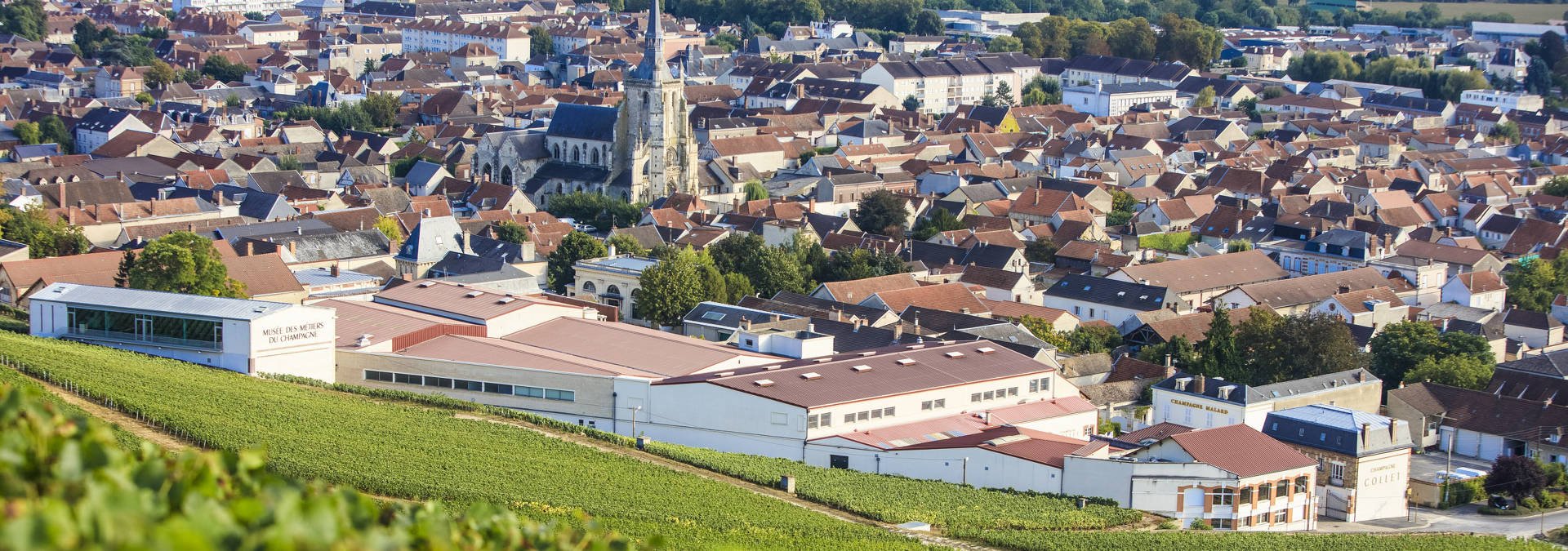
Winery in Aÿ-Champagne, France
Champagne Philipponnat
1,250ptsSingle-Parcel Terroir Champagne

About Champagne Philipponnat
Champagne Philipponnat operates from the Marne Valley town of Aÿ-Champagne, one of the appellation's grand cru villages, where chalk and clay subsoils drive a house style built around depth and tension rather than immediate fruit. Awarded a Pearl 4 Star Prestige rating in 2025, the house has long been associated with single-vineyard expression in a region where blended assemblage remains the dominant commercial grammar.
Chalk, Time, and the Argument for Single-Parcel Champagne
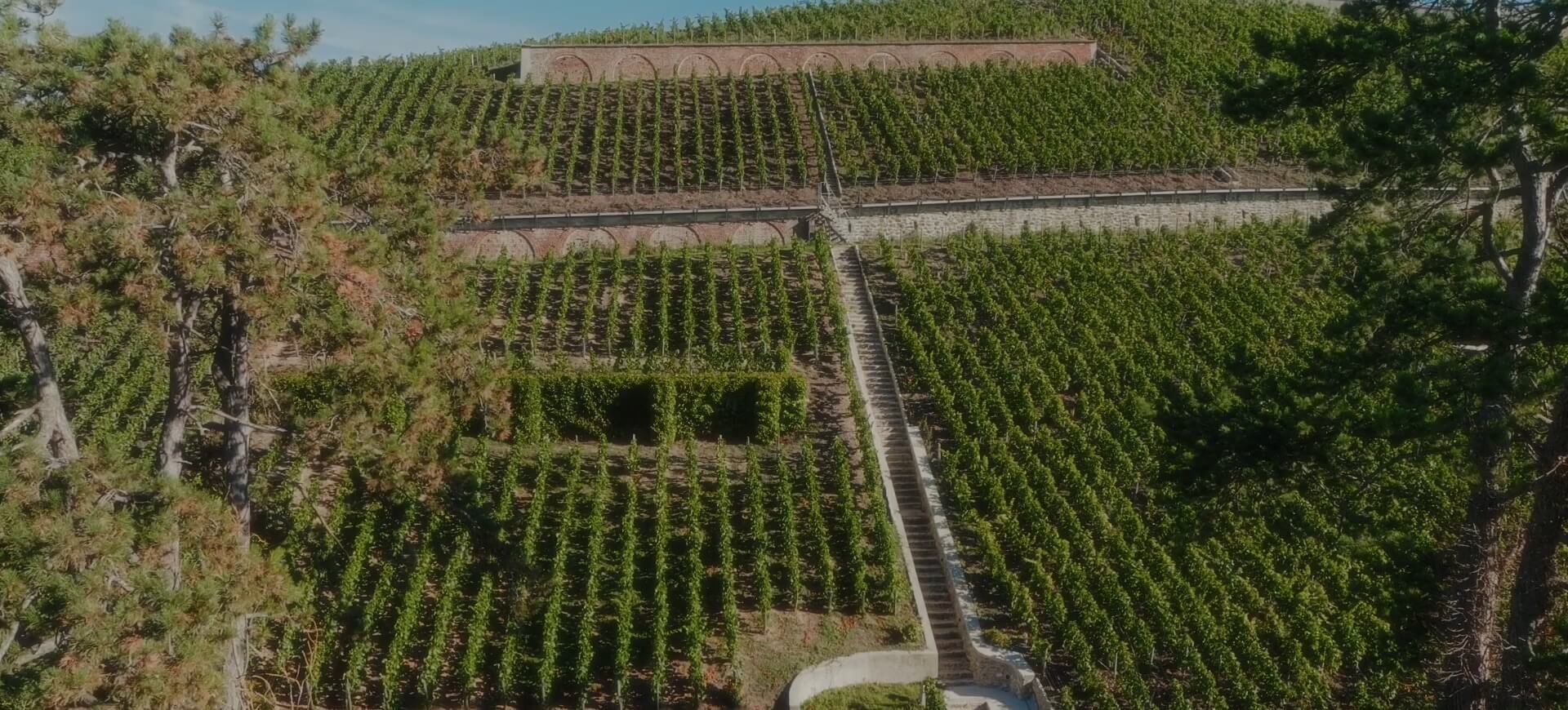
The village of Aÿ-Champagne sits at the western edge of the Montagne de Reims, where the hillside vineyards tip toward the Marne and the chalk seams run close enough to the surface to show through in the soil of the older plots. This is grand cru territory — Aÿ holds that classification for its Pinot Noir — and the physical conditions here have shaped a particular conversation about what Champagne is actually capable of when the blender steps back and lets the ground speak. It is within this argument that Champagne Philipponnat, based at 13 Rue du Pont, has long taken a position. For more on what else the town offers, see our full Aÿ-Champagne restaurants guide.
Terroir as Editorial Stance
The dominant commercial logic of Champagne has always favoured consistency across vintages, achieved by blending fruit from dozens of villages and multiple years. That logic produces predictable, technically accomplished wine, and it has made the region's largest houses global businesses. But a smaller group of producers, concentrated in the grands crus of the Marne Valley and the Côte des Blancs, have built their identities around the opposite position: that specific parcels, in specific years, say something that a blend cannot replicate.
Aÿ is one of the few villages where that argument carries geological weight. The chalk subsoil that defines Champagne's minerality is particularly close to the surface here, and the aspect of the south-facing slopes ensures a ripeness that can carry the structure of single-vineyard wine without losing acidity. Houses working in this register tend to produce wines that read more like Burgundy in their construction , patient, soil-forward, requiring time in the glass , than the effervescent brightness associated with non-vintage Champagne at the prestige end of the market. The comparison to producers such as Albert Boxler in Niedermorschwihr, who similarly prioritises parcel specificity over house-style uniformity in Alsace, is instructive: both sit within regions where blending is the commercial norm and treat it as a choice rather than a given.
What a Pearl 4 Star Prestige Rating Signals
In 2025, Champagne Philipponnat received a Pearl 4 Star Prestige rating from EP Club , a recognition that places it within a small cohort of producers across France and beyond that meet a threshold combining provenance, expression, and critical standing. The rating does not rank against volume producers; it positions the house within the peer set of terroir-led Champagne, alongside properties that treat each vintage as an argument about place rather than a proof of house formula.
Other Pearl 4 Star Prestige holders in the EP Club system span French wine broadly. Château Bastor-Lamontagne in Preignac, Château Branaire Ducru in St-Julien, Château Cantemerle in Haut-Médoc, and Château Clinet in Pomerol each appear in the same tier. That grouping , crossing appellations from Champagne to Bordeaux to Pomerol , reflects a shared criterion: the wine demonstrates a relationship to its origin that distinguishes it from technically correct but geographically anonymous production. The point is not stylistic similarity; it is a level of intentionality about place.
The Marne Valley and the Logic of Grand Cru Aÿ
Understanding Philipponnat's position requires understanding what Aÿ-Champagne represents within the appellation hierarchy. The village received its grand cru designation specifically for Pinot Noir, which thrives on the southern-facing slopes where chalk sits beneath a relatively thin layer of limestone-heavy topsoil. The combination produces fruit with the concentration to age and the acidity to remain alive at the table after a decade in the cellar. That profile is the raw material for the kind of single-vineyard Champagne that rewards patience , a different proposition from the precision blending that defines Reims's grandes maisons.
The broader Champagne region has seen increasing interest from collectors and sommeliers in what is sometimes called the grower or récoltant-manipulant movement: houses that grow their own fruit, often on small parcels, and translate that specificity into the bottle. Aÿ sits at the serious end of this movement, partly because of geology and partly because of proximity to Épernay, the commercial centre of the appellation, which has historically set the terms of what Champagne looks like at scale. The grower argument, in Aÿ more than anywhere else, is framed against that establishment.
Champagne in Comparative Context: France's Prestige Producers
Placing Philipponnat alongside other French prestige producers reveals something about the range of approaches that receive serious recognition. Château Batailley in Pauillac and Château Boyd-Cantenac in Cantenac represent the classified-growth logic of the Médoc: appellation identity built over two centuries and codified in 1855. Château Bélair-Monange in Saint-Émilion works within a right-bank framework where limestone and clay define the grape's character. Across the south, Château d'Esclans in Courthézon and Château d'Arche in Sauternes operate within very different climate and varietal conditions. What connects them is the degree to which the land appears in the wine , a quality that EP Club's Pearl tier is designed to recognise.
Against this French field, Champagne's terroir-led producers occupy a specific niche: they must convince buyers that sparkling wine, a category defined by process (secondary fermentation, disgorgement, dosage decisions), can carry a sense of place as persuasively as a Burgundy village or a Pomerol plateau. The argument is harder to make in a flute than in a wide-bowled glass, which is why serious growers often recommend broader glassware for their vintage and prestige cuvées , a practical signal that they are asking for the same level of attention a table wine receives.
Beyond France: The International Peer Set
The conversation about terroir-expressive production is not limited to France, and EP Club's wider coverage reflects that. Accendo Cellars in St. Helena applies a similar philosophy in Napa, prioritising site-specific Cabernet over appellation blending. Aberlour in Aberlour works within Speyside's distilling tradition in ways that parallel how Philipponnat works within Champagne: a house with deep local roots that uses that rootedness as a differentiator rather than a default. Even Chartreuse in Voiron , a liqueur producer, but one whose identity is inseparable from its Alpine botanical terroir , belongs to the same family of producers for whom geography is argument, not backdrop. And Château Dauzac in Labarde represents the southern Médoc's version of this, where classification and place converge.
Planning a Visit to Aÿ-Champagne
Aÿ-Champagne is accessible by train from Épernay, which sits on the Paris-Strasbourg line and receives TGV connections from Paris Est in under an hour and a half. The town itself is compact, and the Rue du Pont address places Philipponnat close to the village centre. Given that the house operates within the prestige end of grower Champagne, visits should be arranged in advance rather than assumed as walk-in , this is not a tourist-oriented cellar door operating on the same model as Reims's grandes maisons, which receive tens of thousands of visitors annually. The appropriate expectation is a more considered, lower-capacity experience in keeping with the production philosophy the house represents.
FAQ
Is Champagne Philipponnat more low-key or high-energy?
Low-key, by design and by scale. Aÿ-Champagne is a working wine village rather than a tourism destination in the style of Reims or Épernay's Avenue de Champagne. The house's Pearl 4 Star Prestige recognition reflects depth of production rather than visitor volume, and the address on Rue du Pont is a cellar and working estate, not a hospitality complex. Visitors seeking the grand salon and theatrical cave tours of the region's volume houses will find this a quieter, more focused proposition , which, for collectors and wine-serious travellers, is precisely the point.
What is the signature bottle at Champagne Philipponnat?
The house has long been associated with Clos des Goisses, a single-vineyard wine drawn from a steep south-facing slope above the Marne canal in Mareuil-sur-Aÿ, adjacent to Aÿ-Champagne. The parcel's geological conditions , chalk at shallow depth, exceptional sun exposure , produce a wine that carries more structure and age-worthiness than most Champagne at the prestige price tier. The EP Club Pearl 4 Star Prestige rating (2025) speaks to the consistent quality of the house's output, with Clos des Goisses serving as the clearest expression of why single-vineyard Champagne from this part of the Marne Valley commands serious collector attention.
Recognized By
Related editorial
- Best Fine Dining Restaurants in ParisFrom three-Michelin-star icons to the next generation of Parisian chefs pushing boundaries, these are the restaurants that define fine dining in the world's culinary capital.
- Best Luxury Hotels in RomeFrom rooftop terraces overlooking ancient ruins to Michelin-starred hotel dining, these are the luxury hotels that make Rome unforgettable.
- Best Cocktail Bars in KyotoFrom sleek lounges to hidden speakeasies, Kyoto's cocktail scene blends Japanese precision with global influence in ways you won't find anywhere else.
Save or rate Champagne Philipponnat on Pearl
Keep this venue in your Pearl passport, rate it after you visit, and track it alongside every other place you collect.