
Restaurant in Sag Harbor, United States
Zagara
100ptsSouthern Italian Coastal Precision
About Zagara
Zagara brings the seafood-forward cooking tradition of Italy's Amalfi Coast to Sag Harbor, a village whose working waterfront has always made it a more grounded alternative to the Hamptons' glossier dining circuit. The Amalfi reference isn't decorative — it signals an approach to coastal ingredients that privileges clean acid, citrus, and the kind of simplicity that only holds up when the fish is genuinely fresh.
Where the Hamptons' Working Waterfront Meets the Southern Italian Coast
Sag Harbor sits at an interesting remove from the East End's more conspicuous dining culture. While Southampton and East Hampton have spent decades accumulating celebrity-chef outposts and seasonal price premiums, Sag Harbor retained the character of a working village — a whaling port that became an artists' town, then a quieter counterpoint to its neighbors. That context matters when you're reading a restaurant like Zagara, which draws on the culinary vocabulary of Italy's Amalfi Coast. This is a pairing with internal logic: two shorelines, both defined by fishing communities, both with cooking traditions built around what came off the boat rather than what could be trucked in.
The Amalfi Coast approach to seafood is not the same as generically "Italian seafood." It is specific: bright acid from lemons grown on terraced hillsides, olive oil used with restraint, preparations that avoid masking the fish beneath heavy cream or butter sauces. That restraint is only credible when the underlying ingredient justifies it, which is why sourcing, in this tradition, is foundational rather than incidental. At Zagara, the Amalfi reference frames an editorial commitment to coastal-ingredient cooking that makes the Sag Harbor location genuinely purposeful. For our full Sag Harbor restaurants guide, this kind of conceptual coherence between location and cuisine is one of the signals that distinguishes a considered program from a seasonal placeholder.
The Sourcing Logic Behind Coastal Simplicity
The Amalfi Coast cooking tradition that Zagara draws on is structurally dependent on proximity to the water. The classic dishes of that region — grilled whole fish with lemon and capers, pasta with clams and bottarga, crudo dressed with coastal citrus , are not forgiving of ingredients that have spent days in transit. They expose everything. This is what makes the catch-to-kitchen timeline the central editorial question for any restaurant working in this mode: the cooking only delivers on its promise if the fish is genuinely recent.
Sag Harbor's geography answers that question directly. The village sits on a harbor that has been commercially active since the eighteenth century, and the broader East End of Long Island remains one of the more productive coastal fisheries within reach of a major population center. Local docks, including those at Montauk to the east, supply striped bass, fluke, sea scallops, and bluefish to restaurants across the South Fork. That supply chain is the practical infrastructure that makes Amalfi-style simplicity defensible in a Long Island context. Restaurants in this mode that perform well in the Hamptons , as opposed to those simply using coastal imagery as branding , tend to be the ones whose sourcing relationships are specific enough to show up on the plate. It is the same principle that governs why Le Bernardin in New York City has sustained its standing: the argument is always about what the fish actually is, not what you do to it.
The Sag Harbor Setting
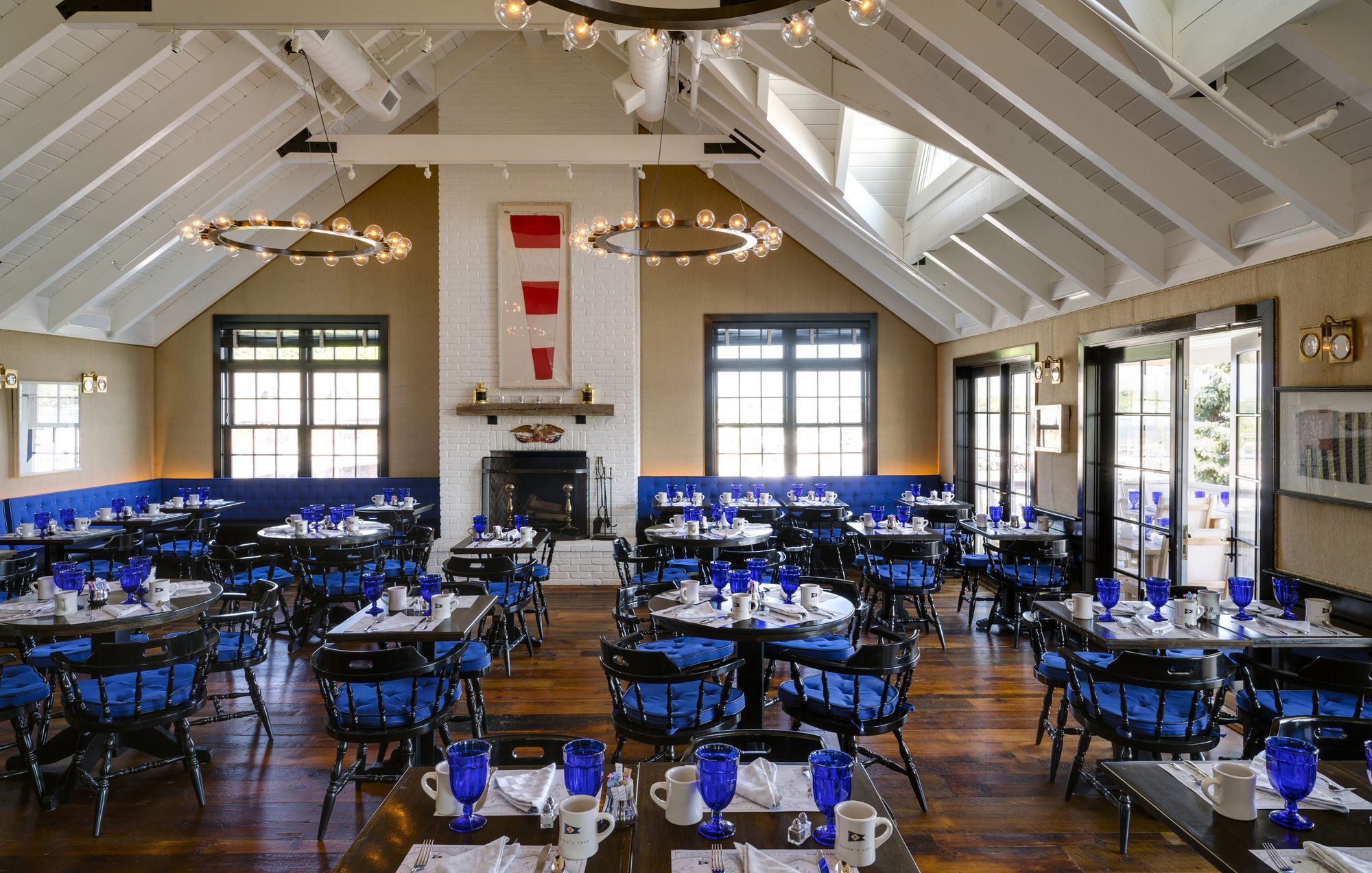
Arriving in Sag Harbor by water or along Main Street, the village announces itself through architecture rather than neon , Federal and Greek Revival buildings from the whaling era, a streetscape that has changed less than most Hamptons villages. The dining atmosphere that develops from this setting tends toward the quieter end of the East End spectrum. Zagara fits the village's register: the Amalfi reference implies whitewashed walls, natural light, ceramic and linen rather than industrial finishes, the kind of room that recedes behind the food rather than competing with it.
That atmosphere separates Zagara from the more theatrical formats found at larger coastal restaurants. For comparison: the high-production, destination-dining formats represented by venues like Alinea in Chicago or Lazy Bear in San Francisco are built around the idea that the room is itself a performance. Zagara's apparent reference point is the opposite tradition , Mediterranean trattoria-scale intimacy where the format disappears and the ingredients carry the weight. In a Hamptons summer context, where many dining rooms compete loudly for attention, that restraint reads as a distinct position rather than a deficit.
Sag Harbor also offers practical advantages that shape the experience. The village is reachable from Manhattan in roughly two and a half hours by car, and unlike some East End destinations, it retains a functional local character in both shoulder season and peak summer. For visitors combining a restaurant visit with a longer stay, our full Sag Harbor hotels guide covers the accommodation options; for pre- or post-dinner options in the immediate area, the bars guide and the wineries guide are both worth consulting given the East End's expanding wine scene.
Zagara in the Wider Coastal Seafood Conversation
The category of Southern Italian coastal cooking as practiced outside Italy is a smaller niche than the broader "Italian seafood" label suggests. A few reference points help locate Zagara's position. At the technical and price ceiling, Providence in Los Angeles and Le Bernardin represent what seafood-forward fine dining looks like when applied to a metropolitan budget and a Michelin-audited standard. Further along the farm-to-table axis, Blue Hill at Stone Barns in Tarrytown and Single Thread Farm in Healdsburg show what proximity-to-source looks like when applied rigorously across all categories of ingredient, not just fish. Zagara's Amalfi framing places it in a different register from either of those poles , less architecturally ambitious than the fine-dining tier, more explicitly place-referential than the produce-driven farm tables.
The more useful peer set is the cohort of coastal-Italian restaurants that has emerged in resort destinations across the Northeast over the past decade. These are rooms that take their cue from the Amalfi and Sicilian coastlines not as a decorative gesture but as a sourcing and preparation philosophy. Within that cohort, credibility turns on two things: the quality of the local catch on any given day, and the kitchen's discipline in not over-complicating it. The American Hotel in Sag Harbor provides a useful local comparison , a long-standing property with a wine program of some depth, operating at a more formal register. Zagara, with its Amalfi orientation, reads as a complementary rather than competing option within the village's dining range.
For those planning a broader East End itinerary alongside a Zagara visit, our Sag Harbor experiences guide maps the surrounding cultural and outdoor context, which in summer includes harbor sailing, the Sag Harbor Whaling Museum, and a cinema that has been running since 1936.
Planning Your Visit
Sag Harbor's summer calendar compresses significantly between Memorial Day and Labor Day, and any restaurant with a genuine local following will see reservation availability tighten during that window. Visiting in late September or October typically means shorter booking lead times, cooler evenings that suit the more warming preparations in any coastal Italian kitchen, and fish that has had a full summer season. Weekend evenings in peak summer require the most forward planning; Tuesday through Thursday are generally more accessible. Given the data available, visitors should verify current hours and booking methods directly before traveling, as operational details for smaller independent restaurants in seasonal resort towns can shift year to year.
Those who want to use a Zagara visit as part of a broader survey of serious American seafood restaurants have a clear map of peers to consider: Addison in San Diego, The Inn at Little Washington, Atomix in New York City, and Alain Ducasse at Louis XV in Monte Carlo for the European coastal reference , the last of which remains the clearest statement of what Mediterranean ingredient simplicity looks like when executed at the highest technical level. Zagara is not operating in that register, nor does it need to be. Its argument is local, seasonal, and specifically Sag Harbor, which in the right season is a compelling case on its own terms.
Frequently Asked Questions
- Is Zagara suitable for children?
- Sag Harbor's dining culture generally skews toward a quieter, adult-oriented register, and restaurants working in the coastal Italian tradition tend toward relaxed but refined environments rather than family-casual formats. Whether Zagara is appropriate for younger diners depends on the specific age and the expectation for the meal; the Amalfi-style approach and mid-to-upper price positioning of comparable restaurants in this East End tier suggest a room that suits families with older children more naturally than those with very young ones.
- What is the atmosphere like at Zagara?
- The Amalfi Coast reference implies a room that prioritizes natural materials, light tones, and a format that steps back from the kind of high-production theatrics found at destination-dining rooms like Alinea or Lazy Bear. In a Sag Harbor context , a village with Federal-era architecture and a quieter character than the broader Hamptons , that translates to a setting that is warm and considered rather than scenographic. For a broader picture of Sag Harbor's dining character, our restaurants guide maps the full range.
- What's the leading thing to order at Zagara?
- In a kitchen working within the Amalfi Coast tradition, the most revealing dishes are typically those that strip back preparation to the minimum: whole fish, raw preparations dressed with local citrus, and pasta formats where the sauce is built entirely from the catch. The discipline of that approach , or its absence , tells you more about the kitchen's sourcing relationships than any composite dish can. Without current menu data, any more specific recommendation would require verifying the current offering directly with the venue.
- Is Zagara reservation-only?
- Sag Harbor restaurants that hold a local following and operate within the Hamptons' compressed summer season tend to fill quickly, particularly for Friday and Saturday evenings between June and August. Reserving in advance is advisable for peak-season visits; shoulder-season visits in May or October are generally more accessible. Current booking method should be confirmed directly with the restaurant, as policies vary and change seasonally.
- What's the defining dish or idea at Zagara?
- The defining idea at Zagara is the claim that Amalfi Coast seafood cooking is viable in a Long Island context, not as pastiche but as a genuine meeting of two fishing-village traditions. That argument lives or dies on sourcing: whether the fish on a given evening came off a local dock recently enough to justify the simplicity of the preparations. For a cuisine where lemon, olive oil, and heat are the primary tools, the ingredient is the dish , and the East End's proximity to productive coastal fisheries is the structural reason this concept makes sense in Sag Harbor rather than elsewhere.
- How does Zagara's Amalfi Coast approach differ from conventional Italian-American seafood on Long Island?
- Conventional Italian-American seafood cooking on Long Island typically relies on richer, more protective preparations: heavy cream sauces, breaded and fried presentations, compound dishes where the fish is one component among many. The Amalfi Coast tradition that Zagara references is structurally different, prioritizing acid, restraint, and preparations that amplify rather than supplement the primary ingredient. That distinction places Zagara closer to the Mediterranean sourcing-first model than to the red-sauce tradition that dominates much of the region, and it makes the quality of the local catch on any given service the single most important variable in the experience.
Related editorial
- Best Fine Dining Restaurants in ParisFrom three-Michelin-star icons to the next generation of Parisian chefs pushing boundaries, these are the restaurants that define fine dining in the world's culinary capital.
- Best Luxury Hotels in RomeFrom rooftop terraces overlooking ancient ruins to Michelin-starred hotel dining, these are the luxury hotels that make Rome unforgettable.
- Best Cocktail Bars in KyotoFrom sleek lounges to hidden speakeasies, Kyoto's cocktail scene blends Japanese precision with global influence in ways you won't find anywhere else.
Save or rate Zagara on Pearl
Keep this venue in your Pearl passport, rate it after you visit, and track it alongside every other place you collect.