Wirtshaus Mensch Mayer
Weiz Center, Weiz
Restaurant in Weiz, Austria
 Book with Pearl
The Read
Dress
Casual
Why go
Wirtshaus Mensch Mayer is a practical Weiz pick for a relaxed evening when ease matters more than a formal restaurant brief. Choose it for casual local plans and late-day flexibility; cross-shop Dejavu Weiz 2.0 by SACCO or Bürgerkeller Weiz if the meal needs a more clearly defined dining identity.
About Wirtshaus Mensch Mayer
For Weiz diners who want a casual evening option, Wirtshaus Mensch Mayer is a practical pick. It is open Tuesday through Friday in the evening, with no service listed for Saturday, Sunday, or Monday.
The useful way to think about this venue is as a Weiz option when timing is the main filter. The late operating hours on open days make it more relevant for evening plans than for lunch.
A casual Weiz choice for an easy evening, not a formal splurge
If the group is comparing other options, Dejavu Weiz 2.0 by SACCO and Bürgerkeller Weiz are natural names to consider alongside it.
This is not a venue to frame around culinary claims or trophy value. For a special dinner, the case is strongest if the group wants a casual setting in Weiz during its open hours; it is weaker if someone needs a clearly documented menu style, price level, or occasion-led positioning in advance.
Where it fits in the local shortlist
Use Wirtshaus Mensch Mayer as an easy evening option in Weiz when the Tuesday-to-Friday schedule works. For another comparison option, Der Luis is worth considering, while the full Weiz restaurants guide is the better starting point for a broader scan before committing.
Planning details
- Location
- Südtiroler Pl. 4, 8160 Weiz, Austria
- Reservations
- Book on the venue's website
- Website
- zur-goldenen-krone.at
- Phone
- +436649459326
The take
The Take
The Vibe
Wirtshaus Mensch Mayer reads like a town institution: it sits on Südtiroler Platz and functions as a daily station in Weiz’s civic life. The place leans on the conventions of the Styrian Gasthof, privileging proximity to farms and seasonality over culinary trendiness. The mood is defined by regional fidelity: pumpkinseed oil, cured meats, fresh dairy and local game appear as signals of place rather than stylistic touches. Patrons come for straightforward, ingredient-forward cooking in a setting that feels anchored to the square and to the rhythms of the surrounding community.
Best For
This Wirtshaus is best for informal, communal meals that favor local flavor and steady rhythms. It suits midday stops between errands, relaxed lunches with neighbors, and convivial dinners for families or groups who want an authentic Styrian experience. Because the format is built around proximity and seasonality, visits feel rooted in the town’s daily life rather than in destination dining. Travelers looking to see how regional ingredients shape everyday cooking and locals who value a reliable, ingredient-driven menu both find this place fitting.
Ordering Tips
Order with the region in mind: look for dishes that showcase Styria’s signature ingredients: cold-pressed Kürbiskernöl, slices of Tafelspitz finished with pumpkinseed oil, cured meats, fresh dairy and preparations of game or river fish when they are in season. The kitchen operates within the Gasthof logic of seasonal sourcing, so menus change with what local farms and rivers provide. Ask the staff what is sourced locally that day and choose dishes that let a single strong ingredient take center stage.
Venue details
Ambiance
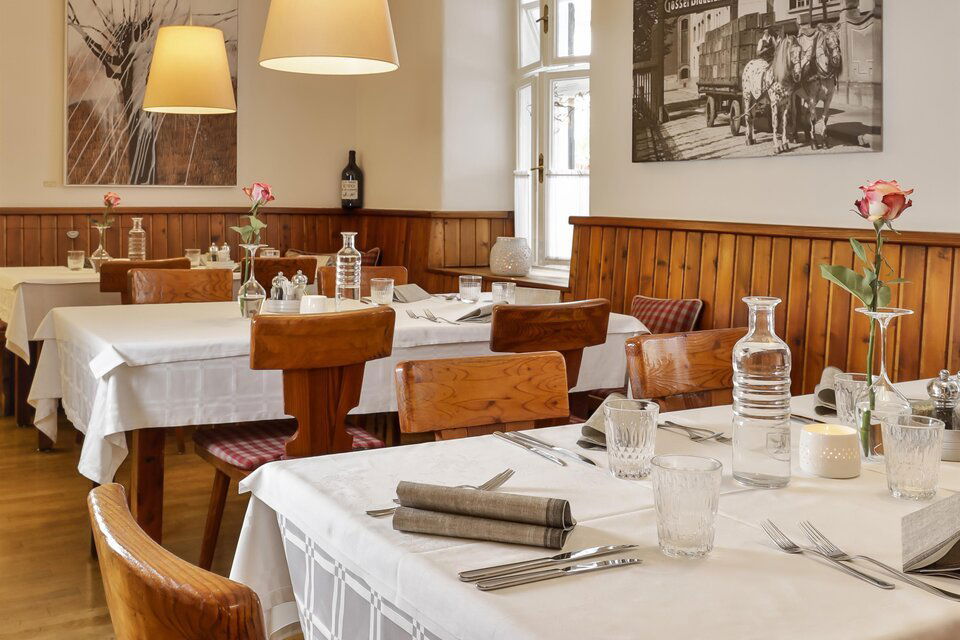
Herzlich and cozy blend of pub and trattoria with a great atmosphere.
Tags
Vibe
Best For
Experience
Sourcing
At the Table
- Dress Code
- Casual
- Noise Level
- Conversational
- Service Style
- Upscale Casual
- Meal Pacing
- Standard
- Capacity
- Medium
- Kitchen
- Fusion
- Menu Format
- A la carte
Know before you go
Know Before You Go
- Getting there
- Südtiroler Pl. 4, 8160 Weiz, Austria
Planning details
Location
Südtiroler Pl. 4, 8160 Weiz, Austria · Directions
Also consider
Where to go if this does not fit
Pick Dejavu Weiz 2.0 by SACCO if the group wants a more restaurant-led night in Weiz. Pick Bürgerkeller Weiz if the goal is casual, familiar, and easy to coordinate.
Restaurant context
How it compares in Weiz
Wirtshaus Mensch Mayer is the easygoing choice in this Weiz set: useful for casual evening plans, less convincing for diners who want a clearly defined creative restaurant. Dejavu Weiz 2.0 by SACCO is the stronger pick when the meal itself needs to carry the night, while Bürgerkeller Weiz is the more direct local comparison for a familiar, low-pressure setting.
If price positioning matters, Der Luis is the clearer splurge-leaning alternative because it has a creative €€€ signal. Wirtshaus Mensch Mayer is better for a flexible evening in Weiz than for a destination-style booking. der Thaller and Kirchenwirt Hofer make more sense if the group is willing to look beyond the immediate Weiz core.
For booking difficulty, Wirtshaus Mensch Mayer looks easier than the more concept-led options. That makes it useful for short-notice plans, but it also lowers the case for choosing it as the centerpiece of a special occasion.
Explore Weiz
Around this place
Discover more on Pearl
Unlock the full Wirtshaus Mensch Mayer guide in Pearl, including awards, comparisons, FAQs, planning details, and nearby places.
Compare Wirtshaus Mensch Mayer
| Venue | Location | Cuisine | Price | Awards |
|---|---|---|---|---|
| Wirtshaus Mensch Mayer | Weiz | , | , | No published awards |
| Dejavu Weiz 2.0 by SACCO | Weiz | , | , | No published awards |
| Bürgerkeller Weiz | Weiz | , | , | No published awards |
| der Thaller | Anger | , | , | No published awards |
| Der Luis | Anger | Creative | €€€ | Michelin Guide Austria 20262025 Michelin Plate2024 Michelin Plate |
| Kirchenwirt Hofer | Puch Bei Weiz | , | , | No published awards |

.png?width=1200&quality=80)
How Wirtshaus Mensch Mayer Weiz compares with similar nearby venues.
FAQ
Frequently Asked Questions
How far ahead should I book Wirtshaus Mensch Mayer?
The venue is open Tue-Fri, 5 PM-1 AM, and closed on Saturday, Sunday, and Monday. If you have a specific evening in mind, it is sensible to check availability in advance.
What should I wear to Wirtshaus Mensch Mayer?
Casual dress is the dress code. Clean casual is a safe choice for an evening visit in Weiz.
Is Wirtshaus Mensch Mayer good for a special occasion?
Use it for a relaxed evening rather than a formal splurge. It fits evening plans on Tuesday through Friday from 5 PM to 1 AM.
Is lunch or dinner better at Wirtshaus Mensch Mayer?
Dinner is the relevant option: the venue opens at 5 PM and stays open until 1 AM from Tuesday to Friday.