
Oculto
Modern Cuisine · Vila do Conde
Restaurant in Vila do Conde, Portugal
 Book with Pearl
The Read
Atlantic Tasting Menus in Vaulted Stone
Price
$150–200per person
Dress
Smart Casual
Why go
A Michelin-starred tasting menu restaurant inside a genuinely excavated medieval monastery on the banks of the Ave River in Vila do Conde. The Flora and Imersão menus, signed by Vítor Matos and Hugo Rocha, focus on marine and seasonal products. At €€€€ in a town with limited competition at this level, it delivers disproportionate setting and quality for northern Portugal.
About Oculto
Book the Kitchen-Facing Counter First
Before you do anything else, request the kitchen-facing seating area when you reserve. Oculto opens and closes the meal there: appetisers and petit fours with coffee are served at that counter while the chefs assemble dessert in front of you. It is a structural part of the format, not an optional upgrade, but asking for it specifically when booking signals the kind of guest you are and ensures the team seats you with intention. Reservations here are hard to secure, so treat the booking window seriously and move early.
What Oculto Actually Is
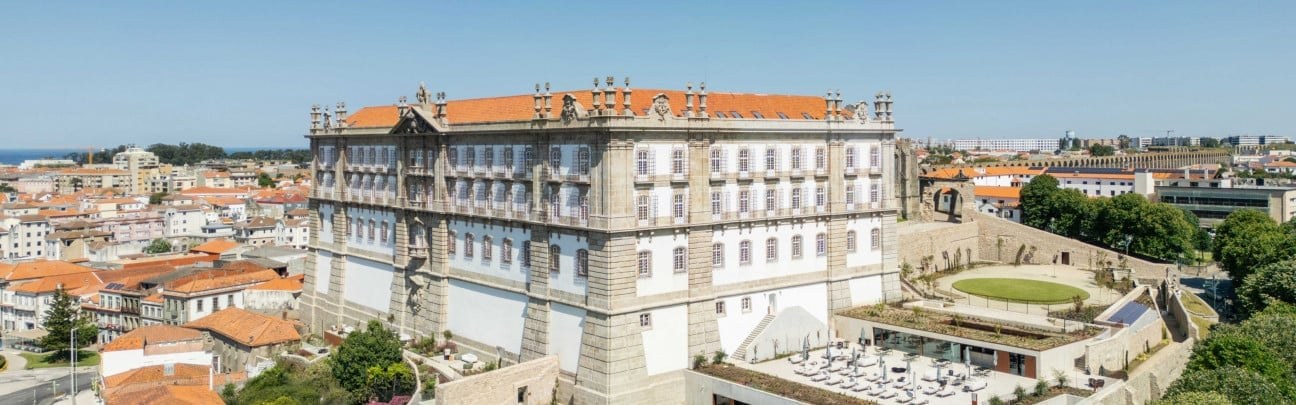
Oculto holds a Michelin star (awarded 2024) and sits inside the former Santa Clara Monastery in Vila do Conde, now operating as The Lince Santa Clara hotel on the banks of the Ave River. The name is not a stylistic flourish: the restaurant was physically hidden for centuries and had to be excavated before it could open, revealing original stone walls and vaulted brick ceilings in the process. That backstory matters here because the room delivers on it. You are eating inside a medieval structure that was, until recently, sealed underground.
The format is tasting menu only, with two options: Flora, a five-course vegetarian menu, and Imersão (Immersion), available in five or eight courses, built around the marine world and seasonal products. Both menus are signed jointly by Vítor Matos and Hugo Rocha. If you have been once and went for the five-course Imersão, the eight-course version is the logical next step: the additional courses deepen the marine-seasonal framework rather than simply extending it.
The editorial angle here is worth stating plainly: this is a Michelin-starred tasting menu experience operating in a monastery in a small Portuguese coastal town, not in Lisbon or Porto. That geographic positioning means it is significantly less crowded with competition, easier to appreciate on its own terms, and carries a setting that most €€€€ restaurants in the country cannot replicate. For the tier, the value argument is real.
The Experience in Practice
Sequence begins in the kitchen-facing seating area with the first appetisers, moves into the main dining room for the body of the menu, and returns to the counter for petit fours and coffee. This rhythm is deliberate and works well for guests who engage with the cooking rather than just the eating. If you are visiting again, watch the pastry station closely during that final counter phase: the dessert construction is the most visible part of the kitchen's process and worth paying attention to.
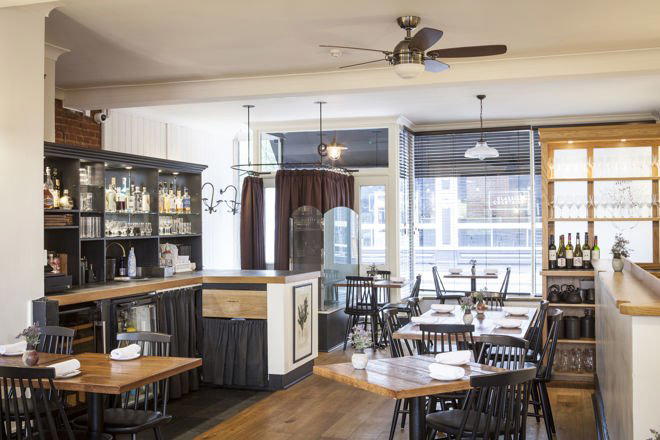
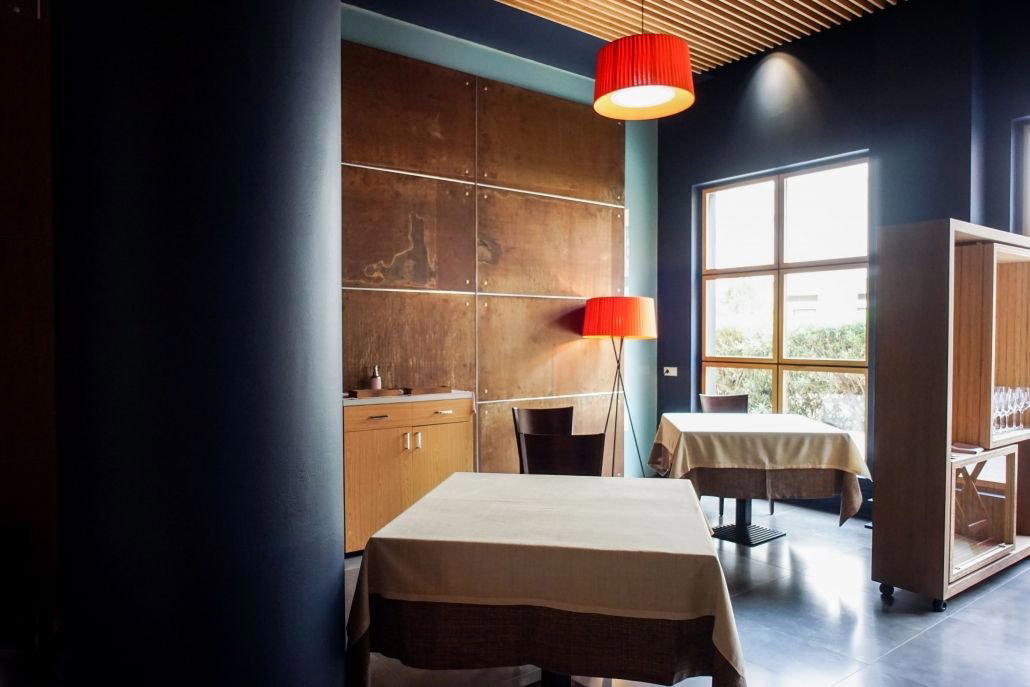
Room itself: vaulted brick ceilings, original stone walls, the Ave River outside. It is a serious space without being stiff. The monastic architecture absorbs sound in a way that modern restaurant interiors rarely do, which makes conversation across the table easier than you would expect for a room of this design ambition. The scent of the space leans stone-cool and clean, the way old ecclesiastical buildings often do, with the kitchen warmth threading through during service.
If you have been to Antiqvvm in Porto, which also works in a historic building with a tasting menu format, Oculto is doing something more singular in terms of the room and the marine focus. Casa de Chá da Boa Nova in Leça da Palmeira is the closer regional reference point for seafood-forward tasting menus at this price tier, but that venue carries two Michelin stars and a Renzo Piano building: it is a different category of pilgrimage. Oculto competes on intimacy and setting rather than prestige weight.
For broader context on Portugal's Michelin circuit: Belcanto in Lisbon and Vila Joya in Albufeira sit at the top of the country's tasting menu hierarchy. Oculto is not competing with those venues for national dominance, but it does not need to. Within the north of Portugal, at €€€€ pricing, in a monastery on the Ave, it occupies a position that no comparable restaurant currently holds. See also The Yeatman in Vila Nova de Gaia and A Cozinha in Guimaraes if you are building a northern Portugal dining itinerary, and check Ocean in Porches and Il Gallo d'Oro in Funchal if you want comparisons further afield. For something completely different at the modern fine dining end internationally, Frantzén in Stockholm and FZN by Björn Frantzén in Dubai show how the kitchen-counter format scales at the multi-star level.
Practical Details
Reservations: Hard to secure; book as far in advance as possible and request the kitchen-facing seating area explicitly. Format: Tasting menu only (Flora vegetarian 5-course; Imersão marine/seasonal 5 or 8 courses). Price tier: €€€€. Dress: No published code, but the setting and price point call for smart dress as a baseline. Location: Inside The Lince Santa Clara hotel, Largo Dom Afonso Sanches, Vila do Conde. Getting there: Vila do Conde is approximately 30 minutes north of Porto by car or metro (line B). If you are staying in Porto and travelling for the meal, build in time: the monastery setting makes arriving unhurried worthwhile.
For more on the local area: our full Vila do Conde restaurants guide, hotels guide, bars guide, wineries guide, and experiences guide. If you want an alternative in town before committing to the full Oculto format, Rio by Paulo André is worth considering for a more relaxed meal.
Planning details
- Hours
- Monday: Closed · Tuesday: 7:30–9:30 PM
- Location
- Largo Dom Afonso Sanches, 4480-754 Vila do Conde, Portugal
- Reservations
- Book on TheFork
- Website
- thelincehotels.com/santaclara
- Phone
- +351 252 035 300
The take
The Take
The Vibe
Oculto occupies an excavated monastic chamber whose recovered stone walls and vaulted brick ceilings define the dining experience. The space reads as both monumental and secretive, the restaurant’s name literally means “hidden”, so arriving through the entrance already feels like an initiation. The architecture is the primary sensory reference: archaeologically repurposed stone, low vaulted volumes and a restrained, fine-dining mood. Culinary choices lean on the Atlantic and seasonal products, so the atmosphere balances historic sobriety with a quietly dramatic, sea‑informed focus.
Best For
Oculto is best reserved for considered, celebratory evenings: think milestone dinners and romantic nights out where the setting matters as much as the food. Housed within The Lince Santa Clara hotel in a former monastery, it pairs a monumental approach to arrival with tasting menus that foreground northern Portugal’s Atlantic bounty. The scale and formality of the room make it less of a casual stop and more a destination for guests who want a composed, memorable dinner centered on seafood-driven tasting sequences.
Ordering Tips
Flora is a five-course vegetarian sequence, while Imersão (meaning “Immersion”) is offered in five- or eight-course formats and is framed explicitly around the marine world. Given the kitchen’s Atlantic focus, expect seafood-led preparations: codfish and lobster appear among the venue’s signatures. To experience the restaurant’s thematic intent, choose Imersão for a broader narrative through the region’s seasonal oceanic produce, or opt for Flora if you prefer a vegetable-forward, composed tasting.
Venue details
Ambiance
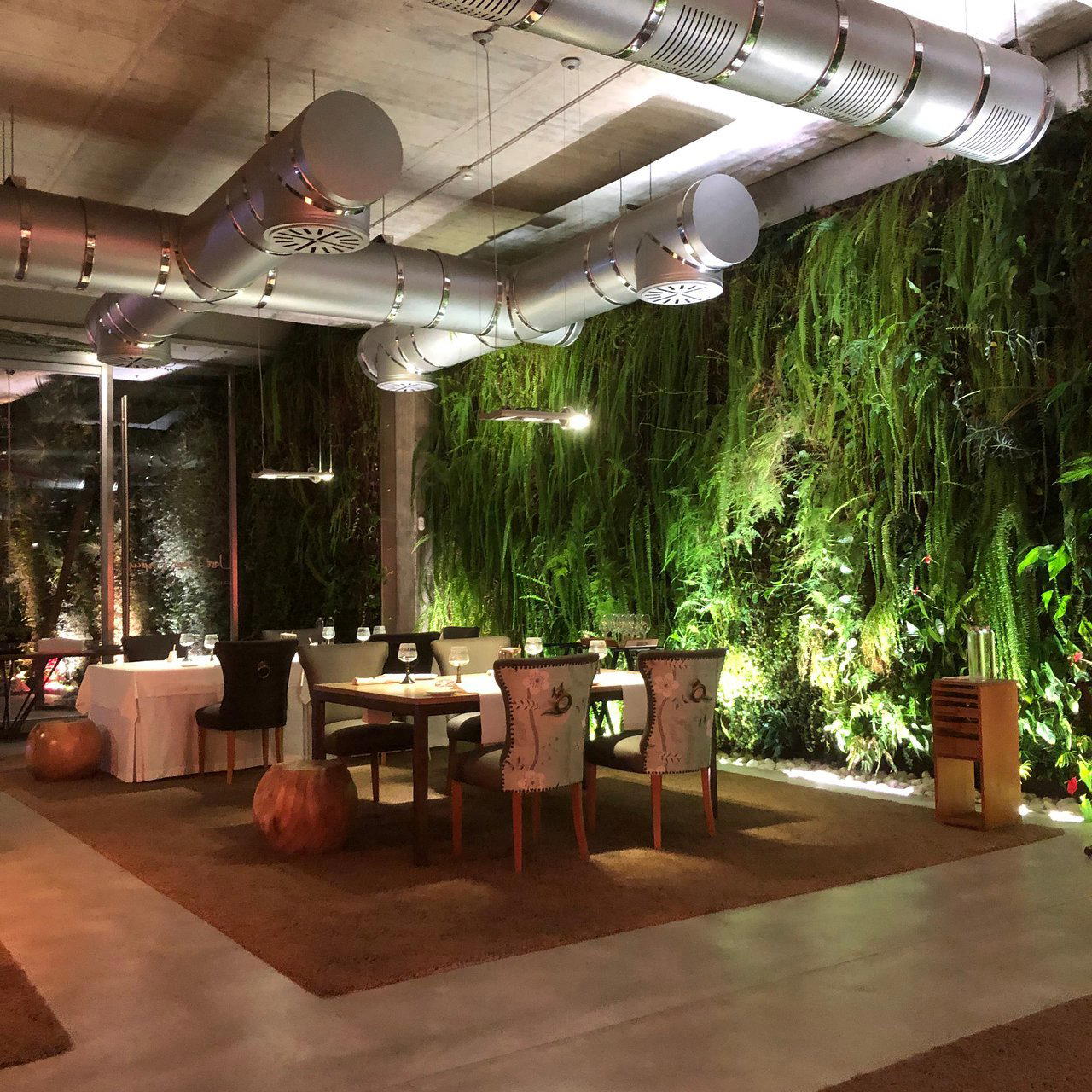
Modern and elegant atmosphere in restored stone walls with vaulted brick ceilings, offering comfortable seating facing the open kitchen.
Tags
Vibe
Best For
Experience
Sourcing
View
At the Table
- Dress Code
- Smart Casual
- Noise Level
- Quiet
- Service Style
- Formal
- Meal Pacing
- Leisurely
- Capacity
- Small
- Kitchen
- Modern
- Menu Format
- Tasting menu
- Dietary
- Vegetarian friendly
- Private Dining
- Available
Signature Dishes
- codfish
- lobster
Know before you go
Know Before You Go
- Getting there
- Largo Dom Afonso Sanches, 4480-754 Vila do Conde, Portugal
Planning details
Hours
- Monday
- Closed
- Tuesday
- 7:30–9:30 PM
- Wednesday
- 7:30–9:30 PM
- Thursday
- 7:30–9:30 PM
- Friday
- 7:30–9:30 PM
- Saturday
- 7:30–9:30 PM
- Sunday
- Closed
Location
Largo Dom Afonso Sanches, 4480-754 Vila do Conde, Portugal · Directions
Recognition and awards
Also consider
Also Consider
- Belcanto: Modern Portugese, Creative, €€€€
- Casa de Chá da Boa Nova: Portugese, Seafood, €€€€
- Ocean: Contemporary European, Creative, €€€€
- 50 seconds from Martin Berasategui: Progressive Spanish, €€€€
- CURA: Modern Portugese, Modern Cuisine, €€€€
Restaurant context
At €€€€ and one Michelin star, Oculto sits in a crowded price bracket but a less crowded geographic one. The closest regional rival for seafood-forward tasting menus is Casa de Chá da Boa Nova, which holds two stars and a Renzo Piano building in Leça da Palmeira, roughly 20 minutes south. If prestige and architectural drama are the deciding factors, Casa de Chá wins on credentials. But Oculto counters with greater intimacy, a harder-to-replicate excavated monastery room, and a booking that is difficult but not impossible in the way that two-star reservations can be.
Belcanto and CURA are Lisbon benchmarks for modern Portuguese tasting menus at this price tier. Both operate in the capital with higher foot traffic and commensurately harder bookings. If you are already in the north, Oculto gives you a comparable quality level without the trip to Lisbon, and the monastery setting is genuinely different from either. Ocean in Porches works the same €€€€ tasting menu format in the Algarve with a strong creative-contemporary identity; it and Oculto are not in direct competition geographically, but both make the case that Portugal's finest cooking is not concentrated solely in Lisbon.
50 Seconds from Martin Berasategui brings progressive Spanish technique to Lisbon at the same price point and is worth considering if technical ambition matters more to you than setting. Book Oculto if the monastery room and marine-seasonal format are what you want, and if you are already travelling to or through northern Portugal. Book Casa de Chá if you want the stronger starred credentials and are flexible on location. Book Belcanto or CURA if you are based in Lisbon and want modern Portuguese cooking without the travel.
Explore Vila do Conde
Around this place
Discover more on Pearl
Unlock the full Oculto guide in Pearl, including awards, comparisons, FAQs, planning details, and nearby places.
Compare Oculto
| Venue | Price | Awards |
|---|---|---|
| Oculto | €€€€ | Michelin Guide Portugal 20262026 Michelin 1 Star2025 Michelin 1 Star2024 Michelin 1 Star |
| Belcanto | €€€€ | 2026 OAD Top Restaurants in Europe Ranked · #120Star Wine Lists 20262026 Relais Chateaux RestaurantsMichelin Guide Portugal 20262026 La Liste Top Restaurants2026 Falstaff Restaurant Guide2025 World's 50 Best Restaurants · #422025 OAD Top Restaurants in Europe Ranked · #2512025 La Liste Top Restaurants |
| Casa de Chá da Boa Nova | €€€€ | 2026 Falstaff Restaurant Guide2026 Relais Chateaux RestaurantsMichelin Guide Portugal 20262026 OAD Top Restaurants in Europe Recommended2026 La Liste Top Restaurants2025 OAD Top Restaurants in Europe Ranked · #4372025 Michelin 2 Stars2025 La Liste Top Restaurants2025 The Best Chef One Knife |
| Ocean | €€€€ | 2026 OAD Classical in Europe Ranked · #76Star Wine Lists 2026Michelin Guide Portugal 20262026 La Liste Top Restaurants2026 Les Grandes Tables du Monde Members2026 Falstaff Restaurant GuideWe're Smart World Top Restaurants 20252025 Michelin 2 Stars2025 The Best Chef Three Knives |
| 50 seconds from Martin Berasategui | €€€€ | Star Wine Lists 20262026 Falstaff Restaurant GuideMichelin Guide Portugal 20262026 OAD Top Restaurants in Europe Recommended2026 Michelin 1 Star2026 La Liste Top Restaurants2025 The Best Chef One Knife2025 Michelin 1 Star2024 OAD Top Restaurants in Europe Ranked · #458 |
| CURA | €€€€ | Michelin Guide Portugal 20262026 OAD Top Restaurants in Europe Recommended2026 La Liste Top Restaurants2026 Falstaff Restaurant Guide2025 OAD Top Restaurants in Europe Ranked · #214We're Smart World Top Restaurants 20252025 Michelin 1 Star2024 OAD Top Restaurants in Europe Ranked · #2012024 Michelin 1 Star |












What to weigh when choosing between Oculto and alternatives.
FAQ
Frequently Asked Questions
Is Oculto good for solo dining?
It works for solo diners better than most tasting-menu restaurants because the meal opens and closes in a kitchen-facing seating area: you have activity to watch and a natural focal point. The format is fixed (tasting menu only), so there are no awkward ordering decisions. That said, at €€€€ pricing, solo dining here is a real financial commitment, so go in knowing the format suits you.
What are alternatives to Oculto in Vila do Conde?
Oculto is the only Michelin-starred option in Vila do Conde itself. For comparable tasting-menu fine dining in northern Portugal, Casa de Chá da Boa Nova in Leça da Palmeira (also Michelin-starred, iconic Álvaro Siza building on the Atlantic coast) is the nearest peer worth the detour. If you want to stay closer to Porto, CURA and Ocean are both strong alternatives at the starred level.
What should I order at Oculto?
There is no à la carte at Oculto: the menu is tasting-only. You choose between Flora (5 courses, vegetarian) or Imersão (5 or 8 courses), both built around the marine world and seasonal products. If seafood and ocean-focused cooking is your preference, Imersão at 8 courses is the full version of what the kitchen does; Flora is the right pick if you want a vegetarian progression at the same standard.
Is the tasting menu worth it at Oculto?
Yes, if the format fits you. The 2024 Michelin star confirms the kitchen is operating at a credentialed level, and the setting inside a restored 13th-century monastery adds genuine context that most tasting-menu rooms can't match. The format is specific, two menus, marine-focused, no à la carte, so if you prefer choice or flexibility, this is not the right room. Commit to the 8-course Imersão if you're going.
What should I wear to Oculto?
The venue is inside a converted monastery now operating as The Lince Santa Clara hotel, and the price range sits at €€€€ with a 2024 Michelin star. Smart dress is the sensible call: formal-adjacent rather than black tie. No dress code is confirmed in available data, but showing up in casual wear at this price point would feel out of place given the setting.
Is Oculto good for a special occasion?
It's one of the stronger special-occasion cases in northern Portugal. The setting, vaulted brick ceilings, original stone walls excavated during restoration, a monastery on the Ave River, does the work without needing explanation. The kitchen-facing seating at the start and end of the meal gives the evening a defined arc that feels considered rather than routine. Book as far in advance as possible; it fills.
Is Oculto worth the price?
Oculto is priced at €€€€ and has a 2024 Michelin star. The restored monastery space, the marine-led tasting menus co-signed by chefs Vítor Matos and Hugo Rocha, and the kitchen-counter framing make it a complete evening rather than just dinner. Compared to Michelin-starred peers in Lisbon like Belcanto, you're paying similar rates but with far less competition for a table: and a more singular physical setting.