.png?width=1200&quality=80)

Nœud. TOKYO
French · Chiyoda, Tokyo
Restaurant in Tokyo, Japan
 Book with Pearl
The Read
Zero-Waste Plant French
Price
$150–200per person
Dress
Smart Casual
Why go
A plant-centred French tasting menu in Chiyoda's Hirakawachō, priced at ¥¥¥ and holding a Michelin Plate (2025). The menu changes daily around seasonal vegetables: a genuinely different position in Tokyo's French dining scene. Easy to book, strong value for the tier, and a good fit for a special occasion where the cooking matters more than the room's scale.
About Nœud. TOKYO
The Verdict
If you have eaten at Nœud. TOKYO before, the most important thing to know on your return visit is that the menu may have changed since you were last here. That is not a caveat: it is the point. The kitchen builds dishes around whatever is seasonal and whole, and the menu evolves daily. A second visit is not a repeat; it is a different meal. For anyone considering a first booking, that same logic applies: what you eat here will be specific to the moment you arrive, which is either the draw or a reason to choose somewhere more predictable, depending on what you want from a French tasting menu in Tokyo.
At ¥¥¥ pricing, Nœud. TOKYO sits a tier below the ¥¥¥¥ operators that dominate Tokyo's fine-dining conversation. Booking is reported as easy. This combination: credentialled, accessible, and priced below the leading bracket, makes it one of the more practical special-occasion choices in the city right now.
The Space
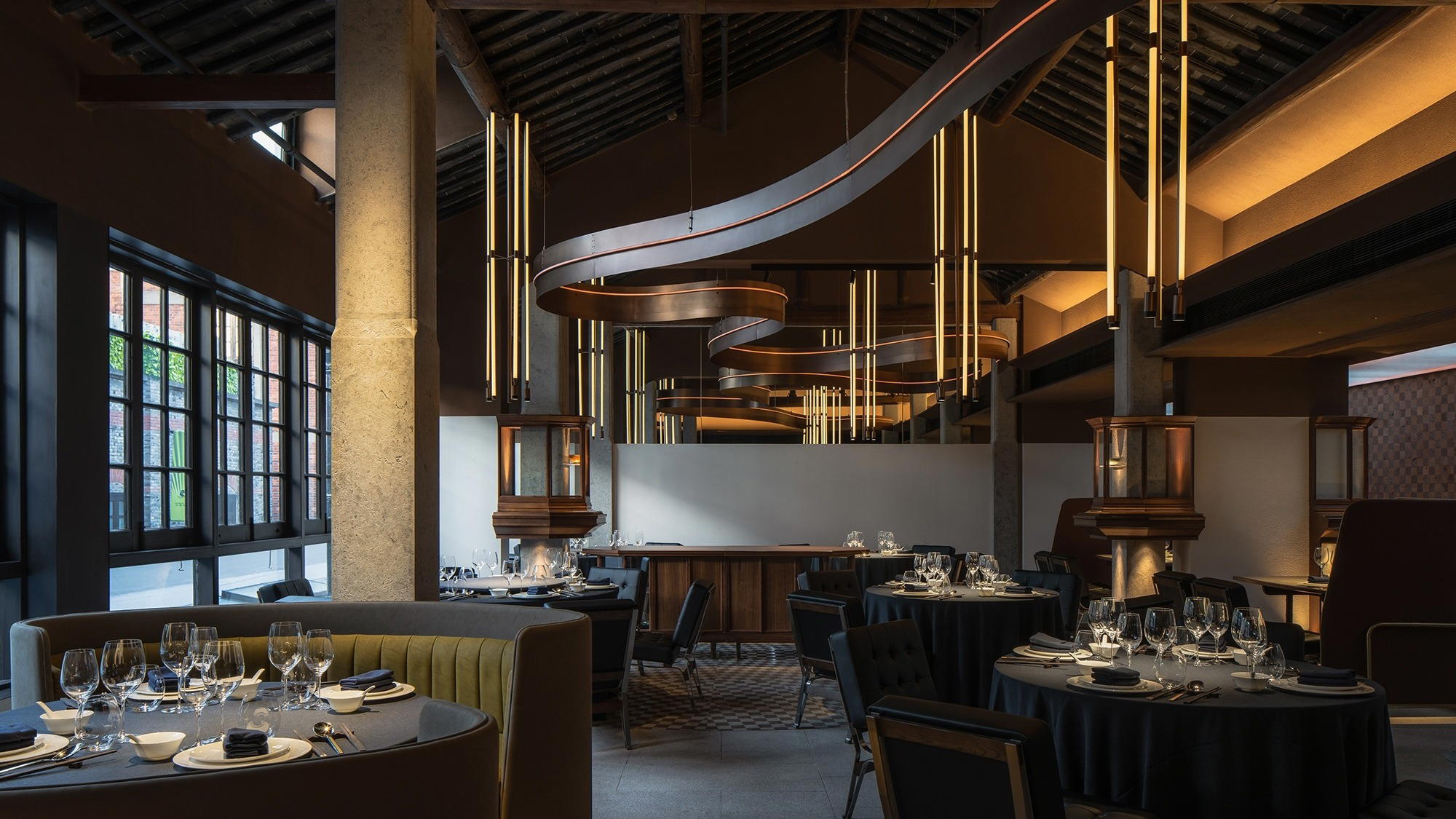
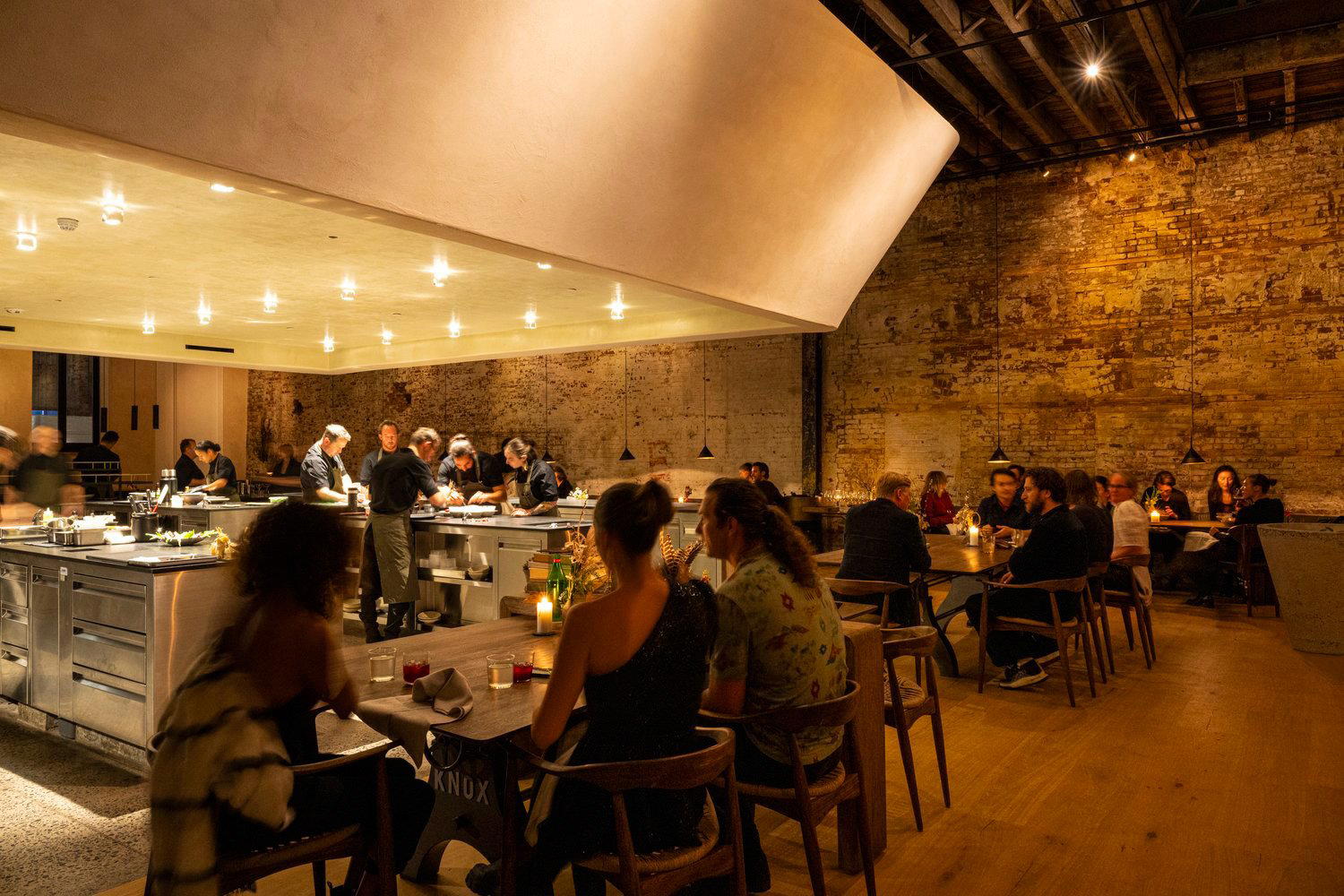
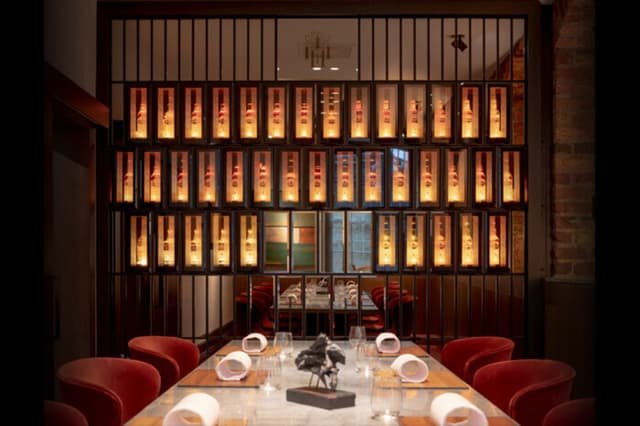
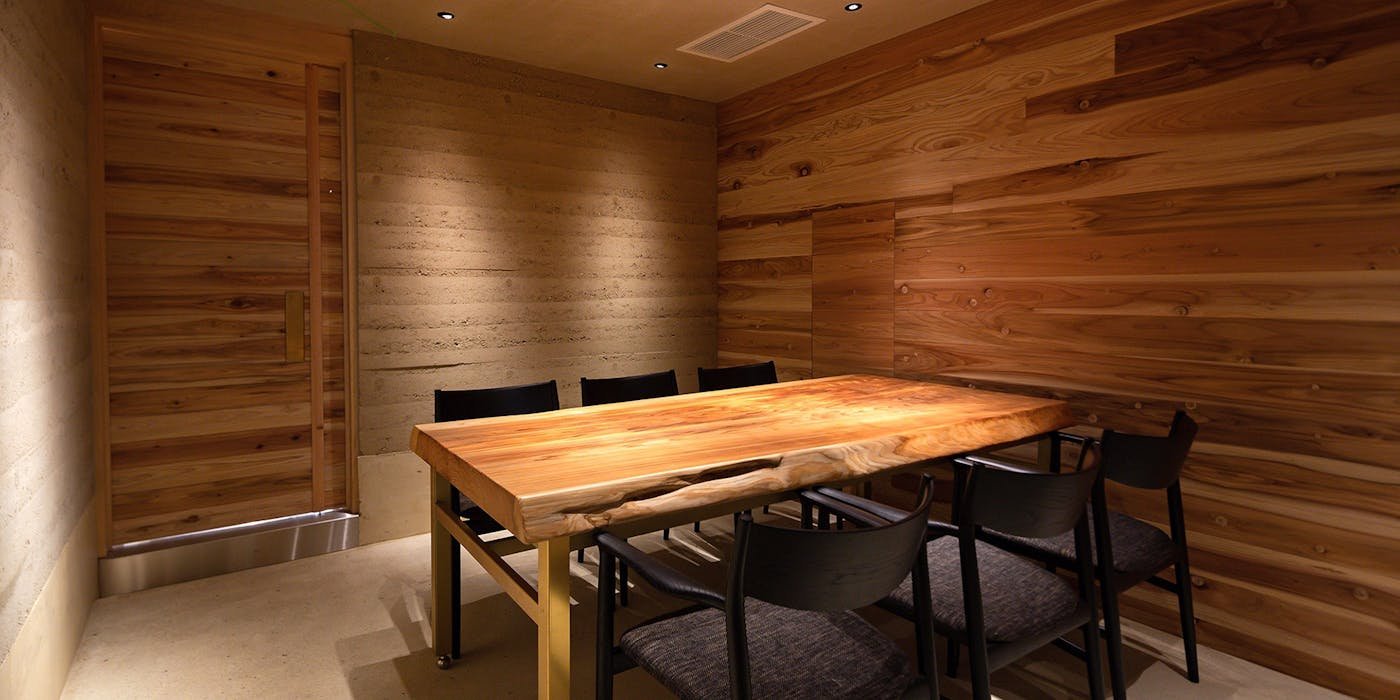
The restaurant occupies a basement floor (B1F) on Hirakawachō in Chiyoda, close to the quieter government and residential side of central Tokyo rather than the louder dining corridors of Ginza or Shinjuku. Basement dining rooms in Tokyo tend toward one of two registers: low-ceilinged and intimate, or cavernous and dim. At Nœud. the fit-out uses recycled materials throughout, a deliberate extension of the kitchen's zero-waste philosophy rather than a decorative choice. The space is designed to feel considered rather than opulent, which tracks with the price point and the cooking style. For a date or a small celebration, a basement room with this kind of intentional design reads as private and focused rather than casual, the physical setting supports the occasion framing without requiring the scale of a hotel dining room.
The Cooking
The kitchen describes its approach as 'All Sustainable French': vegetables at the centre, with leaves, stalks, and peels all in play, transformed through multiple cooking methods. Aroma is the stated priority above presentation, though the plating is described as modern with layered flavours and textures. Chef Naoto Nakatsuka trained with Nadia Sammut at La Ferniére in Lourmarin, a restaurant in Provence known for allergen-free and plant-forward French cooking. That lineage is visible in how the menu is constructed. A fully plant-based menu is available, described by one source as 'a winner', and the kitchen received an upgrade from 3 to 5 Radishes in the 4 Radishes guide in 2025, a recognition system focused on sustainable restaurants. For Tokyo's French dining scene, which skews heavily toward classical technique and luxury produce, this is a genuinely different proposition. It is not that other kitchens ignore vegetables, but few have made them the structural logic of the entire menu.
Late-Night Considerations
What is worth noting is that Chiyoda's Hirakawachō address is quieter at night than Tokyo's more central entertainment districts. If your plan is dinner followed by drinks, the surrounding neighbourhood does not offer the same density of late-night options as Ginza or Roppongi. That said, the restaurant's basement format and the nature of a multi-course tasting menu mean the meal itself is designed to take time, you are unlikely to feel rushed out. For a special occasion where the dinner is the event rather than a prelude to a longer evening, this is a reasonable tradeoff. If you want the flexibility to extend the night nearby, plan transport to a different district rather than expecting the immediate area to carry it.
Know Before You Go
- Price tier: ¥¥¥, below the leading bracket for Tokyo French dining, which typically runs ¥¥¥¥
- Booking difficulty: Easy, no months-ahead planning required, but confirm availability in advance for weekend dates
- Location: B1F, Hirakawachō 2-5-7, Chiyoda, Tokyo, quiet neighbourhood, not a late-night area
- Menu format: Tasting menu, evolves daily based on season and availability
- Diet suitability: Full plant-based menu available; the kitchen's whole-vegetable approach means plant-forward diners are well served
- Dress code: Not confirmed, smart casual is appropriate for this price point and occasion type in Tokyo
- Awards: Michelin Plate 2025; 4 Radishes guide upgrade to 5 Radishes in 2025
- Décor: Recycled materials throughout, consistent with the kitchen's sustainability philosophy
How It Compares
Against the other French options on Tokyo's ¥¥¥¥ tier, Nœud. TOKYO's price and philosophy set it apart. L'Effervescence operates at ¥¥¥¥ with a similar sustainability commitment and stronger Michelin recognition, if credentials matter more than price, that is the comparison to make. Sézanne and ESqUISSE both operate at the upper price tier with classical French frameworks and significant critical attention; neither puts vegetables at the centre of the menu the way Nœud. does. Florilège is another vegetable-forward French kitchen in Tokyo worth comparing directly, it carries stronger Michelin weight but is harder to book and more expensive. For a first-time visitor to Tokyo's French dining scene with a ¥¥¥ budget, Nœud. is a more considered and distinctive choice than a direct classical French room. For those who want the top-tier experience and are prepared to spend accordingly, Château Restaurant Joël Robuchon is the benchmark at the other end of the spectrum.
If you are planning a broader Japan trip, comparable special-occasion French and creative dining options include HAJIME in Osaka, which applies a similarly rigorous ecological philosophy at a higher price and Michelin three-star level, and akordu in Nara for a more intimate setting. For Tokyo specifically, see our full Tokyo restaurants guide, and if you are building out an itinerary, our Tokyo hotels guide, bars guide, and experiences guide are all worth checking. For international comparisons in French dining, Hotel de Ville Crissier in Crissier and Les Amis in Singapore represent different positions in the global French fine-dining conversation.
Planning details
- Hours
- Location
- Location
- Japan, 〒102-0093 Tokyo, Chiyoda City, Hirakawachō, 2 Chome−5−7 B1F
- Reservations
- Book on TableCheck
- Website
- noeud.tagaya.co.jp
- Phone
- +81 3-6910-0233
The take
The Take
The Vibe
Nœud. TOKYO reads as a quietly refined, intellectually driven destination. Tucked into a Chiyoda basement, the room favors a focused, contemplative experience that prizes aroma and vegetal architecture over showy technique. The kitchen’s stated 'All Sustainable French' philosophy and recent 2025 Michelin Plate make the place feel like an earnest, fully formed statement rather than a fleeting trend. Dining here feels like participating in a point of view: restrained, thoughtful, and exacting, with a modern French vocabulary retooled around roots, stems, peels and leaves rather than Parisian templates.
Best For
This restaurant is best for intimate evenings and special occasions where the meal is the main event. Its basement setting and careful, aroma-first approach create a sense of privacy and focus that suits date nights or quiet celebratory dinners. The piece positions Nœud. TOKYO within a ¥¥¥ price tier and notes Michelin Plate recognition, so diners looking for considered, vegetable-forward French cooking in a deliberate, upscale-casual setting will find it rewarding. Expect a paced, attentive service rhythm aligned with tasting-focused dining sensibilities.
Ordering Tips
Embrace the kitchen’s vegetable-first logic: the restaurant treats roots, stems, peels and leaves as the structural elements of each dish, so allow the menu’s plant-forward direction to guide choices. Look for dishes that highlight concentrated vegetable aromas and whole-ingredient use. Given the intellectual posture of the kitchen, trust the pacing and sequence of plates as the best way to experience the restaurant’s point of view.
Venue details
Ambiance
Cozy and relaxed atmosphere with recycled materials in the décor, featuring an intimate counter seating for watching meticulous food preparation.
Tags
Vibe
Best For
Experience
Sourcing
At the Table
- Dress Code
- Smart Casual
- Noise Level
- Quiet
- Service Style
- Formal
- Meal Pacing
- Leisurely
- Capacity
- Intimate
- Kitchen
- Modern
- Menu Format
- Tasting menu, Counter dining
- Dietary
- Vegan options, Vegetarian friendly
- Private Dining
- Available
Know before you go
Know Before You Go
- Getting there
- Japan, 〒102-0093 Tokyo, Chiyoda City, Hirakawachō, 2 Chome−5−7 B1F
Planning details
Hours
Location
Location
Japan, 〒102-0093 Tokyo, Chiyoda City, Hirakawachō, 2 Chome−5−7 B1F · Directions
Recognition and awards
Also consider
Also Consider
- Harutaka: Sushi, ¥¥¥¥
- L'Effervescence: French, ¥¥¥¥
- RyuGin: Kaiseki, Japanese, ¥¥¥¥
- HOMMAGE: Innovtive French, French, ¥¥¥¥
- Crony: Innovative, French, ¥¥¥¥
Restaurant context
Nœud. TOKYO at ¥¥¥ is the most accessible entry point in this comparison set. Every peer venue here operates at ¥¥¥¥, which makes Nœud. the right choice if your budget sits below Tokyo's top tier but you want credentialled, concept-driven French cooking. L'Effervescence is the closest philosophical comparison: also sustainability-focused French, but with stronger Michelin standing and a higher price. If credentials and service polish are priorities over price, that is the trade. HOMMAGE and Crony both operate in the innovative French space at ¥¥¥¥: Crony skews more modern and casual in feel; HOMMAGE is more formally structured. Neither puts vegetables at the centre the way Nœud. does.
RyuGin and Harutaka are different propositions entirely, kaiseki and sushi respectively, and are relevant only if you are deciding between French and Japanese formats rather than within the French category. For a special occasion where the cooking philosophy matters and you are not committed to a specific cuisine, RyuGin at ¥¥¥¥ offers more ceremony and a harder-to-book experience; Nœud. is the easier, more focused alternative.
The clearest booking decision: if plant-forward, sustainable French at ¥¥¥ suits your occasion and budget, Nœud. TOKYO has no direct competitor in this set. If you want maximum Michelin weight and are prepared to pay ¥¥¥¥, L'Effervescence is the step up. If booking difficulty is a factor in your planning, Nœud.'s easy availability gives it a practical edge over most of this comparison group.
Explore Tokyo
Around this place
Discover more on Pearl
Unlock the full Nœud. TOKYO guide in Pearl, including awards, comparisons, FAQs, planning details, and nearby places.
Compare Nœud. TOKYO
| Venue | Cuisine | Awards | Booking Difficulty |
|---|---|---|---|
| Nœud. TOKYO | French | 2026 Michelin PlateWe're Smart World Top Restaurants 20252025 Michelin Plate2024 Michelin Plate | Easy |
| Harutaka | Sushi | 2026 Tabelog Silver · #312026 OAD Top Restaurants in Japan Ranked · #1282026 Michelin 3 Stars2026 La Liste Top RestaurantsTabelog 100 - Sushi - TOKYO - 2025 · #372025 Asia's 50 Best Restaurants · #762025 OAD Top Restaurants in Japan Ranked · #1172025 La Liste Top Restaurants2025 Tabelog Bronze | Unknown |
| L'Effervescence | French | 2026 Tabelog Silver · #682026 OAD Top Restaurants in Japan Ranked · #103Star Wine Lists 20262026 Black Pearl 2 Diamond2026 Relais Chateaux Restaurants2026 La Liste Top Restaurants2026 Michelin 3 Stars2025 Asia's 50 Best Restaurants · #692025 OAD Top Restaurants in Japan Ranked · #92 | Unknown |
| RyuGin | Kaiseki, Japanese | 2026 OAD Top Restaurants in Japan Ranked · #802026 Tabelog Bronze · #3772026 Michelin 3 Stars2026 La Liste Top RestaurantsTabelog 100 - Japanese cuisine - TOKYO - 2025 · #212025 OAD Top Restaurants in Japan Ranked · #542025 Michelin 3 Stars2025 La Liste Top Restaurants2025 The Best Chef Three Knives | Unknown |
| HOMMAGE | Innovtive French, French | 2026 Tabelog Bronze · #1232026 OAD Top Restaurants in Japan Highly Recommended2026 Michelin 2 StarsTabelog 100 - French - TOKYO - 2025 · #762025 Asia's 50 Best Restaurants · #782025 OAD Top Restaurants in Japan Ranked · #1752025 Michelin 2 Stars2025 The Best Chef One Knife2025 La Liste Top Restaurants | Unknown |
| Crony | Innovative, French | 2026 Asia's 50 Best Restaurants · #34Star Wine Lists 20262026 OAD Top Restaurants in Japan Recommended2026 Michelin 2 Stars2025 Asia's 50 Best Restaurants · #30Tabelog 100 - French - TOKYO - 2025 · #782025 OAD Top Restaurants in Japan Ranked · #227We're Smart World Top Restaurants 20252025 Michelin 2 Stars | Unknown |













Side-by-side comparison to help you decide where to book.
FAQ
Frequently Asked Questions
What should I wear to Nœud. TOKYO?
The basement setting in Chiyoda and the recycled-materials décor suggest a considered but not stuffy atmosphere. Neat, polished casual fits the register here: think the kind of outfit you'd wear to a serious French restaurant where the room is modern and the cooking is the main event, not the formality. Avoid overly casual clothing; the ¥¥¥ price point sets expectations on both sides.
What should a first-timer know about Nœud. TOKYO?
The menu at Nœud. TOKYO can change daily, so do not arrive with specific dishes in mind. The kitchen's 'All Sustainable French' approach means vegetables are the centrepiece, leaves, stalks, and peels included, which is a genuine point of difference from most French restaurants in Tokyo at this price. The restaurant holds a Michelin Plate (2025), which signals quality without the reservation arms race of a starred venue.
Is the tasting menu worth it at Nœud. TOKYO?
At ¥¥¥, yes: provided the plant-forward format suits you. The 'All Sustainable French' approach, where leaves, stalks, and peels are all transformed through different cooking methods, is intellectually and gastronomically coherent rather than a gimmick. The Michelin Plate recognition in 2025 supports the kitchen's credibility. If you want a more conventional protein-led French tasting menu, L'Effervescence operates at ¥¥¥¥ and is the peer comparison to make.
Is Nœud. TOKYO worth the price?
At ¥¥¥, Nœud. TOKYO sits below the ¥¥¥¥ tier occupied by peers like L'Effervescence, which makes the value case straightforward if the vegetable-focused format is what you are after. The Michelin Plate (2025) and the upgrade from 3 to 5 Radishes in the same year indicate a kitchen moving in the right direction, not coasting. For the price, few places in Tokyo are doing sustainable French at this level of philosophical commitment.
Is Nœud. TOKYO good for a special occasion?
Yes, with the right group. The basement location in Chiyoda is quiet and removed from tourist-heavy areas, the menu format is immersive, and the kitchen's commitment to aroma-led, sustainable cooking gives the meal a clear identity. For a couple or a small group where at least one person has a genuine interest in vegetable-forward cooking, this works well as a celebration dinner. It is less suited to guests who expect a classic French special-occasion experience with traditional protein courses at the centre.