
Restaurant in Kyoto, Japan
Tokuo
290ptsKappo done à la carte, no omakase required.

About Tokuo
Tokuo is a Michelin Plate-recognised kappo room in Higashiyama operating entirely à la carte — a deliberate departure from Kyoto's kaiseki norm. At ¥¥¥ with a 4.9 Google rating and easy booking, it delivers technically precise Japanese cooking at a price point well below the city's formal multi-course rooms. Book it if you want control over your meal without sacrificing kitchen quality.
Should You Book Tokuo?
Yes, book it — especially if you have already spent time with Kyoto's kaiseki circuit and want to see what the tradition looks like when a kitchen bets on à la carte freedom instead. Tokuo holds a Michelin Plate in both 2024 and 2025, carries a Google rating of 4.9 across 164 reviews, and sits at the ¥¥¥ price point, which puts it meaningfully below the ¥¥¥¥ tier occupied by most of Kyoto's celebrated kappo and kaiseki rooms. For a first-timer who wants technical seriousness without locking into a fixed progression of courses, this is one of the clearer yes decisions in Higashiyama.
Portrait
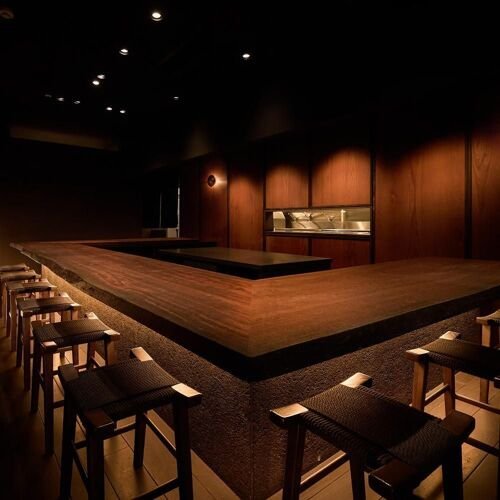
The address places Tokuo on Jingu-michi in Nakanochō, a stretch of Higashiyama Ward where the streetscape is dense with craft shops and quiet shrines. The ground-floor space inside Schilf building announces itself visually before anything arrives at the table: this is not a room trying to perform rustic simplicity or austere ceremony. Arrive without assumptions about what a Kyoto Japanese restaurant should look like, and the room will orient you on its own terms.
What makes Tokuo worth understanding as a destination is its structural break from the prevailing format. Most serious Japanese dining in Kyoto is omakase or kaiseki: the kitchen sets the menu, the courses arrive in a fixed order, and the diner's role is to receive. Tokuo's founding premise is the opposite. The kitchen has gone fully à la carte in order to push kappo culture into its next phase, which means you order what you want, in the quantity you want, at a price tier that doesn't require a special occasion to justify.
The dishes that define the kitchen's technical range are documented in the venue record and worth understanding before you sit down. Blanquillo, a fish that appears regularly in Kyoto cuisine, is listed year-round at Tokuo and arrives in different preparations depending on the season: flame-grilled in some periods, deep-fried in others, or as sakamushi, where the fish is seasoned with sake and salt before steaming. The fact that a single ingredient rotates through three technically distinct preparations is a precise indicator of what the kitchen prioritises: command of method over novelty of ingredient. If you are evaluating whether a kitchen is genuinely skilled or simply working with expensive produce, this kind of documented versatility with a single ingredient is the evidence to look for.
Duck meat dumplings appear on the menu as a direct line to the chef's apprenticeship: prepared in homage to a culinary mentor, they carry the weight of a technique that was learned rather than invented. This matters practically because dishes with that kind of lineage tend to be consistent across visits. If you return to Tokuo, the dumplings are likely to be one of the things that doesn't change, and for a second visit, that consistency is a reason to return rather than a limitation.
The rice dish — rice wrapped in grated yam and bean curd skin , is described as a summer preparation, designed to go down easily in the warmer months. Kyoto's summers are humid and heavy, and a dish engineered for lightness in that context reflects the same attentiveness to season and technique that runs through the blanquillo preparations. Plan a summer visit with this dish in mind.
At ¥¥¥, the pricing positions Tokuo as an accessible entry into serious Japanese cooking without the financial commitment of the city's ¥¥¥¥ kaiseki rooms. For a first visit to Kyoto's restaurant scene, it offers a clear advantage: you can order selectively, eat at your own pace, and spend based on what interests you rather than a fixed menu price. That said, if your goal is the full kaiseki experience , the philosophical progression of courses, the seasonal lacquerware, the ceremonial framing , venues like Kikunoi Roan or Isshisoden Nakamura will serve that intention more directly. Tokuo is not trying to replicate that format; it is proposing something structurally different.
Booking is rated as easy, which is a practical advantage in a city where several comparable rooms require weeks or months of advance planning. If you are building a Kyoto itinerary and need a high-quality Japanese dinner that doesn't require the logistics of a hard-to-secure reservation, Tokuo fits that slot well. The Michelin Plate recognition over two consecutive years confirms the kitchen is operating at a level that serious diners track, without the booking friction of a starred room.
For context on how Tokuo fits within the broader region: if you are visiting multiple cities, HAJIME in Osaka represents a very different scale of ambition at the leading of the price range, while akordu in Nara offers an interesting contrast in how Western and Japanese technique intersect at a similar distance from the city centre. Within Tokyo, Myojaku and Azabu Kadowaki occupy adjacent territory in the kappo and Japanese fine dining category and are worth comparing if you are building a multi-city itinerary. See also Harutaka in Tokyo for a contrast in how the omakase format plays at the leading end.
Tokuo is a good call for any first-timer in Kyoto who wants to eat at the serious end of Japanese cuisine without surrendering control of the meal to a fixed menu. The à la carte format, the ¥¥¥ pricing, the two-year Michelin Plate recognition, and the strong Google score all point in the same direction: this is a kitchen doing precise, methodical work that rewards an attentive diner, and it is accessible enough to book without the planning overhead that defines most of its neighbours in this tier.
Practical Details
| Detail | Tokuo | Gion Matayoshi | Kodaiji Jugyuan |
|---|---|---|---|
| Price range | ¥¥¥ | ¥¥¥¥ | ¥¥¥¥ |
| Cuisine | Kappo, Japanese | Japanese | Japanese |
| Format | À la carte | Omakase/set | Set menu |
| Booking difficulty | Easy | Moderate–Hard | Moderate |
| Awards | Michelin Plate ×2 | See Pearl page | See Pearl page |
| Location | Higashiyama, Kyoto | Kyoto | Kyoto |
For a full picture of where to eat, drink, stay, and explore in the city, see our full Kyoto restaurants guide, our full Kyoto hotels guide, our full Kyoto bars guide, our full Kyoto wineries guide, and our full Kyoto experiences guide. If you want to explore beyond the city, Goh in Fukuoka, 1000 in Yokohama, and 6 in Okinawa are all worth knowing in the same category of technically serious Japanese dining.
Frequently Asked Questions
- What should I wear to Tokuo? Smart casual is appropriate. Tokuo sits at the ¥¥¥ tier in a traditional Kyoto neighbourhood, so the expectation is neat and considered rather than formal. You do not need a jacket, but overly casual beachwear or athletic wear would be out of place. If you are visiting other Higashiyama sites the same day, dress with one step above tourist comfort in mind.
- Can Tokuo accommodate groups? No seat count is confirmed in the venue data, which is typical of smaller Kyoto kappo rooms. If you are planning for a group of four or more, contact the venue directly before assuming availability. At a ¥¥¥ à la carte room in Higashiyama, capacity is likely limited, and larger parties may find the booking process more involved than for two.
- Is Tokuo good for solo dining? Yes. The à la carte format is well suited to solo dining: you order what interests you, spend at your own pace, and are not locked into a fixed menu designed for a party. Kappo-style rooms in Japan have a long tradition of counter dining for solo guests, and the ¥¥¥ price point makes a solo meal here financially direct compared to the city's ¥¥¥¥ kaiseki rooms.
- Is the tasting menu worth it at Tokuo? Tokuo does not operate a tasting menu format: the kitchen's specific proposition is à la carte. If you want a curated multi-course progression, Gion Matayoshi or Kodaiji Jugyuan are better-suited alternatives. If you want to choose your own dishes from a kitchen with Michelin Plate recognition at ¥¥¥, Tokuo is the more flexible choice.
- Is Tokuo good for a special occasion? It works for a special occasion if the occasion is about the food rather than ceremony. The ¥¥¥ price and à la carte format create a more relaxed dynamic than Kyoto's formal kaiseki rooms. If you want tableside ritual and a fixed progression of seasonal courses as the occasion's centrepiece, Kyokaiseki Kichisen or Isshisoden Nakamura are more appropriate. For a celebratory dinner where quality matters and formality doesn't, Tokuo is a sound choice.
- What are alternatives to Tokuo in Kyoto? At the same price tier, Kikunoi Roan offers a kaiseki format with strong recognition if you want a fixed menu structure. For a step up in price and formality, Gion Matayoshi and Kodaiji Jugyuan operate at ¥¥¥¥ with set menus. If you want to stay in the à la carte and technically focused Japanese dining category, Tokuo has few direct competitors at ¥¥¥ in Kyoto , which is part of its case for booking.
Compare Tokuo
| Venue | Cuisine | Awards | Booking Difficulty | Value |
|---|---|---|---|---|
| Tokuo | Japanese | To usher in the next generation in kappo culture, Tokuo goes all in on à la carte items. Blanquillo, a staple of Kyoto cuisine, is served year-round: at times flame-grilled, at others deep-fried or as sakamushi (seasoned with sake and salt, then steamed). Duck meat dumplings, a heritage from the chef’s apprenticeship days, are lovingly prepared in homage to his culinary mentor. Rice enveloped in grated yam and bean curd skin has been devised as a treat that goes down easy in the summer months.; Michelin Plate (2025); Michelin Plate (2024) | Easy | — |
| Gion Sasaki | Kaiseki, Japanese | Michelin 3 Star | Unknown | — |
| cenci | Italian | Michelin 1 Star, World's 50 Best | Unknown | — |
| Ifuki | Kaiseki | Michelin 2 Star | Unknown | — |
| Kyokaiseki Kichisen | Japanese | Michelin 2 Star | Unknown | — |
| SEN | French, Japanese | Michelin 1 Star | Unknown | — |
A quick look at how Tokuo measures up.
Frequently Asked Questions
What should I wear to Tokuo?
There is no published dress code, but at ¥¥¥ pricing in Kyoto's Higashiyama Ward, neat casual or business casual reads correctly. Avoid overly casual sportswear. The neighbourhood context — craft shops, quiet shrines — suggests a low-key but considered look rather than formal attire.
Can Tokuo accommodate groups?
Group capacity is not documented for Tokuo. Kappo restaurants in this price bracket in Kyoto typically run small counters, which makes large parties (6+) difficult. check the venue's official channels before planning a group booking; smaller parties of 2–4 are the safer format here.
Is Tokuo good for solo dining?
Yes, and it is a strong case for it. À la carte kappo is built for counter eating, which suits solo diners well — you order what you want, at your pace, without committing to a fixed menu. Two Michelin Plates in 2024 and 2025 confirm the kitchen is consistent enough to make a solo visit worthwhile.
Is the tasting menu worth it at Tokuo?
Tokuo does not follow a tasting menu format — the kitchen's explicit position is à la carte kappo, which is the point of difference. If you want to eat blanquillo multiple ways or order the duck dumplings without sitting through a set sequence, that flexibility is built into how Tokuo operates. For strict omakase structure, look at Kyokaiseki Kichisen instead.
Is Tokuo good for a special occasion?
Yes, with the right expectations. The ¥¥¥ price point and two consecutive Michelin Plates (2024, 2025) give it the credential weight a special occasion warrants. The à la carte format also means you control the pace and scope of the meal, which works well for celebratory dinners where conversation matters more than a fixed progression.
What are alternatives to Tokuo in Kyoto?
For kaiseki in full ceremony, Kyokaiseki Kichisen is the benchmark. Gion Sasaki offers a more inventive take on the tradition with stronger press recognition. cenci bridges French technique and Japanese produce if you want something structurally different. Ifuki and SEN are worth considering if you want a shorter, lighter meal at a lower commitment level. Tokuo's case is specifically the à la carte kappo freedom — if that format appeals, none of the above replace it directly.
Recognized By

More restaurants in Kyoto
- OgataOgata is a 16-seat kaiseki counter in Shimogyo, Kyoto, holding two Michelin stars and ten years of Tabelog Gold recognition. Dinner runs JPY 60,000–79,999 before drinks and a 10% service charge. Booking is near impossible without months of advance planning, but for serious kaiseki at the counter, it earns its place on any shortlist.
- MizaiMizai holds three Michelin stars and a sustained Tabelog track record across nearly a decade, with dinner running to ¥80,000–¥99,999 per person all-in. Chef Hitoshi Ishihara structures the meal around the spirit of the tea ceremony in a 15-seat room inside Maruyama Park. Book for a serious special occasion; reservations are near-impossible to secure without months of advance planning.
Similar venues by awards
Related editorial
- Best Fine Dining Restaurants in ParisFrom three-Michelin-star icons to the next generation of Parisian chefs pushing boundaries, these are the restaurants that define fine dining in the world's culinary capital.
- Best Luxury Hotels in RomeFrom rooftop terraces overlooking ancient ruins to Michelin-starred hotel dining, these are the luxury hotels that make Rome unforgettable.
- Best Cocktail Bars in KyotoFrom sleek lounges to hidden speakeasies, Kyoto's cocktail scene blends Japanese precision with global influence in ways you won't find anywhere else.
Save or rate Tokuo on Pearl
Keep this venue in your Pearl passport, rate it after you visit, and track it alongside every other place you collect.