
Restaurant in Bodega Bay, United States
Tides Waterfront Dining
100ptsCold-Water Harbor Sourcing

About Tides Waterfront Dining
Tides Waterfront Dining sits on Bodega Bay's harbor edge, where the Sonoma Coast's fishing heritage shapes what lands on the plate. Holding a 1-Star Accreditation from the World of Fine Wine Awards, it occupies the casual-serious middle ground of Northern California coastal dining — close enough to the source that proximity to the catch is part of the proposition.
Where the Water Does the Talking
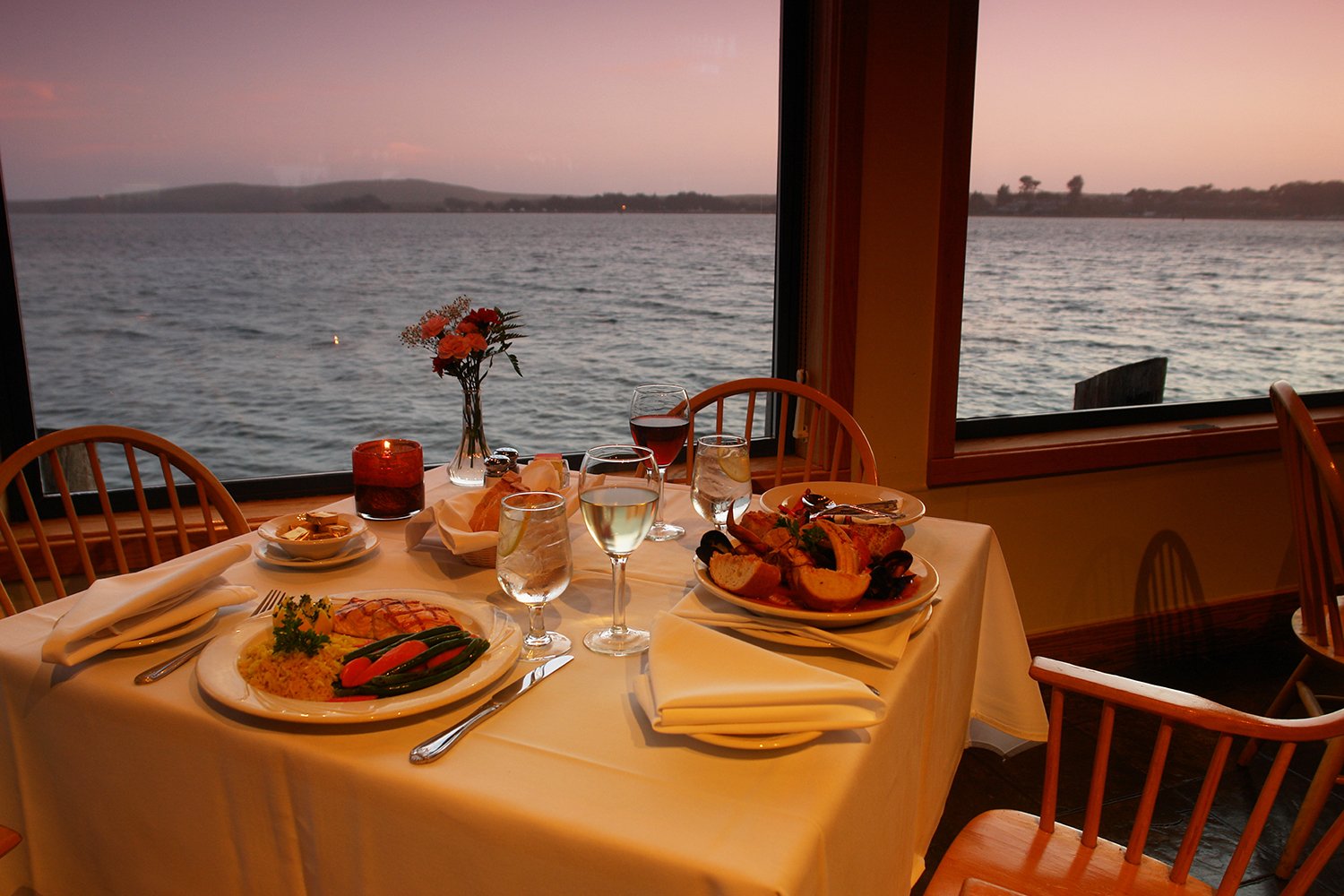
Approach Tides Waterfront Dining from Highway 1 and the framing is immediate: the bay opens up to the west, harbor lights scatter across still water on calm evenings, and the smell of salt air arrives before you reach the door. Bodega Bay is not a dining destination that builds its identity around chef celebrity or tasting-menu theater. It builds it around place, and Tides sits at the physical center of that argument, positioned directly on the waterfront at 835 Bay Hwy with sightlines that make the surrounding estuary as much a part of the experience as anything on the table.
That kind of setting carries an implicit promise about sourcing. Along this stretch of the Sonoma Coast, dungeness crab, Pacific halibut, rockfish, and oysters from nearby Tomales Bay are not marketing language — they are the actual supply chain. The Bodega Bay fishing fleet has worked these waters for generations, and the geography of the bay means the distance between boat and kitchen can be measured in minutes rather than days. For diners who want to understand why provenance matters in coastal California cooking, this is where the argument becomes concrete.
Sonoma Coast Sourcing and Why It Sets the Table
Northern California's coastline between Point Reyes and Jenner represents one of the most productive cold-water fishing zones on the Pacific rim. Upwelling from the California Current drives nutrient-rich water to the surface year-round, creating conditions that produce shellfish and fin fish of unusually concentrated flavor. The dungeness crab season, which typically runs from November through June, is the anchor event for restaurants along this corridor — a period when the local supply is at peak volume and kitchens from Bodega Bay to Bodega Bay's inland neighbors recalibrate their menus around it.
Restaurants that operate close to a working harbor occupy a structurally different position from urban seafood houses that source through wholesale distributors. The day-boat model , where catch moves directly from vessel to kitchen with minimal intermediary handling , preserves texture and flavor in ways that refrigerated logistics cannot fully replicate. This is the logic that underpins the identity of Bodega Bay's waterfront dining scene, and it is the lens through which Tides should be read. Compare that supply proximity to what a restaurant like Le Bernardin in New York City requires , a sophisticated distribution network spanning multiple time zones , and the structural advantage of a harbor-side address becomes clear.
Oysters from Tomales Bay, roughly twenty miles south, represent some of the most precisely defined terroir-driven shellfish on the West Coast. The bay's narrow geography, cold temperatures, and low-salinity mixing points produce oysters with a clean, mineral finish that has made the region a reference point for American oyster culture. The proximity of that supply to kitchens in Bodega Bay gives waterfront dining here a specific ingredient identity that is harder to replicate at distance.
Where Tides Sits in the Northern California Coastal Tier
California's premium dining conversation tends to cluster around a handful of highly capitalized addresses: The French Laundry in Napa, Single Thread Farm in Healdsburg, and the ambitious urban programs at Lazy Bear in San Francisco. These are tasting-menu operations with multi-month booking windows, formal service structures, and price points that reflect their position in the national conversation. Bodega Bay dining operates on a different axis entirely.
The waterfront restaurants along this stretch of Highway 1 are not competing with Alinea in Chicago or Providence in Los Angeles for the same diner or the same occasion. They occupy a tier where the credential is access , physical access to a specific coastline, a working harbor, and a supply chain that makes ingredient integrity the primary argument rather than technique or spectacle. The 1-Star Accreditation from the World of Fine Wine Awards that Tides holds is a signal of quality recognition within that tier, not a claim to the ultra-premium bracket. It positions Tides within a set of venues where serious attention to what is being served, and where it comes from, earns formal recognition.
For context on what that peer set looks like at greater ambition and scale, Blue Hill at Stone Barns in Tarrytown represents the definitive American model of proximity-as-philosophy taken to its logical extreme, with a farm integrated directly into the restaurant's operation. Tides operates at a more accessible register, but the underlying argument about sourcing proximity is related.
The Bodega Bay Dining Scene Around It
Bodega Bay's restaurant options are concentrated and deliberately unhurried. The town has no interest in performing the kind of dining density you find in Healdsburg or Sonoma, and that is part of the appeal for visitors arriving from San Francisco, roughly sixty-five miles to the south. Terrapin Creek operates at the more refined end of the local spectrum, with Californian cooking that has earned sustained critical attention. Tides occupies a complementary position , more casual in format, more immediately connected to the working waterfront aesthetic that defines the town's character.
For visitors building a longer itinerary around the bay, the surrounding Sonoma Coast wine country is a natural extension. Our full Bodega Bay wineries guide maps the area's cellar-door circuit, which includes producers whose cool-climate Pinot Noir and Chardonnay align well with the seafood-forward cooking found at waterfront restaurants. The area's bars and casual hospitality are covered in our full Bodega Bay bars guide, and accommodation options ranging from inn-style lodging to more contemporary properties are laid out in our full Bodega Bay hotels guide. Broader activity planning is collected in our full Bodega Bay experiences guide.
Planning a Visit
Bodega Bay sits on Highway 1, accessible from San Francisco via Highway 101 north to Petaluma and then west, or directly along the coast road for visitors who prefer the slower, more scenic approach. The coastal route adds time but delivers a more considered arrival. Tides is at 835 Bay Hwy, positioned so that arrival by car is the practical default , public transit options to Bodega Bay are limited, and the nearest Sonoma County Airport service connects through Santa Rosa rather than directly to the coast.
Timing a visit around the dungeness crab season, from late autumn through spring, aligns leading with the supply conditions that define this kind of waterfront dining. Summer brings high visitor volume to the Sonoma Coast corridor, particularly from Bay Area travelers using Highway 1 as a weekend route north. Shoulder season visits in early autumn or late spring offer the combination of accessible supply and reduced competition for seating. For a complete picture of what Bodega Bay's restaurant scene offers across formats and price points, our full Bodega Bay restaurants guide provides the broader context alongside Tides.
Frequently Asked Questions
Would Tides Waterfront Dining be comfortable with kids?
Waterfront restaurants in small California harbor towns like Bodega Bay generally operate at a more relaxed register than urban fine-dining addresses. Given Tides' position on the working waterfront and its accreditation tier, the atmosphere is likely to accommodate families without the formality constraints you would encounter at, say, a multi-course tasting-menu room. That said, specific children's menu options and seating configurations are not confirmed in the available data, so contacting the restaurant directly before visiting with young children is the practical step.
What should I expect atmosphere-wise at Tides Waterfront Dining?
The Bodega Bay waterfront setting is the dominant atmospheric fact. Dining here means proximity to the harbor, likely bay views, and the working-coastal character that distinguishes this stretch of Highway 1 from more produced wine-country dining environments. The 1-Star Accreditation from the World of Fine Wine Awards places Tides in a recognized quality bracket without signaling the formal, hushed register of a white-tablecloth room. Expect a setting where the environment does significant work and the energy reflects a town built around fishing and coastal tourism rather than culinary theater.
What's the signature dish at Tides Waterfront Dining?
Specific menu details are not available in the verified data, so naming individual dishes here would mean fabricating information. What can be said with confidence is that the Sonoma Coast supply chain, dungeness crab seasonality, and proximity to Tomales Bay oyster production are the ingredient conditions that shape what waterfront restaurants in this specific location can do at their leading. Any visit during dungeness crab season is timed to the peak of those supply conditions. For current menu specifics, the restaurant should be contacted directly.
Can I walk in to Tides Waterfront Dining?
Booking policy details are not confirmed in the available data. In general, waterfront restaurants in smaller California coastal towns operate with more walk-in flexibility than high-demand urban venues, particularly outside of peak summer weekends. Given Bodega Bay's visitor patterns, Friday and Saturday evenings during summer and holiday periods carry the highest demand. Arriving mid-week or at off-peak hours reduces the risk of a wait. For guaranteed seating, particularly during dungeness crab season or on summer weekends, making a reservation in advance is the lower-risk approach.
Recognized By

Related editorial
- How travel will be redefined by 2040By 2040, Travel Won't Be an Industry — It Will Be Infrastructure My thesis is simple and, I suspect, unfashionable: by 2040 travel will stop behaving like a discretionary consumer category and start
- How travel will be redefined by 2040By 2040, Travel Won't Be a Trip — It Will Be a Stack My thesis is simple and, I think, uncomfortable: by 2040, "travel" will no longer describe a discrete journey from point A to point B.
- How travel will be redefined by 2040The Death of Tourism as We Know It: Why 2040 Will Demand a Completely Different Kind of Traveler Let me be direct: the version of travel most of us grew up dreaming about — cheap flights, crowded lan
Save or rate Tides Waterfront Dining on Pearl
Keep this venue in your Pearl passport, rate it after you visit, and track it alongside every other place you collect.