
Restaurant in Panzano, Italy
Solociccia
100ptsButcher-to-Table Fixed Sitting

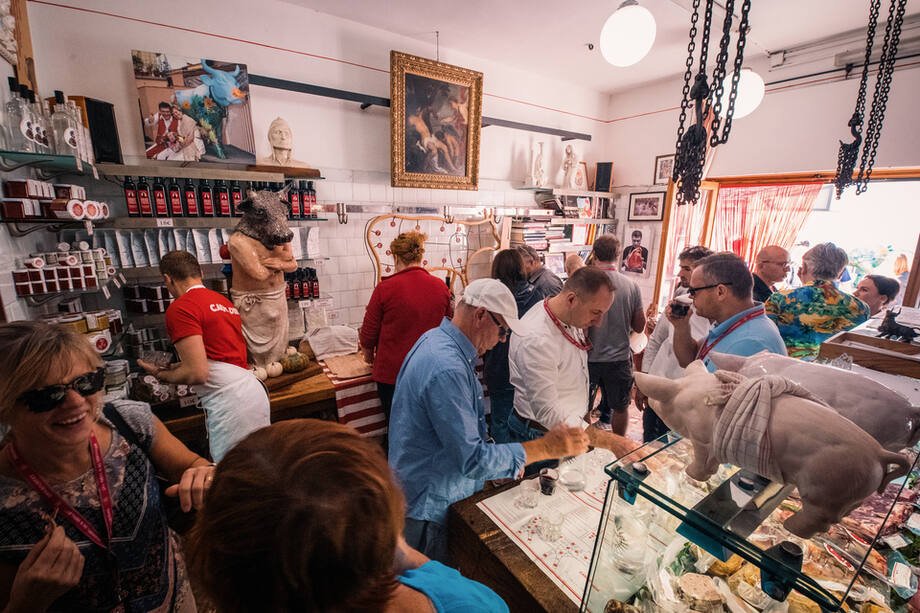
About Solociccia
Solociccia is the lunch-only dining expression of Panzano's celebrated butchery, where a fixed menu built around carefully sourced Chianina beef arrives at a set time with no choices beyond meat or vegetarian. The format removes the theatre of à la carte and replaces it with something closer to a communal feast, making it one of the Chianti's most singular midday commitments.
Where the Butcher's Counter Becomes the Kitchen
The road into Panzano in Chianti winds through a corridor of cypress and vine that has defined Tuscan agricultural identity for centuries. This is not incidental backdrop. The landscape here is a working argument about provenance: the cattle raised on these hills, the traditions of breed selection and aging that predate modern restaurant culture, and the particular insistence of this small hilltop town that meat is a subject worth taking seriously. Solociccia sits on the Via Chiantigiana at number 7, and arriving there at lunch is less like booking a restaurant and more like accepting an invitation to understand where Tuscan beef culture actually comes from.
The context matters. Solociccia operates as the lunch-only dining room connected to what has become one of the most discussed butcheries in Italy. Its sister venue, Officina della Bistecca, handles evenings and runs on a different register, tilting toward the ceremonial. Solociccia, by contrast, is built around a midday tempo: a set time, a fixed menu, and a proposition that the sourcing decisions made at the butcher's block are more consequential than any choice you might make from an à la carte list. That is the editorial premise of the entire experience.
The Logic of the Fixed Menu
Italy's most serious meat-focused tables have arrived at a similar conclusion: if the ingredient is the point, then the menu should be shaped by the ingredient, not by customer preference. This is the operating philosophy behind what Antica Macelleria Cecchini has built across its two dining formats. At Solociccia, the menu arrives as a proposal, not a negotiation. Diners choose between a meat-led sequence and a vegetarian alternative, and the kitchen builds the meal from there.
This positions Solociccia in a specific category of Italian dining that has little overlap with the tasting-menu formalism of places like Osteria Francescana in Modena or the technical ambition of Le Calandre in Rubano. Those are destination restaurants oriented around a chef's creative voice. Solociccia is oriented around a product and a tradition. It is closer in spirit to the communal, ingredient-led format that defines the leading agrarian tables of central Italy, where the kitchen's authority rests on sourcing credibility rather than culinary invention. The fixed menu is not a limitation; it is the argument.
Sourcing as the Central Act
Chianina cattle, the ancient white breed native to the Val di Chiana and Tuscan hills, sit at the center of what the butchery and its dining rooms represent. The breed is among the oldest documented cattle breeds in Europe, historically prized for both its working role in Tuscan agriculture and its beef quality. In the context of Florentine bistecca culture, Chianina is the reference point: large, lean cuts with a particular texture that rewards aging and high-heat grilling over wood or charcoal.
What distinguishes the sourcing logic here from that of a standard steakhouse is the degree of integration between the butchery and the table. The meat that appears on Solociccia's midday menu passes through the same selection and preparation process that has built the butchery's Italian reputation. That continuity between source and plate is precisely what drives the pilgrimage from Florence, roughly 35 kilometres to the north, and from further afield. At the finer end of Italian dining, the €€€€ tiers occupied by Enoteca Pinchiorri or Enrico Bartolini in Milan are built around culinary transformation of ingredient. Solociccia's value proposition runs in the opposite direction: the ingredient arrives at the table as close to its essential form as the kitchen can manage, and the reputation of the sourcing does the primary work.
This is a model that has more in common with the ingredient-first philosophy of Norbert Niederkofler's approach in Brunico than with the classical Italian cooking of Dal Pescatore in Runate, even though the food itself belongs to an entirely different register. The common thread is an insistence that the provenance of the raw material is the primary intellectual content of the meal.
Format, Timing, and What to Expect
Solociccia is open for lunch only, and the service runs at a fixed time. This is not the kind of place where you arrive when convenient and order off a printed menu at leisure. The communal format, the fixed start, and the limited binary choice between meat and vegetarian mean that the experience is structured from the outset. For visitors more accustomed to the flexibility of urban dining, the format can initially feel constraining. In practice, it functions as a commitment device: it removes the friction of decision-making and focuses attention on the meal itself.
Panzano is a small town, and the volume of visitors drawn by the butchery and its dining rooms means that booking well in advance is advisable, particularly through the spring and autumn harvest seasons when Chianti sees its highest traffic. The village sits at around 400 metres elevation on the ridge between Greve in Chianti and Castellina, and the drive through the surrounding vineyards and olive groves is part of the context. For those spending time in the broader Chianti zone, the full picture of what the area offers is covered in our full Panzano restaurants guide, with accommodation options mapped in our Panzano hotels guide.
Wine, naturally, is not an afterthought in this part of Tuscany. The Chianti Classico zone wraps around Panzano on all sides, and pairing local Sangiovese with the red meat courses is a direct alignment of geography. For those wanting to extend the visit into the vineyards themselves, our Panzano wineries guide covers the estates worth seeking out. Bars and evening options in the village are thin on the ground, as expected for a settlement of this size, but our Panzano bars guide and experiences guide note what does exist.
The Wider Italian Table in Context
It is worth situating Solociccia against the broader range of Italian dining that EP Club covers. The high end of the Italian restaurant spectrum, from Piazza Duomo in Alba to Reale in Castel di Sangro and Quattro Passi in Marina del Cantone, is characterised by chef-led creativity, tasting formats, and the codes of international fine dining. Solociccia does not operate in that tier, nor is it attempting to. Its reference point is older and more specific: the Tuscan butchery tradition, the cultural weight of the bistecca, and the argument that proximity to source is itself a form of quality. Compared to destination dining in the American frame, say Le Bernardin in New York or Emeril's in New Orleans, Solociccia occupies a completely different category: it is a product-led communal table where the kitchen's role is curation and execution rather than authorship.
That distinction is what makes it worth the drive from Florence, and worth planning around the fixed lunch format. The meal is not a performance. It is a demonstration of what happens when sourcing, tradition, and a specific agricultural place are allowed to be the whole point.
Frequently Asked Questions
- Is Solociccia okay with children?
- The communal, fixed-menu format at a set time suits families willing to commit to the structure, but Panzano is a small Chianti village rather than a child-oriented destination, so it rewards guests of any age who come specifically for the food.
- How would you describe the vibe at Solociccia?
- If you are drawn to ingredient-focused, communal dining with deep agricultural roots, Solociccia delivers exactly that: a no-choices, fixed-time lunch built around one of Italy's most discussed butcheries. If you expect the flexibility and creative range of a metropolitan fine-dining room, the format will feel deliberately stripped back.
- What dish is Solociccia famous for?
- The house's identity is built on Chianina beef, the ancient white Tuscan breed central to the bistecca alla Fiorentina tradition. The fixed meat menu reflects the butchery's sourcing, though specific dishes rotate with the kitchen's proposal rather than appearing on a permanent printed list.
- How hard is it to get a table at Solociccia?
- Panzano draws a disproportionate volume of visitors relative to its size, and the fixed-time, fixed-menu format means capacity is limited. Booking significantly ahead, particularly in spring and autumn, is the practical approach for anyone with fixed travel dates.
Recognized By

Similar venues by awards
Related editorial
- Best Fine Dining Restaurants in ParisFrom three-Michelin-star icons to the next generation of Parisian chefs pushing boundaries, these are the restaurants that define fine dining in the world's culinary capital.
- Best Luxury Hotels in RomeFrom rooftop terraces overlooking ancient ruins to Michelin-starred hotel dining, these are the luxury hotels that make Rome unforgettable.
- Best Cocktail Bars in KyotoFrom sleek lounges to hidden speakeasies, Kyoto's cocktail scene blends Japanese precision with global influence in ways you won't find anywhere else.
Save or rate Solociccia on Pearl
Keep this venue in your Pearl passport, rate it after you visit, and track it alongside every other place you collect.