

Hill Street Tai Hwa Pork Noodle
Street Food · CRAWFORD, Singapore
Restaurant in Singapore, Singapore
 Book with Pearl
The Read
Hawker Counter Precision
Price
$1–10per person
Chef
Tang Chay Seng
Dress
Casual
Why go
Hill Street Tai Hwa Pork Noodle holds a 2024 Michelin star for its bak chor mee, cooked to order at hawker prices in the Kallang district. Expect a queue at any time of day. For the quality delivered at the $ price point, the wait is worth building into your Singapore itinerary.
About Hill Street Tai Hwa Pork Noodle
The Verdict
The queue forms before the shutters open. At 466 Crawford Lane, Hill Street Tai Hwa Pork Noodle operates on its own terms: one dish, one price tier, no reservations, no shortcuts. It holds a Michelin star as of 2024, which makes it one of the most decorated single-dish hawker stalls in Singapore. If you are willing to wait, and you should expect to, this is one of the clearest value propositions in the city's food scene: a bowl that costs a few dollars and is cooked with the same precision you would expect from a restaurant charging ten times as much.
Why Crawford Lane
Tai Hwa has been at Crawford Lane long enough that the address and the dish have become inseparable in the minds of Singaporeans who grew up eating here. Crawford Lane sits in the Kallang district, a neighbourhood that has never positioned itself as a dining destination. There are no hotel concierges directing guests here, no cluster of wine bars softening the approach. What the area does have is a working-class hawker culture that has survived decades of urban change, and Tai Hwa is the anchor of that identity. The stall is the reason people make the trip to this specific corner of the island. Its Michelin recognition did not move the stall to a more prominent postcode: the star came to Crawford Lane, not the other way around. That matters if you are trying to understand what kind of eating experience this is. It is not an attraction retrofitted into a heritage space. It is a functioning hawker stall that happens to be extraordinarily good at one thing, in the neighbourhood where it has always operated.
What the Awards Tell You
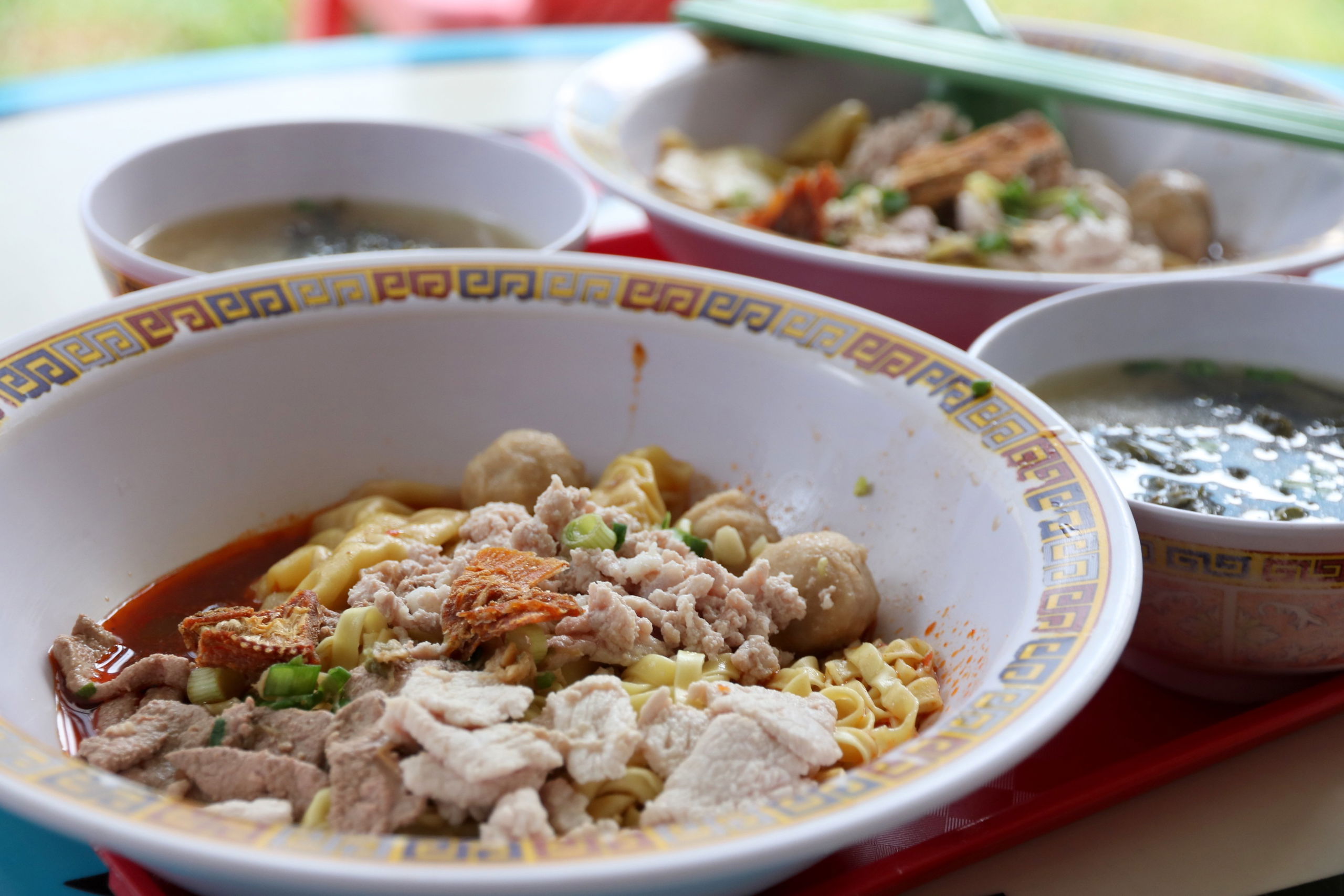
The Michelin Guide's inspectors noted that the noodles are cooked to order, with layered flavours and textures in each bowl. Crispy dried plaice, fluffy cracklings, and tender pork liver are cited specifically as components that are meticulously prepared. That level of detail from an awards body is worth taking seriously. It tells you this is not a stall coasting on reputation, the preparation standards that earned the recognition are maintained at the cooking station, not just described on a laminated menu board. At the $ price tier, a Michelin star is not a marker of luxury. It is a marker of technical consistency, and that is exactly what Tai Hwa delivers.
What to Expect When You Arrive
Expect to queue. The Michelin citation itself states you should expect to queue at any time of day, and that is not an exaggeration. The stall opens at 9 AM Tuesday through Sunday and closes at 8:30 PM. Monday is the weekly closure day. Arriving at opening gives you the shortest waits, but even early morning queues can stretch. The atmosphere at Tai Hwa is loud, functional, and entirely without ceremony. Hawker centre acoustics mean you will hear the clatter of trays, the hiss of cooking, and the background noise of a busy public space. This is not a venue for a quiet conversation. It is a venue for eating well, quickly, and without distraction. If ambient noise is a concern for your group, plan accordingly.
The Explorer's Case for Coming Here
For food-focused travellers, the context around this stall is as instructive as the bowl itself. Bak chor mee, minced pork noodle, is a distinctly Singaporean-Hokkien preparation, and Tai Hwa's version is considered a benchmark. The dish uses a vinegar-based sauce rather than the soup-based variants you will find elsewhere, and the balance of acidity, fat, and texture is what the Michelin inspectors were pointing to when they described layered flavours. Coming here and then comparing against other Singaporean noodle stalls is one of the more efficient ways to develop a real sense of what separates competent hawker cooking from the kind of execution that sustains a decades-long reputation. For that reason, Tai Hwa belongs on any itinerary that takes Singapore's street food culture seriously, alongside stalls like 545 Whampoa Prawn Noodles, A Noodle Story, and Adam Rd Noo Cheng Big Prawn Noodle. Each one has a different noodle format and a different neighbourhood context, which gives you genuine comparison points.
If your Singapore noodle itinerary goes wider, 91 Fried Kway Teow Mee and Ah Hock Fried Hokkien Noodles cover different preparations and price points worth including. And if you want to see how the same street food ambition plays out across the region, stalls like 888 Hokkien Mee in George Town, Ah Boy Koay Teow Th'ng, and A Pong Mae Sunee in Phuket are useful reference points for the broader Southeast Asian hawker context.
This is a known pattern at high-volume hawker stalls where queue length, seating logistics, and service speed generate friction that has nothing to do with the quality of the food. The inspectors are specifically assessing food quality and consistency; the Google average reflects the full experience, including waiting in a crowded hawker centre on a hot afternoon.
Know Before You Go
Practical Details
- Address: 466 Crawford Lane, #01-12, Singapore 190466
- Hours: Tuesday to Sunday, 9 AM to 8:30 PM. Closed Monday.
- Price range: $ (hawker pricing)
- Booking: Walk-in only. No reservations accepted.
- Queue: Expect a wait at any time of day, including opening. Arriving at 9 AM gives the shortest queue.
- Leading for: Solo diners, pairs, food-focused travellers, anyone building a Singapore hawker itinerary
- Not ideal for: Groups needing a single large table, anyone with low tolerance for noise or long waits
- Awards: Michelin 1 Star (2024)
- Nearest context: Kallang district, Crawford Lane food centre
Plan Your Singapore Trip
Tai Hwa fits into a broader Singapore food itinerary with ease. Use our full Singapore restaurants guide for a complete picture of where to eat across price tiers and cuisines. If you are also planning accommodation, our Singapore hotels guide covers the full range. For drinks before or after, the Singapore bars guide has current recommendations. And for experiences and wineries, the experiences guide and wineries guide cover those separately.
For regional street food context beyond Singapore, the George Town and Phuket stalls linked above, including Air Itam Duck Rice, Air Itam Sister Curry Mee, Ali Nasi Lemak Daun Pisang, Anuwat in Phang Nga, and Bang Dean in Phang Nga, round out a useful comparative picture of street food precision across the region.
Planning details
- Hours
- Monday: closed · Tuesday: 9 AM-8:30 PM
- Location
- 466 Crawford Ln, #01-12, Singapore 190466
- Website
- taihwa.com.sg
- Phone
- +65 9272 3920
The take
The Take
The Vibe
Hill Street Tai Hwa Pork Noodle sits squarely in Singapore’s hawker tradition: functional, unpretentious and defined by craft rather than décor. The stall lives inside a fluorescent-lit multi-storey hawker centre with plastic stools and laminate tables, so the experience is all about the food and the rhythms of the queue. Service is direct and brisk; there’s no fuss, only precision. The writing emphasizes the stall’s technical mastery of bak chor mee and the working‑class context that sustains it, so diners should expect a classic, everyday atmosphere where the bowl, not the dining room, is the point of pride.
Best For
This is a destination for people who prioritize flavour, value and authenticity over ambiance. It suits solo diners and small parties who don’t mind standing in line for a carefully executed bowl; locals and budget-conscious food fans are the natural audience. The stall keeps long hours from morning into evening (Tuesday–Sunday), which makes it accessible across breakfast, lunch and dinner, though stock often dictates availability. Visitors who want a straightforward, no-frills taste of Singaporean hawker craft will find this one particularly rewarding.
Ordering Tips
Expect a queue and plan around inventory: the stall opens at 9 AM from Tuesday through Sunday and often sells out before closing. Come early or be prepared to wait: there are effectively no off-peak hours. Order the signature bak chor mee (pork noodles) in its dry form if you want to appreciate the balance of black vinegar, chilli, lard and braised mushrooms. Keep expectations practical: seating is communal and service is counter‑style, so collect your bowl promptly and savour the technical precision in each bite.
Venue details
Ambiance
Casual hawker center atmosphere in a run-down coffee shop with plastic tables, lively queues, and basic seating under fans.
Tags
Vibe
Best For
Experience
At the Table
- Dress Code
- Casual
- Noise Level
- Lively
- Service Style
- Counter Service
- Meal Pacing
- Quick Bite
- Capacity
- Large
- Kitchen
- Traditional
- Menu Format
- A la carte
- Outdoor Seating
- Yes
Signature Dishes
- Bak Chor Mee
- Pork Noodles
- Dried Fish
Know before you go
Know Before You Go
- Getting there
- 466 Crawford Ln, #01-12, Singapore 190466
Planning details
Hours
- Monday
- closed
- Tuesday
- 9 AM-8:30 PM
- Wednesday
- 9 AM-8:30 PM
- Thursday
- 9 AM-8:30 PM
- Friday
- 9 AM-8:30 PM
- Saturday
- 9 AM-8:30 PM
- Sunday
- 9 AM-8:30 PM
Location
Recognition and awards

Also consider
Also Consider
- Zén: European Contemporary, $$$$
- Jaan by Kirk Westaway: British Contemporary, $$$
- Summer Pavilion: Cantonese, $$
- Burnt Ends: Australian Barbecue, Barbecue, $$$
- Seroja: Singaporean, Malaysian, $$$
Restaurant context
Hill Street Tai Hwa Pork Noodle and Zén occupy opposite ends of the Singapore dining spectrum, but both hold serious Michelin recognition. Zén asks for a multi-hundred-dollar commitment per head and delivers a long European contemporary tasting menu in a formal setting. Tai Hwa asks for a few dollars, a queue, and no ceremony. If your goal is Michelin-quality cooking at the lowest possible entry price, Tai Hwa is the clearer choice. If you are after a full-evening fine dining experience with wine pairings and tableside service, Zén is the correct booking.
Jaan by Kirk Westaway, Burnt Ends, and Seroja all sit at the $$$ tier and require advance booking, sometimes weeks out. Burnt Ends in particular has a booking difficulty comparable to Tai Hwa's queue problem: you will wait either way, just in different formats. For value per dollar spent on food quality, Tai Hwa outperforms all three. For ambiance, occasion dining, or groups wanting a seated restaurant experience, any of the three $$$ options are more suitable. Seroja is the strongest pick if you want Singapore's local culinary traditions in a proper restaurant format.
Summer Pavilion at $$ offers the closest middle ground: Cantonese cooking with serious technical credentials, easier to book than Burnt Ends, and a more comfortable setting than any hawker centre. If you want a sit-down meal with comparable ingredient care to Tai Hwa but in a restaurant environment, Summer Pavilion is the logical alternative. For pure food-to-price ratio, though, Tai Hwa remains the reference point in Singapore's lower price tiers.
Explore Singapore
Around this place
Discover more on Pearl
Unlock the full Hill Street Tai Hwa Pork Noodle guide in Pearl, including awards, comparisons, FAQs, planning details, and nearby places.
Compare Hill Street Tai Hwa Pork Noodle
| Venue | Price | Booking Difficulty | Awards |
|---|---|---|---|
| Hill Street Tai Hwa Pork Noodle | $ | Hard | 2026 OAD Casual in Asia Ranked · #59Michelin 1 Star 20262025 Michelin 1 Star2024 Michelin 1 Star |
| Zén | $$$$ | Unknown | 2026 OAD Top Restaurants in Asia Ranked · #4Michelin 3 Stars 20262026 Black Pearl 1 Diamond2026 La Liste Top Restaurants2025 OAD Top Restaurants in Asia Ranked · #32025 Asia's 50 Best Restaurants · #792025 La Liste Top Restaurants2025 Michelin 3 Stars2025 The Best Chef Two Knives |
| Jaan by Kirk Westaway | $$$ | Unknown | 2026 OAD Top Restaurants in Asia Ranked · #52Michelin 2 Stars 20262026 Black Pearl 2 Diamond2026 Les Grandes Tables du Monde Members2026 La Liste Top RestaurantsAsia's Best Fine Dining Experience 20262025 Asia's 50 Best Restaurants · #77We're Smart World Top Restaurants 2025We're Smart World Top 100 2025 |
| Summer Pavilion | $$ | Unknown | Michelin 1 Star 20262026 OAD Top Restaurants in Asia Highly Recommended2026 Black Pearl 1 Diamond2026 Wine Spectator Best of Award of ExcellenceChinese Restaurant Awards 2026: Elite 25 Asia Top 50 Honourees2025 Asia's 50 Best Restaurants · #952025 OAD Top Restaurants in Asia Ranked · #1242025 Wine Spectator Best of Award of Excellence2025 Michelin 1 Star |
| Burnt Ends | $$$ | Unknown | 2026 World's Best Steaks 101 Best Steak Restaurants · #92026 OAD Top Restaurants in Asia Ranked · #382026 Asia's 50 Best Restaurants · #59Michelin 1 Star 20262026 Black Pearl 1 Diamond2026 Wine Spectator Award of Excellence2026 La Liste Top RestaurantsWorld's Best Wine Lists 2026: Global Category Winners2025 World's Best Steaks 101 Best Steak Restaurants · #5 |
| Seroja | $$$ | Unknown | 2026 OAD Top Restaurants in Asia Ranked · #192026 Asia's 50 Best Restaurants · #20Michelin Green Star 2026Michelin 2 Stars 20262026 Black Pearl 1 Diamond2026 La Liste Top Restaurants2025 OAD Top Restaurants in Asia Ranked · #392025 Asia's 50 Best Restaurants · #40Tatler Best Restaurants Asia-Pacific 2025 |















What to weigh when choosing between Hill Street Tai Hwa Pork Noodle and alternatives.
FAQ
Frequently Asked Questions
Is Hill Street Tai Hwa Pork Noodle worth the price?
At a price range of $, this is one of the lowest-cost Michelin-starred meals you can eat anywhere in the world. The question is not whether the food is worth the money, it is, but whether you are willing to queue for it. The Michelin citation itself flags that queues form at any time of day, so factor that time cost into your calculation. For the combination of price and credential, nothing in Singapore competes directly.
What should I order at Hill Street Tai Hwa Pork Noodle?
There is effectively one dish: bak chor mee, Singapore's minced pork noodle. The Michelin inspectors specifically noted the crispy dried plaice, fluffy cracklings, and tender pork liver as standout components, all cooked to order. Choose your noodle type and portion size at the counter. There is no menu to overthink: arrive, queue, and eat the bowl.
Can I eat at the bar at Hill Street Tai Hwa Pork Noodle?
This is a hawker stall at Tai Hwa Eating House, 466 Crawford Lane, not a restaurant with a bar. Seating is at shared hawker centre tables. There is no counter dining or bar seating in the conventional sense. Come prepared to find a seat when the queue clears, particularly during peak hours.
Is the tasting menu worth it at Hill Street Tai Hwa Pork Noodle?
There is no tasting menu. Tai Hwa is a single-dish hawker stall operating at $ price range. You order a bowl of bak chor mee. If a multi-course format is what you want, Zén or Jaan by Kirk Westaway are the appropriate alternatives in Singapore. Tai Hwa's appeal is the opposite: one dish, executed with Michelin-level precision, at hawker prices.
What should a first-timer know about Hill Street Tai Hwa Pork Noodle?
Go early, ideally at opening at 9 AM Tuesday through Sunday: the stall is closed on Mondays. The Michelin Guide explicitly states to expect a queue at any time of day, and that holds. Bring cash, eat fast enough to free up the table for others, and manage your expectations around the setting: this is a hawker centre, not a dining room. The bowl is what earns the star.