

White Robata
Shuwaikh
Restaurant in Shuwaikh, Kuwait
 Book with Pearl
The Read
Price
$50–100per person
Dress
Smart Casual
Why go
White Robata is a practical Shuwaikh pick for a polished Japanese-style meal in the Sheikh Jaber Al-Ahmed Cultural Centre. Book it for a date, business dinner, or small celebration when easy logistics matter more than award credentials or a named chef-led tasting format.
About White Robata
White Robata is a Shuwaikh venue opening daily from 1 PM, closing at 11:30 PM on most nights and at 1 AM on Thu and Fri. For planning, note its Shuwaikh location, smart-casual dress code, and later closing on Thu and Fri.
Choose it for a Shuwaikh meal with clear hours
White Robata makes the most direct sense when the priority is a Shuwaikh dining option with daily hours and a smart-casual dress expectation.
For planning around White Robata, start with the basics: it is in Shuwaikh, opens daily at 1 PM, and has a smart-casual dress code.
The planning decision is simple: use the opening hours
White Robata opens at 1 PM every day. It closes at 11:30 PM on Mon, Tue, Wed, Sat, and Sun, and at 1 AM on Thu and Fri. Those later Thu and Fri hours may be useful if timing is the main planning constraint.
Cross-shop other options if your group wants a different kind of meal: Bukhara Restaurant, Dai Forni, Le Tarbouche Restaurant, Riccardo Restaurant, and Shahrayar Restaurant are natural alternatives to consider alongside White Robata.
Planning details
- Location
- Sheikh Jaber Al-Ahmed Cultural Centre, Arabian Gulf St, Kuwait City, Kuwait
- Reservations
- Book on SevenRooms
- Website
- whiterobata.com
The take
The Take
The Vibe
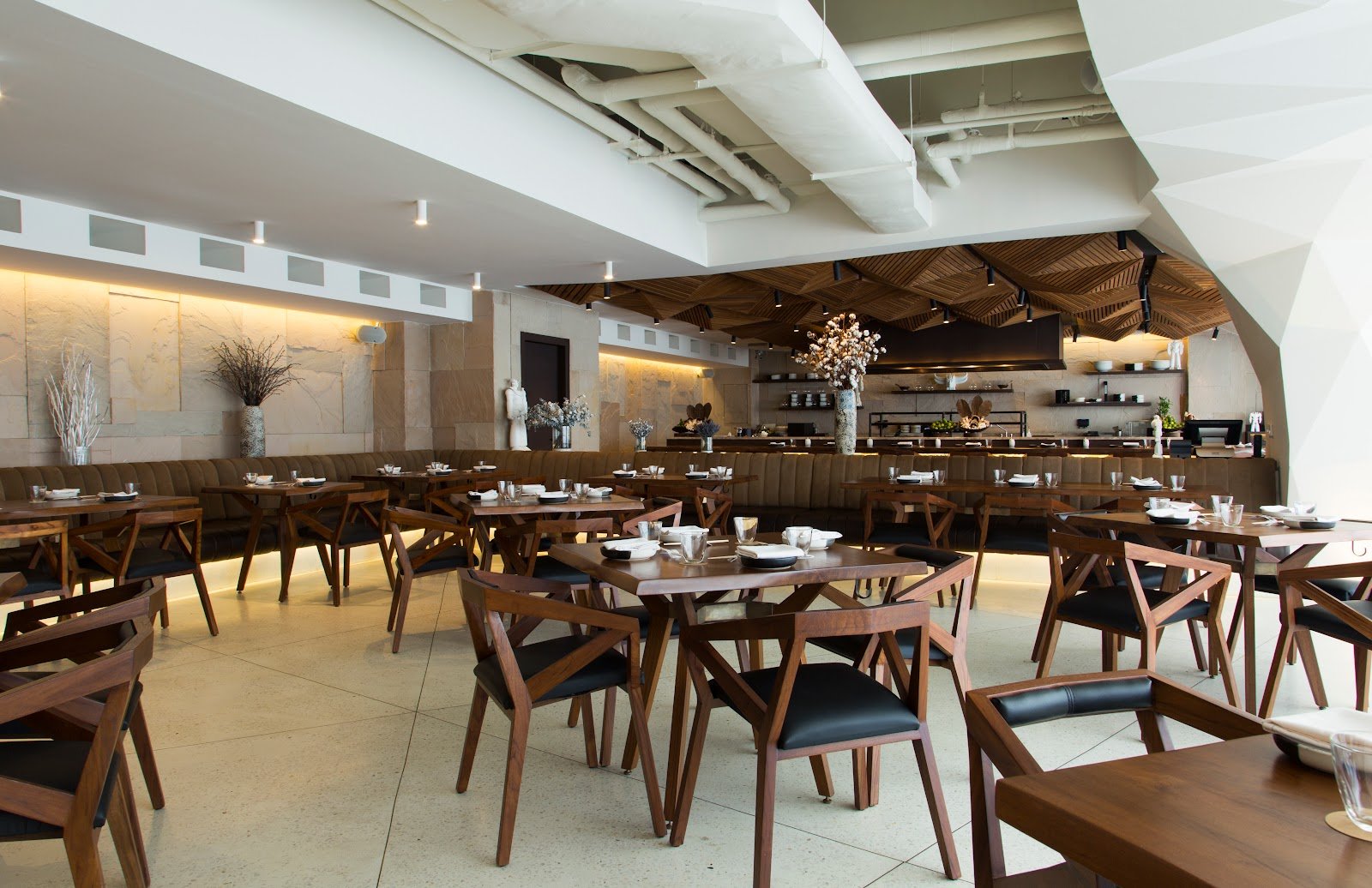
White Robata settles the austere logic of live-fire Japanese cooking inside one of Kuwait’s most architecturally considered civic spaces. The robata tradition, grilling over bincho-tan charcoal at controlled distance and heat, rewards restraint and clearly sourced ingredients, so the restaurant’s mood is built around precision and refinement rather than theatrical embellishment. Located within the Sheikh Jaber Al-Ahmed Cultural Centre, the dining experience feels shaped by the building’s formal design: composed, polished and quietly commanding. The result is a sophisticated, high-end robata room that foregrounds craftsmanship, ingredient quality and an elevated approach to charcoal-fired Japanese technique.
Best For
This is a place to book for attentive evening dining when the quality of ingredients and the grilling technique matter. The robata format and the setting inside a major cultural centre make the restaurant feel suited to deliberate dinners and special occasions where the architecture and provenance of ingredients contribute to the experience. Because the format amplifies the character of each ingredient, meals here reward focused tasting rather than casual grazing: think considered plates shared across a composed dinner service and an appetite for the nuances of live-charcoal cookery.
Ordering Tips
The robata approach highlights restraint: the grill does little to hide flaws and everything from fat content to fish age reads clearly, so prioritize items that showcase quality. Look for straightforward, charcoal-grilled pieces and dishes that let the sourcing speak: avoid heavily sauced preparations where possible. Standout and signature items to try include the six-hour braised short rib, the spicy tuna wanton taco and the flank steak frites nigiri; each illustrates the house focus on ingredient and technique. Order with an eye toward tasting a range of grilled flavors and textures rather than overly complex preparations.
Venue details
Ambiance
Cozy upscale atmosphere with stylish wooden interiors, romantic lighting, and an outdoor terrace offering fountain views and sunsets.
Tags
Vibe
Best For
Experience
Accessibility
At the Table
- Dress Code
- Smart Casual
- Noise Level
- Conversational
- Service Style
- Upscale Casual
- Meal Pacing
- Leisurely
- Capacity
- Medium
- Kitchen
- Modern
- Menu Format
- A la carte, Small plates
- Dietary
- Vegetarian friendly, Vegan options, Halal
- Outdoor Seating
- Yes
Signature Dishes
- six-hour braised short rib
- spicy tuna wanton taco
- flank steak frites nigiri
Know before you go
Know Before You Go
- Getting there
- Sheikh Jaber Al-Ahmed Cultural Centre, Arabian Gulf St, Kuwait City, Kuwait
Planning details
Location
Sheikh Jaber Al-Ahmed Cultural Centre, Arabian Gulf St, Kuwait City, Kuwait · Directions
Also consider
Also Consider
- Le Tarbouche Restaurant, Notable alternative
- Riccardo Restaurant, Notable alternative
- Shahrayar Restaurant, Notable alternative
- Bukhara Restaurant, Notable alternative
- Dai Forni, Notable alternative
Restaurant context
How White Robata compares in Shuwaikh
White Robata is the pick for Japanese-style grilling and a more contemporary celebration meal. Le Tarbouche Restaurant is the better cross-shop for Lebanese dining, while Shahrayar Restaurant points the decision toward Persian cooking.
For a more formal hotel-style meal, compare it with Riccardo Restaurant, Bukhara Restaurant, and Dai Forni. Riccardo is the Italian alternative, Bukhara is the Indian alternative, and Dai Forni is the Italian-leaning special-occasion cross-shop. White Robata is the easier recommendation when the group wants a less formal, shareable meal.
If booking friction is the deciding factor, White Robata has the clearest advantage because it is marked easy to book. If ambiance means traditional dining-room formality, the hotel restaurant set may suit better; if ambiance means a modern night out around Shuwaikh, White Robata is the cleaner fit.
Explore Shuwaikh
Around this place
Discover more on Pearl
Unlock the full White Robata guide in Pearl, including awards, comparisons, FAQs, planning details, and nearby places.
Compare White Robata
| Venue | Location | Awards |
|---|---|---|
| White Robata | Shuwaikh | No published awards |
| Le Tarbouche Restaurant | Kuwait City | No published awards |
| Riccardo Restaurant | Kuwait City | No published awards |
| Shahrayar Restaurant | Kuwait City | No published awards |
| Bukhara Restaurant | Kuwait City | No published awards |
| Dai Forni | Kuwait City | No published awards |
How White Robata Shuwaikh compares with similar nearby venues.
FAQ
Frequently Asked Questions
Is lunch or dinner better at White Robata?
White Robata opens at 1 PM daily. For timing, note that it closes at 11:30 PM on most nights and at 1 AM on Thu and Fri.
Is White Robata good for solo dining?
Solo diners should plan around the Shuwaikh location, 1 PM daily opening time, and smart-casual dress code.
Is White Robata good for a special occasion?
It may be worth considering if the Shuwaikh location, smart-casual dress code, and opening hours fit your plans.
What are alternatives to White Robata?
Other options to consider include Bukhara Restaurant, Dai Forni, Le Tarbouche Restaurant, Riccardo Restaurant, and Shahrayar Restaurant, depending on the kind of meal your group wants.
What should I wear to White Robata?
The dress code is smart casual. Aim for neat, polished clothing rather than anything overly relaxed.