
Restaurant in Kuala Lumpur, Malaysia
Seed
290ptsEuropean technique, Japanese produce, counter seats.

About Seed
Seed holds a Michelin Plate (2024, 2025) and a 4.8 Google rating for its European fine-dining menu built on Japanese produce — a concept that mirrors its Singapore sibling, Whitegrass. At $$$$ in Kuala Lumpur, it delivers technical precision and restrained flavour, making it the right call for a special occasion dinner. Book the counter and do not skip the focaccia.
Seed, Kuala Lumpur: Should You Book?
Here is the misconception worth correcting upfront: Seed is not a Japanese restaurant that happened to land in Kuala Lumpur. It is a European fine-dining operation built around Japanese produce and technique, conceived by the same chef behind Molina in KL and the acclaimed Whitegrass in Singapore. If you arrive expecting something in the mould of a traditional omakase, or a Southeast Asian tasting menu with regional storytelling, you will be recalibrating from the first course. What you actually get is a restrained, technically precise European menu where Japanese seasonings and seafood do the quiet work — and where the focaccia, reportedly crusty, airy, and served with whipped butter, has earned specific mention in Michelin's notes two years running.
Seed has held a Michelin Plate in both 2024 and 2025. That credential matters for positioning: a Michelin Plate signals that inspectors consider the kitchen consistent and competent, without yet awarding a star. In Kuala Lumpur's fine-dining bracket, that puts Seed in a competitive tier alongside Hide and Ling Long — venues where the experience is polished but the price tag is significant. At $$$$, you are in the same bracket as Dewakan and Nadodi. The question is whether the format and flavour register justify that spend for your particular evening.
The Room and the Counter
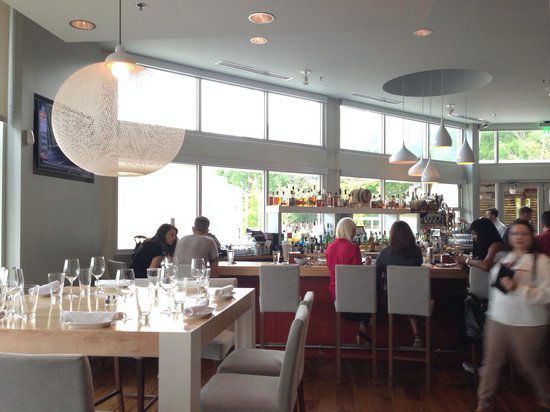
The space at Seed is worth factoring into your booking decision. Earthy colours and cool neutrals define the interior, and the wave-shaped counter seats face directly into an open kitchen. If you have been once and sat at a table, try the counter on your return visit. The kitchen view changes the experience meaningfully: you watch the pacing, you see the plating decisions, and the meal reads differently as a result. For a two-leading on a special occasion, the counter is the better ask. Groups of four or more may find table seating more practical, but the counter remains the configuration Seed seems designed around.
Lunch vs. Dinner: Which Service to Book
This is where the practical decision-making gets interesting. Seed's format follows the same logic as most serious tasting-menu restaurants in this price tier: dinner is the fuller, more elaborated version of the concept, while lunch , if offered , tends to be a shorter, more accessible entry point. At $$$$, a lunch service at Seed, if available, is likely to represent better value per course than dinner, particularly if you are using it as a first visit to assess whether the kitchen is worth a return at full length. If you have already been once and want the complete experience, dinner is the obvious choice. Given that booking difficulty here is assessed as hard, lunch slots , typically lower demand at this tier , may also be easier to secure. If you are planning ahead for an anniversary or a significant dinner, lock in the reservation as early as possible; do not assume a two-week lead time will be sufficient.
What the Food Actually Does
Based on Michelin's own notes, the kitchen's strongest work is in seafood: creative preparation, light seasoning, and a restraint that keeps the Japanese-European fusion from tipping into confusion. The flavour register here is not bold or punchy in the way Southeast Asian cooking often is. It is precise and quieter, built on technique rather than intensity. If you are returning after a first visit where the seafood courses landed well, those are the dishes to anchor your expectations around again. The focaccia is specifically flagged in the Michelin citation as worth ordering , at a $$$$ price point, bread that earns a named mention from inspectors is bread you should not skip.
For context on how this approach compares across the region, Thevar in Singapore and Soigné in Seoul both operate in the same innovative fine-dining register, fusing Asian and European sensibilities at comparable price points. Seed's closest DNA match is Whitegrass , its Singapore sibling , which means diners familiar with that experience will find the philosophy consistent, even if the KL menu adapts to local sourcing.
Who Should Book Seed
Seed works leading for diners who want European fine-dining technique delivered in a setting that does not feel European. The Japanese-produce angle gives it a point of difference from French contemporary venues like DC. by Darren Chin in the same city. If you are a regular who has already tried the core menu, the practical play on a return visit is to request the counter, order the focaccia early, and let the seafood courses be the measure of the kitchen's current form. The Google rating of 4.8 across 898 reviews suggests consistent execution and a dining room that earns its repeat visitors. At this price tier, that consistency matters as much as any single outstanding meal.
For broader planning around your visit, see our full Kuala Lumpur restaurants guide, and if you are building a longer itinerary, our guides to Kuala Lumpur hotels, bars, and experiences cover the rest. If you are travelling further around Malaysia, Auntie Gaik Lean's Old School Eatery in George Town, Christoph's in Penang, and The Dining Room at The Datai Langkawi are worth noting at different price points and registers.
Know Before You Go
- Price tier: $$$$ , commit to this as a considered spend, not a casual dinner
- Awards: Michelin Plate 2024 and 2025
- Google rating: 4.8 / 5 (898 reviews)
- Cuisine: European with Japanese produce and seasonings
- Address: Lot 16032, Batu 5 1, 2, Jln Cheras, Taman Billion, 56100 Kuala Lumpur
- Booking difficulty: Hard , book as far in advance as possible
- Counter vs. table: Counter seats offer open-kitchen views; request on booking
- Don't skip: The focaccia , specifically cited by Michelin inspectors
- Leading for: Couples, special occasions, diners who appreciate restraint over intensity
- Related venues: Lavo and Lavo Gallery in Petaling Jaya and BM Cathay Pancake in Seberang Perai for lower-price-point options nearby
Frequently Asked Questions
What should I order at Seed?
- The focaccia with whipped butter is specifically mentioned in Michelin's written notes , order it. Beyond that, seafood courses are where the kitchen has drawn the most praise: light seasoning, creative preparation, Japanese produce doing the structural work. If you are returning, use the seafood dishes as your benchmark for the kitchen's current form.
Does Seed handle dietary restrictions?
- No dietary information is confirmed in our data. At this price tier and format, tasting-menu kitchens typically accommodate restrictions with advance notice, but contact Seed directly before booking to confirm. Do not assume flexibility without asking.
What are alternatives to Seed in Kuala Lumpur?
- At the same $$$$ tier: Dewakan if you want Malaysian produce and identity at the centre of the menu rather than European structure. Molina for a different innovative approach at the same price point. At $$$: Beta offers Malaysian-focused fine dining at lower spend. For French contemporary at $$$$, DC. by Darren Chin is the direct comparison in terms of formality and price.
What should a first-timer know about Seed?
- It is not a Japanese restaurant. The format is European fine dining using Japanese produce and seasonings , a distinction that matters for setting expectations. Booking is hard; reserve early. The counter seats are the leading spot in the room. The focaccia is not optional. At $$$$, this is a considered occasion restaurant, not a casual drop-in.
Is Seed good for a special occasion?
- Yes, with the right pair. Seed works well for couples or small groups who want a technically precise, quieter fine-dining experience. The Michelin Plate credential, the open-kitchen counter, and the $$$$ positioning all signal occasion dining. If you want something with more energy or a bolder flavour register, it may not match the mood you are after , but for an anniversary or a dinner that needs to feel considered, it is a sound call.
Is the tasting menu worth it at Seed?
- If European technique applied to Japanese produce is your format, yes. The two consecutive Michelin Plates and a 4.8 Google rating across nearly 900 reviews suggest the kitchen delivers consistently at this price point. If you prefer a menu with strong Southeast Asian identity or bolder seasoning, the value proposition shifts , Dewakan or Nadodi will serve you better.
Is Seed worth the price?
- At $$$$ in Kuala Lumpur, Seed is priced at the leading of the local fine-dining market. The Michelin recognition and the consistent Google score justify the spend for diners who want restrained, technique-led European cooking. If you are comparing it to Whitegrass in Singapore, the DNA is the same. If you are deciding between Seed and a lower-cost alternative like Beta at $$$, the price gap is meaningful: you are paying for format, precision, and the Michelin-verified consistency, not for a more flavour-forward or locally rooted experience.
What should I wear to Seed?
- No dress code is confirmed in our data. At $$$$ with Michelin recognition, smart casual is a safe baseline , what you would wear to a serious dinner in any other city's fine-dining room. Avoid overly casual clothing. If in doubt, err toward the more formal end of your wardrobe.
Compare Seed
| Venue | Cuisine | Awards | Booking Difficulty | Value |
|---|---|---|---|---|
| Seed | Innovative | Splashes of earthy colours and cool neutrals adorn the inviting space and the seats at the wave-shaped counter command a fascinating view of the open kitchen. Just like at its sibling, Whitegrass, in Singapore, the Japanese chef crafts a European lineup from Japanese produce and seasonings. Seafood dishes stand out in particular with creative twists and light seasoning. Crusty and airy, their focaccia is unmissable, especially with creamy whipped butter.; Michelin Plate (2025); Michelin Plate (2024) | Hard | — |
| Dewakan | Malaysian | Michelin 2 Star, World's 50 Best | Unknown | — |
| Beta | Malaysian | Michelin 1 Star | Unknown | — |
| Molina | Innovative | Michelin 1 Star | Unknown | — |
| DC. by Darren Chin | French Contemporary | Michelin 1 Star | Unknown | — |
| Aliyaa | Sri Lankan | Unknown | — |
Comparing your options in Kuala Lumpur for this tier.
Frequently Asked Questions
What should I order at Seed?
The seafood courses are where the kitchen earns its Michelin Plate recognition, so do not skip them. Michelin's own notes flag the focaccia with whipped butter as a standout — order it if it appears on your menu. The format is a set tasting menu, so ordering is largely decided for you, but flag any strong preferences when booking.
Does Seed handle dietary restrictions?
Seed's menu is built around seafood and European technique using Japanese produce, which may create friction for guests avoiding fish or shellfish. check the venue's official channels ahead of your visit to discuss dietary needs — tasting-menu restaurants at this price point ($$$$ per head) typically accommodate restrictions with advance notice, but confirmation from the venue is the only reliable answer here.
What are alternatives to Seed in Kuala Lumpur?
Dewakan is the comparison to make if you want a Malaysian-produce tasting menu with its own distinct culinary identity rather than a Japanese-European hybrid. DC. by Darren Chin is worth considering for a more intimate, chef-driven European experience. Beta is a stronger choice if you want contemporary Malaysian cooking rather than European fine-dining structure.
What should a first-timer know about Seed?
Seed is a tasting-menu restaurant — there is no à la carte option, so commit to the full format before booking. The wave-shaped counter seats are the most engaging option in the room, offering a direct view of the open kitchen. It shares a culinary philosophy with Whitegrass in Singapore, which gives you a useful frame of reference if you have dined there.
Is Seed good for a special occasion?
Yes, with the right group. The counter seats suit couples or small groups of two to four who want engagement with the kitchen as part of the experience. The $$$$ price point and Michelin Plate status signal occasion dining, and the earthy, considered interior avoids the stiff formality that makes some fine-dining rooms feel uncomfortable for celebratory meals.
Is the tasting menu worth it at Seed?
If you are specifically interested in European fine-dining technique applied to Japanese produce, Seed delivers a focused, credible version of that format — Michelin has recognised it with a Plate in both 2024 and 2025. If you want Malaysian culinary identity on the plate, Dewakan is a more direct match for your money at the same tier.
Is Seed worth the price?
At $$$$ per head, Seed sits at the top of Kuala Lumpur's fine-dining price bracket, but the Michelin Plate (2024 and 2025) confirms the kitchen is operating at a level that justifies the positioning. For diners comfortable with European tasting-menu format, the seafood-forward cooking and Japanese-produce angle make it a strong case. If you are uncertain about the format, the value argument weakens considerably.
Recognized By

Similar venues by awards
Related editorial
- Best Fine Dining Restaurants in ParisFrom three-Michelin-star icons to the next generation of Parisian chefs pushing boundaries, these are the restaurants that define fine dining in the world's culinary capital.
- Best Luxury Hotels in RomeFrom rooftop terraces overlooking ancient ruins to Michelin-starred hotel dining, these are the luxury hotels that make Rome unforgettable.
- Best Cocktail Bars in KyotoFrom sleek lounges to hidden speakeasies, Kyoto's cocktail scene blends Japanese precision with global influence in ways you won't find anywhere else.
Save or rate Seed on Pearl
Keep this venue in your Pearl passport, rate it after you visit, and track it alongside every other place you collect.