


Aroma
Modern Cuisine · Monti, Rome
Restaurant in Rome, Italy
 Book with Pearl
The Read
Colosseum-View Modern Roman
Price
€€€€
Chef
Giuseppe Di Iorio
Dress
Formal
Why go
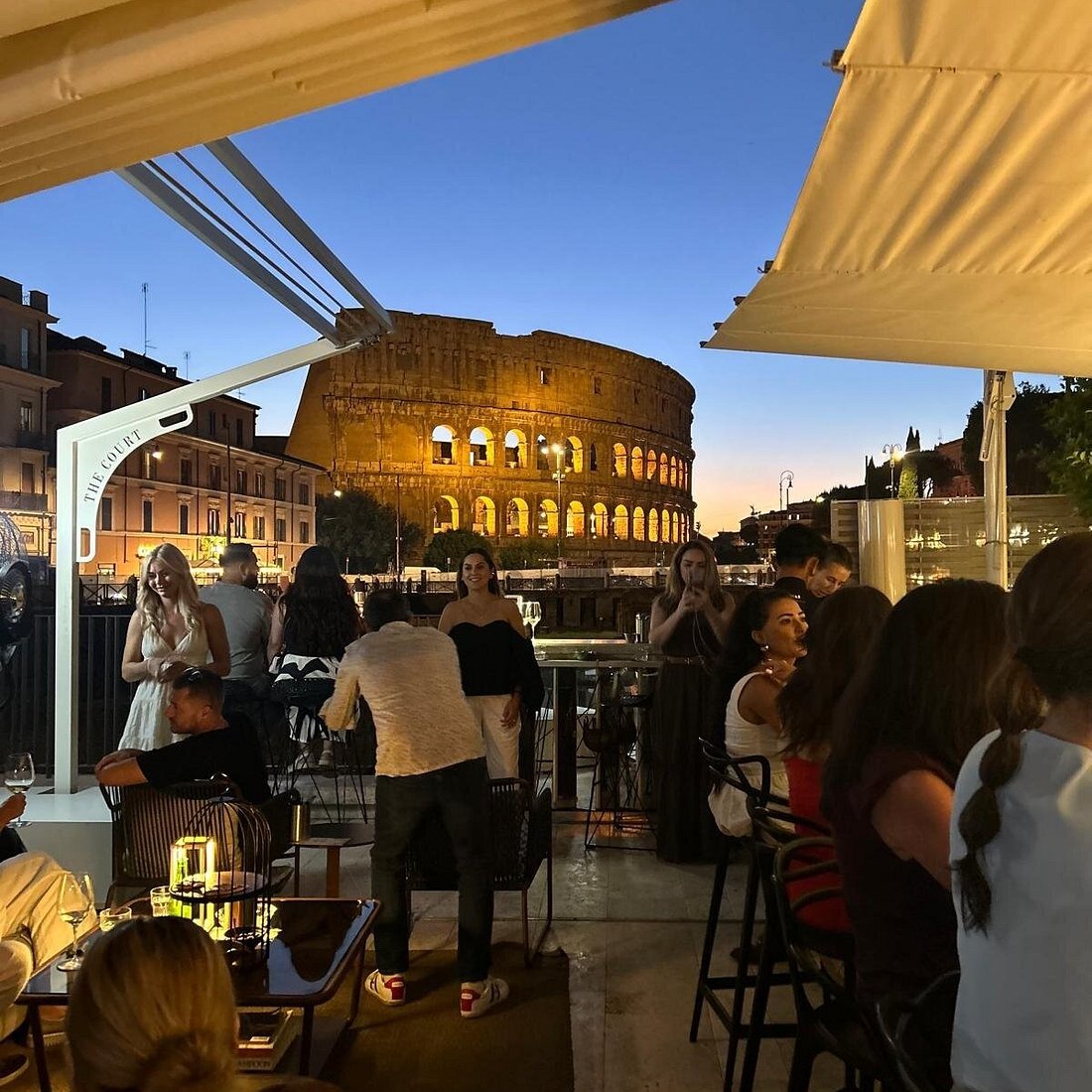
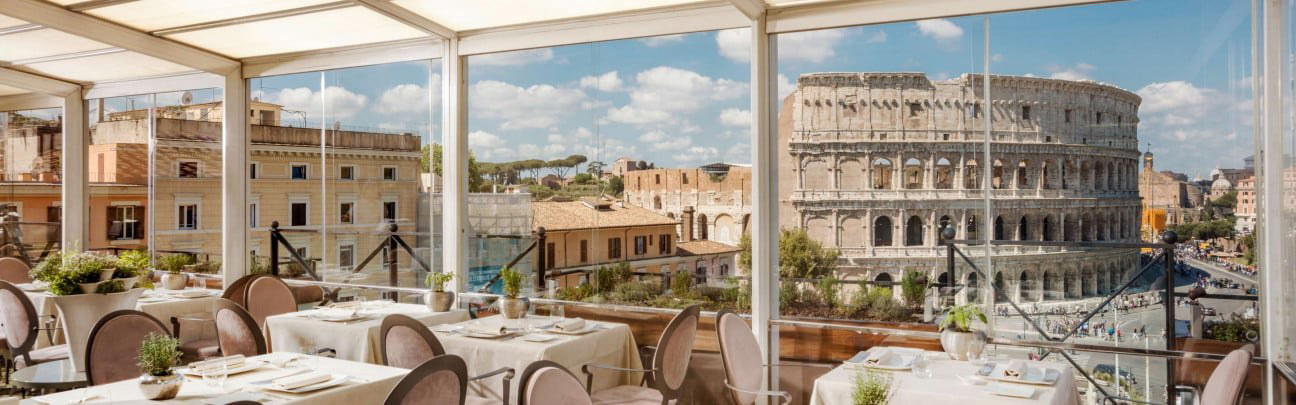
Aroma earns its Michelin star and €€€€ price with a rooftop terrace that faces the Colosseum directly and a menu from Chef Giuseppe Di Iorio that covers classic Roman cooking, Campanian influences, and more creative territory across four tasting menus. The à la carte-from-the-menu format adds flexibility rare at this level. Book at least three to four weeks out — this is one of Rome's harder reservations to secure.
About Aroma
Verdict
Four tasting menus, one Michelin star, and a rooftop view of the Colosseum directly ahead of you: Aroma earns its €€€€ price tag if the setting is part of what you are paying for. Chef Giuseppe Di Iorio's menu spans classic Roman cooking, Campanian influences, and more creative territory, so there is enough range to satisfy a table with different priorities. For a high-occasion dinner in Rome with serious cooking and a location that no other starred restaurant in the city can match, this is the booking to make. If pure culinary ambition with no regard for the view is your priority, Il Pagliaccio or Idylio by Apreda are harder to unseat. But for occasion dining where the room and the skyline are doing real work alongside the food, Aroma delivers.
The Restaurant
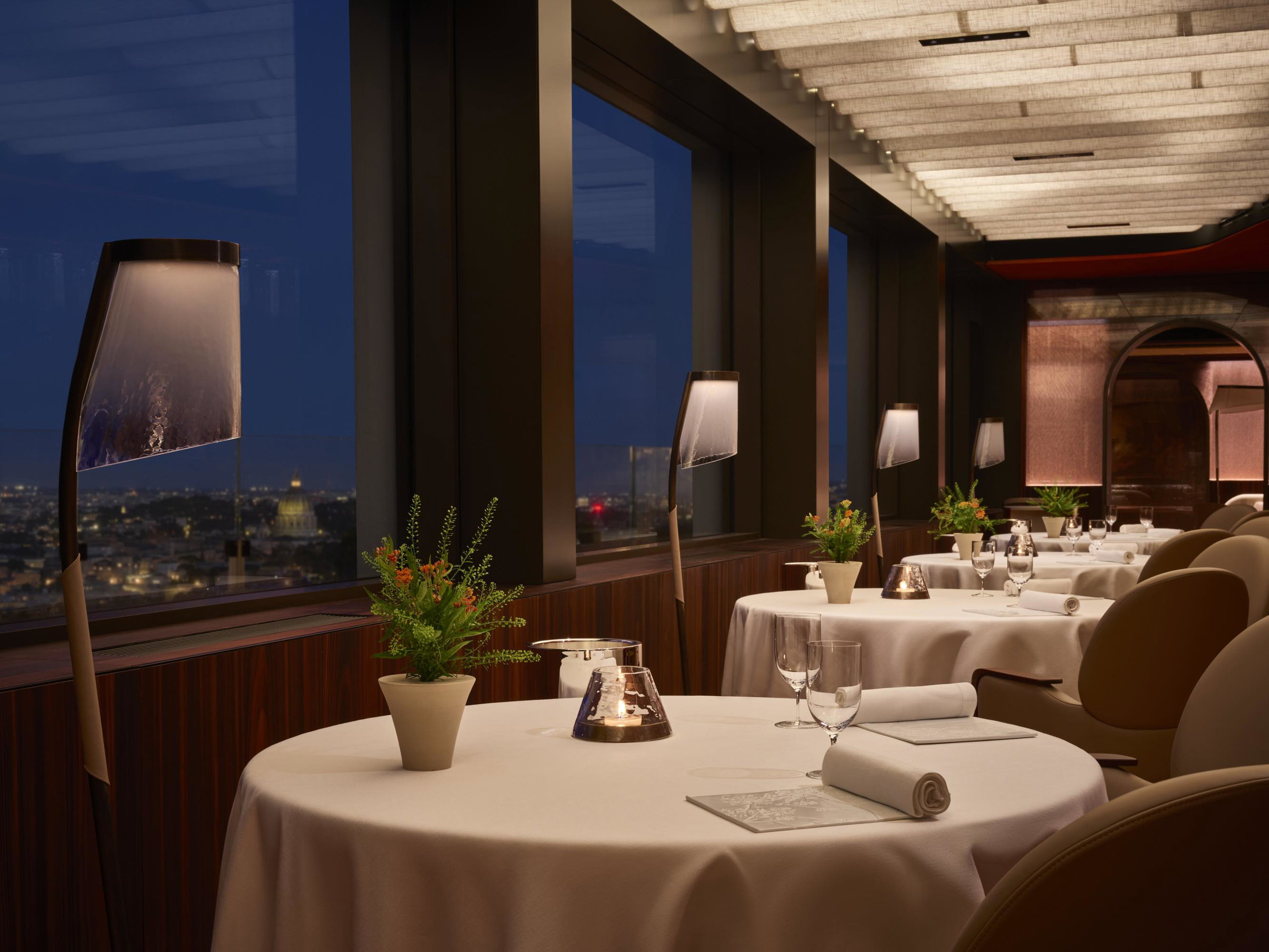
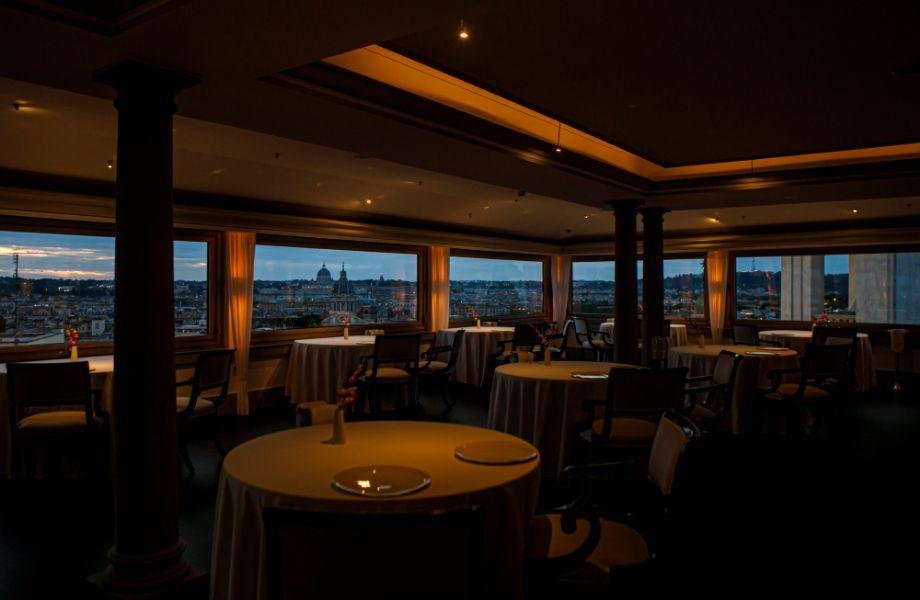
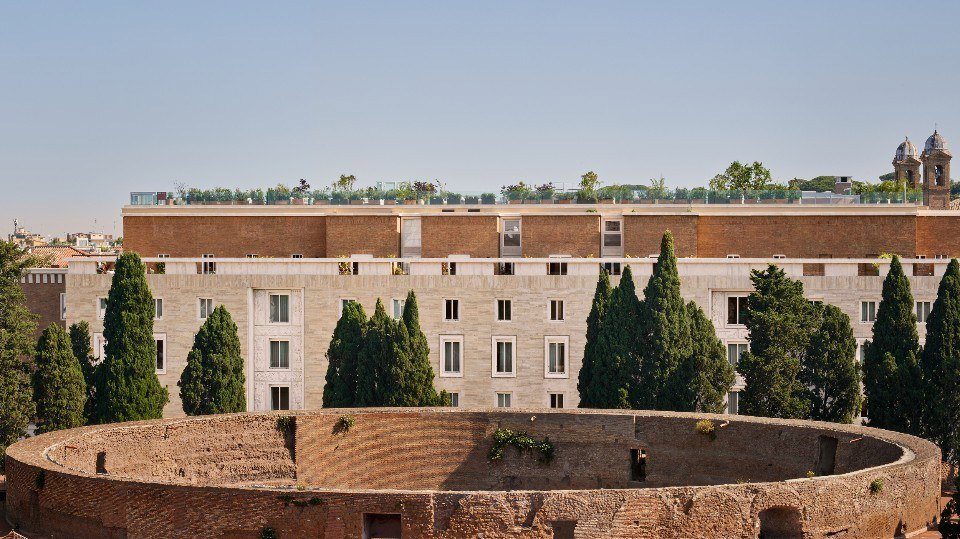
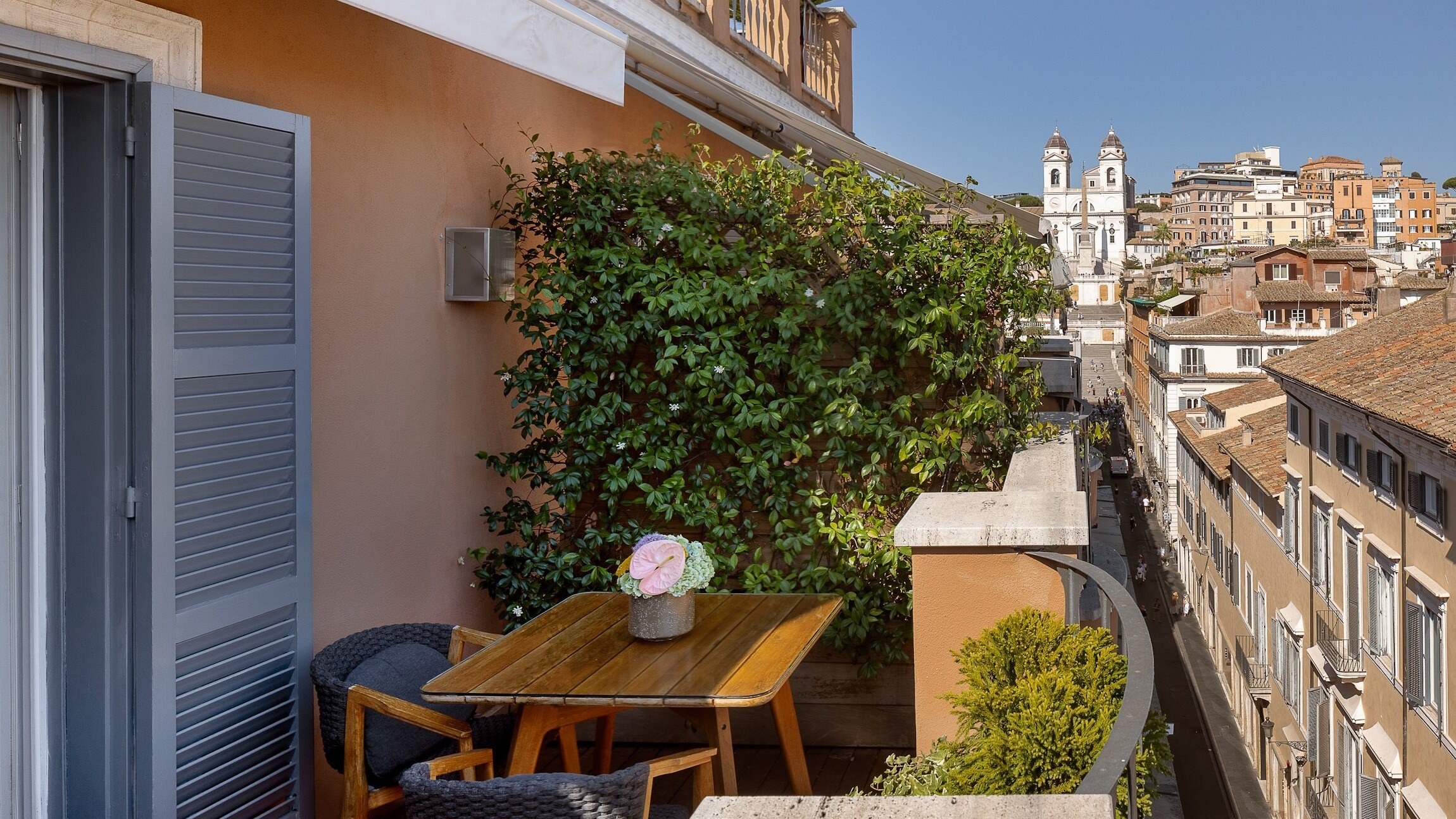
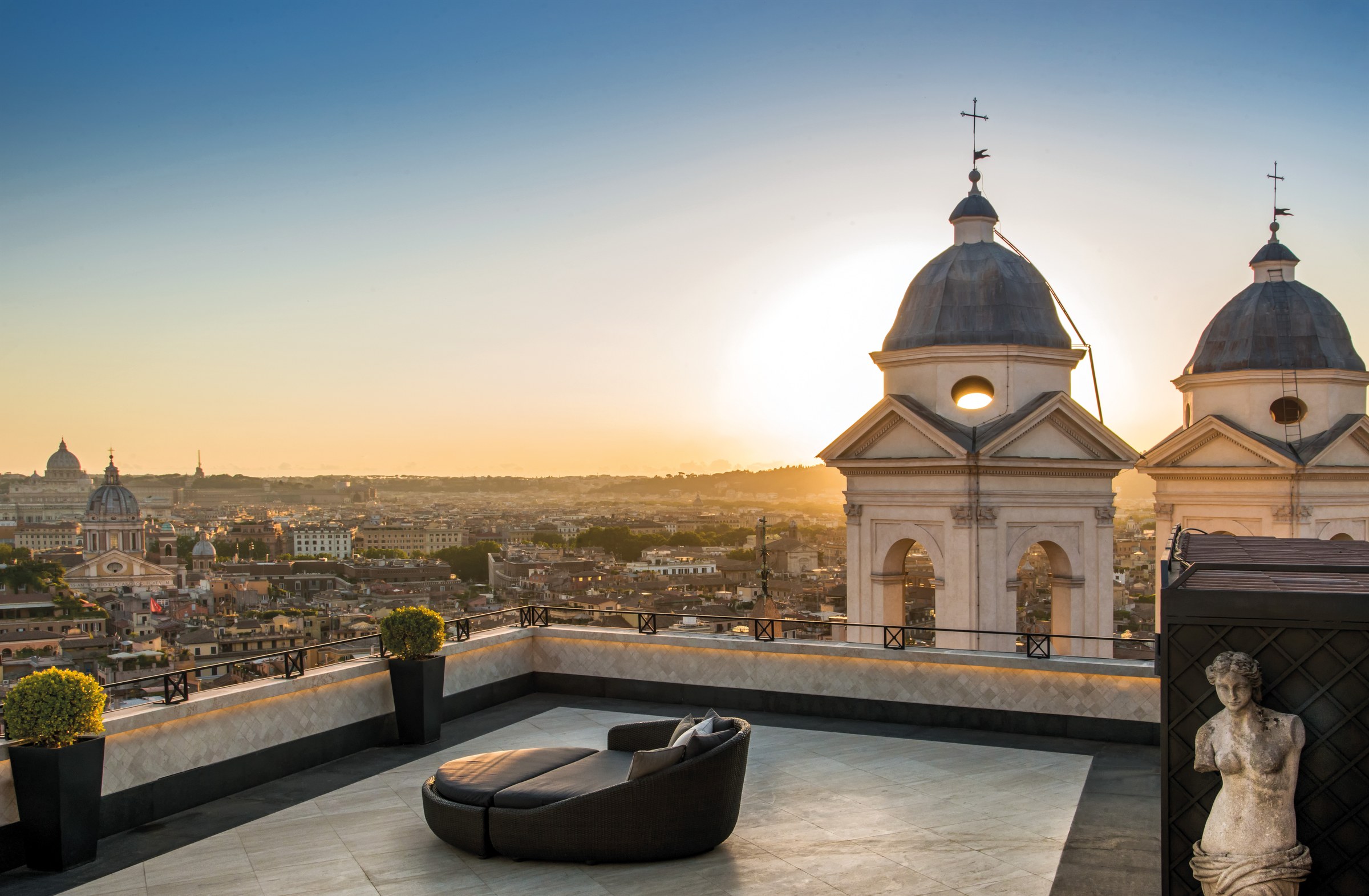
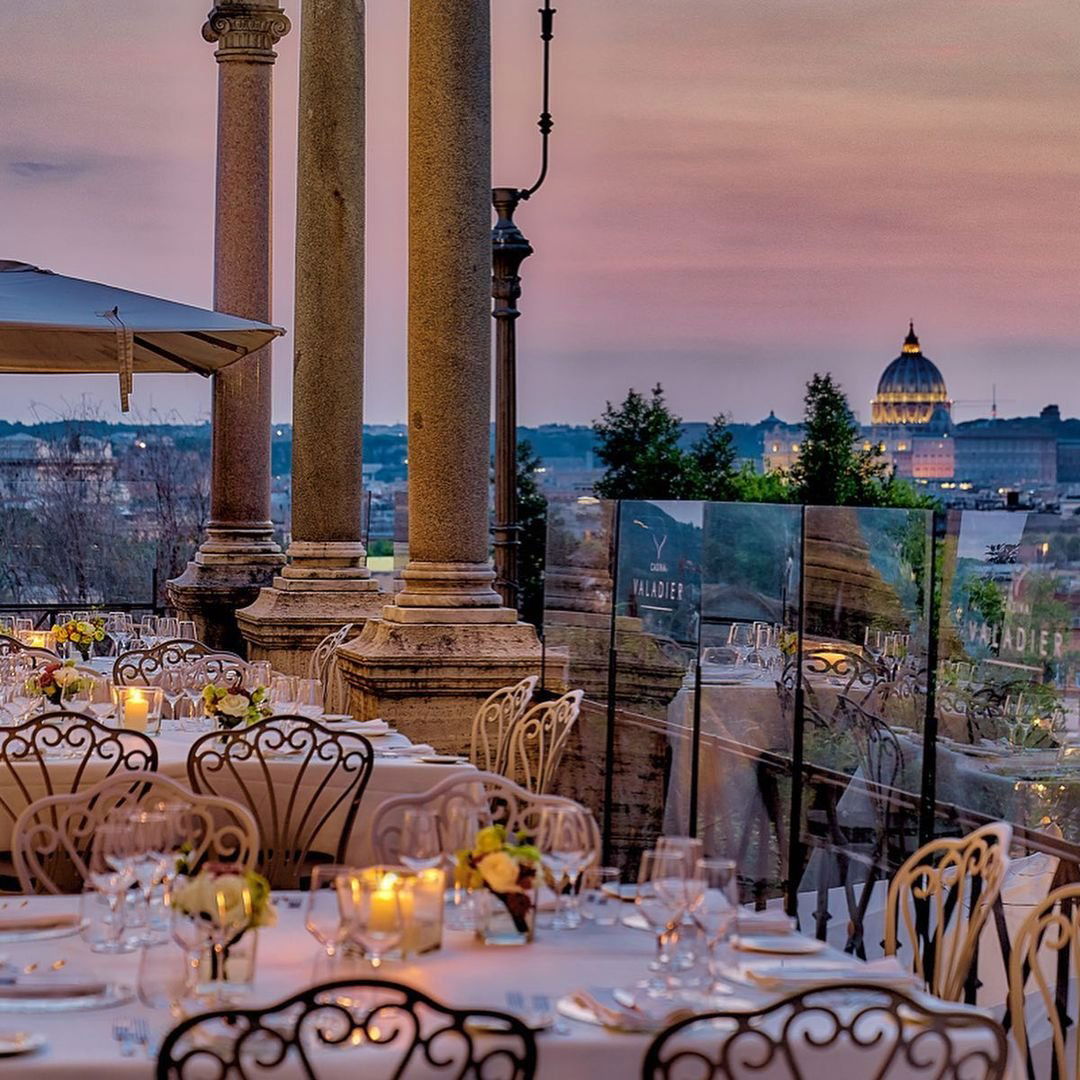
Aroma sits inside the Palazzo Manfredi on Via Labicana, and the lift from the ground floor delivers you to one of the most arresting dining positions in Rome. The terrace faces the Colosseum head-on, with the Domus Aurea visible to the right and a fragment of the Victor Emmanuel II monument in the distance. The terrace is covered during winter, which means the outdoor setting is available year-round, not just in summer, and that practical detail matters when you are booking months out for a November or February trip.
The cooking under Giuseppe Di Iorio is built on a Roman foundation but is not constrained by it. The four tasting menus, including a dedicated vegetarian option, give the kitchen room to move between tradition and invention without making the menu feel unfocused. Crucially, individual dishes can be selected from those menus à la carte style, which removes the all-or-nothing commitment of a fixed tasting format and makes Aroma more flexible than most Michelin-starred tables in this price tier. If you want to eat two or three dishes and let the view do the rest of the work, you can do that here. That flexibility is rare at this level and makes Aroma a more practical choice for mixed groups or guests who find a seven-course format a hard sell.
The editorial angle worth understanding before you book is how Di Iorio's sourcing shapes what ends up on the plate. The Roman-Campanian axis that runs through the menu is not a branding exercise: it reflects an approach grounded in specific regional produce. Classic Roman dishes appear alongside Campanian-influenced preparations and more freely creative options, and the tasting menu structure is designed to show that range in sequence. At €€€€ price positioning, you are paying for produce sourced with intention, not for volume or novelty. That trade-off is the right one if the quality of the raw ingredients reads clearly in the finished dish, which is the question that a single visit answers and a written portrait cannot.
For context within Italy's broader fine dining picture, Aroma holds one Michelin star as of 2024. That places it in the same tier as a wide range of serious Italian tables, from Atelier Moessmer Norbert Niederkofler in Brunico to Dal Pescatore in Runate, but it is a different kind of restaurant from both. The Colosseum view is a differentiator that no amount of cooking technique replicates, and Aroma's positioning leans into that honestly. If you want to understand where Rome's leading end sits relative to Italy's most decorated kitchens, Enoteca Pinchiorri in Florence, Le Calandre in Rubano, and Osteria Francescana in Modena are the reference points worth knowing.
Within Rome itself, the comparison set includes La Pergola at the three-star level, and at the one-star tier, Acquolina, Storie d'Amore, /gu.stà.re/ oltrecucina, and Il Ristorante Alain Ducasse Roma all compete for the same occasion-dinner budget. Aroma's differentiator in that group is explicit: no other restaurant in the set gives you the Colosseum at eye level while you eat. Whether that warrants the price premium over a technically sharper kitchen elsewhere depends entirely on what you are celebrating and who you are bringing.
A 4.1 at €€€€ with significant volume suggests the experience lands consistently, even if it does not generate the uniform enthusiasm of a smaller room with tighter control. The view attracts a tourist audience as well as serious diners, and that mixed room means the energy can vary. If you want the quietest, most focused experience, lunch on a Wednesday or Thursday is likely to be calmer than a Saturday dinner in peak summer.
Booking and Practical Details
Aroma operates Tuesday evenings only for dinner on Mondays, then lunch and dinner Wednesday through Sunday. Monday is dinner-only (7 PM to 11 PM). The kitchen opens for lunch at 12:30 PM on Wednesday through Sunday. Booking difficulty is rated Hard: secure a table at least three to four weeks out for a weekday dinner, and further ahead for weekend bookings during spring and autumn when Rome's restaurant scene is at full pressure. The terrace is covered and usable in winter, so there is no off-season advantage that makes the room easier to book.
Dress expectations at a Michelin-starred hotel restaurant in Rome lean formal-smart. No dress code is confirmed in available data, but arriving in anything less than smart casual risks standing out in the wrong direction at a table of this calibre.
For a complete picture of where to eat, drink, and stay in Rome, see our full Rome restaurants guide, our full Rome hotels guide, our full Rome bars guide, our full Rome wineries guide, and our full Rome experiences guide. For global reference points in modern cuisine at a similar or higher level, Enrico Bartolini in Milan, Frantzén in Stockholm, and FZN by Björn Frantzén in Dubai provide useful calibration.
Quick reference: Michelin 1 Star (2024) | €€€€ | Via Labicana 125, Rome | Lunch Wed–Sun 12:30–3 PM, Dinner Mon–Sun 7–11 PM | Booking: Hard, 3–4 weeks minimum.
How It Compares
Aroma vs. Rome's other €€€€ starred tables
See the comparison section below.
Located inside
 HotelPalazzo ManfrediFull hotel guide
Planning details
- Hours
- Monday: 7 PM-11 PM · Tuesday: 7 PM-11 PM
- Location
- Via Labicana, 125, 00184 Roma RM, Italy
- Reservations
- Book on TheFork
- Website
- aromarestaurant.it
- Phone
- +39 06 9761 5109
The take
The Take
The Vibe
Aroma stages fine dining against one of Rome's most cinematic backdrops. Perched on the rooftop terrace of the Palazzo Manfredi, the restaurant foregrounds the Colosseum while the Domus Aurea and the Vittoriano anchor sightlines to either side. The kitchen operates at a Michelin level, so the room balances spectacle with seriousness: the terrace draws guests for the view, and the cooking—structured tasting menus and a dedicated vegetarian option—answers that visual drama with technically sure, richly detailed plates. The overall feel is rooted in the city's history while remaining luxuriously restrained.
Best For
Aroma suits two clear types of diners: those who come chiefly for the view and those who arrive as committed gastronomes. Lunch (Wed–Sun, 12:30–15:00) tends to attract business guests and informed visitors with flexible schedules, while dinner (daily, 19:00–23:00; Monday and Tuesday are dinner-only) draws a larger, international audience intent on the rooftop spectacle. The kitchen offers four structured tasting formats, including a vegetarian tasting, so groups seeking a composed, multi-course experience are well served alongside solo visitors and business lunches.
Ordering Tips
Reserve in advance and request a terrace table if the Colosseum view matters to your visit; the covered rooftop terrace is the focal point. Decide whether you want a quieter, business‑leaning midday service (lunch Wed–Sun, 12:30–15:00) or the more theatrical evening seating (dinner nightly, 19:00–23:00). Opt for one of the structured tasting menus to experience the breadth of the kitchen—there's a dedicated vegetarian tasting—and expect Michelin‑level pacing and presentation. If the view is essential, note that bookings specifically for the spectacle are common.
Venue details
Ambiance
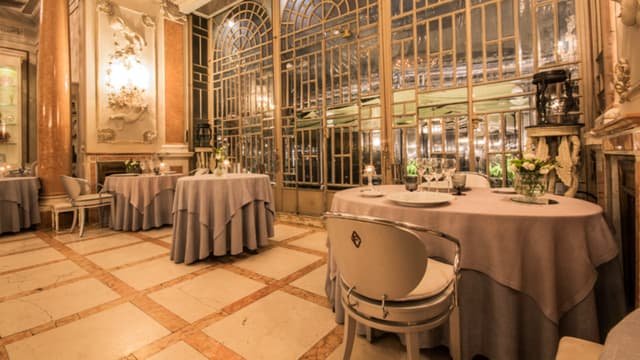
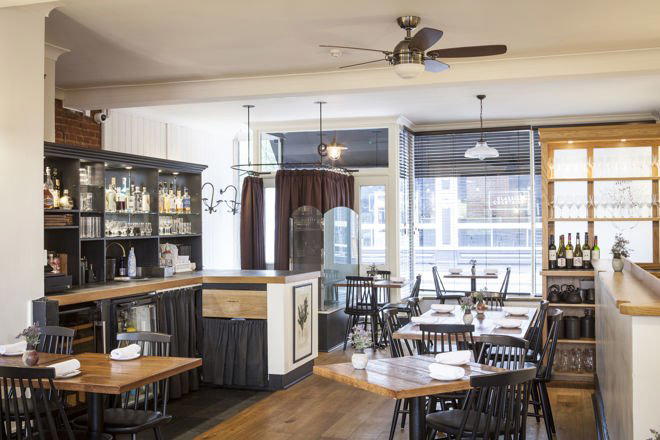
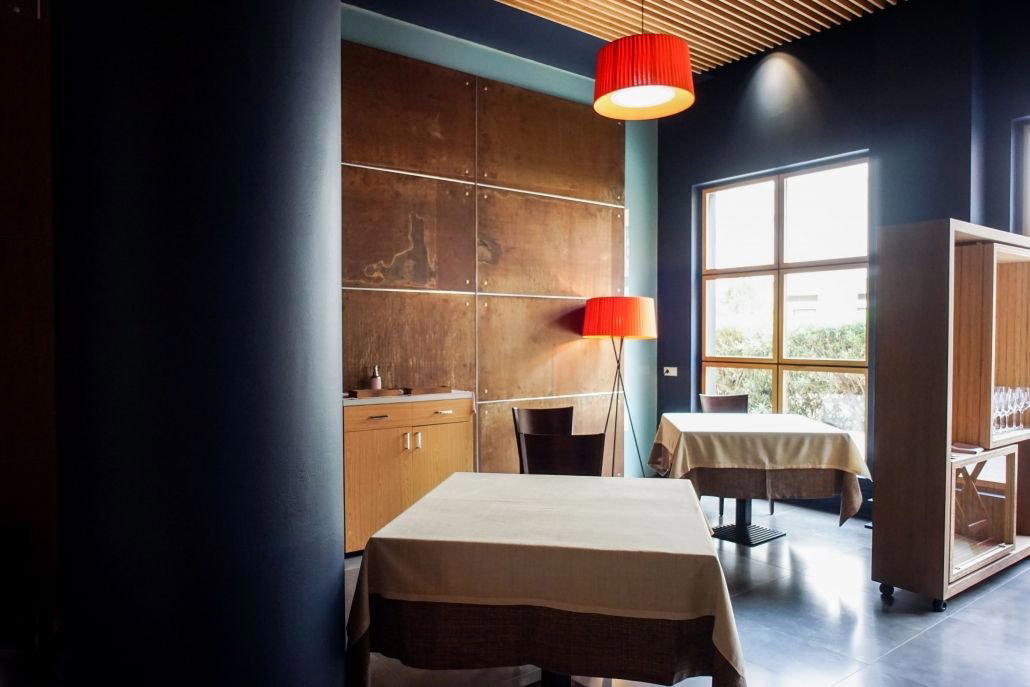
Refined and intimate with soft lighting; the terrace offers breathtaking nighttime views of the Colosseum, though the restaurant can become noisy during peak hours. The interior is modest and understated, with focus on the view and plated presentations.
Tags
Vibe
Best For
Experience
Sourcing
View
Accessibility
At the Table
- Dress Code
- Formal
- Noise Level
- Conversational
- Service Style
- Formal
- Meal Pacing
- Extended Experience
- Capacity
- Small
Signature Dishes
- Tagliolini pasta in curry sauce with scampi and coconut
- Chianina beef tartare with rocket pesto
- Crepinette di San Pietro with caviar and Champagne sauce
- Quail pasta with brown sauce
Know before you go
Know Before You Go
- Getting there
- Via Labicana, 125, 00184 Roma RM, Italy
Planning details
Hours
- Monday
- 7 PM-11 PM
- Tuesday
- 7 PM-11 PM
- Wednesday
- 12:30 PM-3 PM 7 PM-11 PM
- Thursday
- 12:30 PM-3 PM 7 PM-11 PM
- Friday
- 12:30 PM-3 PM 7 PM-11 PM
- Saturday
- 12:30 PM-3 PM 7 PM-11 PM
- Sunday
- 12:30 PM-3 PM 7 PM-11 PM
Location
Via Labicana, 125, 00184 Roma RM, Italy · Directions
Recognition and awards


Also consider
Also Consider
- Enoteca La Torre, Creative, €€€€
- Il Pagliaccio, Contemporary Italian, Creative, €€€€
- Idylio by Apreda, Modern Italian, Italian Contemporary, €€€€
- La Palta, Country cooking, €€€
- Orma Roma, Fusion, €€€€
Restaurant context
Among Rome's €€€€ starred restaurants, Aroma occupies a specific position: it is the best choice when the setting is as important as what is on the plate. Il Pagliaccio and Idylio by Apreda are more focused as pure kitchen propositions, and if maximising culinary ambition per euro is your frame, both will edge Aroma. But neither puts you on a rooftop with the Colosseum directly in front of you, and for a celebration or a first Rome visit where the room needs to do some of the heavy lifting, that difference is material.
Enoteca La Torre brings a creative menu in a high-end format at the same price tier and is worth considering if you want a more intimate room without the tourist adjacency that Aroma's setting attracts. Orma Roma is the choice if the Roman-Italian framework feels too narrow and you want something with more global range. For the most technically ambitious cooking in Rome with the prestige to match, La Pergola at three stars is in a different category entirely, and the price reflects that.
The practical read: book Aroma when the occasion calls for a room that makes an immediate impression and you want a kitchen that can hold its own alongside it. Book Il Pagliaccio or Idylio by Apreda when the food is the primary reason you are spending at this level. All three are hard bookings, so lead time matters regardless of which direction you go.
Around this place
Discover more on Pearl
Unlock the full Aroma guide in Pearl, including awards, comparisons, FAQs, planning details, and nearby places.
Compare Aroma
| Venue | Cuisine | Awards | Booking Difficulty |
|---|---|---|---|
| Aroma | Modern Cuisine | 2026 OAD Classical in Europe Ranked · #1282026 Falstaff Restaurant Guide2025 Michelin 1 Star2024 Michelin 1 Star | Hard |
| Enoteca La Torre | Creative | 2026 La Liste Top Restaurants2026 Michelin 2 Stars2026 Falstaff Restaurant Guide2025 OAD Classical in Europe Ranked · #2562025 La Liste Top Restaurants2025 Michelin 2 Stars2024 OAD Classical in Europe Ranked · #2082024 Michelin 2 Stars | Unknown |
| Il Pagliaccio | Contemporary Italian, Creative | 2026 OAD Classical in Europe Ranked · #121Star Wine Lists 20262026 Wine Spectator Best of Award of Excellence2026 Les Grandes Tables du Monde Members2026 Michelin 2 Stars2026 La Liste Top Restaurants2026 Falstaff Restaurant Guide2025 OAD Classical in Europe Ranked · #1162025 Wine Spectator Best of Award of Excellence | Unknown |
| Idylio by Apreda | Modern Italian, Italian Contemporary | 2026 OAD Top Restaurants in Europe Recommended2026 La Liste Top Restaurants2026 Michelin 1 Star2025 OAD Top Restaurants in Europe Ranked · #5152025 La Liste Top Restaurants2025 The Best Chef One Knife2025 Michelin 1 Star2024 OAD Top Restaurants in Europe Ranked · #4802024 Michelin 1 Star | Unknown |
| La Palta | Country cooking | 2026 OAD Top Restaurants in Europe Recommended2026 Michelin 1 Star2025 OAD Casual in North America Ranked · #8142025 Michelin 1 Star2025 The Best Chef One Knife2024 OAD Casual in North America Ranked · #7812024 Michelin 1 Star2023 OAD Casual in North America Recommended | Unknown |
| Orma Roma | Fusion | 2026 OAD Top Restaurants in Europe Recommended2026 Michelin 1 Star2025 The Best Chef One Knife2025 Michelin 1 Star2024 Michelin 1 Star | Unknown |







What to weigh when choosing between Aroma and alternatives.
FAQ
Frequently Asked Questions
Is lunch or dinner better at Aroma?
Dinner gets the Colosseum lit up, which changes the setting considerably — it's the format to book if the view is part of your reason for coming. Lunch runs Wednesday through Sunday (12:30 PM to 3 PM) and is harder to secure than an evening slot on weekdays, making it a solid option if your evenings are already committed. Both services run the same four tasting menus, so the food case is equal either way.
What should a first-timer know about Aroma?
The lift from the ground floor inside Palazzo Manfredi (Via Labicana, 125) takes you up to a covered rooftop terrace — open year-round — with direct Colosseum views ahead and the Domus Aurea to the right. Chef Giuseppe Di Iorio's menus run classic Roman dishes alongside Campania influences and more creative options, including a vegetarian tasting menu. Monday is dinner-only; all other days offer both lunch and dinner. At €€€€, this is a planned, occasion-driven meal, not a spontaneous one.
Is the tasting menu worth it at Aroma?
Yes, if the setting is part of the calculation. Aroma holds a Michelin star (2024) and runs four tasting menus — including a vegetarian option — from which individual dishes can be ordered à la carte style, which reduces the all-or-nothing commitment of a fixed menu. The €€€€ price range is on par with Rome's other starred restaurants, but few combine that tier of cooking with a direct Colosseum view. If you want the star without the setting, Il Pagliaccio or Idylio by Apreda offer comparable culinary ambition at a similar price point.
What are alternatives to Aroma in Rome?
Il Pagliaccio (two Michelin stars) is the move if cooking precision matters more than setting. Idylio by Apreda, inside the Pantheon-adjacent Anantara hotel, offers a similarly theatrical room with strong tasting menu credentials. Enoteca La Torre brings a wine-forward approach to fine dining with its own Michelin recognition. Orma Roma skews more contemporary and ingredient-driven for guests who find Aroma's classic-Roman framing less relevant. If value per star is the priority, La Palta merits attention for its depth-to-price ratio.
Is Aroma good for a special occasion?
It's one of the stronger cases in Rome for a milestone meal — a Michelin-starred kitchen, a rooftop terrace covered and heated in winter so it runs year-round, and a view of the Colosseum that's hard to argue with as a backdrop. The flexible tasting menu format (à la carte selection from four menus) accommodates mixed-preference groups better than a single fixed menu would. Book well in advance; the terrace is small and demand for the view tables is consistent.