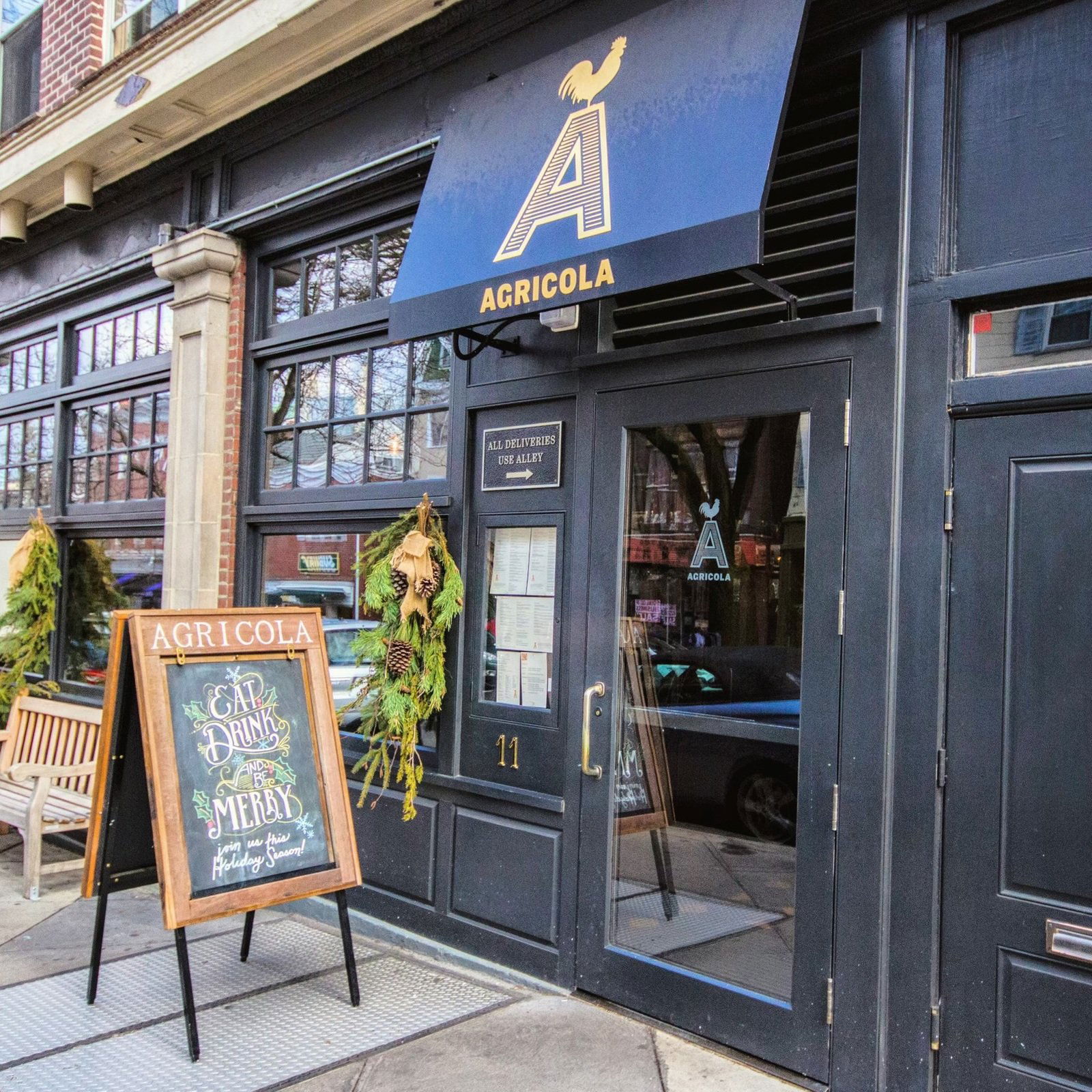
Agricola
Downtown Princeton, Princeton
Restaurant in Princeton, United States
 Book with Pearl
The Read
Price
$50–100per person
Dress
Smart Casual
Why go
Agricola is a useful Princeton pick for an easy central meal with enough range for repeat visits. Book it for casual dates, weeknight dinners, or mixed-taste groups; choose Elements for a more formal splurge, Mistral Princeton for a sharper small-plates night, and Mediterra when the table wants a Mediterranean-leaning alternative.
About Agricola
Agricola is a Princeton venue with daily hours and a smart-casual dress code. It opens at 11:30 AM Monday through Friday, 10:30 AM on Saturday and Sunday, closes at 10 PM Monday through Saturday, and closes at 9 PM on Sunday.
Use the hours as the planning filter
The clearest planning advantage is availability across the week. Agricola lists hours from 11:30 AM to 10 PM Monday through Friday, 10:30 AM to 10 PM on Saturday, and 10:30 AM to 9 PM on Sunday. That makes it a flexible Princeton option for plans that need a venue open earlier in the day as well as in the evening.
Menu details, pricing, cuisine, seating format, or specific dishes are not specified, so it is advisable to check current details directly before committing. The dress expectation is smart casual, offering a polished tone without requiring formal wear.
Who should choose it over other Princeton options
Choose Agricola when the priority is a Princeton plan with broad timing flexibility and a smart-casual dress expectation. If you are comparing nearby options, you can also look at Mistral Princeton, The Perch at Peacock Inn, or Elements, depending on the kind of visit you want.
The planning case is simple: Agricola is a practical Princeton option with daily hours. For a wider scan before committing, compare it with Mediterra and the full Princeton restaurants guide.
Planning details
- Location
- 11 Witherspoon St, Princeton, NJ 08542
- Reservations
- Book on Resy
- Website
- agricolaeatery.com
- Phone
- +16099212798
The take
The Take
The Vibe
Agricola presents a measured, serious approach to farm-driven dining in Princeton's walkable downtown. The writing emphasizes accountable sourcing and seasonal discipline, so the room reads less like decor and more like an extension of its kitchen-driven ethos. The place attracts a discerning local and visitor crowd, and its atmosphere leans toward refined, understated hospitality rather than showy trends. Overall it feels like a thoughtful destination for diners who care about provenance and menu rigor, offering a composed, polished experience grounded in nearby farms and the rhythms of the academic calendar.
Best For
Agricola suits evenings when you want a menu shaped by local farms and seasonality—think date nights, special-occasion dinners, and business meals where food provenance matters. Its proximity to Nassau Hall and Princeton’s central stretch makes it a convenient stop for visiting families, academics, and weekend guests with city-level expectations. Signature items like the flatbread and Griggstown chicken anchor the menu, and the restaurant’s commitment to changing dishes with the seasons keeps return visits rewarding. It’s a dependable choice when you want thoughtful ingredients presented with restraint and clarity.
Ordering Tips
Lean into the restaurant’s seasonal focus: ask the server which local farms influenced that day’s menu and what’s arriving from nearby producers. The flatbread and Griggstown chicken are cited as signature items and are good reference points for the kitchen’s style. Because the menu is driven by provenance and changeable by season, request recommendations that reflect current sourcing rather than assuming staples will always appear. If you care about tasting the region, inquire about the farms behind vegetables and dairy—those relationships define the Agricola experience.
Venue details
Ambiance
Rustic, warm, and inviting with multiple dining rooms, open kitchen, and comfortable atmosphere suitable for gatherings.
Tags
Vibe
Best For
Experience
Sourcing
Accessibility
At the Table
- Dress Code
- Smart Casual
- Noise Level
- Conversational
- Service Style
- Upscale Casual
- Meal Pacing
- Leisurely
- Capacity
- Medium
- Kitchen
- Farm-to-table
- Menu Format
- A la carte, Small plates
- Wine Program
- Curated
- Dietary
- Vegetarian friendly, Vegan options, Gluten-free options
- Private Dining
- Available
Signature Dishes
- flatbread
- Griggstown chicken
Know before you go
Know Before You Go
- Getting there
- 11 Witherspoon St, Princeton, NJ 08542
Planning details
Location
Also consider
Also Consider
- Mistral Princeton, Notable alternative
- Elements, Notable alternative
- Mediterra, Notable alternative
- The Perch at Peacock Inn, Notable alternative
- Chatpati Delhi, Indian, Indian
Restaurant context
How Agricola compares in Princeton
Agricola is the practical middle lane in Princeton: easier to slot into a normal night than Elements, less formal than The Perch at Peacock Inn, and broader in appeal than Mistral Princeton. For a serious splurge, Elements is the clearer choice. For a relaxed central dinner, Agricola is easier to recommend.
Against Mediterra, the decision comes down to mood: Mediterra is the better cross-shop when the group wants a Mediterranean-leaning meal, while Agricola works better as a flexible repeat option. Chatpati Delhi is the outlier for Indian food rather than a like-for-like substitute, but it is useful when value and a more casual meal matter more than ambiance.
Booking difficulty is the quiet advantage here. If the table cannot line up Elements or wants less ceremony than The Perch at Peacock Inn, Agricola is the safer Princeton reservation to pursue first, with Mistral Princeton and Mediterra as the closest alternates depending on appetite and group style.
Explore Princeton
Around this place
Discover more on Pearl
Unlock the full Agricola guide in Pearl, including awards, comparisons, FAQs, planning details, and nearby places.
Compare Agricola
| Venue | Location | Cuisine | Awards |
|---|---|---|---|
| Agricola | Princeton | , | No published awards |
| Mistral Princeton | Princeton | , | 2026 OAD Casual in North America Recommended2025 OAD Casual in North America Ranked · #832 |
| Elements | Princeton | , | No published awards |
| Mediterra | Princeton | , | No published awards |
| The Perch at Peacock Inn | Princeton | , | 2026 Wine Spectator Best of Award of Excellence2025 Wine Spectator Best of Award of Excellence |
| Chatpati Delhi | Franklin Park | Indian | 2025 New York Times America's Best Restaurants |



How Agricola Princeton compares with similar nearby venues.
FAQ
Frequently Asked Questions
How far ahead should I plan for Agricola?
A specific booking window is not specified. Agricola is open 11:30 AM to 10 PM Monday through Friday, 10:30 AM to 10 PM on Saturday, and 10:30 AM to 9 PM on Sunday, so choose a time within those listed hours and confirm availability directly.
What should I wear to Agricola?
The dress code is smart casual. Formal wear is not required.
Is Agricola good for a special occasion?
It can be considered for a Princeton meal if the listed hours and smart-casual dress code fit your plans. Details regarding a tasting-menu format, private dining, pricing, or other special-occasion specifics are not available, so confirm those points directly if they matter for the event.
Is midday or evening better at Agricola?
Agricola opens at 11:30 AM Monday through Friday and 10:30 AM on Saturday and Sunday, with evening hours daily. Separate midday or dinner menus are not specified, so the better time depends on your schedule and current availability.
Does Agricola handle dietary restrictions?
What are alternatives to Agricola?
Other options to compare include Mistral Princeton, Elements, Mediterra, Chatpati Delhi, and The Perch at Peacock Inn. The best choice depends on your preferred timing, dress expectations, and the details each venue offers.