
Restaurant in Tokyo, Japan
Ponta Honke
450Pearl Points120 years of craft at honest prices.

.png?width=144&height=144&quality=80)

About Ponta Honke
Ponta Honke has run continuously from the same Ueno address since 1905, making it one of Tokyo's most historically grounded yoshoku restaurants. With a Michelin Bib Gourmand (2024), a #75 ranking on Opinionated About Dining Casual Japan (2025), and a ¥¥ price point, it is one of the city's clearest arguments for serious cooking at an accessible price. Book for lunch and pair with the Ueno neighbourhood.
Verdict: One of Tokyo's most honest meals at one of its most honest prices
120 years of continuous operation is the single most telling number at Ponta Honke. Since 1905, four generations of the Shimada family have served the same category of dish — yoshoku, Japan's tradition of Western-influenced cooking — from the same address in Ueno, Taito City. Chef Yoshihiko Shimada holds a Michelin Bib Gourmand (2024) and a ranking of #75 in the Opinionated About Dining Casual Japan list (2025). At a ¥¥ price point, this is one of the most credentialed affordable meals in Tokyo. If you are looking for a serious, historic dining room with no performance and no price premium, book Ponta Honke.
The Room and the Experience
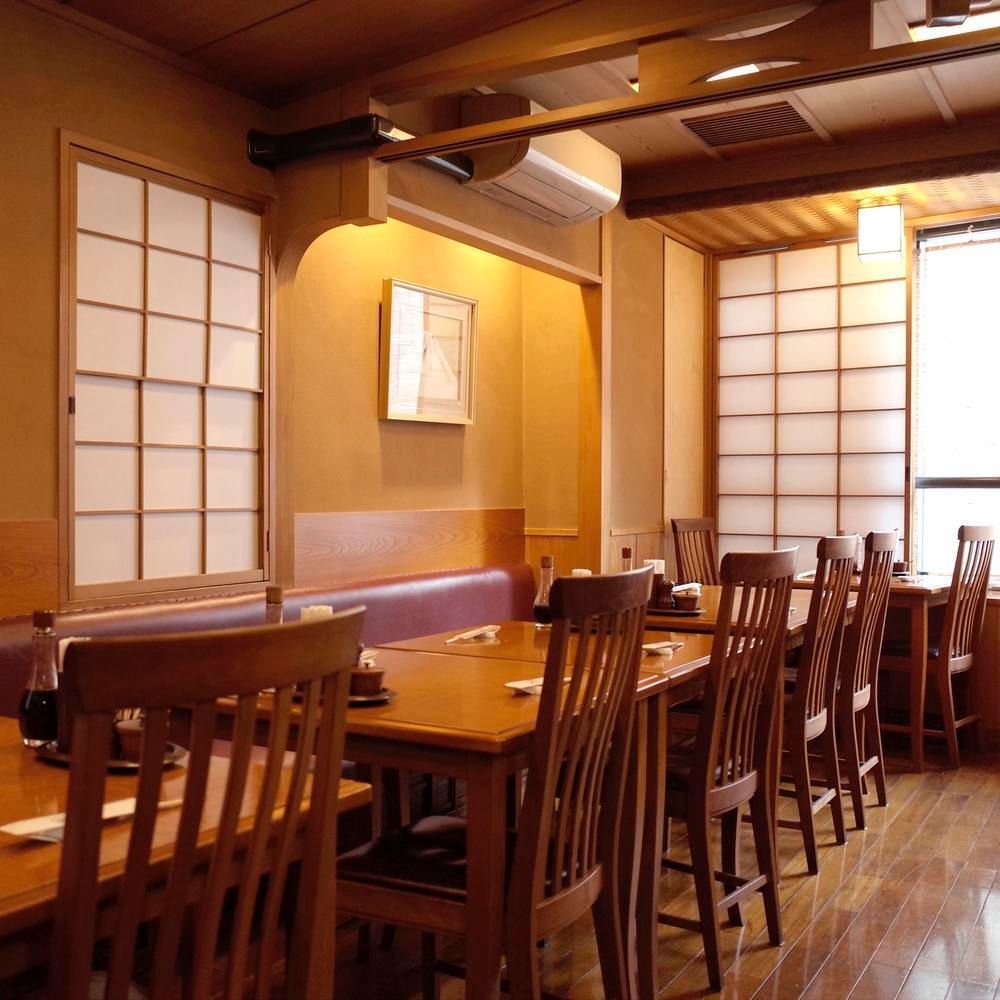
Ponta Honke's dining room carries the weight of a family enterprise that has never tried to be anything other than what it is. The space reads as intimate rather than grand, the kind of room where the layout and seating reflect decades of practical refinement rather than designer intervention. This is not a minimalist showpiece or a buzzy open kitchen. It is a room shaped by four generations of family service, and that restraint is the point. For a food-focused traveller who wants to understand what Tokyo's older Western-influenced restaurant tradition actually looks like in practice, the spatial experience here delivers more context than most contemporary venues can.
The physical setting in Ueno puts Ponta Honke in one of Tokyo's most historically layered neighbourhoods, close to the park, the museums, and the market energy of Ameyoko. It is not a destination you stumble into; it requires intent. That is part of its appeal for the traveller who seeks depth over convenience. If your Tokyo itinerary is built around cultural density, the Ueno address makes Ponta Honke a natural anchor for a morning or midday meal before the area's museums and markets. For broader Tokyo dining context, see our full Tokyo restaurants guide.
The Food: Yoshoku Done with Complete Seriousness
Yoshoku, the Japanese reinterpretation of Western dishes that developed from the Meiji era onward, is not a minor culinary category in Japan, but it is underrepresented in the international food conversation relative to sushi or kaiseki. Ponta Honke is one of the clearest arguments for taking it seriously. The kitchen's approach is built on craft that predates modern restaurant culture: the chef's katsu is deep-fried in lard trimmed by hand from the same pork that will be cooked, the cabbage is hand-chopped, and every element of preparation follows a method inherited from the first generation. Nothing here is delegated to convenience.
For the food-focused traveller, the significance of this is practical, not sentimental. Hand-trimmed lard produces a different fry than commercial shortening. Hand-chopped cabbage has a different texture than machine-cut. These are not romantic details, they are the reasons the food tastes the way it does, and why the Michelin Bib Gourmand recognition is grounded in technique rather than atmosphere. If you want to compare yoshoku at different price points across Japan, KORISU in Kyoto and Yoshoku Izumi in Osaka are two worthwhile reference points in the same category. Tokyo peers in the broader Western-influenced cooking space include grill GRAND and YŌSHOKU BISTRO TŌYAMA.
Breakfast and Lunch Format: When to Go
Given the editorial angle here, what the daytime service delivers, Ponta Honke is a strong case for a morning or early afternoon visit. Yoshoku dishes such as katsu are traditionally lunch-anchored in Japan, and the format at a ¥¥ price point means the economics of a midday meal here are genuinely accessible. Hours are not confirmed in our database, so verify directly before visiting, but the category convention strongly suggests lunch is the primary service. A midday visit also allows you to pair the meal with the Ueno area itself, the park, Ameyoko market, and the cluster of museums are all within walking range.
If you are building a Tokyo restaurant itinerary that spans price points and formats, Ponta Honke works well as your daytime anchor before an evening reservation at a higher-price-tier venue. For reference on what else Tokyo's dining scene covers, see our full Tokyo restaurants guide, and if you are planning across Japan's other major cities, HAJIME in Osaka, Gion Sasaki in Kyoto, and Goh in Fukuoka represent the range of what serious dining looks like across the country.
Practical Details
Reservations:Budget: ¥¥, making this one of the most affordable credentialed meals in Tokyo. Dress: No dress code information confirmed, smart casual is appropriate for any Bib Gourmand venue. Getting there: Ueno, Taito City; the address (3 Chome-23-3 Ueno) puts you close to Ueno Station, which is served by multiple JR and subway lines. Booking method: Not confirmed in our database, phone is the most reliable approach for older Tokyo family restaurants in this category. For hotels near Ueno, see our full Tokyo hotels guide. For further Tokyo exploration, bars, wineries, and experiences guides are available.
Pearl Picks: More Tokyo and Beyond
- grill GRAND, Western-influenced cooking in Tokyo
- Mejiro Shunkotei, Tokyo casual dining
- YŌSHOKU BISTRO TŌYAMA, Yoshoku in Tokyo
- Harutaka, Sushi at the top end of Tokyo's market
- L'Effervescence, French dining in Tokyo
- KORISU, Yoshoku in Kyoto
- Yoshoku Izumi, Yoshoku in Osaka
- HAJIME, Osaka fine dining
- Gion Sasaki, Kyoto kaiseki
- akordu, Nara dining
- Goh, Fukuoka fine dining
- 1000, Yokohama dining
- 6, Okinawa dining
Frequently Asked Questions
How far ahead should I book Ponta Honke?
A few days ahead is usually enough given the ¥¥ price point — this is not a months-long waitlist situation. That said, Ponta Honke holds a Michelin Bib Gourmand and ranks #75 on OAD Casual Japan 2025, so it draws consistent foot traffic. Call or visit in person to confirm, as the venue does not list an online booking system in available records.
Can Ponta Honke accommodate groups?
Nothing in the available venue data specifies a private dining room or maximum party size, so check the venue's official channels before planning a large group visit. The room is described as intimate, which typically limits group flexibility. For straightforward group bookings at this price range, a venue with confirmed private dining arrangements may be a safer choice.
Does Ponta Honke handle dietary restrictions?
The kitchen's signature preparation uses lard rendered from the same pork being fried, which is central to the dish and unlikely to be substituted. Pork-free or lard-free requests would conflict directly with the core offering here. Diners with pork or animal-fat restrictions should look elsewhere.
Is the tasting menu worth it at Ponta Honke?
Ponta Honke does not operate a tasting menu format — this is a yoshoku restaurant where the tonkatsu is the main event, not a multi-course progression. At ¥¥ pricing with a Michelin Bib Gourmand, the value case is built around a focused, honest meal rather than breadth. If a tasting format is your priority, RyuGin or L'Effervescence serve that need at a very different price point.
Is Ponta Honke worth the price?
At ¥¥ pricing with a 2024 Michelin Bib Gourmand and a #75 OAD Casual Japan ranking, Ponta Honke sits in a strong value bracket for Tokyo. The Bib Gourmand is specifically Michelin's marker for quality at a reasonable price, and 120 years of family operation with hand-trimmed lard and hand-chopped cabbage reflects genuine craft, not nostalgia performance. For the category, yes — it is worth it.
What should a first-timer know about Ponta Honke?
Come for the pork cutlet and nothing else — the kitchen has been refining one core dish across four generations and that focus is the point. The restaurant is in Ueno (3 Chome-23-3 Ueno, Taito City), easy to reach and not hidden away. Expect a modest, family-run room rather than a polished dining room, and note that the lard-based frying method is integral to the recipe, not optional.
Is Ponta Honke good for solo dining?
Yes — a focused single-dish restaurant at ¥¥ pricing is well-suited to solo visits, and the counter or small-table format common in Tokyo yoshoku restaurants makes eating alone comfortable. The intimate scale of a family-run room reinforces that. Solo diners often get served faster, which matters if you're working through a Tokyo day.
Location
3 Chome-23-3 Ueno, Taito City, Tokyo 110-0005, Japan
Tokyo, Japan
Compare Ponta Honke
| Venue | Awards | Price |
|---|---|---|
| Ponta Honke | ¥¥ | |
| Harutaka | Michelin 3 Star, World's 50 Best | ¥¥¥¥ |
| RyuGin | Michelin 3 Star, World's 50 Best | ¥¥¥¥ |
| L'Effervescence | Michelin 3 Star, World's 50 Best | ¥¥¥¥ |
| HOMMAGE | Michelin 2 Star, World's 50 Best | ¥¥¥¥ |
| Florilège | Michelin 2 Star, World's 50 Best | ¥¥¥ |
Comparing your options in Tokyo for this tier.
Also Consider
- Harutaka, Sushi, ¥¥¥¥
- RyuGin, Kaiseki, Japanese, ¥¥¥¥
- L'Effervescence, French, ¥¥¥¥
- HOMMAGE, Innovtive French, French, ¥¥¥¥
- Florilège, French, ¥¥¥
Ponta Honke sits in a different category from most of its credentialed Tokyo peers, not because the cooking is lesser, but because the format and price point serve a different decision. At ¥¥ with a Bib Gourmand, it occupies the same tier of Michelin recognition as a strong neighbourhood restaurant, while venues like Harutaka (Sushi, ¥¥¥¥) and RyuGin (Kaiseki, ¥¥¥¥) operate at four to five times the spend per head. If your question is where to eat well in Tokyo without a significant outlay, Ponta Honke answers it more directly than any of those venues. If your question is where to have Tokyo's most technically accomplished single meal, the ¥¥¥¥ tier is where that competition takes place.
Against the French-influenced end of Tokyo's dining scene, L'Effervescence (¥¥¥¥), HOMMAGE (¥¥¥¥), and Florilège (¥¥¥), Ponta Honke is the inverse proposition: Japanese-inflected Western cooking rather than French technique applied to Japanese ingredients. For the traveller who wants to understand Japan's own relationship with Western food traditions, Ponta Honke is the more relevant choice. For a contemporary French tasting menu in Tokyo, Florilège at ¥¥¥ is the most accessible of that group, but it is still a meaningfully higher spend than Ponta Honke.
On booking difficulty, Ponta Honke is the easiest option in this peer set. Harutaka, RyuGin, L'Effervescence, and HOMMAGE all require advance planning and in some cases months-ahead reservations. Ponta Honke at ¥¥ with easy booking availability is the right call for travellers whose itinerary is not fixed far in advance, or who want to add a high-quality meal without the logistical overhead of a top-tier reservation. The trade-off is format and occasion: Ponta Honke is a lunch or casual dinner proposition, not a special-occasion destination in the way the ¥¥¥¥ tier venues are.
Recognized By


Explore Tokyo
Save or rate Ponta Honke on Pearl
Keep this venue in your Pearl passport, rate it after you visit, and track it alongside every other place you collect.