
Restaurant in Yokohama, Japan
Nodaiwa (野田岩)
100ptsKanto-Style Eel Tradition
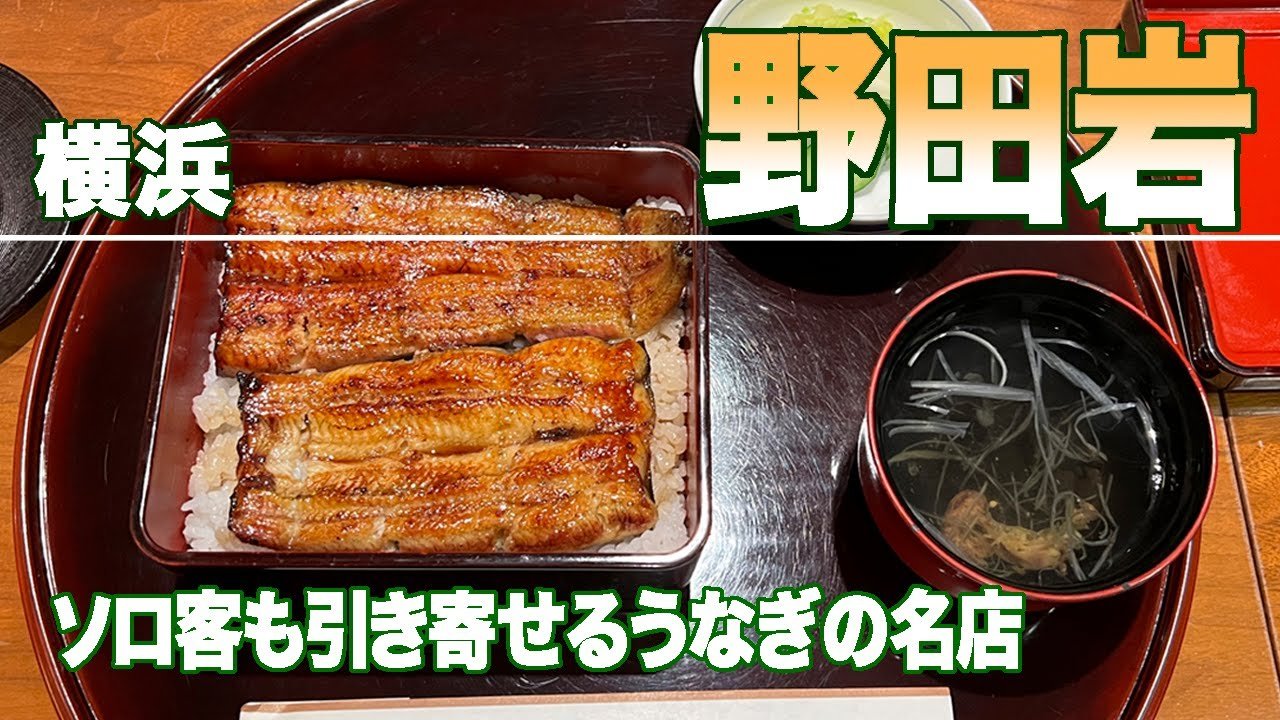
About Nodaiwa (野田岩)
Nodaiwa (野田岩) is a Yokohama outpost of one of Japan's most storied unagi houses, located on the fifth floor of the Takashimaya department store in Nishi-ku. The Tokyo flagship dates back over two centuries, placing this branch within a lineage that represents eel cuisine at its most historically grounded. For visitors seeking a serious eel counter in Yokohama, Nodaiwa carries credentials that few department-store restaurants in Japan can match.
Eel and the Long History Behind It
Japanese unagi cuisine does not belong to a single generation or a single chef. It developed over centuries into a set of strict regional conventions: the Kanto style of steaming before grilling, the Kansai preference for grilling direct, the specific timings of sansho pepper and the lacquered sweetness of tare. When a restaurant draws on more than two hundred years of institutional practice, those conventions are not choices — they are inherited obligations. Nodaiwa (野田岩), the Yokohama branch of the Tokyo house that traces its origins to the Edo period, operates inside exactly that framework. It sits on the fifth floor of the Yokohama Takashimaya department store in Nishi-ku, an address that places it at the centre of the city's main commercial hub, steps from Yokohama Station.
The department-store context is worth addressing directly. In Japan, the leading floors of major depato are not overflow space — they are competitive restaurant floors where long-established houses place satellite operations specifically to reach a transit-adjacent, discerning clientele. The fifth floor of Takashimaya in Yokohama follows that pattern. A Nodaiwa branch here signals deliberate expansion into the city's busiest pedestrian corridor, not a compromise with a secondary site.
The Kanto Tradition on the Plate
Unagi in the Kanto region , the broader Tokyo-Kanagawa corridor , is prepared in a sequence that defines the cuisine here: the eel is split, skewered, briefly steamed to draw out fat, then finished over charcoal and lacquered repeatedly with tare. The result is a texture distinct from anything produced by the Kansai direct-grill method: softer in the centre, with a caramelised exterior that carries the deep, slightly bitter edge of charcoal smoke. This method demands precise timing and temperature knowledge accumulated across many repetitions. In a house with Nodaiwa's generational depth, it is that accumulated knowledge that sits behind each dish, not any individual chef's creative interpretation.
The classic ordering unit for eel in this tradition is the unaju, a lacquered box presenting eel over rice with the tare pooling at the base, or the hitsumabushi, where the rice and eel are portioned and the last serving is taken with dashi poured over the leading. These formats have not changed substantially in generations , and at a restaurant like Nodaiwa, that stability is the point. Comparing this to the seasonal-menu dynamism you find at kaiseki houses such as Gion Sasaki in Kyoto or the precision-driven European structures at HAJIME in Osaka illustrates how differently the genre operates: unagi restaurants are custodians of a fixed tradition, not participants in a seasonal conversation.
Yokohama's Dining Architecture
Yokohama's restaurant offer divides across several distinct zones. Chinatown anchors one of Japan's densest concentrations of Chinese dining, with dim sum institutions like Manchinro Tenshinpo (萬珍樓 點心舗) operating at serious depth. The sushi tier is represented by counters including Nakajo and Omino Kamiyacho. For yakitori, 1000 operates at the JPY 15,000–19,999 price bracket with a focused skewer format. Among these, a specialist unagi house with multi-generational credentials occupies a category almost entirely its own. The cuisine type is rarely represented at the level of institutional seriousness that Nodaiwa carries into the market.
The Yokohama Takashimaya address , specifically 西区南幸1-6-31, 5F , is functionally a short walk from Yokohama Station's main exits, making it among the most accessible serious-dining destinations in the city. That matters for visitors building a broader Japan itinerary. Connections to Tokyo are frequent and fast from Yokohama, and the city's dining scene rewards building in stops alongside, not only as part of, a Tokyo-focused programme. For deeper context on how the city's restaurants fit together, our full Yokohama restaurants guide maps the neighbourhood-level offer across cuisine types.
Situating the House in the Broader Unagi Category
Within Japan's unagi restaurant tier, the Tokyo Nodaiwa flagship is one of the country's most historically documented eel houses, with a lineage tracked across the early nineteenth century. The Yokohama branch sits as an extension of that institutional identity. It is useful to think of the peer set not as other Yokohama restaurants, but as other storied unagi houses in Japan's major cities , places where the cuisine is treated as an inherited art rather than a contemporary technique. That is a smaller and more defined category than it might first appear. Compared to the multi-format innovation visible in fish-focused restaurants outside Japan, such as Le Bernardin in New York City, the unagi house tradition places an almost complete premium on fidelity over invention.
Other strong Japan restaurant references from EP Club's wider coverage , including Harutaka in Tokyo, akordu in Nara, and Goh in Fukuoka , each represent distinct points in Japanese fine dining, from tradition-rooted sushi to European-inflected kaiseki. The unagi house sits outside all of those frameworks, operating in a specialist lane where the criteria for seriousness are specific: sourcing quality, charcoal type, tare age, and the precision of the steaming step.
Planning a Visit
The fifth-floor Takashimaya location follows department-store operating hours, which in Japan typically open by late morning and run into the evening. Reservations for serious unagi meals at heritage houses are advisable, particularly at lunch, when the format draws both local regulars and visitors with time-sensitive itineraries. Because the venue database does not carry current booking information for this branch, confirming hours and reservation availability directly with the Takashimaya restaurant floor before visiting is the practical approach. The venue is in the 220-0005 postcode, reachable from Yokohama Station's west exit. Other EP Club-reviewed restaurants across Japan's regions , from Enishi in Yokohama to specialist formats in smaller cities like Nanao and Sapporo , can be coordinated into a broader regional itinerary.
Frequently Asked Questions
What should I eat at Nodaiwa (野田岩)?
The core of the Nodaiwa tradition is eel prepared in the Kanto style: steamed before charcoal-grilling and lacquered with a house tare that, at the Tokyo flagship, is maintained as a running reduction built over generations. The standard ordering formats are unaju (eel over rice in a lacquered box) and the course-style progression that includes liver soup and pickles alongside. These are the dishes that define what this house does , ordering outside that core is missing the point of coming.
How far ahead should I plan for Nodaiwa (野田岩)?
Because this is a department-store branch rather than a standalone counter, walk-in access may be more realistic than at the Tokyo flagship, particularly outside peak lunch hours. That said, heritage eel houses in Japan attract deliberate diners who plan around them, and the Yokohama Takashimaya floor is a high-footfall location. Confirming availability by phone or in person on the day is reasonable; booking a day or two ahead if your travel schedule is fixed is the safer position.
What's Nodaiwa (野田岩) leading at?
Unagi in the Kanto tradition is what this house has done for over two centuries at the Tokyo level, and the Yokohama branch carries that institutional precision. The strength is in the cooking method , the steaming and grilling sequence, the layered tare application, the charcoal finish , rather than in menu breadth or seasonal variation. This is a cuisine where the repetition of a narrow technique across decades produces something that cannot be replicated at a general Japanese restaurant.
Is Nodaiwa (野田岩) in Yokohama the same as the Tokyo flagship?
The Yokohama branch operates as an extension of one of Japan's most historically documented unagi houses, with the Tokyo original tracing its lineage to the Edo period. Branch operations in Japanese department stores typically follow the mother house's sourcing and preparation standards, though the experience of visiting a transit-adjacent satellite differs from the standalone original. For those who cannot reach the Tokyo location, the Yokohama branch represents access to the same culinary tradition at a more logistically convenient address , the Takashimaya 5F, steps from Yokohama Station.
Related editorial
- Best Fine Dining Restaurants in ParisFrom three-Michelin-star icons to the next generation of Parisian chefs pushing boundaries, these are the restaurants that define fine dining in the world's culinary capital.
- Best Luxury Hotels in RomeFrom rooftop terraces overlooking ancient ruins to Michelin-starred hotel dining, these are the luxury hotels that make Rome unforgettable.
- Best Cocktail Bars in KyotoFrom sleek lounges to hidden speakeasies, Kyoto's cocktail scene blends Japanese precision with global influence in ways you won't find anywhere else.
Save or rate Nodaiwa (野田岩) on Pearl
Keep this venue in your Pearl passport, rate it after you visit, and track it alongside every other place you collect.