
Restaurant in Newark, United States
Konoz Restaurant
100ptsNewark Middle Eastern Table
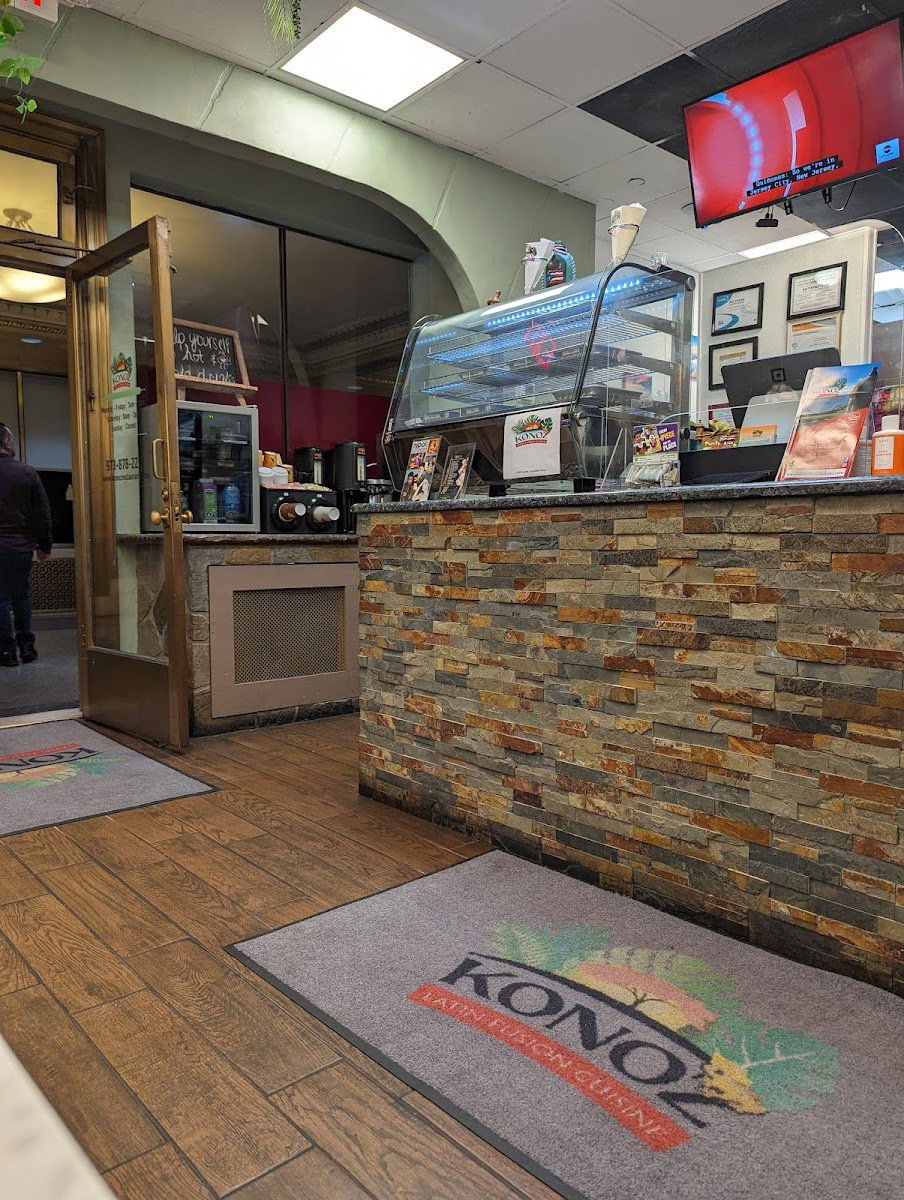
About Konoz Restaurant
Konoz Restaurant occupies a Clinton Street address in Newark's downtown corridor, drawing from a dining scene that has quietly broadened its range of cuisines over the past decade. The restaurant sits within reach of a neighbourhood that rewards exploration, positioned among a cohort of independent operators that give Newark's restaurant community its particular character.
Clinton Street and the Texture of Newark's Independent Dining Scene
The stretch of Clinton Street that runs through Newark's downtown is not a restaurant row in any conventional sense. There are no marquee names announcing themselves from illuminated facades, no valet queues spilling onto the pavement. What you find instead is a more considered kind of dining presence, the sort that sustains itself through neighbourhood loyalty and word-of-mouth rather than tourist foot traffic. Konoz Restaurant, at 16 Clinton St, sits within that pattern. Its address alone positions it inside a local dining ecology that has been shaped less by national press attention than by the communities who actually live and work in Newark.
That context matters, because Newark's restaurant scene is frequently misread by visitors arriving with New York City assumptions. The city is not a satellite of Manhattan's dining industry. It has its own histories, its own immigrant communities, and its own culinary reference points. The Ironbound district, a few blocks east, has carried a Portuguese and Spanish identity for generations, anchored by places like Campino Restaurant, Don Pepe Restaurant, and Fornos of Spain. The broader downtown has added range over the past decade, with spots like Jack's Restaurant and Bar and Seoul Tofu House indicating a more varied appetite among the city's diners. Konoz operates within that expanding frame.
What the Cuisine Tradition Brings to the Table
The name Konoz carries resonance in Arabic, where it translates roughly to treasures or stores of value — a signal toward a culinary tradition rooted in Middle Eastern and North African cooking. That tradition is one of the most texturally complex in the world, built on centuries of trade route exchange between the Levant, the Gulf, the Maghreb, and the Mediterranean. Rice dishes cooked with layered spicing, slow-braised proteins, bread used as both vessel and accompaniment, cold mezze that arrive before any main course has been considered: these are the structural habits of a cooking culture that treats time as an ingredient.
In the American context, Middle Eastern restaurants have historically occupied either a fast-casual register or a special-occasion format, with relatively little space between. The fast-casual end is well-documented: falafel counters, shawarma wraps, hummus platters served in the kind of places where you order at a window. The more formal end has been slower to develop outside major metropolitan centres, though cities with significant Arab-American populations — Detroit, Dearborn, parts of greater New York , have sustained more complete expressions of this cooking for decades. Newark's own demographics, with communities tracing roots across North Africa and the broader Middle East, provide the neighbourhood context that tends to produce the most grounded versions of this cuisine.
That grounding shows up not in performance or novelty but in the kind of cooking that assumes the diner already understands the reference points. A properly made kibbeh is not explained; it is simply brought out and expected to speak for itself. The same logic applies to the slow-cooked lamb dishes and rice preparations that form the structural backbone of Gulf and Levantine festive cooking. Whether Konoz works from a Lebanese, Egyptian, Gulf, or broader pan-Arab frame, the shared culinary grammar involves depth of spice, quality of protein, and the social structure of the meal as much as any individual dish.
How Newark Compares to the Wider American Dining Map
It is worth placing Newark's independent dining scene against the wider American restaurant map, not to diminish it but to calibrate expectations honestly. The most formally recognised restaurants in the country operate at a tier defined by multi-year waiting lists, tasting menus priced above two hundred dollars per person, and culinary programs that attract international press attention. Places like Le Bernardin in New York City, Alinea in Chicago, The French Laundry in Napa, Lazy Bear in San Francisco, or Atomix in New York City sit at that upper register. Others, like Blue Hill at Stone Barns in Tarrytown, Single Thread Farm in Healdsburg, Providence in Los Angeles, Addison in San Diego, The Inn at Little Washington, and Emeril's in New Orleans, represent the broader cohort of destination dining that draws visitors specifically for the restaurant experience. Internationally, benchmark addresses like 8½ Otto e Mezzo Bombana in Hong Kong define what award-level expectations look like outside the US entirely.
Konoz operates in a different register from all of these, and there is no editorial case for pretending otherwise. Its value is not measured against Michelin stars or 50 Best rankings. It is measured against the question of whether a city like Newark has access to honest, technically grounded cooking in the cuisines that matter most to its own population. On that question, the presence of an independently run Middle Eastern restaurant on Clinton Street is meaningful. The wider Newark restaurants guide tracks that diversity across price points and cuisine categories.
Planning Your Visit
Verified operational details for Konoz , including hours, phone, and booking method , are not confirmed in current records, so the practical advice here is direct: call ahead or visit in person before making a specific trip. Clinton Street is accessible from Newark Penn Station, which connects to New York Penn Station via NJ Transit in under thirty minutes, making the restaurant reachable for visitors based in the city without requiring a car. Downtown Newark is walkable from the station, though the neighbourhood rewards a degree of local orientation before your first visit. Dress expectations at independent restaurants in this part of Newark tend toward the casual; there is no evidence of a formal dress code at Konoz. For allergy and dietary requirements, direct contact with the restaurant before arrival is the appropriate route, given that Middle Eastern cooking often involves sesame, wheat, and dairy across multiple dishes by default.
Frequently Asked Questions
What should I eat at Konoz Restaurant?
Without confirmed menu data, the structural starting point for any Middle Eastern table is the mezze selection: cold dishes, dips, and small plates that arrive before the main course and set the tone for the meal. From there, rice-based main dishes and slow-cooked proteins are typically the heart of the menu in this culinary tradition. Ask the staff for their recommendation on the day, as availability in independent kitchens often reflects what is freshest.
Do I need a reservation for Konoz Restaurant?
In a city like Newark, where independently run restaurants in the downtown corridor serve a working local clientele rather than a destination dining crowd, walk-in availability is often reasonable on weekday evenings. That said, if you are travelling specifically to eat at Konoz, a call ahead is advisable given that booking policies are not confirmed in current public records. Weekend evenings may require more planning.
What is Konoz Restaurant leading at?
Based on its cultural frame, Konoz is leading positioned as a practitioner of Middle Eastern cooking in a city where that tradition is supported by genuine community demand rather than novelty. The cuisine's strengths , depth of spice, generosity of portion, social structure of the meal , tend to show most clearly in shared-table formats. Ordering broadly across the menu, rather than focusing on a single dish, reflects how this cooking tradition is intended to be experienced.
Do they accommodate allergies at Konoz Restaurant?
Phone and website details are not confirmed in current records for Konoz. The direct approach for allergy information is to contact the restaurant before visiting. Middle Eastern cooking typically involves sesame in multiple forms, wheat across bread and pastry elements, and dairy in some preparations, so advance communication is particularly important for guests with sensitivities in those categories.
Is Konoz Restaurant a suitable choice for a group dinner in Newark?
Middle Eastern dining formats are structurally suited to groups: the tradition of shared mezze, large-format main dishes, and communal bread service means that larger tables often experience the cuisine more fully than solo diners. If Konoz follows that tradition, a group of four to eight diners would be positioned to order across the menu and eat in the way the cooking was designed to be served. Confirming capacity and group booking arrangements directly with the restaurant is recommended before arriving with a larger party.
Related editorial
- Best Fine Dining Restaurants in ParisFrom three-Michelin-star icons to the next generation of Parisian chefs pushing boundaries, these are the restaurants that define fine dining in the world's culinary capital.
- Best Luxury Hotels in RomeFrom rooftop terraces overlooking ancient ruins to Michelin-starred hotel dining, these are the luxury hotels that make Rome unforgettable.
- Best Cocktail Bars in KyotoFrom sleek lounges to hidden speakeasies, Kyoto's cocktail scene blends Japanese precision with global influence in ways you won't find anywhere else.
Save or rate Konoz Restaurant on Pearl
Keep this venue in your Pearl passport, rate it after you visit, and track it alongside every other place you collect.