

Restaurant in Manele, United States
Four Seasons Resort Lanai
0Pearl PointsIsland-Edge Resort Table
 Part of Four Seasons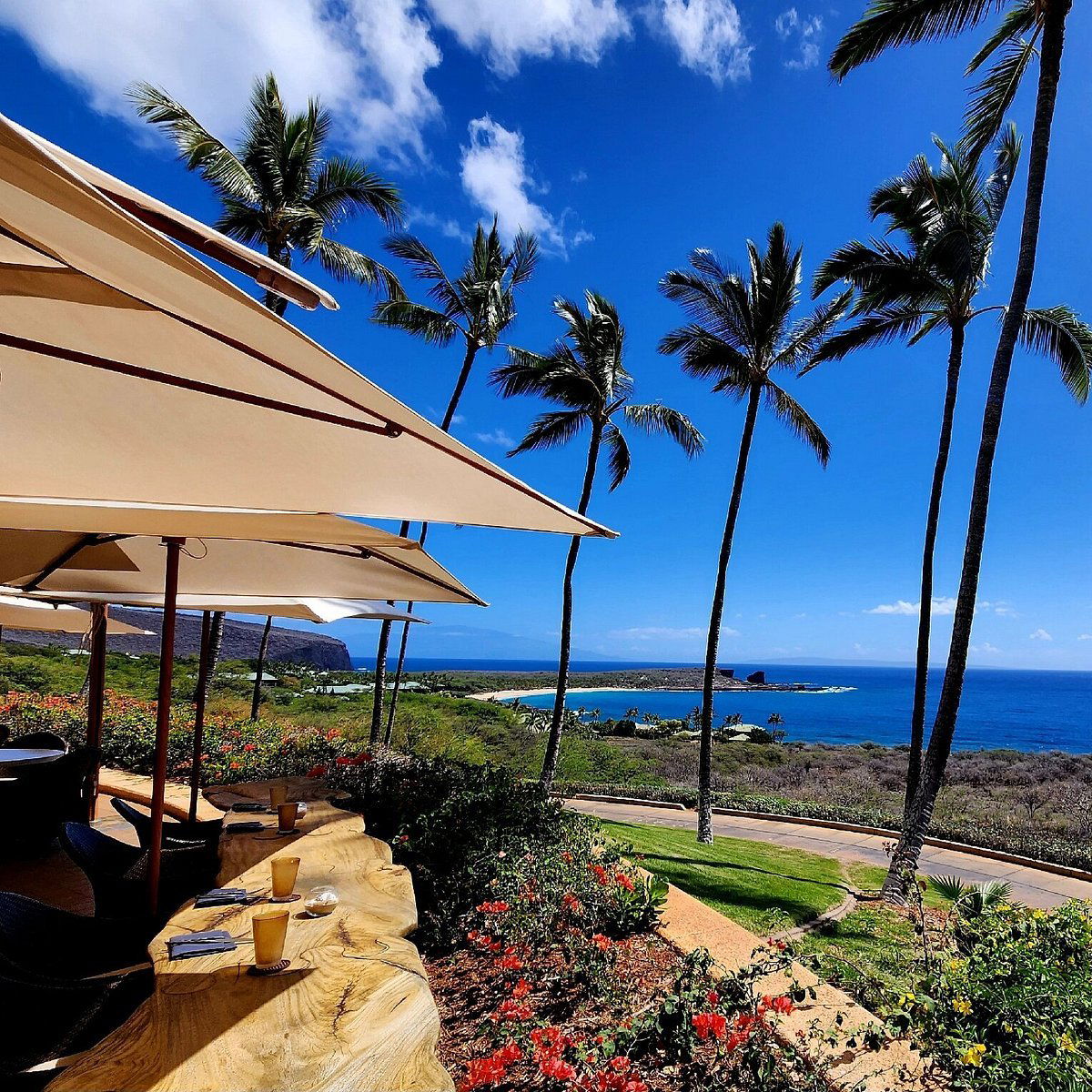
About Four Seasons Resort Lanai
Current identity verified as Four Seasons Resort Lanai.
The Geography of a Meal at the Edge of Lanai
Lanai sits roughly nine miles off Maui's southwest coast, reachable by ferry or a short charter flight. The island has no traffic lights, fewer than 3,200 permanent residents, a coastline that alternates between volcanic rock shelves and sheltered bays. Manele Bay occupies the southern end of that coastline, where the water turns a deep, consistent blue and spinner dolphins move through the channel most mornings. It is one of the more geographically isolated resort destinations in the United States, that isolation defines what any serious dining here must confront: almost nothing edible grows or lands nearby without intention.
1 Manele Bay Rd is a restaurant in Lanai City, Hawaii, with a price point around $100 per person. Whatever is on the table arrived by boat, barge, or air. That logistical reality, which sounds like a constraint, has historically pushed the better kitchens on Lanai toward tighter sourcing relationships and more considered menus than their square footage might otherwise suggest. When resupply is infrequent and expensive, waste becomes a kitchen discipline, not just an environmental posture.
Sourcing at a Remove: What Island Isolation Actually Means
The ingredient sourcing story for any serious restaurant on Lanai is structural, not aspirational. Hawaii's broader farm-to-table movement gained visible momentum in the late 1990s and early 2000s, when chefs on Oahu and Maui began formalizing relationships with local growers to reduce dependence on mainland imports. Lanai, with its smaller population and single dominant resort operator, arrived at the same destination through a different route: necessity. The island cannot absorb the supply chain redundancies that a Honolulu kitchen might treat as standard backup.
That produces a menu logic closer to what you find at places like Single Thread Farm in Healdsburg or Blue Hill at Stone Barns in Tarrytown, where the farm or the geography sets the menu rather than the menu dictating procurement. It is a different pressure, but the outcome for the diner is similar: you are eating what the place can actually support, not a simulacrum of some other city's cuisine. That specificity has real value.
Hawaii's Pacific position also means the ingredient palette is genuinely different from the continental United States. Local reef fish, deep-water catches from Hawaiian waters, tropical produce with no mainland equivalent, proteins with distinct regional character all appear in the better kitchens here in ways that are difficult to replicate at Le Bernardin in New York City or Alinea in Chicago regardless of those kitchens' sourcing ambitions.
The Setting: Manele Bay as Physical Context
The Manele Bay area functions as a resort enclave within an island that is itself a destination apart from mainstream Hawaii tourism. Visitors here are not passing through; the ferry schedule and flight options mean everyone arrived with a specific intention. That self-selecting quality gives the dining scene a different demographic than, say, Waikiki: fewer one-night stoppers, more guests with the patience for a longer meal and an interest in where their food came from.
The bay itself is protected on three sides, which keeps the water calm enough for snorkeling most of the year and gives waterside positions a predictable visual anchor regardless of season. Mornings and evenings read differently here: mornings are cool and quiet, evenings carry the trade winds and the particular quality of light that Hawaii's latitude produces in the final hour before sunset. For dining purposes, evening positions near the water have a distinct atmospheric advantage over midday.
How Manele Fits the Broader Hawaii Fine Dining Picture
Hawaii's premium dining scene has become considerably more sophisticated over the past two decades. Providence in Los Angeles and Addison in San Diego represent the kind of precision-led American fine dining that influences what ambitious Hawaii kitchens now measure themselves against. The island state has produced its own recognizable culinary identity, sometimes called Hawaii Regional Cuisine, built on the archipelago's multicultural food history and its Pacific sourcing advantages.
Lanai's position within that landscape is as a quieter, more concentrated version of the Hawaii luxury experience. The island has never competed on volume. What it offers instead is the sense of a place that has not been optimized for throughput. That is a legitimate differentiator in a market where The French Laundry in Napa and Lazy Bear in San Francisco define what a certain tier of American restaurant experience can look like at maximum execution. Lanai's version of that tier is quieter, less scrutinized, dependent on the island's physical remoteness to generate its particular atmosphere.
For comparison, the gap between top-tier Hawaii dining and Michelin-circuit restaurants on the mainland has narrowed meaningfully. Kitchens with strong local sourcing programs and technically trained staff now produce food that competes directly with the output of recognized addresses like Atomix in New York City or Frasca Food and Wine in Boulder in terms of ingredient quality, if not always in the precision of execution. Hawaii's access to specific proteins and tropical produce gives its leading kitchens a genuine sourcing advantage no mainland address can duplicate.
Planning a Visit to Manele
Access to Lanai runs through two points: the Expeditions Ferry from Lahaina, which takes roughly 45 minutes under normal conditions, or short-hop flights from Honolulu and Maui. The ferry is the more practical option for day visitors, though guests staying at the resort have access to other transfer arrangements. Lanai City, the island's only town, sits a short drive from Manele Bay and is worth an hour of exploration before or after a meal.
Bacchanalia in Atlanta, Causa in Washington D.C., Bruto in Denver, ITAMAE in Miami, The Inn at Little Washington, and Emeril's in New Orleans. Each represents a distinct regional approach to premium dining and provides useful calibration for what to expect at a comparable tier. 8 1/2 Otto e Mezzo Bombana in Hong Kong for a Pacific-adjacent luxury dining frame of reference.
Location
1 Manele Bay Rd, Lanai City, HI 96763, USA
Manele, United States
Explore Manele
Save or rate Four Seasons Resort Lanai on Pearl
Keep this venue in your Pearl passport, rate it after you visit, and track it alongside every other place you collect.