
Restaurant in Saint Barthelemy, St Barts
Le Tamarin
100ptsTamarind Canopy Dining
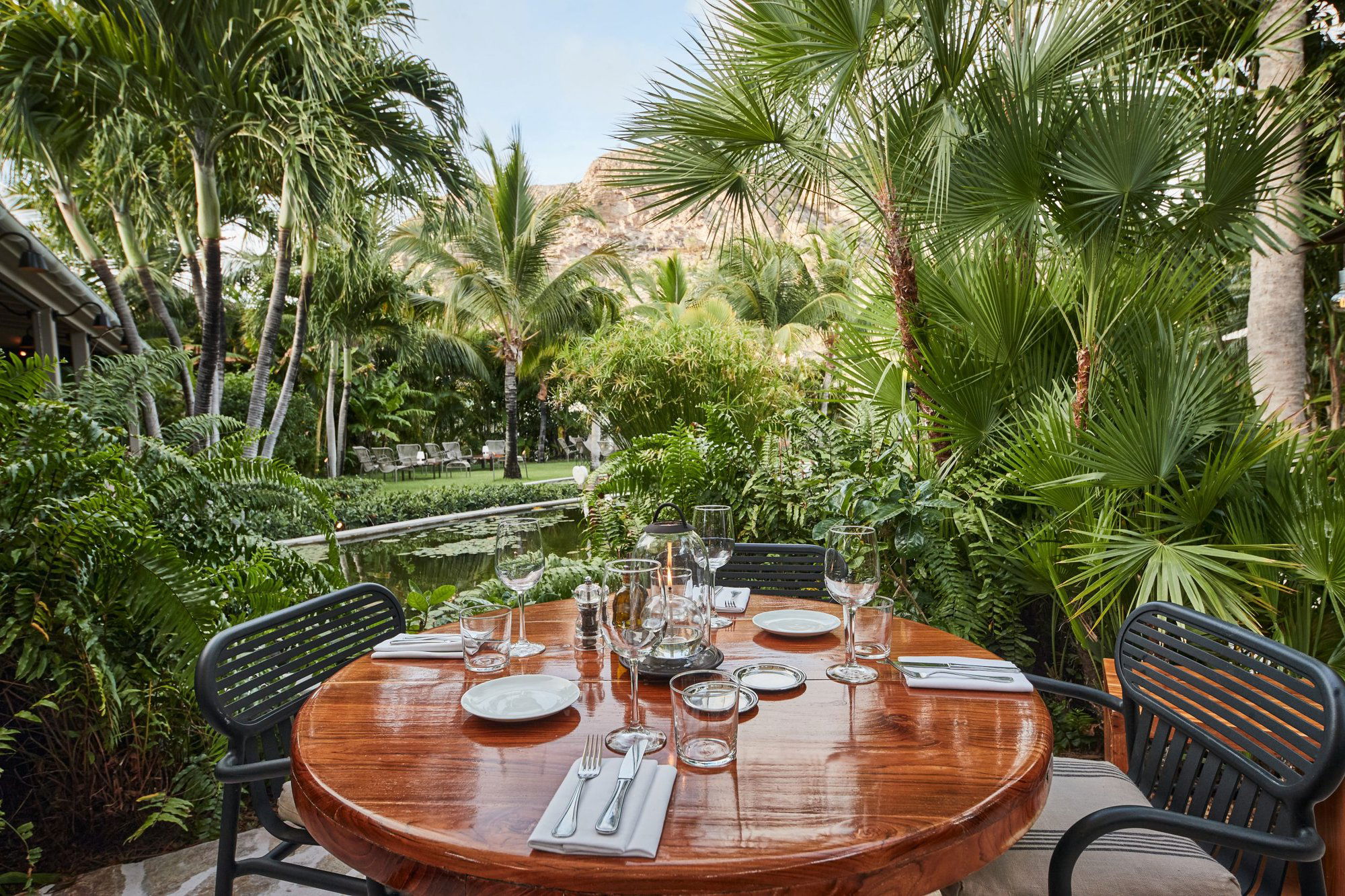
About Le Tamarin
"To dine at Le Tamarin is to feel like you are doing so in the middle of a tropical oasis—if, well, the jungle had glamorous guests dining in sequins and feathers, as well guests playing boozy games of backgammon on its grounds. Serving up French island-style cuisine (think ceviche yet also foie gras) and an expansive fresh-caught fish selection, you’d be remiss not to order their signature cocktail, the Tamarini, before heading out on the town."
Where the Saline Road Ends and Lunch Begins
The road to Saline does not suggest ceremony. It winds past low scrub and salt ponds before opening onto one of St. Barts' least-developed corners, a part of the island that has, by geography and temperament, resisted the concentrated glamour of Gustavia. Le Tamarin sits in this quieter register, under a canopy of tamarind trees that filters the afternoon light into something slower than the rest of the island tends to move. Arriving here feels less like visiting a restaurant and more like discovering where the island goes when it is not performing for anyone.
That physical context is not incidental to what Le Tamarin is. Dining in the Caribbean at this price tier tends to bifurcate sharply: either the setting overwhelms the food, or the kitchen works so hard to prove itself that the setting becomes irrelevant. The better operations find equilibrium. Le Tamarin's position in Saline, away from the marina crowds and the Gustavia terrace circuit, positions it in a category of destination restaurants where the journey to reach the table is part of the experience's logic.
The Source Question in a Supply-Chain Desert
For any serious kitchen operating on an island 25 kilometres wide with no agricultural interior to speak of, ingredient sourcing is not a philosophical choice — it is a structural problem that defines what a kitchen can actually do. St. Barts imports the overwhelming majority of what its restaurants serve. The island has no working farms of consequence, no fishing fleet scaled to fine dining volume, and a logistics chain that runs through Guadeloupe and Sint Maarten before produce reaches any kitchen. What a chef decides to work with, and where they source it from, effectively determines the ceiling of what the food can be.
In this context, the restaurants that perform at the higher end of the island's dining tier tend to be those that have built reliable supply relationships for quality proteins and produce from France and Martinique, supplemented where possible by whatever local fishing yields. This is the model that separates the more considered operations from those simply executing beach-club menus at inflated prices. Across St. Barts, the French-leaning kitchens have a structural advantage: direct access to mainland French suppliers through the island's administrative relationship with France, which keeps import pathways more direct than they would be for an independent Caribbean territory. For further context on how the island's dining scene distributes across styles and formats, our full Saint Barthelemy restaurants guide maps the range from beach clubs to destination tables.
Le Tamarin operates within this French-supply ecosystem. The kitchen's positioning in Saline, rather than on the waterfront or in Gustavia, means it is not competing on the quick-lunch, see-and-be-seen circuit. That location implies a deliberate choice about pacing and format: meals here are not rushed, and the menu is designed for a guest who has committed to the afternoon rather than fit a table in between activities.
The Tamarind Setting as Editorial Context
The outdoor dining format under the tamarind canopy places Le Tamarin in a specific tradition of Caribbean open-air restaurants where shade, breeze, and natural material define the mood more decisively than interior design can. This is a format that rewards the right weather — and in St. Barts, from December through April, the right weather is nearly guaranteed. The dry season brings consistent trade winds and low humidity, which makes outdoor dining under natural cover genuinely comfortable rather than aspirationally described as such.
The positioning of the restaurant in the dry season window also explains the booking pressure that builds from late November onward. St. Barts compresses its highest-demand period into roughly five months, when the island's visitor profile skews most heavily toward the high-net-worth traveler who books far in advance and fills the tables at the island's most established addresses. For comparison across the island's top tier, Restaurant Le Toiny operates on a similar seasonal logic from its Toiny hillside, while Bagatelle St. Barth and BONITO SAINT BARTH in Gustavia capture a different segment of that same seasonal demand with more social, higher-energy formats.
Where Le Tamarin Sits in the Island's Dining Hierarchy
St. Barts does not have a deep fine dining tier in the Michelin sense. The island's restaurants are reviewed and praised in travel media rather than awarded in the structured critical frameworks that apply to Paris, New York, or Tokyo. That absence of formal critical infrastructure does not mean the food is undistinguished, but it does mean that positioning claims have to be read through a different lens. Restaurants like Le Tamarin earn their standing through longevity, repeat clientele, and word-of-mouth among the island's returning visitor base rather than through awards cycles.
This is a different competitive logic than what operates at, say, Le Bernardin in New York City or Waterside Inn in Bray, where formal critical recognition is a core part of the establishment's identity and pricing power. In St. Barts, the premium is on setting, provenance, and the social fabric of who returns. Across the wider Caribbean-adjacent fine dining conversation, kitchens at destinations like Quattro Passi in Marina del Cantone and Uliassi in Senigallia demonstrate how coastal settings can anchor serious culinary reputations when the kitchen matches the location's ambition. The comparison is instructive: island and coastal restaurants at the premium tier consistently prove that geography alone is insufficient without kitchen discipline to justify the pricing.
Planning a Table at Le Tamarin
Saline sits on St. Barts' southeastern side, accessible by car from Gustavia in roughly ten to fifteen minutes depending on traffic , modest by any standard, though the island's single-lane roads and tourist season congestion can extend that. The restaurant is a lunch-oriented destination; arriving early in the afternoon service allows for a more relaxed experience under the tamarind canopy before the trade winds shift in the later afternoon. Reservations are advisable during high season, which runs from the Christmas and New Year's period through the end of March, when the island operates at capacity and the more established restaurants fill consistently.
The Saline area is also within reasonable distance of the beach of the same name, which means Le Tamarin can serve as a logical organizing point for a half-day that combines both. Visitors who plan around that logic tend to find the pacing more satisfying than those who treat the restaurant as a standalone stop. For travelers building a wider itinerary around serious food experiences, the broader EP Club coverage of venues like Lazy Bear in San Francisco, Atomix in New York City, HAJIME in Osaka, Reale in Castel di Sangro, Piazza Duomo in Alba, Le Calandre in Rubano, Dal Pescatore in Runate, Atelier Moessmer Norbert Niederkofler in Brunico, Quique Dacosta in Dénia, and Emeril's in New Orleans provides useful calibration for what premium dining looks like across very different formats and price tiers.
Frequently Asked Questions
- What should I order at Le Tamarin?
- Given the kitchen's position within St. Barts' French-supply ecosystem, the strongest choices tend to follow the French and French-Caribbean track rather than dishes that require locally sourced produce St. Barts cannot reliably provide. On an island where the freshest proteins typically arrive via Guadeloupe or direct from France, fish and simply prepared meat dishes will generally reflect the leading of what the kitchen has to work with on a given day. The afternoon format rewards ordering for a full meal rather than a quick course or two.
- What is the overall feel of Le Tamarin?
- Le Tamarin occupies a quieter, more residential corner of St. Barts than the Gustavia restaurant circuit. The tamarind canopy setting creates a shaded, unhurried atmosphere that differs from the waterfront energy of the island's more social venues. For visitors used to the pricing tier that St. Barts commands across its dining options, the experience here leans toward tranquil afternoon meal rather than high-energy social occasion. The combination of location and format makes it a better fit for guests who want to linger than those looking for the scene.
- Is Le Tamarin child-friendly?
- The outdoor setting and relaxed pacing at Le Tamarin are generally accommodating by the standards of what St. Barts restaurants offer at this price level. The island's dining prices are uniformly high by Caribbean standards, and Le Tamarin is not an exception to that pattern, which makes it a less obvious choice for families with very young children who may not engage with a long, leisurely lunch format. Older children comfortable with a sit-down meal in a calm outdoor environment would fare better.
- How does Le Tamarin compare to other established dining addresses in St. Barts?
- Le Tamarin distinguishes itself from the Gustavia waterfront restaurants and beach club formats by its Saline location and its emphasis on a quieter, shaded midday meal under tamarind trees. Where venues like Bagatelle St. Barth prioritize social energy and visibility, Le Tamarin's appeal is rooted in physical remove from the island's busiest corridors. It operates in the same general price tier as the island's other established French-leaning restaurants, positioned as a destination in its own right rather than a convenience stop.
Related editorial
- Best Fine Dining Restaurants in ParisFrom three-Michelin-star icons to the next generation of Parisian chefs pushing boundaries, these are the restaurants that define fine dining in the world's culinary capital.
- Best Luxury Hotels in RomeFrom rooftop terraces overlooking ancient ruins to Michelin-starred hotel dining, these are the luxury hotels that make Rome unforgettable.
- Best Cocktail Bars in KyotoFrom sleek lounges to hidden speakeasies, Kyoto's cocktail scene blends Japanese precision with global influence in ways you won't find anywhere else.
Save or rate Le Tamarin on Pearl
Keep this venue in your Pearl passport, rate it after you visit, and track it alongside every other place you collect.