
Restaurant in Lexington, United States
Inn at Hastings Park
125ptsRevolutionary-Era Farm Table

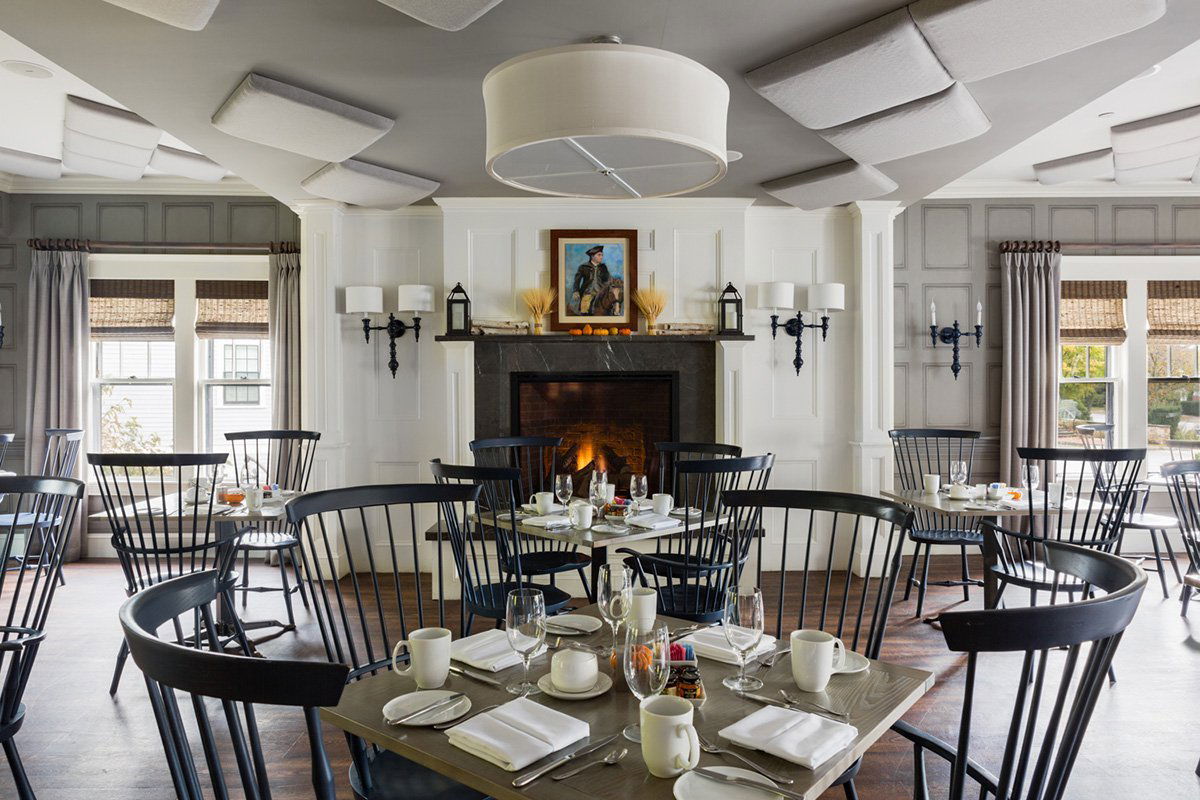
About Inn at Hastings Park
A Relais & Châteaux property in Lexington, Massachusetts, Inn at Hastings Park places seasonal American cooking within a town that served as the opening chapter of the Revolutionary War. Chef Alissa Tsukakoshi leads the kitchen, drawing on New England's farm and coastal networks. Located 20 minutes from Boston along Massachusetts Avenue, it holds a 4.5 Google rating across 228 reviews and a Relais & Châteaux member rating of 4.6/5.
Where Revolutionary History Meets the New England Harvest Table
Massachusetts Avenue through Lexington carries a particular gravity. The road that militiamen walked toward the Battle Green in April 1775 now passes through a town centre that has spent the intervening centuries accumulating a quieter kind of purpose: careful preservation, community-scale commerce, and an ongoing negotiation between historical weight and contemporary life. The Inn at Hastings Park sits along this same corridor, and the tension between those two registers, the colonial and the current, shapes the dining experience as much as anything on the plate.
Arriving at the property, the architectural register is unmistakably New England inn: clapboard and symmetry, a scale that reads residential rather than institutional. It is the kind of building that asks you to slow down before you have sat down. That physical cue matters. In a region where farm-to-table has become the default language of aspirational dining, the spaces that carry it most convincingly are usually those where the built environment reinforces the philosophy rather than contradicting it.
The Farm-to-Table Current in New England Dining
New England's sourcing culture did not arrive fully formed. It grew out of the region's existing infrastructure: a dense network of small farms across Massachusetts, Vermont, and Maine; coastal fishing operations with direct-sale traditions; and a dairy and cheesemaking sector that never fully industrialised in the way the Midwest did. Those structural conditions gave chefs in Boston and its surrounding towns a working supply chain at a time when their counterparts in other American cities were still assembling one from scratch.
The movement's evolution over the past two decades has pushed beyond the simple fact of local sourcing toward something more demanding: seasonal menu discipline, meaning kitchens that genuinely change what they cook when the supply changes, not merely swap a garnish. It has also produced a sharper conversation about which farms, which fishermen, and which producers are named and why. The credibility of a seasonal American program now rests less on the claim of locality and more on the specificity of the relationships behind it.
Chef Alissa Tsukakoshi operates the kitchen at Inn at Hastings Park within this tradition. The Relais & Châteaux membership, which carries its own sourcing and quality standards across a global network of independent properties, provides an external framework that aligns with the broader New England farm-driven approach rather than sitting at odds with it. Properties in the Relais & Châteaux network are evaluated on cuisine quality and property character, making that affiliation a meaningful trust signal in the context of American inn dining.
For comparative reference, the farm-to-table lineage in American fine dining is most rigorously represented at operations like Blue Hill at Stone Barns in Tarrytown, where the relationship between kitchen and growing operation is the explicit premise of every menu. Single Thread Farm in Healdsburg applies a similarly integrated model on the West Coast. Inn at Hastings Park operates in a different register, as a working inn with a restaurant rather than a destination dining project, but the sourcing values that define those upper-tier programs are part of the same broader shift in American cooking that shapes what Tsukakoshi's kitchen does with New England's seasonal calendar.
Clam Chowder as Cultural Document
Among the dishes associated with this kitchen, the signature clam chowder carries a particular kind of weight. In New England, clam chowder is not a dish that rewards reinvention for its own sake. It is a preparation with strong community expectations, a dense interpretive history, and a standard against which every version gets measured whether the kitchen intends it or not. A chowder that appears on a Relais & Châteaux property menu is simultaneously a regional declaration and a statement of technique: cream weight, clam texture, potato cut, and seasoning balance all communicate something specific about the kitchen's position on tradition versus modification.
That the chowder functions as a house signature here reflects something true about how serious American restaurants in the Northeast build identity. You do not avoid the canonical preparation; you commit to a version of it. The broader American dining programs at Saga in New York City and Next Restaurant in Chicago approach American culinary heritage through different lenses, but the underlying logic is the same: engage the tradition directly rather than stepping around it.
Lexington as Dining Context
Lexington's dining scene is smaller and quieter than what Boston's inner neighborhoods offer, but that is partly the point. The town draws visitors for its Revolutionary War sites and keeps them with the kind of unhurried pace that suburban Massachusetts towns with strong historical identity tend to sustain. The Inn at Hastings Park functions within this context as the town's principal fine dining address, a role that carries different expectations than operating inside a competitive urban restaurant cluster.
For those exploring the broader Lexington table, Town Meeting Bistro represents the town's more casual neighborhood dining register. Further afield but worth the trip for contrast, Snow's BBQ sits in an entirely different American cooking tradition. The Inn fits the higher end of the local spectrum, and within that position it benefits from low direct competition at its price tier and format.
Logistics for those planning around a Boston visit: the inn sits roughly 20 minutes northwest of the city, making it practical as either a day-trip destination or a base for those who prefer a quieter overnight setting than central Boston provides. Massachusetts Avenue is the direct route, and the proximity to Lexington's Battle Green means dinner reservations can be combined with an afternoon on the historical sites. Reservations can be made through the property's website at innathastingspark.com or by telephone at +1 781 301 6660, with email contact available at hastingspark@relaischateaux.com.
Across the broader EP Club network of American dining, the farm-driven inn format that Inn at Hastings Park occupies differs structurally from urban fine dining programs like Le Bernardin in New York City, Lazy Bear in San Francisco, Alinea in Chicago, Providence in Los Angeles, Addison in San Diego, Emeril's in New Orleans, or The French Laundry in Napa. The competitive set for an inn like this is defined by Relais & Châteaux peers and New England's established country-inn dining tradition, not by tasting-menu destination restaurants in major cities. That distinction matters when setting expectations: the experience here is shaped by place and pace as much as by plate.
The 4.5 Google rating across 228 reviews and the 4.6/5 Relais & Châteaux member score suggest consistent delivery against the expectations of that format. For more on where the Inn sits within Lexington's broader hospitality options, see our full Lexington hotels guide, our full Lexington restaurants guide, our full Lexington bars guide, our full Lexington wineries guide, and our full Lexington experiences guide.
Frequently Asked Questions
Is Inn at Hastings Park a family-friendly restaurant?
Given the Relais & Châteaux positioning and the setting in a historic inn, this is a quieter, more formal dining environment than a typical suburban American restaurant — families with older children who are comfortable in that register will find it direct, but it is not a venue built around younger families.
Is Inn at Hastings Park better for a quiet night or a lively one?
If you are after a quiet, composed evening in a setting with genuine historical character, this is the right call. Lexington is not a town that generates restaurant energy late into the night, and the inn format reinforces that. If you want a livelier room, Boston's dining neighborhoods are 20 minutes away and will serve that mood more directly.
What should I order at Inn at Hastings Park?
The signature clam chowder is the reference point the kitchen has anchored its identity to, and in a New England inn operating within a Relais & Châteaux framework under Chef Alissa Tsukakoshi, that is the dish that will tell you most about what the kitchen values and how it executes against the regional tradition.
Recognized By

Related editorial
- Best Fine Dining Restaurants in ParisFrom three-Michelin-star icons to the next generation of Parisian chefs pushing boundaries, these are the restaurants that define fine dining in the world's culinary capital.
- Best Luxury Hotels in RomeFrom rooftop terraces overlooking ancient ruins to Michelin-starred hotel dining, these are the luxury hotels that make Rome unforgettable.
- Best Cocktail Bars in KyotoFrom sleek lounges to hidden speakeasies, Kyoto's cocktail scene blends Japanese precision with global influence in ways you won't find anywhere else.
Save or rate Inn at Hastings Park on Pearl
Keep this venue in your Pearl passport, rate it after you visit, and track it alongside every other place you collect.