
Restaurant in Tokyo, Japan
Hikarimono
230Pearl PointsSerious sushi without the ceremony or price.
.png?width=144&height=144&quality=80)
About Hikarimono
A Michelin Plate sushi counter in Roppongi built around hikarimono — silver-skinned fish — at ¥¥ pricing. Chef Kan Sato runs a bar-friendly format with nigiri courses and à la carte, designed for casual drop-ins rather than ceremonial omakase. One of the few Michelin-recognised sushi options in Tokyo where booking is easy and the bill stays manageable.
Is Hikarimono worth booking for a casual sushi night in Roppongi?
Yes — and it answers a question that most Roppongi dining options cannot: where do you go for serious sushi without the ceremony, the booking anxiety, or the bill shock? Chef Kan Sato — known locally as Satokan-san, built this place around a simple proposition: a sushi shop where people drop in casually. At ¥¥ pricing, that proposition holds.
What Hikarimono actually is
The name is the programme. Hikarimono means 'shining thing', the category of silver-skinned fish served with the skin on, sliced to catch the light. Sato's affection for this category is the backbone of the menu, which is structured as three loose formats: a sushi-and-bar-snacks course, a mainly-nigiri course, and à la carte. The courses are designed for drinkers, not just diners, so the pacing runs differently from a traditional omakase counter, there is room to linger over a drink between pieces rather than being moved through a timed sequence. If you have been once and found the rhythm comfortable, that is the thing to return for.
The dish that draws the most attention is the hikarimaki: pilchard with shredded dried plum and bettarazuke, a daikon pickled in salted rice malt. It is the kitchen's clearest statement, hikarimono technique applied to a roll, with the acidity and crunch of the pickled elements providing contrast to the richness of the fish. On a return visit, ordering it à la carte to compare against a full nigiri run is the way to understand what Sato is doing with the format.
The room and the experience
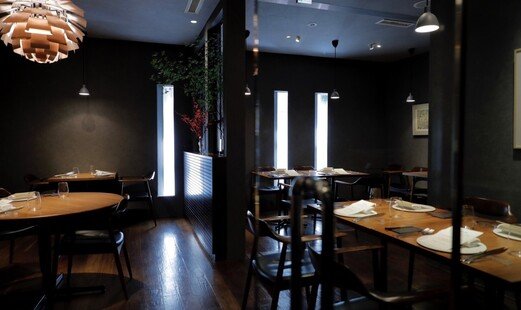
Hikarimono sits on the ground floor of a residential building in Roppongi, at 7 Chome-5-11 Minato City. The address is residential rather than commercial-strip, which sets the tone before you walk in. Visually, what you see here is not the theatrical counter of a high-end omakase room, there is no temple-like restraint, no choreographed plating ritual. The setting is oriented toward the bar experience, which means the visual anchor is the fish itself, the preparation, and the gloss of the silver-skinned pieces. For someone returning after a first visit, the room will already feel familiar; the question is whether you arrive at the bar or settle in for a course.
Groups and private dining at Hikarimono
The bar-and-counter format and the drop-in ethos suggest this is a venue calibrated for small groups of two to four rather than large private dining bookings. The three-course structure, including à la carte flexibility, makes it workable for groups with different appetites, one person running the full nigiri course while another picks from the bar snacks is not awkward here, because the pacing is designed for drinkers with options rather than a synchronized tasting experience. There is no confirmed private dining room in the venue data, so large groups expecting a separated, dedicated space should verify directly before assuming that format is available. For groups of two to four who want a relaxed counter experience without the formality of Tokyo's top-tier omakase rooms, Hikarimono is a practical and low-friction choice. For parties seeking the full private room experience with dedicated service, venues at a higher price tier will be more reliable, see Harutaka or Sushi Kanesaka for that format.
Value and the competitive position
At ¥¥, Hikarimono sits in a price tier well below Tokyo's Michelin-starred sushi counters. The Michelin Plate recognition signals that inspectors found consistent, quality cooking without awarding a star, which is an honest reflection of the venue's intent. Sato is not trying to compete with Sukiyabashi Jiro Roppongiten or Edomae Sushi Hanabusa on technical prestige. The value case here is real: Michelin-recognised sushi in Roppongi, designed for casual visits, at a price point that does not require a special-occasion budget. If you have already been once, the question of whether it is worth returning is mostly a question of what you are in the mood for. For a drinks-led evening with serious nigiri as the anchor, yes. For a formal progression through a chef's tasting vision, look elsewhere.
How Hikarimono compares to nearby alternatives
Tokyo has no shortage of sushi at every price tier. Hikarimono's specific position, Michelin Plate, ¥¥ pricing, bar-friendly pacing, is relatively distinct in Roppongi. For a full guide to what else the city offers across cuisines, see our full Tokyo restaurants guide. If you are planning a broader trip and want to compare sushi options across Japan, Sushi Shikon in Hong Kong and Shoukouwa in Singapore represent what the format looks like when exported at the highest level, useful reference points for understanding where Hikarimono sits in the wider picture. Within Japan, the contrast with kaiseki-focused venues like Gion Sasaki in Kyoto or HAJIME in Osaka makes Hikarimono's casual intent even clearer, it is the option you choose when you want to eat well without making the meal the entire event.
Booking and practical details
Booking difficulty is low. Hikarimono's drop-in philosophy means walk-ins are more viable here than at most Michelin-recognised sushi venues in Tokyo. That said, confirming availability in advance is sensible, particularly for groups of three or more, as the venue's counter-and-bar format means capacity is not unlimited. No phone number or website is currently listed in Pearl's data, so the most reliable approach is to check reservation platforms covering Tokyo's independent restaurants. For broader Tokyo planning, our full Tokyo hotels guide, Tokyo bars guide, and Tokyo experiences guide can help you build the rest of the trip around a meal here.
Quick comparison: Hikarimono vs. nearby sushi options
| Venue | Price tier | Format | Booking difficulty | Michelin recognition |
|---|---|---|---|---|
| Hikarimono | ¥¥ | Bar-led, nigiri + à la carte | Easy | Plate (2025) |
| Harutaka | ¥¥¥¥ | Omakase counter | Hard | Star |
| Sukiyabashi Jiro Roppongiten | ¥¥¥¥ | Omakase counter | Hard | Star |
| Sushi Kanesaka | ¥¥¥¥ | Omakase counter | Hard | Star |
| Hiroo Ishizaka | Varies | Counter | Moderate | Check Pearl |
For more on dining in Japan, see our guides to 1000 in Yokohama, Goh in Fukuoka, akordu in Nara, and 6 in Okinawa. For everything Tokyo, start with our full Tokyo restaurants guide or explore the city's wineries and bars.
Frequently Asked Questions
Is Hikarimono good for solo dining?
Yes — it's one of the better solo options at this price tier in Roppongi. The counter format and bar-snack pacing suit a single diner eating at their own speed. At ¥¥ with Michelin Plate recognition, the value-to-effort ratio is hard to beat if you're eating alone in the area.
Can Hikarimono accommodate groups?
Two to four is the sweet spot. The bar-and-counter setup and drop-in ethos are calibrated for small groups, not large parties or private dining bookings. If you're coming with six or more, look elsewhere — RyuGin or L'Effervescence have private room options better suited to that format.
Does Hikarimono handle dietary restrictions?
The menu is built around hikarimono — silver-skinned fish — and the signature hikarimaki includes pilchard, dried plum, and pickled daikon. That's a fish-forward, traditionally Japanese programme with limited flexibility built in. If dietary restrictions are significant, check the venue's official channels before booking.
Is Hikarimono worth the price?
At ¥¥, it's one of the clearer value cases among Michelin-recognised sushi venues in Tokyo. Michelin Plate status means inspectors found the cooking noteworthy, and the pricing sits well below the city's starred counters. For casual, quality sushi without committing to a ¥¥¥¥ omakase, this is the right call.
What should I wear to Hikarimono?
The drop-in philosophy and casual bar format signal that this is not a jacket-required setting. Neat, relaxed clothing is appropriate — think the kind of thing you'd wear to a quality neighbourhood bar. Nothing in the venue data suggests formal dress expectations.
How far ahead should I book Hikarimono?
Booking pressure is lower here than at most Michelin-recognised sushi venues in Tokyo. The drop-in ethos means walk-ins are viable, but calling ahead for a weekend evening is still sensible. For a weeknight visit, showing up without a reservation is a reasonable option.
What should a first-timer know about Hikarimono?
The menu is structured around three courses — sushi and bar snacks, mainly nigiri, and bar snacks — plus à la carte, and it's paced for drinkers as much as diners. Chef Kan Sato built this as a place to drop in casually, not a destination-dining event. Come with that expectation and it delivers clearly at the ¥¥ price point.
Location
Japan, 〒106-0032 Tokyo, Minato City, Roppongi, 7 Chome−5−11 カサグランデミワ 1階
Tokyo, Japan
Compare Hikarimono
| Venue | Awards | Price |
|---|---|---|
| Hikarimono | ¥¥ | |
| Harutaka | Michelin 3 Star, World's 50 Best | ¥¥¥¥ |
| L'Effervescence | Michelin 3 Star, World's 50 Best | ¥¥¥¥ |
| RyuGin | Michelin 3 Star, World's 50 Best | ¥¥¥¥ |
| HOMMAGE | Michelin 2 Star, World's 50 Best | ¥¥¥¥ |
| Crony | Michelin 2 Star, World's 50 Best | ¥¥¥¥ |
How Hikarimono stacks up against the competition.
Also Consider
- Harutaka, Sushi, ¥¥¥¥
- L'Effervescence, French, ¥¥¥¥
- RyuGin, Kaiseki, Japanese, ¥¥¥¥
- HOMMAGE, Innovtive French, French, ¥¥¥¥
- Crony, Innovative, French, ¥¥¥¥
Hikarimono's clearest peer comparison is not with the ¥¥¥¥ omakase counters that dominate Tokyo's Michelin sushi tier, but understanding where it sits relative to them helps set expectations. Harutaka is the reference point for serious omakase in Tokyo: tighter pacing, higher technical ambition, and a booking process that requires planning weeks in advance. If the full chef-led progression is what you are after, Harutaka justifies the price gap. Hikarimono is the right choice when you want Michelin-recognised fish work without the commitment, in time, formality, or spend.
Against Tokyo's non-sushi options at the top of the market, the contrast is even sharper. L'Effervescence and RyuGin are both ¥¥¥¥ venues where the booking difficulty, dress expectations, and pacing are categorically different from what Hikarimono offers. HOMMAGE and Crony sit in an innovative French register that shares nothing with Hikarimono's format. If you are deciding between a Hikarimono evening and a booking at one of those venues, the deciding factor is not quality, it is what kind of experience you want. Hikarimono is for a drinks-led night where good nigiri is the anchor; the ¥¥¥¥ options are for when the meal is the main event.
For the Roppongi area specifically, Hikarimono fills a genuine gap: approachable pricing, a bar-friendly structure, and Michelin recognition that signals consistent kitchen standards. It is the practical answer for visitors who want to eat well in the neighbourhood without committing to a high-spend, high-formality omakase. If private dining or a large group format is the priority, move up the price tier and plan further ahead, but for two to four people looking for a well-executed, low-friction sushi evening in Tokyo, Hikarimono is the easiest yes in its category.
Recognized By

Explore Tokyo
Save or rate Hikarimono on Pearl
Keep this venue in your Pearl passport, rate it after you visit, and track it alongside every other place you collect.