
Restaurant in Tokyo, Japan
hatsune
290ptsOne chef, real Chinese cooking, fair price.

About hatsune
A solo-chef Chinese restaurant in Meguro with a 2025 Michelin Plate and a 4.3 Google rating across 650 reviews, Hatsune delivers careful noodle-led lunches and à la carte evening dining at a ¥¥ price point. The appetiser platter and Yellow Mapo Tofu with Seafood are the standout orders. Book ahead — it is small, and it is worth it.
Who Should Book Hatsune — and When
Hatsune is the right call if you want a solo-chef Chinese meal in Tokyo that punches well above its price tier. At ¥¥, it is the kind of place that makes a strong argument for a weekday lunch date, a low-key celebration, or a deliberate break from the kaiseki-and-sushi circuit. If you are after a grand dining room or extended tasting ceremony, this is not your venue. If you want technically careful Chinese cooking from a single pair of hands, in a small second-floor room in Meguro, it earns genuine attention.
The Portrait
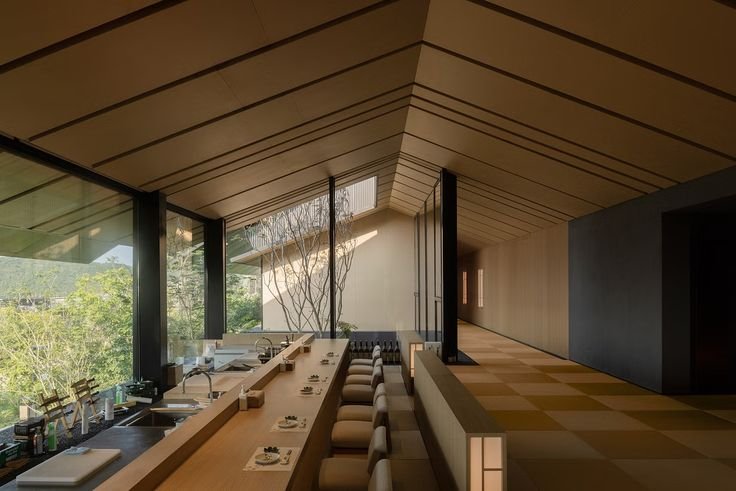
Hatsune operates out of a compact second-floor space in Meguro City — specifically the Meguro Nest building on Meguro 3-chome. The format is simple: one chef, alone in the kitchen, running both a lunch and dinner service. That constraint is also the point. Every dish that arrives has been made by a single person who decided it was ready to serve. There is no brigade to delegate to, no sous-chef catching mistakes. The 2025 Michelin Plate recognition reflects exactly that: the guide acknowledges the cooking as food worth seeking out, without overstating what this place is.
At lunch, the menu leans hard into noodles. Dandan noodles and hot-and-sour ramen are the anchors. These are not fusion interpretations or Tokyo-softened approximations , the dishes sit squarely in a Chinese register, and the care in execution is evident at the ¥¥ price point. If you are comparing this to the Chinese dining options available across Tokyo at similar spend, Hatsune is doing something more considered than most. For broader context on how Tokyo's Chinese dining tier works, venues like Chugoku Hanten Fureika and Chugoku Hanten Kohakukyu (Amber Palace) represent the higher-budget end of that category , Hatsune offers a materially different value proposition.
In the evening, the kitchen shifts to à la carte and set menu options. The appetiser platter is specifically worth ordering: it arrives with enough variety to read as a genuine statement of intent, and the preparation effort is visible. The spring rolls are recommended as a standalone item. The dish that draws the most curiosity is the Yellow Mapo Tofu with Seafood , an unusual name that corresponds to a visually distinctive preparation, departing from the red-oil version most diners expect. This is the kind of detail that makes an evening here feel like more than a routine dinner, without the kitchen reaching for theatrics.
The solo-chef format shapes the experience in ways that matter for your planning. Service pacing will reflect one person managing everything. On a special occasion, that intimacy can work in your favour , the room is small, the atmosphere is close, and there is nothing impersonal about what arrives at the table. But if you are planning a longer celebration dinner with multiple courses and need a kitchen that can handle complex timing across a large table, the format has natural limits. For that kind of evening, Ippei Hanten or Koshikiryori Koki may be more practical alternatives.
The Google rating sits at 4.3 across 650 reviews , a meaningful sample size for a restaurant this small. That average reflects consistent satisfaction rather than occasional brilliance, which is actually a useful signal: this is a reliable venue, not a variable one. For a ¥¥ restaurant with a Michelin Plate, that combination of consistency and recognition at this price level is the core of the value case. Comparable solo-kitchen operations in Tokyo with similar recognition tend to book out further in advance and carry higher price tags. Hatsune, for now, remains accessible.
If you are mapping Chinese dining in Tokyo more broadly, itsuka offers a contrasting format worth considering. For those using Hatsune as a base for planning a wider Japan trip, the Pearl guides for HAJIME in Osaka, Gion Sasaki in Kyoto, akordu in Nara, Goh in Fukuoka, 1000 in Yokohama, and 6 in Okinawa provide further decision support. For Chinese cooking at a comparable level of chef ambition in other cities, Restaurant Tim Raue in Berlin and Mister Jiu's in San Francisco illustrate what the category looks like when the price tier rises significantly. Hatsune is doing something structurally similar , serious, chef-driven Chinese cooking , at a fraction of the cost.
The Meguro address is in a residential-commercial pocket of the city, away from the tourist-heavy dining corridors. That means you are going slightly off the usual path, which is appropriate for a venue this size. See our full Tokyo restaurants guide for broader context, or explore Tokyo hotels, Tokyo bars, Tokyo wineries, and Tokyo experiences to build out your itinerary.
Ratings at a Glance
- Google: 4.3 / 5 (650 reviews)
- Awards: Michelin Plate 2025
- Price tier: ¥¥
Booking and Practical Details
Booking difficulty is rated easy. Given the small size of the restaurant and the solo-chef format, advance booking is still advisable , especially for dinner and any occasion where timing matters. Contact details and hours are not currently confirmed in our database; check current listings before visiting. The address is 3 Chome-11-6 Meguro, Meguro City, Tokyo, 2F Meguro Nest.
Practical Comparison
| Venue | Cuisine | Price | Booking Difficulty | Award |
|---|---|---|---|---|
| Hatsune | Chinese | ¥¥ | Easy | Michelin Plate 2025 |
| Harutaka | Sushi | ¥¥¥¥ | Hard | Michelin-recognised |
| RyuGin | Kaiseki | ¥¥¥¥ | Hard | Michelin-recognised |
| Florilège | French | ¥¥¥ | Moderate | Michelin-recognised |
| L'Effervescence | French | ¥¥¥¥ | Hard | Michelin-recognised |
Compare hatsune
Frequently Asked Questions
How far ahead should I book hatsune?
Book at least a week in advance, and more for weekend evenings. The solo-chef format means capacity is hard-capped — there is no slack for walk-ins if the room fills. Lunch seatings may be easier to secure on short notice, but dinner slots at this Michelin Plate-recognised spot move faster.
Is hatsune worth the price?
At ¥¥, yes — Hatsune is one of the stronger value cases in Tokyo's Chinese dining tier. A Michelin Plate in 2025 with a solo chef at this price point is uncommon. The appetiser platter alone is flagged as a highlight for the preparation work involved, which is notable at this price band.
Does hatsune handle dietary restrictions?
The menu is built around Chinese cuisine with dishes like dandan noodles, hot-and-sour ramen, spring rolls, and a seafood-based tofu preparation. The solo-chef format limits flexibility — substitutions and omissions are harder to accommodate when one person is running the entire kitchen. check the venue's official channels before booking if dietary needs are a factor.
What should a first-timer know about hatsune?
The format splits cleanly by meal: noodle-led dishes dominate at lunch, while dinner opens into à la carte and set menu options. Order the appetiser platter — the database flags it specifically for variety and preparation effort. The Yellow Mapo Tofu with Seafood is worth noting for its unusual construction. The restaurant is on the second floor of the Meguro Nest building in Meguro 3-chome.
Is hatsune good for a special occasion?
For an intimate occasion with two people, the solo-chef format and compact space actually work in your favour — it is a personal, focused meal rather than a large-room event. At ¥¥ with Michelin Plate recognition, it fits a meaningful-but-not-extravagant occasion. For a larger group celebration, the room size will be a constraint worth checking before booking.
Is the tasting menu worth it at hatsune?
The set menu is only available at dinner, so if you are visiting at lunch your options are à la carte noodle dishes. At dinner, the set menu is worth considering alongside the à la carte — the appetiser platter is specifically recommended and fits naturally into a set progression. Given the ¥¥ price range, the set route is unlikely to feel steep relative to comparable Chinese dining in Tokyo.
Recognized By

More restaurants in Tokyo
- SézanneOccupying the seventh floor of the Four Seasons Hotel Tokyo at Marunouchi, Sézanne earned its first Michelin star within months of opening in July 2021 and now holds three. British chef Daniel Calvert applies French technique to Japanese ingredients, producing a prix-fixe format that Tabelog has recognised with Silver awards every year from 2023 through 2026. It ranked 4th in Asia's 50 Best Restaurants in 2025 and 15th globally in 2024.
- SazenkaSazenka is the address for Chinese cuisine in Tokyo at its most technically demanding. Chef Tomoya Kawada's wakon-kansai approach — Japanese seasonal ingredients applied through Chinese culinary technique — has earned consecutive Tabelog Gold Awards from 2019 to 2026, a #71 ranking on the World's 50 Best 2025, and 99 points from La Liste 2026. At JPY 50,000–59,999 per head, it is one of the hardest tables in the city to book and worth the effort.
- NarisawaNarisawa is Tokyo's most credentialled innovative tasting menu restaurant — two Michelin stars, Asia's 50 Best number 12, and a Tabelog Silver award — running at JPY 80,000–99,999 per head. Book for a milestone occasion, confirm vegetarian or vegan needs in advance, and reserve at least two to three months out. With 15 seats and reservation-only access, this is one of Tokyo's hardest tables to secure.
- FlorilègeFlorilège delivers two Michelin stars and an Asia's 50 Best #17 ranking at a dinner price of ¥22,000 — competitive for Tokyo at this level. Chef Hiroyasu Kawate's plant-forward tasting menus around an open-kitchen counter at Azabudai Hills make this the strongest choice for contemporary French dining in Tokyo if theatrical, produce-led cooking is what you want. Book well in advance; availability is near-impossible at short notice.
- DenDen holds two Michelin stars, a World's 50 Best top-25 Asia ranking, and a Tabelog Silver Award running back to 2017 — and it books out within hours of the two-month reservation window opening. Chef Zaiyu Hasegawa's daily-changing seasonal omakase runs JPY 30,000–39,999 at dinner in a relaxed house-restaurant setting near Gaiemmae. Book by phone only, noon–5 PM JST. Lunch is irregular; plan around dinner.
- MyojakuMyojaku is a 2-Michelin-star, 14-course French-leaning omakase in Nishiazabu holding a 4.47 Tabelog score, Tabelog Silver 2025–2026, and Asia's 50 Best #45 (2025). Chef Hidetoshi Nakamura's water-forward, no-dashi approach shifts meaningfully with the seasons — making timing your reservation as important as getting one. Budget JPY 50,000–59,999 per head plus 10% service charge; reservations only, near-impossible to secure.
Similar venues by awards
Related editorial
- Best Fine Dining Restaurants in ParisFrom three-Michelin-star icons to the next generation of Parisian chefs pushing boundaries, these are the restaurants that define fine dining in the world's culinary capital.
- Best Luxury Hotels in RomeFrom rooftop terraces overlooking ancient ruins to Michelin-starred hotel dining, these are the luxury hotels that make Rome unforgettable.
- Best Cocktail Bars in KyotoFrom sleek lounges to hidden speakeasies, Kyoto's cocktail scene blends Japanese precision with global influence in ways you won't find anywhere else.
Save or rate hatsune on Pearl
Keep this venue in your Pearl passport, rate it after you visit, and track it alongside every other place you collect.