.png?width=1200&quality=80)

Argile
Modern Cuisine · Marchmont, Edinburgh
Restaurant in Edinburgh, United Kingdom
 Book with Pearl
The Read
Fermentation-Led Counter Precision
Price
$150–200per person
Dress
Smart Casual
Why go
Argile is Edinburgh's hardest eight-seat counter to book, and worth the effort for serious tasting menu diners. Chef-owner Jack Montgomery's seven-course, daily-changing menu earns a 2025 Michelin Plate with technically ambitious cooking that draws on Japanese technique and biodynamic wine pairings. At ££££, it delivers more intimacy and kitchen focus than larger peers like Martin Wishart or The Kitchin.
About Argile
Should You Book Argile?
Argile is one of the hardest tables to secure in Edinburgh, and that difficulty is entirely justified. Eight seats. A seven-course tasting menu that changes daily. Chef-owner Jack Montgomery serving many courses himself. If you are looking for technically ambitious modern cooking in an intimate setting, this is the booking to chase — but you need to plan ahead, and you need to want the full tasting menu format. This is not a drop-in dinner option.
The 2025 Michelin Plate recognition confirms what Edinburgh diners have been saying quietly for some time: Argile punches well above the weight its postcode and seat count might suggest. For context, a Michelin Plate signals cooking worth stopping for — it sits below Star level but ahead of the broader field. In a city with strong competition at the ££££ tier, that credential matters when you are deciding where to spend the money.
The Experience
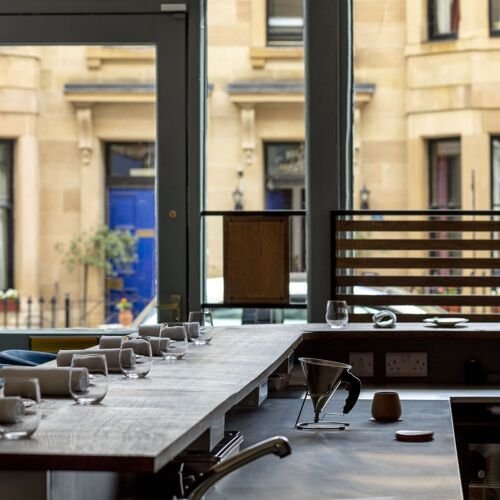
Argile sits on a quiet Southside street at 21 Argyle Place, away from the tourist circuit that anchors most of Edinburgh's dining conversation. The room is built around a chef's counter with high stools, eight covers in total. The format is closer to a Japanese kappo counter or a chef's table experience than a conventional restaurant, and that framing helps set expectations correctly. You are not booking a table; you are booking a seat at a performance.
The menu is seasonal and shifts day to day, which means there is no fixed repertoire to research in advance. What the database record documents, however, gives a clear picture of the kitchen's range. Dishes have drawn on Japanese technique alongside European foundations: a slow-cooked egg with trout roe, onion broth cooked for four days with togarashi, pickled enoki mushrooms, and Ibérico ham alongside a pour of Pedro Ximénez. Elsewhere, shelled Shetland mussels have appeared on a citron-butter paste made from lemons packed in salt for a year with shio koji. Pumpkin pot-roasted with seaweed on walnuts. A kombucha scoby culture glazed in maple syrup. These are not ideas borrowed from a trend, they are specific, considered, and technically demanding to execute at this scale.
The drinks pairing is built into the experience and is worth taking seriously. The wine list focuses on small-scale, organic, and biodynamic producers. Documented pairings have matched roe deer brushed with homemade black garlic against a single-varietal Counoise from the Southern Rhône, the kind of pairing decision that reflects genuine knowledge of both the wine and the dish. If you are coming as a food and wine enthusiast, the pairing is not an add-on; it is part of what makes Argile worth the trip from anywhere in the UK.
Pottery and earthenware used for service are not incidental. The name Argile references the sticky clay used in pottery-making, and the choice of vessels is deliberate, each piece of china or earthenware functions as part of the presentation. For a guest who pays attention to these details, it adds a layer of coherence that most tasting menu restaurants at this price point do not bother.
With eight seats and a daily-changing menu, the operation is tight enough that a poor night would register immediately. The near-perfect score across a meaningful number of covers suggests the kitchen delivers reliably, not just on exceptional evenings.
Booking Argile
Getting a table here is genuinely difficult. With only eight seats and a format that does not scale, availability is limited by design. Book as far in advance as you can, treat this like booking a Michelin-starred counter in London or a small-plates tasting room in Edinburgh's peer set. Last-minute availability is possible but should not be counted on. The booking method is not confirmed in Pearl's data, so check directly via the address at 21 Argyle Place, Edinburgh EH9 1JJ, or search for the venue's current reservation channel before travelling. There is no confirmed walk-in policy.
For comparison, Edinburgh venues like Condita operate on a similarly small-scale, high-demand model. If Argile is fully booked, Condita is the closest equivalent in terms of format and ambition. Cardinal, Montrose, and Moss are worth exploring if your dates are flexible. Number One operates at the same price tier with more capacity and easier availability, though the experience is different in format and feel.
If you are travelling specifically for this meal, Edinburgh's broader dining and hospitality context is worth planning around. Pearl's full Edinburgh restaurants guide, Edinburgh hotels guide, Edinburgh bars guide, Edinburgh wineries guide, and Edinburgh experiences guide cover the surrounding options in full.
For UK-wide context on what tasting menu cooking at this level looks like, compare against CORE by Clare Smyth in London, L'Enclume in Cartmel, or Moor Hall in Aughton. Argile is smaller and less decorated than any of those, but for a specific style of counter-led, chef-driven cooking, the format comparison is valid. If the counter-with-daily-changing-menu model appeals and you are looking internationally, Frantzén in Stockholm operates on a similar philosophy at a higher price point and decoration level.
Quick reference: Eight-seat counter tasting menu, Michelin Plate 2025, ££££ price range, Southside Edinburgh, book well in advance.
How It Compares
Planning details
- Location
- 21 Argyle Pl, Edinburgh EH9 1JJ, United Kingdom
- Reservations
- Book on Superb
- Website
- argilerestaurant.co.uk
The take
The Take
The Vibe
Argile presents a tightly calibrated dining experience built around an eight-seat chef's counter. The room is compact and intentionally focused: high stools ring a single counter and the kitchen sits within arm's reach, so service feels immediate and precise. The restaurant foregrounds material details — handmade ceramics and earthenware are integral to how each course is presented — and that attention to objects reinforces a quietly considered, European tasting-room sensibility. Culinary references range from classical French structure to Japanese fermentation and Nordic sourcing, giving the meal a layered, worldly intelligence rather than flash or excess.
Best For
This is primarily a tasting-counter destination best suited to an evening sitting where the format itself is the point of the visit. The seven-course menu shifts daily with seasonality and availability, and the compact layout lends itself to a focused, multi-course progression led by the chef. Visitors looking for a chef-led narrative, close kitchen theatre and a succession of thoughtfully plated courses will find Argile rewarding. It aligns with other ambitious, higher-tier tasting counters in the city and is especially fitting for diners who want an immersive, course-by-course experience.
Ordering Tips
Expect a fixed multi-course tasting menu that changes day to day; the description specifies a seven-course structure driven by produce availability and technique. Seating is limited to eight covers at a single counter, and the kitchen is close enough that you can follow each dish as it is finished — the chef plates and serves many courses himself. Because the format is a single counter with high stools, prepare for counter seating and an intimate, uninterrupted sequence of plates. Menus emphasize fermentation, seasonality and a mix of French, Japanese and Nordic techniques.
Venue details
Ambiance
Cozy and relaxed open-plan kitchen counter seating with spotless environment, charming decor, and warm hospitality fostering a magical, educative atmosphere.
Tags
Vibe
Best For
Experience
Sourcing
At the Table
- Dress Code
- Smart Casual
- Noise Level
- Quiet
- Service Style
- Upscale Casual
- Meal Pacing
- Leisurely
- Capacity
- Intimate
- Kitchen
- Modern
- Menu Format
- Tasting menu
- Wine Program
- Exceptional
- Drinks Focus
- Wine pairing
- Dietary
- Vegetarian friendly
Signature Dishes
- Orkney scallop tartare
- roe deer loin with black garlic
- slow cooked egg in onion broth
Know before you go
Know Before You Go
- Getting there
- 21 Argyle Pl, Edinburgh EH9 1JJ, United Kingdom
Planning details
Location
Recognition and awards
Also consider
Also Consider
- Martin Wishart, Modern European, Modern Cuisine, ££££
- The Kitchin, Modern British, Modern Cuisine, ££££
- Timberyard, Modern British - Nordic, Modern British, ££££
- AVERY, Creative, ££££
- Condita, Modern Cuisine, ££££
Restaurant context
At the ££££ tier in Edinburgh, Argile occupies the most intimate end of the spectrum. Eight seats and a daily-changing seven-course menu make it the hardest booking in this comparison set, harder even than Condita, which operates on a similarly small scale. Both venues suit the same diner profile, committed tasting menu guests who want a focused, counter-led experience, but Argile's Japanese-influenced technique and documented depth of fermentation and biodynamic pairing work give it a distinct identity. If you can only book one, Argile is the choice for technical range; Condita is a strong fallback if dates do not align.
Martin Wishart and The Kitchin both hold Michelin Stars, a step above Argile's current Michelin Plate, and both operate out of Leith with more covers and better availability. If the credential matters more than the counter format, either of those is a safer and more accessible booking. Timberyard offers a Nordic-influenced take on the same price tier with a more relaxed atmosphere; it is the better choice if the tasting menu format feels high-pressure. AVERY rounds out the creative end of the ££££ field with a different aesthetic and booking profile.
For a food and wine enthusiast who wants the most immersive, chef-driven experience available in Edinburgh right now, Argile is the booking to prioritise. The trade-off is real: no flexibility on format, no walk-in option, and a room so small that a suboptimal evening has nowhere to hide. If those constraints suit your preferences, book here before anywhere else in the city.
Explore Edinburgh
Around this place
Discover more on Pearl
Unlock the full Argile guide in Pearl, including awards, comparisons, FAQs, planning details, and nearby places.
Compare Argile
| Venue | Cuisine | Awards | Booking Difficulty |
|---|---|---|---|
| Argile | Modern Cuisine | 2026 Michelin PlateThe Good Food Guide 20252025 Michelin Plate2024 Michelin Plate | Hard |
| Martin Wishart | Modern European, Modern Cuisine | 2026 Harden's Top 100 UK Restaurants · #36Star Wine Lists 20262026 AA 4-Rosette RestaurantsMichelin Guide Great Britain & Ireland 20262026 La Liste Top Restaurants2025 OAD Classical in Europe Ranked · #323The Good Food Guide 20252025 La Liste Top Restaurants2025 Michelin 1 Star | Unknown |
| The Kitchin | Modern British, Modern Cuisine | 2026 National Restaurant Awards Top 100 · #492026 Harden's Top 100 UK Restaurants · #69Star Wine Lists 20262026 AA 5-Rosette Restaurants2026 OAD Top Restaurants in Europe Recommended2026 Michelin 1 Star2026 La Liste Top Restaurants2025 OAD Top Restaurants in Europe Ranked · #475The Good Food Guide 2025 | Unknown |
| Timberyard | Modern British - Nordic, Modern British | 2026 National Restaurant Awards Top 100 · #25Star Wine Lists 20262026 National Restaurant Awards - Best Restaurant in Scotland2026 National Restaurant Awards - Cocktail List of the Year2026 AA 3-Rosette RestaurantsMichelin Guide Great Britain & Ireland 20262025 OAD Top Restaurants in Europe Ranked · #287The Good Food Guide 20252025 Michelin 1 Star | Unknown |
| AVERY | Creative | Michelin Guide Great Britain & Ireland 20262025 Michelin 1 Star2024 Michelin 1 Star | Unknown |
| Condita | Modern Cuisine | Michelin Guide Great Britain & Ireland 2026The Good Food Guide 20252025 Michelin 1 Star2024 Michelin 1 Star | Unknown |








Key differences to consider before you reserve.
FAQ
Frequently Asked Questions
What should I wear to Argile?
There is no documented dress code, but the format — eight seats, seven courses, chef-owner Jack Montgomery serving dishes personally — reads as a considered occasion rather than a casual night out. Dress as you would for a serious dinner with someone you want to impress. Overly formal is unnecessary; visibly underdressed would feel off.
Is Argile worth the price?
At ££££ for a seven-course tasting menu with only eight covers, the price reflects a genuinely rare format: seasonal dishes that can change daily, a chef who serves you himself, and a drinks pairing built around small-scale organic and biodynamic wines. For diners who want tasting-menu depth in an intimate setting, it justifies the spend. If you want à la carte flexibility at that price point, look elsewhere.
Is the tasting menu worth it at Argile?
Yes, if technically driven modern cooking is what you are after. The Michelin Plate recognition in 2025 confirms the cooking is operating at a serious level. The menu changes from day to day and draws on global influences with Japanese technique running through several courses. For eight diners at a time, the attention per cover is high. It is not worth it if you want choice or a relaxed, drop-in format.
Can I eat at the bar at Argile?
Argile has a chef's counter with high stools curving around it — that is effectively the room. All eight seats face the kitchen, so eating at the counter is the experience, not an alternative to it. There is no separate bar or walk-in seating.
What should a first-timer know about Argile?
Three things: it seats eight people, the menu is seven courses and changes regularly, and Jack Montgomery serves many of the dishes himself. The address is 21 Argyle Place on Edinburgh's Southside, away from the city-centre dining corridor. Book as far ahead as possible — this is a format that cannot add covers on a busy night, so availability is structurally limited.
What are alternatives to Argile in Edinburgh?
For a similarly serious tasting-menu experience with more seats and an easier booking window, The Kitchin and Martin Wishart are the established reference points, both with Michelin Stars. Condita is the closest structural comparison — small, counter-focused, neighbourhood-rooted — and worth weighing directly against Argile. Timberyard offers a more relaxed tasting format with a stronger natural-wine focus.
Is Argile good for a special occasion?
Yes, provided the party is small. With eight seats total, Argile is suited to couples or a table of two to four at most. The intimate counter format, personally served courses, and Michelin Plate-recognised cooking make it a strong choice for a birthday or anniversary dinner where the meal itself is the point. It is not suitable for large groups.