
Restaurant in Brda, Slovenia
Domačija Belica
100ptsSeasonal Farmhouse Table
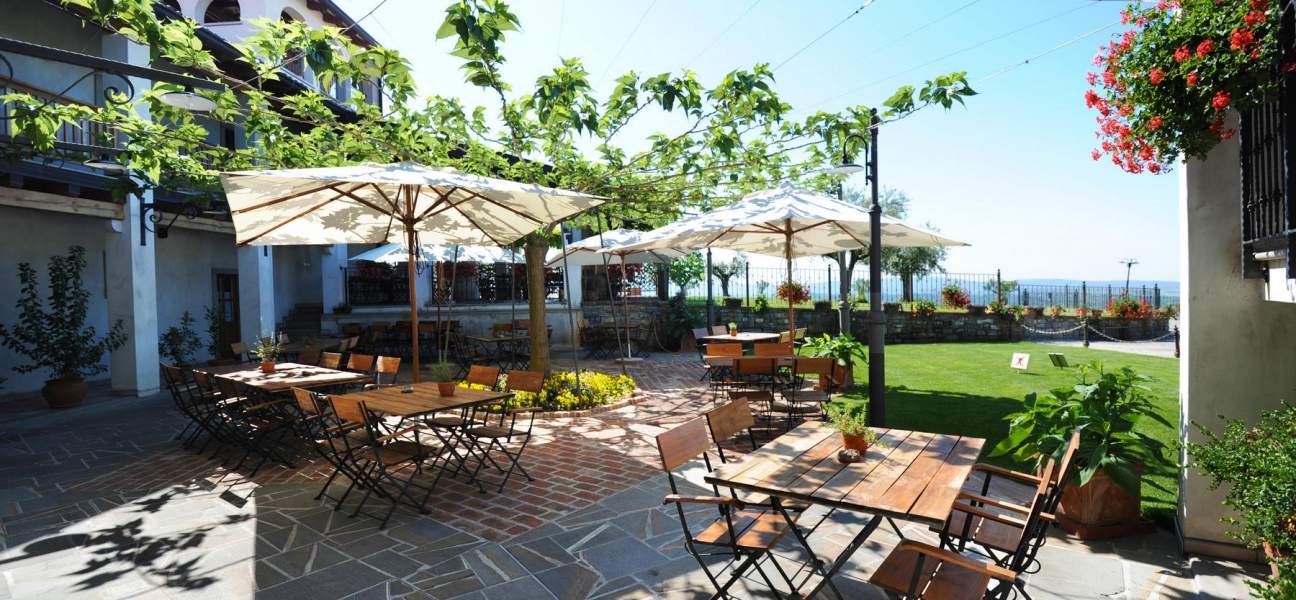
About Domačija Belica
Domačija Belica sits in Medana, at the heart of Slovenia's Brda wine country, where the gostilna tradition of unhurried, farm-rooted hospitality remains a defining feature of the region's table culture. The address places guests in a landscape of limestone terraces, Rebula vines, and village rhythms that few corners of the Alpine south can match. For those tracing Brda's dining character beyond the headline names, Belica is a point of reference.
Where the Meal Moves at the Valley's Pace
Medana is not a village that announces itself. The road from Dobrovo narrows through cherry orchards and dry-stone walls before opening onto a cluster of farmhouses that have been fermenting wine and setting tables for generations. In Brda, the western Slovenian wine region that presses against the Italian border at Friuli, this kind of address is not incidental — it is the whole argument. Domačija Belica occupies that address at Medana 32, and the logic of the place begins before you sit down: you are already inside the meal's context the moment you arrive.
The gostilna format — Slovenia's version of the Franco-Italian osteria, built on seasonal produce, local wine, and an unhurried pace set by whoever is cooking , has its clearest expression in Brda. In the cities, the form has been modernised, sometimes to the point where the original rhythm is hard to find. In Medana, that rhythm is structural. A meal here is expected to take time, and the expectation is not negotiated at the table but absorbed from the setting itself.
The Ritual of the Brda Table
Across Brda's dining tradition, a meal is sequenced by what the season allows rather than by what the kitchen wishes to demonstrate. That distinction matters. In regions with strong farm-to-table rhetoric but weak agricultural infrastructure, the seasonal claim is often aspirational. In Brda, where smallholders grow olives, figs, cherries, and Rebula grapes on terraced plots that have been cultivated since at least the medieval period, the constraint is real. The kitchen works within it, and the menu reflects that constraint honestly.
The pace of service in this format is generous in a specific way: courses arrive when they are ready, not when a front-of-house timer dictates. Wine is poured from local producers , Brda's wine identity leans heavily on Rebula (the Slovenian name for Ribolla Gialla), alongside Sauvignon Blanc and the red varieties Merlot and Cabernet Sauvignon that perform well on the region's marl and flysch soils. A table at a domačija in Brda is understood to be an extended occupation, not a turnover slot.
That extended format connects Domačija Belica to a cohort of Brda addresses that have resisted the pressure to accelerate. Klinec Medana operates on similar principles from the same village. B&B Klinec extends the hospitality into overnight stays. Kabaj Morel anchors its table to the winery output directly. Bužinel and Gredič each represent different points on the spectrum between farmhouse informality and structured dining. Domačija Belica sits within this peer group, not above or below it, as part of a regional pattern that has more coherence than the individual addresses suggest in isolation.
Brda in the Context of Slovenian Fine Dining
Slovenia's restaurant culture has attracted serious international attention over the past decade, largely through addresses like Hiša Franko in Kobarid, which brought the country's western river valleys onto the global conversation. That attention has created a secondary effect: travellers now arrive in Slovenia with a genuine curiosity about regional variation, not just flagship names. Brda benefits from that curiosity, but it operates differently from Kobarid or Ljubljana. The region's draw is agricultural and viticultural, not primarily culinary in the fine-dining sense. The tables that matter here are the ones closest to the source.
Elsewhere in Slovenia, the Michelin-recognised tier includes addresses like Gostilna Pri Lojzetu in Vipava and Hiša Linhart in Radovljica, as well as the more urban formats represented by Restavracija Strelec in Ljubljana and Dam in Nova Gorica. Pavus in Laško, Hiša Denk in Zgornja Kungota, Milka in Kranjska Gora, Grič in Šentjošt nad Horjulom, and Gostilna Skaručna in Vodice complete a network of destination restaurants spread across the country's varied terrains. Internationally, the unhurried multi-course format that defines Brda dining has parallels at places like Lazy Bear in San Francisco and, at a different register of formality, Le Bernardin in New York City , though the Brda version carries none of the theatrical architecture those addresses deploy.
The broader Slovenian fine-dining scene is mapped in full in our Brda restaurants guide, which covers the region's range from farmhouse tables to wine estate dining rooms.
Planning a Visit to Medana
Brda is a short drive from Nova Gorica and accessible from Trieste in under an hour, which makes it a viable day trip from the Adriatic coast or a logical stop on a Slovenia-Friuli circuit. The village of Medana itself is small enough that arriving by car is the practical option; public transport to the area is limited. Wine tourism in the region peaks in late summer and autumn, when harvests bring additional energy to the valley roads, and booking ahead is advisable during those months. Because venue-specific booking details for Domačija Belica are not publicly documented in current editorial records, contacting the property directly through local tourism channels or Brda's regional tourism board is the most reliable approach for confirming availability.
The domačija model in Brda typically operates on the assumption that guests will combine a meal with a wine purchase or cellar visit , that structure shapes expectations on both sides. Arriving with time and no fixed agenda is not merely a preference; it is the correct posture for this kind of address.
Frequently Asked Questions
What should I order at Domačija Belica?
Specific menu details for Domačija Belica are not verified in current editorial records. As a rule at domačija-format restaurants in Brda, the seasonal set menu or the kitchen's daily selection is the most reliable way to eat: dishes reflect what the farm and local suppliers can provide that week. Pairing with a local Rebula or one of the region's skin-contact whites is consistent with how Brda tables are meant to work. For confirmed menu information, contact the venue directly or consult the Brda dining guide.
Do they take walk-ins at Domačija Belica?
Walk-in availability at farmhouse restaurants in Brda varies by season and day. During peak harvest months (September and October) and on summer weekends, capacity at addresses like Domačija Belica fills quickly. Brda's regional reputation has grown, and the smaller domačija properties in Medana are among those that see increased demand. Booking ahead is the lower-risk approach, particularly for groups. For current availability, the regional tourism board for the Nova Gorica and Brda area is a reliable first contact.
What makes Domačija Belica worth seeking out?
The argument for Domačija Belica is the same argument that makes Medana a worthwhile destination in the first place: the address puts you inside a working agricultural village in one of Slovenia's most coherent wine-producing regions, with a table format that reflects that context honestly. Peer addresses like Klinec Medana and Kabaj Morel operate from the same premise, and together they define a dining character that is harder to find in Slovenia's more urbanised restaurant scene.
Can Domačija Belica handle vegetarian requests?
Verified dietary accommodation details for Domačija Belica are not available in current editorial records. Seasonal Brda cuisine draws heavily on vegetables, pulses, and foraged ingredients alongside meat and cured products, so vegetarian-compatible dishes are generally present in the region's farmhouse format. For confirmed dietary information, contact the venue through the Brda regional guide or via local tourism contacts, as no direct website or phone number is publicly listed in current records.
Is Domačija Belica worth it?
For a traveller whose interest is in Brda as a wine and agricultural region rather than as a stop on a tasting-menu circuit, the domačija format represents the most grounded way to eat here. The value comparison is not against fine-dining peers like Hiša Franko but against other farmhouse addresses in the valley. At that register, the combination of local wine access, seasonal produce, and the unhurried pace that characterises Medana's table culture is a case that does not require much elaboration. Pricing specifics are not verified in current records, so budget expectations should be confirmed before visiting.
How does Domačija Belica fit into a broader Brda wine itinerary?
Medana is one of Brda's most concentrated clusters for wine-adjacent hospitality, which makes Domačija Belica a natural anchor point for a half-day or full-day circuit through the village. From Medana, nearby addresses like Klinec Medana and B&B Klinec are within walking distance, and the broader Brda wine route connects eastward to Dobrovo and westward toward the Italian border. A sensible approach is to treat Belica as the table component of a morning or afternoon that also takes in a cellar visit to one of the region's estate producers , the domačija model is designed for exactly that kind of sequencing.
Related editorial
- Best Fine Dining Restaurants in ParisFrom three-Michelin-star icons to the next generation of Parisian chefs pushing boundaries, these are the restaurants that define fine dining in the world's culinary capital.
- Best Luxury Hotels in RomeFrom rooftop terraces overlooking ancient ruins to Michelin-starred hotel dining, these are the luxury hotels that make Rome unforgettable.
- Best Cocktail Bars in KyotoFrom sleek lounges to hidden speakeasies, Kyoto's cocktail scene blends Japanese precision with global influence in ways you won't find anywhere else.
Save or rate Domačija Belica on Pearl
Keep this venue in your Pearl passport, rate it after you visit, and track it alongside every other place you collect.