
Restaurant in Hasselt, Belgium
BLEND by RAUW
100ptsPost-Industrial Sequence Dining
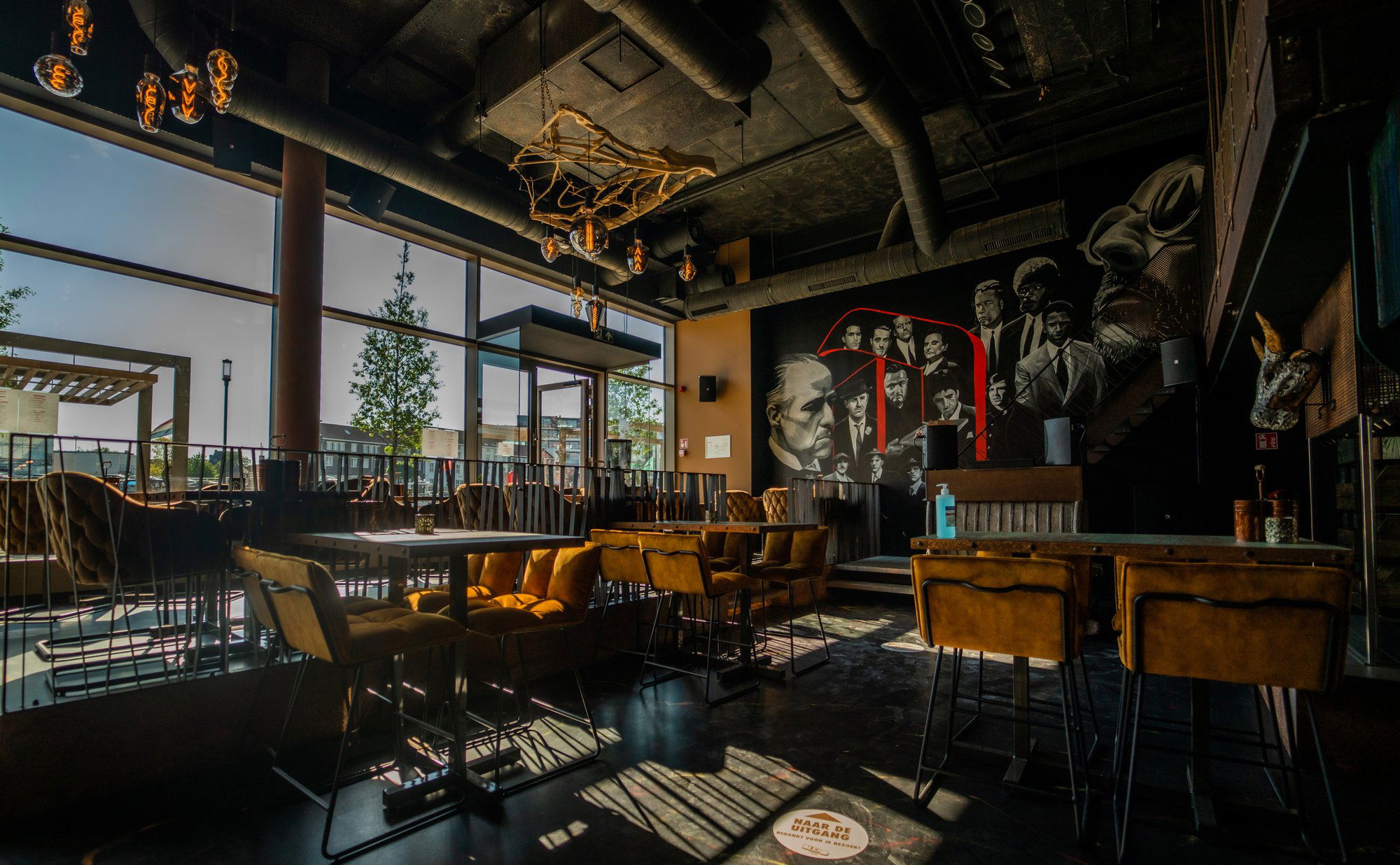
About BLEND by RAUW
BLEND by RAUW occupies a former industrial address on Slachthuiskaai in Hasselt, placing it within a generation of Belgian restaurants that have moved away from formal dining rooms toward spaces where the meal itself carries the ceremony. With Hasselt's dining scene producing serious creative ambition across multiple price tiers, BLEND by RAUW represents the city's appetite for considered, technically grounded cooking in settings that feel contemporary rather than ceremonial.
Where the Meal Sets the Pace
Slachthuiskaai 5 sits along a former slaughterhouse quay in Hasselt, a stretch of post-industrial waterfront that has become one of the more interesting addresses in Flemish dining. The shift from working infrastructure to dining destination is familiar across Belgian cities — Ghent's repurposed warehouses, Antwerp's old port buildings — but Hasselt has managed it with a particular restraint, favouring considered independent projects over the kind of high-concept redevelopment that can drain a neighbourhood of its character. BLEND by RAUW is part of that pattern: a restaurant in a location that signals intent before the meal begins.
In a city where the €€€ tier is increasingly well-represented, from JER (Modern Cuisine) to Ogst (Modern French), the question a new address has to answer is not simply whether the cooking is good, but where it sits within a coherent local ecosystem. Hasselt has, over the past decade, moved from a secondary Flemish dining city to one with genuine critical mass , a shift that places restaurants like BLEND by RAUW in a more competitive and more interesting position than the city's size might suggest.
The Ritual of the Meal in Hasselt's Creative Tier
Belgian restaurants in the creative-contemporary bracket have largely settled on a shared grammar for the meal: a sequence of smaller courses, a kitchen that frames each plate as a discrete statement, and a pace that resists the hurried rhythm of brasserie dining. That format rewards kitchens with something to say across five or seven or ten stages, and it places the emphasis squarely on the internal logic of the menu rather than on any single showpiece dish.
Hasselt's dining culture sits interestingly between Flemish pragmatism and the kind of French-inflected formality that still governs many Belgian fine dining rooms further west. Restaurants like 't Genoegen and Arlecchino reflect how varied that local register can be , Italian warmth, classical Flemish service, creative French structure all coexisting within a few minutes of each other. BLEND by RAUW, from its quayside address, positions itself within this scene without fully resolving into any single category.
The dining ritual at venues of this type tends to ask something of the guest as well as the kitchen. Arriving with time, moving through courses without impatience, engaging with a menu that has been built as a sequence rather than a list of options: these are the terms on which a meal like this succeeds. It is not the format of every occasion, but it is the format that produces the most coherent account of what a kitchen actually believes.
Hasselt in the Belgian Dining Conversation
Belgium's restaurant culture is more decentralised than it sometimes appears from the outside. The country's most discussed addresses are spread across Ghent, Antwerp, and the countryside rather than concentrated in Brussels, and the Flemish provinces have consistently produced kitchens that operate at serious technical levels without the capital's overhead or profile pressure. Vrijmoed in Gent, Zilte in Antwerp, and estate-scaled projects like Hof van Cleve in Kruishoutem or Boury in Roeselare have all contributed to a picture of Belgian fine dining that extends well beyond the capital's orbit.
Hasselt fits into that picture as a mid-sized city with a dining culture that punches above its population weight. The presence of multiple restaurants operating at the €€€ tier or above , a bracket that in many comparable European cities would be occupied by one or two addresses , suggests that the local audience is genuinely engaged with serious cooking, not just with the occasion of going out. That context matters for how BLEND by RAUW should be understood: not as an anomaly in a provincial city, but as part of a sustained local commitment to food as a considered practice.
For readers approaching Belgian dining from further afield, the comparison set extends across the country. Bozar Restaurant in Brussels, Willem Hiele in Oudenburg, La Durée in Izegem, and d'Eugénie à Emilie in Baudour each represent different registers of Belgian creative ambition. Internationally, the pacing and philosophy of contemporary Belgian tasting menus draws natural comparisons with American formats like Lazy Bear in San Francisco or the technical rigour of Le Bernardin in New York City , kitchens where the structure of the meal is itself part of the proposition.
What Draws the Local Audience
In a city where alternatives like ArtChoc offer entirely different registers of the Hasselt dining experience, the restaurants that sustain regulars in the creative tier tend to do so through consistency of execution and a menu that evolves with enough frequency to reward return visits. The quayside address on Slachthuiskaai gives BLEND by RAUW a physical setting that distinguishes it from the city-centre cluster , enough separation to feel like a deliberate choice rather than a default option.
Neighbouring addresses like Cuchara in Lommel and Ralf Berendsen in Neerharen show how the wider Limburg province has developed its own dining vocabulary alongside Hasselt's more concentrated scene. For visitors coming specifically for the food, the city's compactness is an advantage: an evening can move between addresses, or a stay can cover several nights and several different kitchens within a very short radius. The full picture of what Hasselt currently offers is mapped in our full Hasselt restaurants guide.
Planning a Visit
Slachthuiskaai 5 is reachable on foot from central Hasselt in under fifteen minutes, and the quayside location is most atmospheric in the early evening when the light along the water shifts. As with most Belgian restaurants operating at this level, reservations are the practical default rather than the cautious option , the creative-tier dining room in a city like Hasselt fills quickly on weekend evenings, and weekday tables can disappear further in advance than the city's scale might suggest. Arriving with a clear evening rather than a fixed departure time allows the meal to proceed at the kitchen's intended pace, which is where this format works leading.
Frequently Asked Questions
What do regulars order at BLEND by RAUW?
The venue's database record does not specify individual dishes, so naming particular plates would be speculation. What the cuisine category and positioning in Hasselt's creative tier do suggest is that the kitchen operates on a menu-as-sequence model, where the most coherent way to eat is to commit to what the kitchen proposes rather than to select individual items. At restaurants in this bracket across Belgium, from Vrijmoed in Gent to Boury in Roeselare, the tasting format is where the kitchen makes its strongest argument. Following that format rather than working against it is the most reliable approach for a first visit.
Should I book BLEND by RAUW in advance?
Hasselt's creative-tier restaurants fill consistently, particularly on Thursday through Saturday evenings. The city's dining audience is engaged and the number of seats at this level is not large. If your visit falls on a weekend or coincides with a Belgian public holiday, booking as far ahead as the restaurant permits is a reasonable precaution. Weekday tables can sometimes be secured with shorter notice, but the quayside address and the format suggest demand runs ahead of capacity on most service nights.
How does BLEND by RAUW fit into Hasselt's wider dining scene, and is it a good choice for a first serious meal in the city?
Hasselt has developed one of the more coherent provincial dining scenes in Belgium, with multiple kitchens operating at the creative-contemporary level within a compact city centre. BLEND by RAUW's Slachthuiskaai address places it slightly outside the central cluster, which gives it a distinct character among first-visit options. For a reader approaching Hasselt's food scene for the first time, cross-referencing this address with peers like JER and Ogst and consulting our full Hasselt restaurants guide will help map where each kitchen sits within the city's current offer.
Related editorial
- Best Fine Dining Restaurants in ParisFrom three-Michelin-star icons to the next generation of Parisian chefs pushing boundaries, these are the restaurants that define fine dining in the world's culinary capital.
- Best Luxury Hotels in RomeFrom rooftop terraces overlooking ancient ruins to Michelin-starred hotel dining, these are the luxury hotels that make Rome unforgettable.
- Best Cocktail Bars in KyotoFrom sleek lounges to hidden speakeasies, Kyoto's cocktail scene blends Japanese precision with global influence in ways you won't find anywhere else.
Save or rate BLEND by RAUW on Pearl
Keep this venue in your Pearl passport, rate it after you visit, and track it alongside every other place you collect.