
Restaurant in Bang Rak, Thailand
Park Society
100ptsSathorn Elevated Format
About Park Society
Park Society sits on North Sathorn Road in Bangkok's Bang Rak district, where the city's financial corridor meets one of its most competitive dining strips. The address places it inside a neighbourhood that has drawn serious kitchen talent for two decades, and the surrounding context — rooftop venues, ingredient-driven Thai menus, and internationally trained chefs — sets a high baseline for what a table here should deliver.
Sathorn's Dining Register, and Where Park Society Sits Within It
North Sathorn Road is one of Bangkok's better tests of a restaurant's confidence. The address at 2 North Sathorn puts Park Society in a corridor where the city's finance-sector clientele, long-stay expatriates, and internationally mobile visitors converge with reasonable regularity. Bang Rak, the district that holds this stretch, has accumulated enough serious kitchens over the past two decades that a new opening here is measured not against the neighbourhood average but against its upper tier. That upper tier currently includes Sorn in Bangkok, which earned two Michelin stars on the strength of its southern Thai sourcing programme, and a broader cohort of ฿฿฿฿ operations running tightly edited menus with explicit ingredient provenance. In that context, positioning on Sathorn is a statement as much as a location choice.
For a broader map of where Park Society sits relative to Bang Rak's other tables, our full Bang Rak restaurants guide covers the district's range from street-level to rooftop. The contrast with a place like Som Tam Jay So in the same district illustrates how wide that range runs: Bangkok's most commercially active neighbourhoods tend to support both the deeply local and the internationally formatted, often within walking distance.
Ingredient Sourcing as the Central Question in Bangkok's Fine Dining Tier
Bangkok's top-tier dining conversation has shifted decisively toward provenance over the past several years. The question is no longer whether a kitchen uses Thai ingredients but which farmers, which regions, and which seasonal windows. Sorn built its Michelin recognition around southern Thai suppliers and ingredients that rarely appeared in Bangkok fine dining before its opening. PRU in Phuket went further by operating its own farm, a model that compressed the supply chain to near zero. At the ฿฿฿฿ tier across Bangkok, these moves have set an implicit standard: a kitchen that cannot explain where its protein and produce come from is operating below the current expectation level, regardless of technique.
That pressure has produced an interesting split in the city's premium market. One group of restaurants treats sourcing as a marketing layer, listing province names on the menu while running a largely conventional supply chain behind the scenes. A smaller group has restructured procurement to the point where the sourcing IS the menu, driving what dishes are possible on any given week. The difference is apparent in the food and, more pointedly, in the consistency of the offer across seasons. Thailand's agricultural calendar is specific enough — with marked differences in produce quality between the cool season running roughly November through February and the wet months from June onward — that a kitchen genuinely tied to local supply will show variation in a way a conventionally sourced kitchen will not.
Elsewhere in Thailand, this approach has taken firm root. AKKEE in Pak Kret and Anuwat in Phang Nga represent regional iterations of the same shift: kitchens that treat geography as both constraint and creative resource. Even outside the country's premium tier, places like Ayutthayarom in Phra Nakhon Si Ayutthaya and Baan Suan Lung Khai in Ko Samui demonstrate that the sourcing impulse extends well beyond Bangkok and beyond formal fine dining into deeply regional cooking traditions.
The Sathorn Rooftop and refined-Venue Format in Bangkok
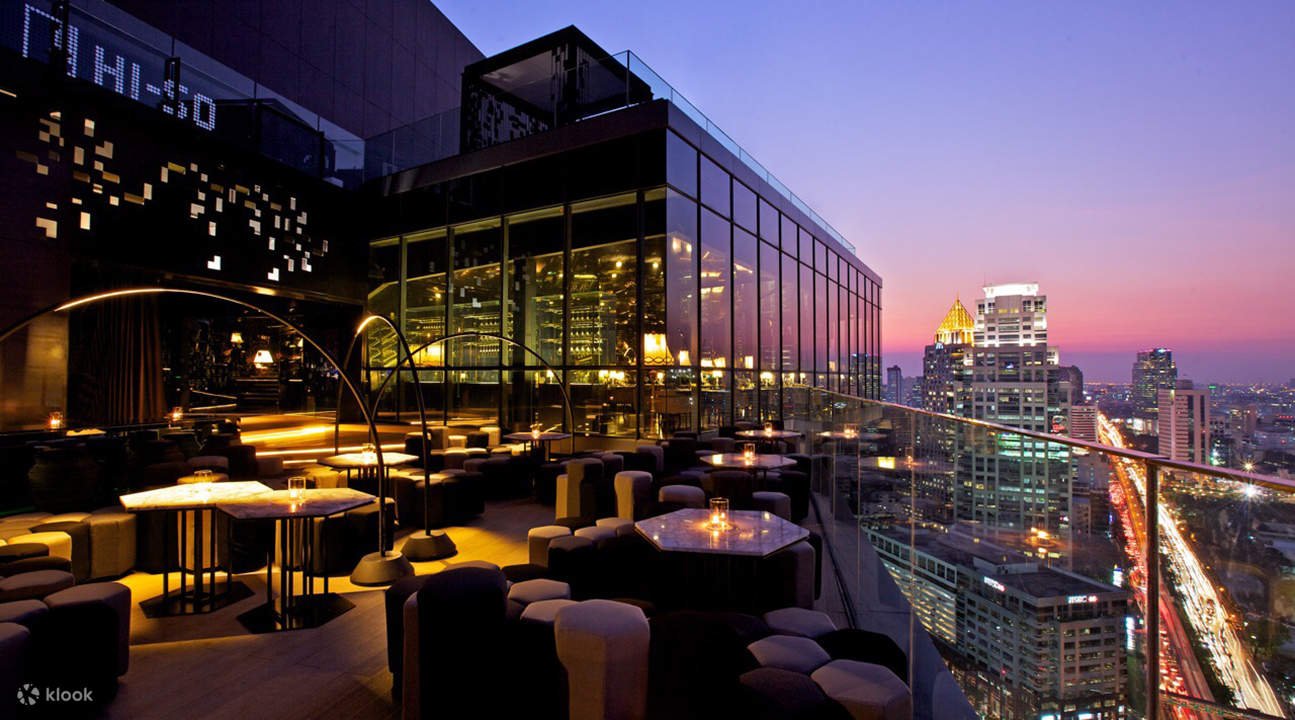
Bangkok's rooftop and refined-venue category operates under a different competitive logic than its ground-level restaurant peers. The view is a product variable, and venues in this format are priced and booked accordingly. The city has enough of these , from the well-documented perches along the Chao Phraya to the hotel-tower formats on Silom and Sathorn , that novelty alone no longer justifies a visit. What separates the ones worth returning to from the ones worth visiting once is whether the kitchen programme holds up independently of the setting. Internationally, the same tension plays out at places like Le Bernardin in New York City and Lazy Bear in San Francisco, where the physical environment is secondary to a kitchen identity that could theoretically survive relocation. The question for any Bangkok rooftop venue is whether it would retain its audience if you dropped it to street level.
Park Society's position on North Sathorn places it in a peer group that includes some of Bangkok's more programme-serious refined venues. The neighbourhood's density of hotel-connected and standalone rooftop formats means that the competitive set is both large and visible. Visitors booking in this category tend to be comparing across multiple properties before committing, which puts a premium on distinctive kitchen identity over generic international menus.
Thailand's Regional Restaurant Circuit as Context
Understanding Park Society also requires some awareness of how Bangkok dining sits within a wider Thai restaurant ecosystem that has grown considerably more sophisticated at the regional level. Kitchens like Baan Chik Pork Noodles in Udon Thani, Baan Heng in Khon Kaen, and Banmai Chay Nam in Nakhon Ratchasima have developed strong local followings on the basis of regional ingredient specificity, the kind of precision that Bangkok's premium sector now aspires to import. The flow of culinary intelligence is no longer strictly from Bangkok outward; it increasingly runs in both directions, with chefs in the capital actively seeking out provincial producers and techniques that the regional kitchens have been working with for years.
This matters for any Bang Rak restaurant operating at a premium price point: the reference set for what rigorous Thai ingredient work looks like has expanded well beyond the city's own borders. Banrimbung in Nakhon Pathom, Banya in Nonthaburi, and Chom Tawan in Chon Buri each operate within commuting distance of Bangkok and serve as useful comparators for what serious provincial cooking looks like when it is not trying to be capital-city fine dining. Chomjan in Ubon Ratchathani and The Spa in Lamai Beach extend that frame further, showing how ingredient-driven cooking adapts to wildly different regional contexts across Thailand.
Planning a Visit
Park Society is located at 2 North Sathorn Road, Si Lom, Bang Rak, Bangkok 10500. The address is direct to reach by BTS (Chong Nonsi station is the nearest stop on the Silom Line) and by taxi or ride-share from most central Bangkok hotels. Sathorn's traffic density during evening peak hours, roughly 5:30pm to 8pm on weekdays, means that ground-level transport can add meaningful time to arrival from Sukhumvit or Siam. Those coming from the riverside should factor in similar variability. Given that specific hours, pricing, and booking methods are not confirmed in our current data, we recommend checking directly with the venue before planning your evening around a specific time slot.
Frequently Asked Questions
- Is Park Society a family-friendly restaurant?
- At a premium Sathorn address in one of Bangkok's most commercially active dining districts, Park Society is formatted for adults rather than families with young children. The neighbourhood and price positioning make it a natural fit for business dining or adult social occasions.
- Is Park Society better for a quiet night or a lively one?
- That depends on timing and format. Bangkok's refined-venue category tends toward lively on Friday and Saturday evenings when the rooftop format draws a social crowd. If the kitchen programme is the priority rather than the scene, midweek bookings at venues of this type in Bang Rak consistently deliver a calmer experience, with more attentive service and less ambient noise competing with the food.
- What do regulars order at Park Society?
- Without confirmed menu data, we cannot specify dishes. What the address and competitive tier suggest is that a kitchen in this position in Bangkok's current market is under meaningful pressure to anchor its menu around identifiable Thai ingredient sourcing, the same standard applied to recognised peers like Sorn and Baan Tepa. Regulars at venues of this type tend to track seasonal shifts in the menu rather than returning for a fixed signature item.
- Does Park Society's Sathorn address make it practical for visitors staying in Sukhumvit?
- The two corridors are connected by both BTS Skytrain lines with a change at Siam, making the journey reliable and predictable in around 20-30 minutes by rail. Sathorn's concentration of internationally recognised restaurants means a Sukhumvit-based visitor making the trip can reasonably extend the evening across more than one stop in the neighbourhood, with Bang Rak's dining range from street-level to rooftop available within a short radius of the North Sathorn address.
Related editorial
- Best Fine Dining Restaurants in ParisFrom three-Michelin-star icons to the next generation of Parisian chefs pushing boundaries, these are the restaurants that define fine dining in the world's culinary capital.
- Best Luxury Hotels in RomeFrom rooftop terraces overlooking ancient ruins to Michelin-starred hotel dining, these are the luxury hotels that make Rome unforgettable.
- Best Cocktail Bars in KyotoFrom sleek lounges to hidden speakeasies, Kyoto's cocktail scene blends Japanese precision with global influence in ways you won't find anywhere else.
Save or rate Park Society on Pearl
Keep this venue in your Pearl passport, rate it after you visit, and track it alongside every other place you collect.