
Restaurant in Zadar, Croatia
Antiquus sushi@more POP
100ptsAdriatic-Coast Omakase
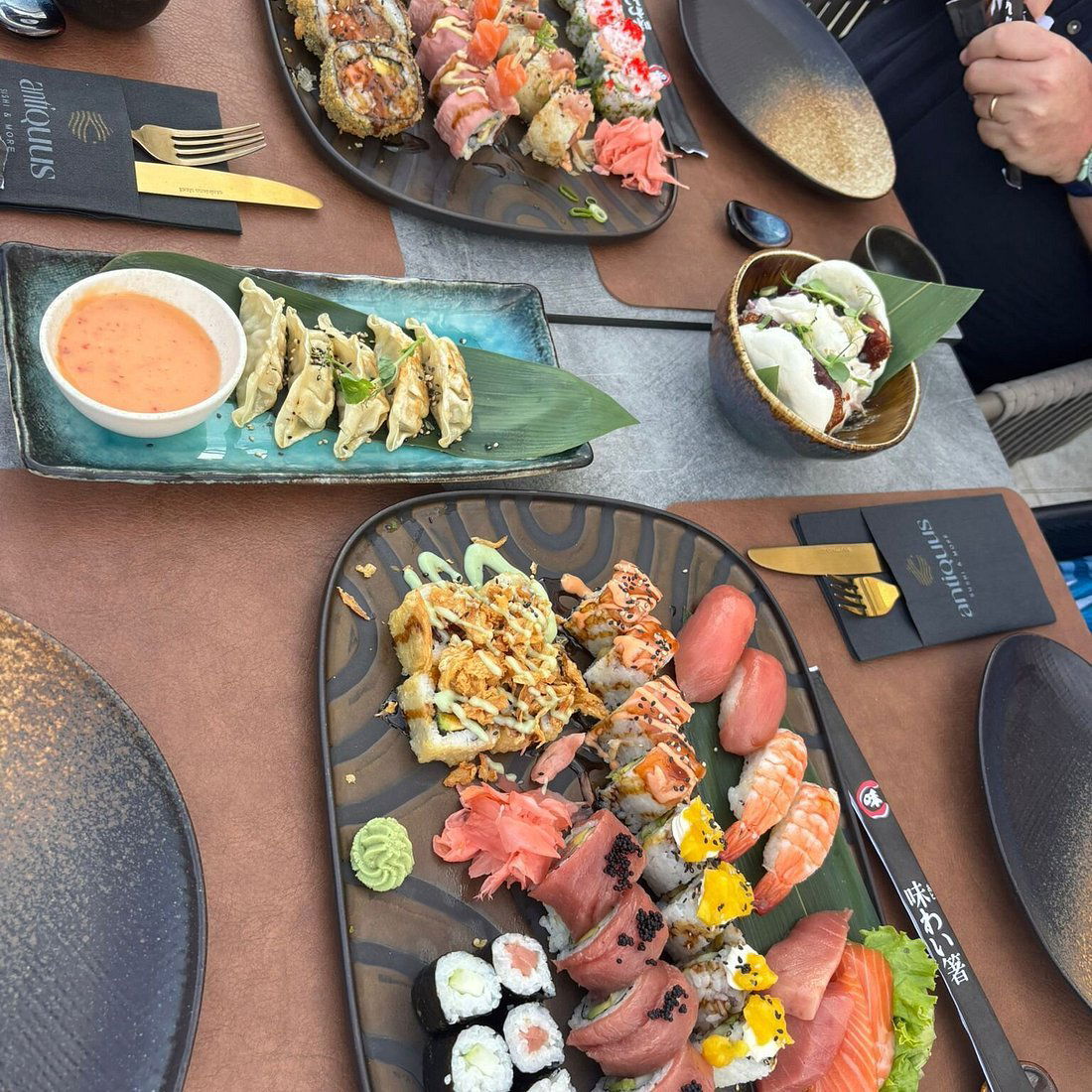
About Antiquus sushi@more POP
Zadar's sushi scene is small enough that a venue combining Japanese technique with Adriatic sourcing occupies its own tier. Antiquus sushi@more POP sits on Ul. Zadarskog Mira in a city better known for its Roman forum and Maraschino liqueur than raw fish. The premise raises a genuine question about ingredient provenance in a landlocked-cuisine tradition meeting one of Europe's most productive coastlines.
Where the Adriatic Meets the Omakase Counter
Sushi in Croatian coastal cities exists in a different register than it does in Tokyo or even London. In Zadar, a city whose culinary identity runs through grilled fish, lamb under the peka, and the briny minerality of local shellfish, Japanese technique applied to Adriatic catch is less a fusion novelty and more a logical extension of what the sea already offers. The Dalmatian coast produces sea bass, bream, and shellfish that routinely supply higher-end European kitchens; the question is whether that same ingredient quality, when redirected through Japanese prep traditions, holds up on the plate.
Antiquus sushi@more POP, addressed at Ul. Zadarskog Mira 1358 in Zadar, occupies that particular intersection. The name signals a pairing with the broader A'mare POP concept, and the Adriatic address puts it in a city that draws a sophisticated summer crowd with genuine expectations around seafood. Visitors already familiar with the standard of fish served at Zadar's established dining rooms will arrive with a calibrated baseline.
The Sourcing Argument for Adriatic Sushi
The credibility of any sushi program outside Japan rests heavily on the supply chain. In coastal Dalmatia, that argument is easier to make than in most European cities. The northern Adriatic and the waters around the Dalmatian islands are among the cleaner fishing grounds remaining in the Mediterranean basin, producing fish with the fat content and texture that Japanese preparation methods reward. Wild sea bass from the archipelago around Zadar, for instance, competes on specification with fish that premium sushi counters in other European capitals import at considerable cost and transit time.
That proximity matters. Where a Tokyo-trained counter in Paris or Berlin is working with fish that has crossed several logistics nodes, a Zadar operation sourcing locally can, in principle, work with catch at a freshness interval that changes what the knife can do. Whether Antiquus sushi@more POP operates with that level of sourcing discipline is a question the venue's own service and menu confirm on the day, but the geographic conditions for it are present in a way they simply are not in landlocked dining cities. For comparison, restaurants like Le Bernardin in New York City have built long reputations on the argument that sourcing decisions are the real menu; the same logic applies, scaled differently, to any serious seafood program.
Croatia's wider fine-dining tier has demonstrated that the country's seafood is capable of anchoring ambitious tasting menus. Pelegrini in Sibenik and LD Restaurant in Korčula both operate in the zone where Adriatic ingredient quality drives the editorial point of the menu. Antiquus sushi@more POP makes a related case from a different culinary tradition.
Zadar's Dining Room, Read Against Its Peers
Zadar's restaurant scene is more layered than its scale suggests. The old town peninsula holds everything from the terrace-facing-sea format at A'mare POP to the more composed Croatian kitchen at Bistro Pjat. Established addresses like Bruschetta and Butler Gourmet&Cocktails Garden hold different positions in the competitive set, and the Mediterranean-leaning rooms at Foša and Kaštel represent the city's more classical upper tier at the €€€ price bracket.
A sushi concept sits outside that competitive set almost entirely. It draws a different occasion: the visitor who has spent a week eating peka and grilled branzino and wants a session at a counter where the technique shifts register entirely. It also draws the traveller cross-referencing Zadar against other Croatian dining destinations. Those who have already eaten at Nebo by Deni Srdoč in Rijeka or Agli Amici Rovinj in Rovinj arrive with expectations shaped by the country's most technically demanding kitchens. Alfred Keller in Mali Lošinj and Boskinac in Novalja further illustrate how island and coastal Adriatic settings are increasingly associated with considered, ingredient-led menus rather than tourist-volume cooking.
Within Zadar specifically, 4kantuna represents a different angle on the city's dining character. Taken together, these addresses sketch a city with enough diversity that a sushi counter with a clear sourcing premise reads as a genuine addition rather than a novelty import.
Planning a Visit
Zadar's high season runs from June through August, when the old town fills quickly and restaurant capacity across all tiers runs near its limit. The address at Ul. Zadarskog Mira 1358 places the venue within reach of the old town peninsula without sitting in its most congested tourist corridor. Visitors arriving by ferry or flying into Zadar Airport, approximately 8 kilometres east of the city centre, should plan dining reservations in advance for July and August visits; walk-in availability at any Zadar venue during peak summer is unpredictable at leading. Outside peak season, from September through October, the city moves at a slower pace and seat availability opens considerably. Autumn is also when local fish markets carry some of their most consistent supply, which matters for any kitchen whose argument depends on what arrived that morning.
For those building a broader Croatia itinerary with dining as a structuring concern, the country's most referenced restaurant programs outside Zagreb include Krug in Split, Restaurant 360 in Dubrovnik, and Dubravkin Put in Zagreb. Zadar sits naturally on a northern Dalmatian circuit that connects these points. For a full picture of what the city's dining rooms offer, our full Zadar restaurants guide maps the relevant addresses across price tiers and cuisine types.
For those comparing Zadar's sushi offer against reference points in other global cities, Lazy Bear in San Francisco represents a useful case study in how a city's local ingredient culture can reframe a format that originated elsewhere; the Adriatic version of that argument is still developing, but the raw material conditions are present.
Frequently Asked Questions
- Is Antiquus sushi@more POP a family-friendly restaurant?
- Zadar has a range of dining formats across its old town and harbour area, and the city's summer crowd includes both families and solo travellers. A sushi counter format typically suits adults and older children comfortable with Japanese-style service; the format tends toward focused, sequential eating rather than the flexible sharing plates that suit mixed-age groups most easily. Families visiting Zadar with younger children may find the city's more casual Croatian fish restaurants a better fit for pace and portion style.
- What kind of setting is Antiquus sushi@more POP?
- The venue operates within the A'mare POP framework in Zadar, a city whose dining rooms range from terrace-facing-sea formats in the €€€ bracket to more casual old town spots. Without confirmed awards or a published price tier, the setting is leading understood as a sushi-specific concept within a city whose upper-mid dining tier is defined by Adriatic seafood. The Ul. Zadarskog Mira address places it outside the most tourist-dense old town core.
- What dish is Antiquus sushi@more POP famous for?
- No confirmed signature dishes appear in the current venue record. Given the cuisine type and the Adriatic sourcing conditions available in Zadar, locally caught fish prepared through Japanese technique is the logical centre of the menu. Croatia's coastline supplies sea bass, bream, and shellfish with specifications that premium sushi programs in other European cities would import at significant cost; any kitchen operating here with sourcing discipline has access to genuinely strong raw material.
- Do they take walk-ins at Antiquus sushi@more POP?
- Zadar's dining rooms across all price points run close to capacity during July and August, and any venue operating a counter-format sushi program in a city this size is likely to have limited seat availability without prior contact. Outside peak season, particularly in September and October, walk-in chances improve across the city. Booking ahead is the lower-risk approach regardless of time of year.
- Why is sushi relevant in a Dalmatian coastal city like Zadar?
- The Dalmatian coast is among the more productive and relatively clean fishing grounds remaining in the Mediterranean, supplying fish with the fat content and texture that Japanese prep methods specifically reward. A sushi program in Zadar has access to locally caught seafood at a freshness interval that operations in landlocked cities cannot match, even when importing high-specification fish. That proximity to source is the operative argument for Japanese technique applied to Adriatic catch, and it is the reason coastal Croatia represents a more credible setting for this cuisine format than most European cities away from the sea.
Related editorial
- Best Fine Dining Restaurants in ParisFrom three-Michelin-star icons to the next generation of Parisian chefs pushing boundaries, these are the restaurants that define fine dining in the world's culinary capital.
- Best Luxury Hotels in RomeFrom rooftop terraces overlooking ancient ruins to Michelin-starred hotel dining, these are the luxury hotels that make Rome unforgettable.
- Best Cocktail Bars in KyotoFrom sleek lounges to hidden speakeasies, Kyoto's cocktail scene blends Japanese precision with global influence in ways you won't find anywhere else.
Save or rate Antiquus sushi@more POP on Pearl
Keep this venue in your Pearl passport, rate it after you visit, and track it alongside every other place you collect.