
Restaurant in Brisbane, Australia
Agnes
225ptsOpen-Fire Restraint

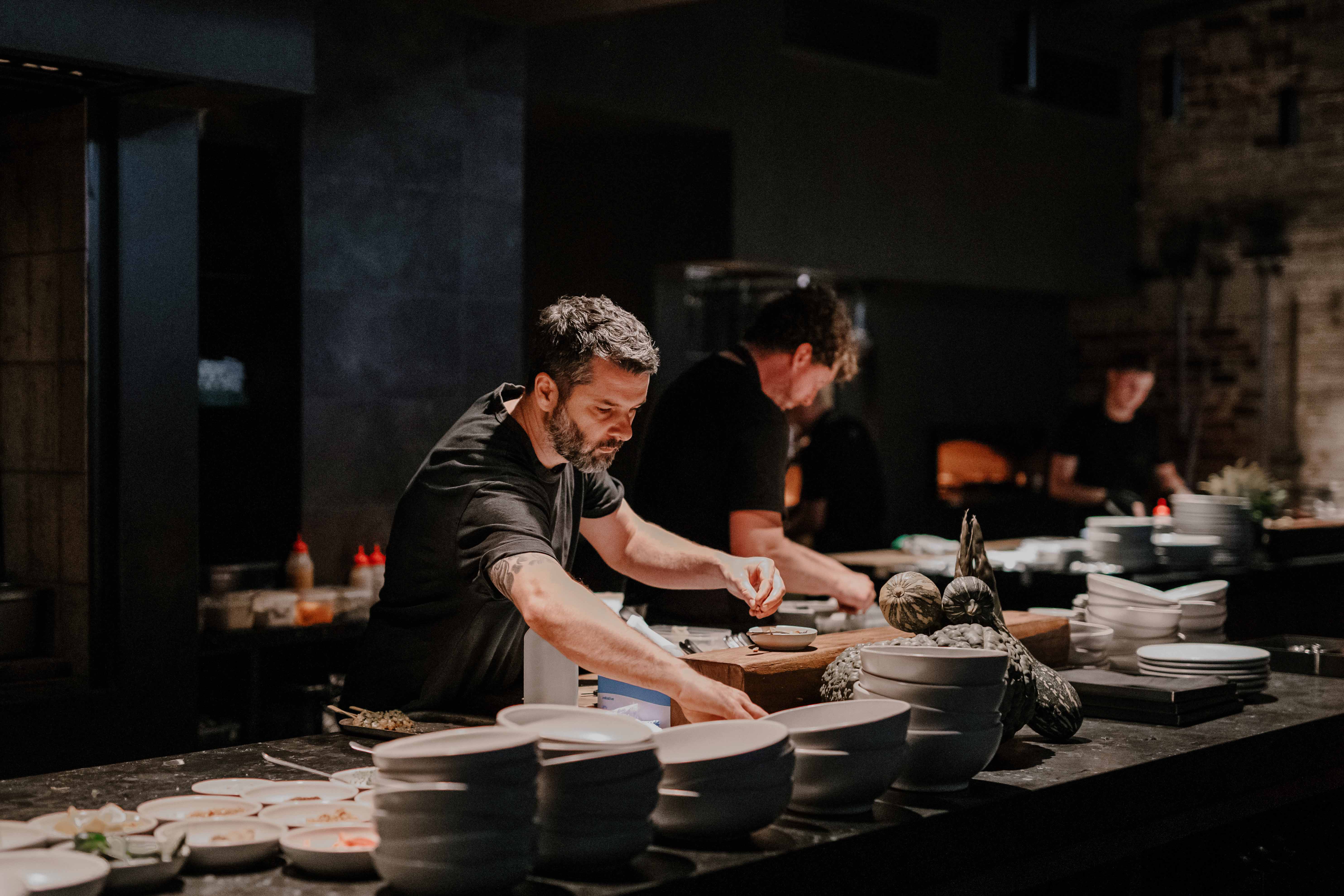
About Agnes
Agnes in Fortitude Valley has become a marker for where Brisbane's fire-led cooking sits at its most considered. Housed in a heritage building on Agnes Street, the restaurant works across three levels, from a main dining room to a wine bar and terrace, with wood and charcoal as the organising principle throughout. The cooking is modern Australian, the approach is restrained, and the produce-first agenda runs across vegetables, seafood, and dry-aged beef alike.
Fire as Method, Not Statement
There is a particular quality to a dining room built around open fire: the warmth that settles before the food arrives, the faint trace of woodsmoke that signals what the kitchen is doing without advertising it. At Agnes on Agnes Street in Fortitude Valley, that atmosphere is the starting point. The building is heritage, spread across three levels, and the interior carries the materiality of the space rather than overwriting it. The glow of the hearth anchors the ground floor. The wine bar and terrace extend the mood outward. It is the kind of room that makes the evening feel coherent before the first dish lands.
Brisbane's dining scene has shifted considerably in the past decade. The city that once deferred to Sydney and Melbourne for serious cooking has developed its own register, one shaped partly by proximity to exceptional Queensland produce, partly by a generation of chefs who trained interstate and abroad and came home. Fire-led cooking sits inside that broader shift. Across Australian restaurants, from Brae in Birregurra to Hentley Farm in Seppeltsfield, the hearth has moved from a single station to an organising philosophy. Agnes belongs to that cohort, but its identity is specifically Brisbane: produce-driven, relatively unfussy in presentation, and built for the kind of long dinner that a warm subtropical evening encourages.
The Cultural Logic of the Grill
Wood-fire cooking in Australia carries a different cultural weight than it does in, say, the Basque Country or the Argentine pampas. It arrives here without a single dominant tradition. Instead, it draws on Indigenous smoke-and-earth techniques, the pastoral legacy of open-flame beef cookery, and the influence of chefs who absorbed live-fire discipline from kitchens in Europe and North America. What emerged, across a number of significant Australian restaurants, is a practice that does not point to one ancestor. It synthesises. The approach at Agnes reflects that condition. The menu applies fire to vegetables, seafood, and meat with equal seriousness, refusing to let beef dominate the logic of the kitchen even as dry-aged cuts and Australian Wagyu form a clear part of the identity.
That breadth matters. At restaurants where fire is primarily a beef delivery system, the technique can feel one-dimensional. The more considered approach, which Agnes pursues, treats the hearth as a flavour tool that can bring depth to a delicate fish or char the edge of a vegetable without erasing what it actually is. It is cooking that looks minimal on the plate precisely because the complexity has been built through heat and timing rather than through layered sauces or elaborate garnish. Internationally, kitchens like Lazy Bear in San Francisco and, in a different register, Le Bernardin in New York City demonstrate how technique-first thinking can drive menus that read simply but execute at a different level. Agnes operates in that same logic, applied to a specifically Australian pantry.
What the Menu Argues
The kitchen at Agnes is led by chef and co-owner Ben Williamson, whose background informs a menu that sits firmly within modern Australian grill cooking without becoming an exercise in novelty. The cooking does not chase maximalism. Smoke and char are used to build structure, not to overwhelm the ingredient. A piece of beef carries intensity from the fire but arrives on the plate tasting of the animal first, the method second. The balance is the achievement.
Dry-aged cuts and Australian Wagyu anchor the meat section, positioned in a tier that aligns Agnes with serious beef restaurants nationally. But the broader menu signal is the range: vegetables treated with the same heat discipline, seafood handled with enough restraint that it does not disappear under char, and a pacing across courses that allows the fire-led flavour profile to accumulate without becoming monotonous. Contrast is one of the kitchen's strongest tools. A dish can carry smoke and still feel clean. That is not a simple thing to pull off consistently.
For broader orientation on where Agnes sits within Brisbane's current scene, the full Brisbane restaurants guide maps the city's dining in more detail. In Fortitude Valley specifically, the restaurant operates in a neighbourhood that has absorbed a wave of serious cooking in recent years, with Bar Alto and Bar Miette among the options that define the precinct's current character. Agnes occupies a different register from those, but it is part of the same moment in Brisbane's confidence as a dining city.
The Building as Collaborator
The three-level format at Agnes is worth taking seriously as a design decision rather than a layout convenience. The main dining room, the wine bar, and the terrace each create a different register while sharing the same kitchen logic. Guests who begin in the wine bar before moving to the dining room experience the evening with a different rhythm than those who arrive directly at the table. The terrace extends the spatial range further, offering the warm Fortitude Valley air as a fifth element in the meal.
This multi-room structure places Agnes in a cohort of Australian restaurants that treat the building as part of the proposition. Properties like Attica in Melbourne and Botanic in Adelaide demonstrate how the physical envelope of a restaurant can carry editorial weight in itself, reinforcing what the kitchen is trying to say. At Agnes, the heritage fabric of the building and the pared-back interior design do that work without competing with the food. The room stays warm and human in scale, which supports the style of dining the kitchen produces: unhurried, produce-focused, built for people who want to settle rather than graze.
Service, Wine, and the Shape of the Evening
The wine bar embedded within Agnes is not a cosmetic addition. It integrates the drinks programme into how guests move through the space and how the evening is shaped. Brisbane has developed a more serious natural and low-intervention wine culture in recent years, and venues with their own bar infrastructure are better positioned to support that. The wine selection at Agnes functions as part of the meal's pacing rather than as a separate commercial element, giving the evening more range without pulling focus from the food.
Service operates at the same pace as the kitchen: guided where guidance adds value, absent where the dish or the moment does not need explanation. That restraint is not indifference. It is a reading of the room that reflects confidence in the product. The same quality shows in how the courses are timed, which avoids the sense of being rushed through a theatrical production in favour of something closer to a proper dinner with a beginning, middle, and end. Comparable warmth and rhythm can be found at restaurants like Pipit in Pottsville and Provenance in Beechworth, both of which share a similar commitment to service that supports rather than performs.
Planning a Visit
Agnes is located at 22 Agnes Street, Fortitude Valley, a neighbourhood with good public transport access from the Brisbane CBD. The three-level venue handles different party sizes across its spaces, though the main dining room suits groups looking for the full fire-and-produce experience rather than a quick pass through the wine bar. For diners planning a broader Fortitude Valley evening, the precinct offers complementary options including Kor Dak and the wider selection covered in the Brisbane guide. Agnes operates at a price point consistent with Brisbane's tier of serious modern Australian restaurants, comparable to Bacchus and 1889 Enoteca in terms of positioning rather than format. Reservations are strongly recommended, particularly for the main dining room on Thursday through Saturday evenings. Walk-in access to the wine bar is more likely on quieter midweek nights, though availability varies.
Frequently Asked Questions
Is Agnes good for families?
Agnes works well for adults and older teenagers who are comfortable with a longer, produce-led dinner format. The atmosphere is warm rather than formal, and the multi-level layout means the venue does not feel rigidly quiet. That said, the price point and pacing align more naturally with a considered adult dinner than a casual family outing. If the group includes younger children, the wine bar level may offer a less pressured entry point than the main dining room.
What is the vibe at Agnes?
Fortitude Valley has a range of registers after dark, and Agnes sits at the considered, unhurried end of that spectrum. The room is warm, the noise level stays manageable, and the heritage building gives the space texture without feeling stiff. It reads as smart-casual: guests who arrive dressed well will feel at home, and those who do not treat it as a formal occasion will not feel out of place. The fire and the open kitchen give the dining room a live quality without turning it into a performance.
What do people recommend at Agnes?
The fire-cooked beef, including dry-aged cuts and Australian Wagyu, draws consistent attention and represents the kitchen's identity most directly. Ben Williamson's approach to grilling, which prioritises clarity over char for its own sake, tends to generate strong word of mouth. The vegetable and seafood dishes are also noted for applying the same heat discipline rather than treating them as secondary to the meat programme. The wine selection, integrated through the bar, is frequently mentioned as a strength alongside the food.
Do they take walk-ins at Agnes?
Agnes is a well-regarded Fortitude Valley restaurant at a price point where advance booking is the more reliable approach, particularly for weekend evenings in the main dining room. The wine bar component does offer some walk-in potential, especially on midweek nights, and functions as an entry point to the venue without requiring a full dinner reservation. For anyone planning specifically around Agnes, securing a booking ahead of travel is the practical default.
What makes Agnes worth seeking out?
Agnes makes a coherent argument for fire-led cooking that goes beyond beef and beyond spectacle. The kitchen applies wood and charcoal to the full range of the menu with equal seriousness, and the results carry the kind of restrained confidence that is harder to sustain than maximalism. Within Brisbane's dining scene, it sits at a point of maturity: not trying to announce itself, but delivering a complete evening, from room to fire to service, that gives the city a serious reference point in modern Australian grill cooking. For context, that places it in a peer conversation with restaurants like Rockpool in Sydney, Laura at Pt Leo Estate in Merricks, and Ormeggio at The Spit in Mosman, restaurants that define their respective cities' upper tier through consistency and clarity of purpose rather than noise.
Recognized By

Related editorial
- Best Fine Dining Restaurants in ParisFrom three-Michelin-star icons to the next generation of Parisian chefs pushing boundaries, these are the restaurants that define fine dining in the world's culinary capital.
- Best Luxury Hotels in RomeFrom rooftop terraces overlooking ancient ruins to Michelin-starred hotel dining, these are the luxury hotels that make Rome unforgettable.
- Best Cocktail Bars in KyotoFrom sleek lounges to hidden speakeasies, Kyoto's cocktail scene blends Japanese precision with global influence in ways you won't find anywhere else.
Save or rate Agnes on Pearl
Keep this venue in your Pearl passport, rate it after you visit, and track it alongside every other place you collect.