
Restaurant in Banff, Canada
1888 Chop house
150ptsRocky Mountain Chop House

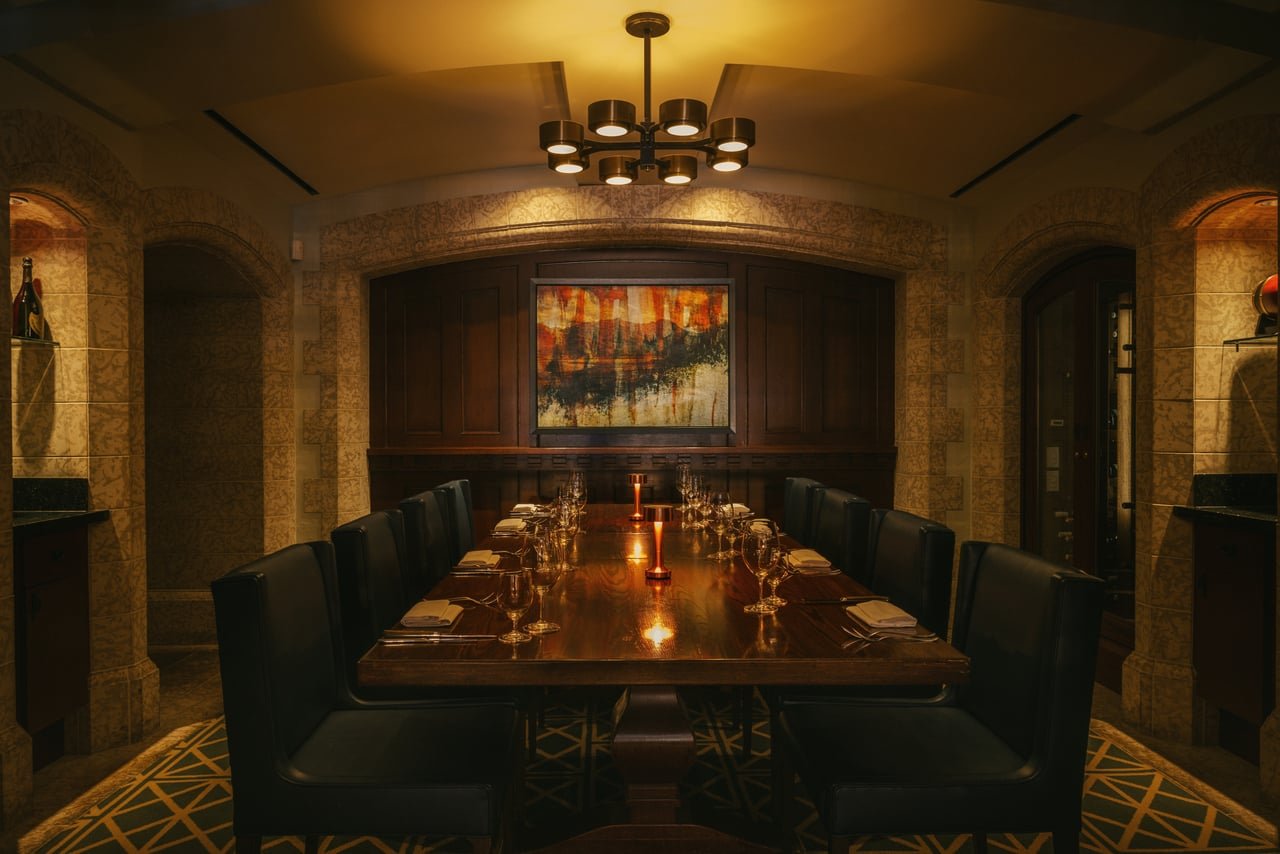
About 1888 Chop house
A White Star-listed wine program and a chop house format built for Alberta's beef country, 1888 Chop house sits inside the Fairmont Banff Springs at 405 Spray Ave. The recognition from Star Wine List in December 2021 places it in a specific tier of Canadian mountain dining where the wine list carries as much weight as the kitchen. For a full picture of where it fits in Banff's dining scene, consult our Banff restaurants guide.
Chop House Dining in the Canadian Rockies: Where Beef and Altitude Meet
Banff's restaurant scene operates under a pressure few Canadian cities face: a captive audience of resort guests, a short summer peak, and the constant expectation that food must somehow match the scale of the mountains outside. The hotels on Spray Avenue carry most of that expectation. The Fairmont Banff Springs, which houses 1888 Chop house, is one of the oldest and most architecturally prominent addresses in the national park, and the chop house format it supports is a deliberate response to the Alberta beef tradition that runs through this province's food identity. A chop house in this context is not a nostalgic American import. It is an acknowledgment that Alberta raises some of North America's most traceable, high-quality beef, and that a restaurant in this region has a credible supply chain to draw from.
The chop house format itself has specific implications for how a kitchen sources. Unlike a tasting menu restaurant, where the chef's discretion over ingredients can be exercised course by course, a chop house commits publicly to a protein category. The quality of Alberta beef is not incidental to that commitment. The province's ranching culture, built on open grasslands east of the Rockies, produces grain-finished beef that has attracted serious buyers across Canada and internationally. For a restaurant operating under the 1888 name, a reference to the year the Banff Springs hotel first opened, the sourcing question is as much historical as it is culinary. The land that surrounds Banff National Park has been ranching country for well over a century, and a good chop house in this location draws directly on that continuity.
The Star Wine List Recognition and What It Signals
Published on Star Wine List in December 2021 and awarded a White Star, 1888 Chop house carries a credential that matters specifically in the context of wine programming. Star Wine List evaluates lists on depth, range, and the coherence of the selection relative to the food program. A White Star is the entry point into their recognition tier, placing the restaurant alongside properties that take their wine offering seriously enough to merit editorial attention. In a mountain resort town where wine lists are frequently treated as secondary to whisky and cocktail programs, that recognition is a meaningful differentiator.
For a chop house, a credible wine list is structurally important. Beef-centric menus demand red wine depth, and the pairing conversation at a serious chop house tends to move through Cabernet Sauvignon and its Bordeaux-adjacent relatives, Malbec from Argentina, and the bolder expressions of Rhône varieties. A White Star recognition suggests the list at 1888 can hold that conversation. Within [our full Banff restaurants guide](https://www.enprimeurclub.com/restaurants/banff), it sits as one of the few addresses where the wine program has received independent editorial attention rather than relying solely on hotel brand reputation.
Alberta Sourcing and the Regional Beef Argument
The ingredient sourcing argument for Alberta beef is geographic before it is culinary. The foothills west of Calgary, the Chinook belt that keeps winters marginally milder than the rest of the prairies, and the scale of the ranching operations in the region collectively produce a supply chain that a restaurant in Banff can access with relative directness. That proximity matters. Restaurants that operate far from their protein sources face both freshness and traceability limitations that a Banff chop house, sitting at the edge of Alberta's ranching country, does not face in the same way.
This regional grounding places 1888 Chop house in a different conversation than Canadian fine dining restaurants that emphasize foraging or hyper-local produce. Venues like [Tanière³ in Quebec City](https://www.enprimeurclub.com/restaurants/taniere-qubec-city-restaurant) or [Eigensinn Farm in Singhampton](https://www.enprimeurclub.com/restaurants/eigensinn-farm-singhampton-restaurant) build their identity around what grows on or near the property. A chop house builds its identity around a specific animal, a specific region, and the processing and aging decisions that follow. Those are different sourcing philosophies, each defensible within its own culinary logic. In Western Canada, [AnnaLena in Vancouver](https://www.enprimeurclub.com/restaurants/annalena-vancouver-restaurant) and [ÄNKÔR in Canmore](https://www.enprimeurclub.com/restaurants/ankor-canmore-restaurant) represent the more produce-led, contemporary approach. The chop house model is deliberately narrower in its protein focus and broader in its claim to regional beef authority.
Where 1888 Sits in Banff's Dining Tier
Banff's upper dining tier divides, broadly, between hotel restaurants with serious culinary ambitions and independent operators. The Fairmont Banff Springs hosts more than one dining concept, and [Eden at The Rimrock Resort](https://www.enprimeurclub.com/restaurants/eden-the-rimrock-resort-banff-restaurant) represents the other major hotel fine dining address in town. Eden operates in a different register, with a tasting menu format and Canadian cuisine framing that contrasts with the chop house's à la carte, protein-forward structure. The two venues are not in direct competition; they serve different versions of a Banff hotel dining experience.
Beyond Banff, the Alberta and broader western Canadian dining conversation includes addresses such as [Restaurant Pearl Morissette in Lincoln](https://www.enprimeurclub.com/restaurants/restaurant-pearl-morissette-lincoln-restaurant) and [The Pine in Creemore](https://www.enprimeurclub.com/restaurants/the-pine-creemore-restaurant), which pursue Canadian terroir from entirely different geographic and culinary starting points. In Montreal, [Jérôme Ferrer's Europea](https://www.enprimeurclub.com/restaurants/jrme-ferrer-europea-montral-restaurant) and in Toronto, [Alo](https://www.enprimeurclub.com/restaurants/alo-toronto-restaurant) represent the contemporary fine dining end of the national spectrum. The chop house format sits apart from all of these, occupying a specific niche where the format's constraints, namely a commitment to beef, a wine list built to accompany it, and a room designed to support a longer, more deliberate meal, are the product rather than an incidental feature.
Planning Your Visit
1888 Chop house is located at 405 Spray Ave within the Fairmont Banff Springs, a property that requires either a short drive or a taxi from central Banff. The hotel sits above the Bow River and is accessible by foot from town, though the walk involves a meaningful incline. Visitors staying at the Fairmont have direct access; those staying elsewhere should account for transport in both directions, particularly in winter when road and path conditions can vary. Booking ahead is advisable, particularly during the summer peak from late June through August and over the winter ski season, when both the hotel and the national park reach high occupancy. The Star Wine List recognition makes the wine list worth engaging with directly at the table rather than defaulting to a familiar label. For those building a broader Banff itinerary, our guides to [Banff hotels](https://www.enprimeurclub.com/hotels/banff), [Banff bars](https://www.enprimeurclub.com/bars/banff), [Banff wineries](https://www.enprimeurclub.com/wineries/banff), and [Banff experiences](https://www.enprimeurclub.com/experiences/banff) provide the wider context. For comparison points further afield in North America, [Le Bernardin in New York City](https://www.enprimeurclub.com/restaurants/le-bernardin) and [Emeril's in New Orleans](https://www.enprimeurclub.com/restaurants/emeril-s-new-orleans-restaurant) represent different ends of the North American fine dining conversation, while [Narval in Rimouski](https://www.enprimeurclub.com/restaurants/narval-rimouski-restaurant) and [DEER + ALMOND in Winnipeg](https://www.enprimeurclub.com/restaurants/deer-almond-winnipeg-restaurant) illustrate how Canadian regional dining takes shape outside the major urban centres.
Frequently Asked Questions
Is 1888 Chop house suitable for children?
A chop house in a hotel setting is generally more accommodating of families than a tasting menu restaurant, and Banff as a destination draws significant family travel. That said, the format, centred on premium beef cuts and a serious wine program, is calibrated toward adult diners. Families with older children who can engage with a sit-down, à la carte meal in a hotel dining room should find it manageable. For younger children, the broader Banff dining scene offers more casual alternatives.
Is 1888 Chop house formal or casual?
Hotel chop houses in resort settings typically occupy a middle register: more formal than a casual grill, less prescriptive than a white-tablecloth tasting menu room. The Fairmont Banff Springs is a grand property by any measure, and the dining environment reflects that. Smart-casual dress is a reasonable assumption for most hotel dining rooms of this type in Canada, though the specific dress code for 1888 is not confirmed in publicly available data. The White Star wine recognition and the hotel context both suggest an expectation of a more considered evening rather than a drop-in dinner.
What is the must-try dish at 1888 Chop house?
Specific current menu items are not available in confirmed public data, and stating otherwise would be speculative. What the format makes clear is that Alberta beef is the kitchen's primary commitment. In a chop house of this type, the beef cuts, whether aged rib-eye, striploin, or tenderloin, are the structural centre of the menu and the clearest expression of the restaurant's sourcing argument. Any serious engagement with the menu should start there. The wine list, recognized by Star Wine List, is the logical pairing companion and worth treating as part of the meal rather than an afterthought.
Recognized By

Similar venues by awards
Related editorial
- Best Fine Dining Restaurants in ParisFrom three-Michelin-star icons to the next generation of Parisian chefs pushing boundaries, these are the restaurants that define fine dining in the world's culinary capital.
- Best Luxury Hotels in RomeFrom rooftop terraces overlooking ancient ruins to Michelin-starred hotel dining, these are the luxury hotels that make Rome unforgettable.
- Best Cocktail Bars in KyotoFrom sleek lounges to hidden speakeasies, Kyoto's cocktail scene blends Japanese precision with global influence in ways you won't find anywhere else.
Save or rate 1888 Chop house on Pearl
Keep this venue in your Pearl passport, rate it after you visit, and track it alongside every other place you collect.