
Hotel in Warth, Austria
Hotel Walserberg
225Pearl PointsHigh-Pass Alpine Retreat

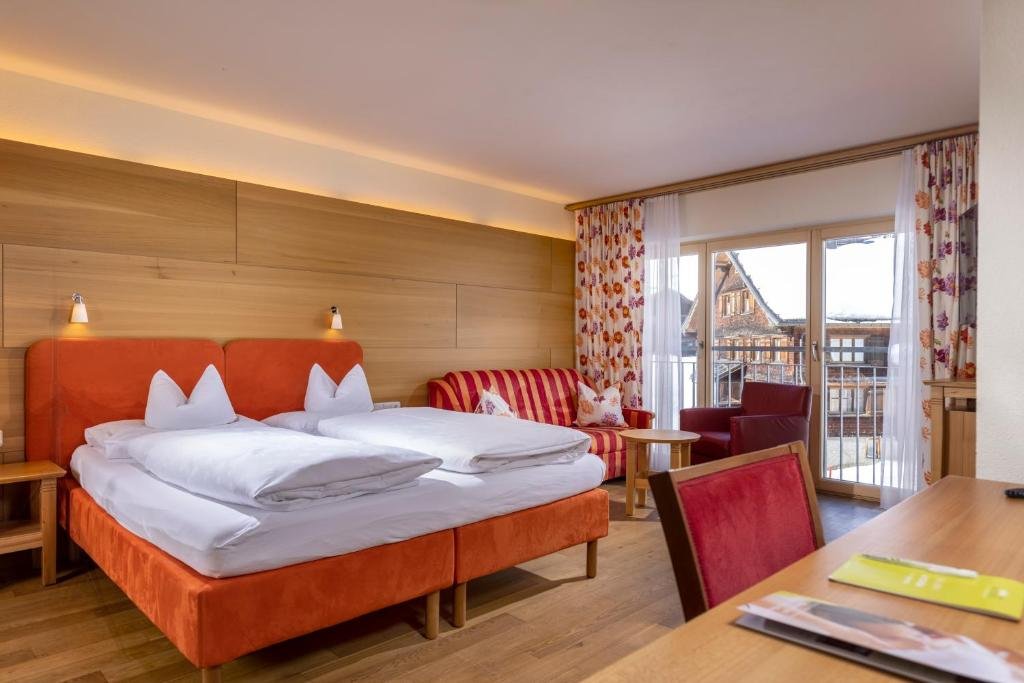
About Hotel Walserberg
Hotel Walserberg sits in Warth, one of the Vorarlberg Alps' most snow-reliable villages, and carries a 94-point score from La Liste's 2026 Top Hotels ranking. That credential places it in a narrow tier of Austrian alpine properties recognised for quality at international level. For travellers choosing between Warth and its better-known neighbour Lech, Walserberg offers a quieter entry point into the same high-altitude terrain.
Where the Bregenzerwald Meets the High Pass
Warth sits at roughly 1,500 metres on the Hochtannberg Pass, at the point where Vorarlberg's Bregenzerwald valley system gives way to the open snowfields connecting to the Arlberg region. The village receives some of the highest average snowfall in the Alps, a geographical fact that shapes everything about how properties here are designed and experienced. Unlike Lech or Zürs, which sit on the more trafficked northern approach to the Arlberg, Warth has historically drawn a quieter, more self-selecting traveller, one willing to follow a longer road for fewer crowds and more consistent snow cover. Hotel Walserberg, addressed at Warth 37, occupies that particular niche: a property in a village that wears its alpine credentials without the apparatus of a full resort town.
La Liste Recognition and What It Signals
In 2026, La Liste placed Hotel Walserberg in its Leading Hotels ranking with a score of 94 points. La Liste's hotel index applies a methodology drawn from aggregated international sources, which means a 94-point score reflects consistent performance across guest experience, physical quality, and service delivery, not a single critic's visit. Within Austria's alpine hotel tier, that score positions Walserberg alongside properties that compete on quality rather than brand name. For comparison, the Austrian alpine market includes internationally flagged addresses such as Rosewood Schloss Fuschl in Hof bei Salzburg and design-forward independents like Alpen-Wellness Resort Hochfirst in Obergurgl. Walserberg operates without a global brand affiliation, which in La Liste's scoring context makes a 94-point result more telling, not less.
The Architecture of an Alpine Property at This Altitude
Austrian alpine architecture in the upper Vorarlberg has developed its own grammar over the past century, one distinct from the Tyrolean vernacular that dominates Innsbruck's hinterland or the Salzburg mountain corridors. Warth and its neighbouring villages in the Bregenzerwald have a tradition of timber construction that is technically precise and restrained in ornament, drawing on a local craft culture that produced some of the most internationally recognised contemporary architecture in the German-speaking world. Properties built or renovated in this region tend to work with that tradition rather than against it: heavy timber framing, pitched roof lines calibrated for significant snow loads, and facade treatments that read as continuous with the hillside rather than imposed on it.
At altitude, the relationship between interior and exterior becomes a design problem in itself. Windows must manage dramatic light shifts from the reflective snowfield environment, while insulation demands push walls to thicknesses that affect how interior spaces feel and sound. The leading properties in this tier treat those constraints as design opportunities: deep window reveals that frame mountain views like apertures, interior materials that register warmth against a cold exterior, and circulation routes that use the building's topography to stage the arrival sequence. These are the qualities that define the strongest properties in this part of the Alps. Properties across Austria that have navigated similar design-environment relationships include LEADING Hotel Hochgurgl in Hochgurgl and Bergland Sölden Design- und Wellnesshotel in Sölden.
Warth in the Austrian Alpine Hierarchy
Austria's alpine hotel market has consolidated around a small number of village clusters with proven snow reliability and international name recognition: Lech-Zürs, Kitzbühel, St. Anton, and Ischgl at the top of the scale, with a second tier of villages that offer equivalent terrain and conditions to a smaller, less brand-driven audience. Warth sits firmly in that second tier, connected to the Ski Arlberg lift system since 2013 in a link that added considerable weight to its technical ski offering without fundamentally changing the village's character. Properties in that second tier tend to attract guests who value quieter alpine settings. Hotel Almhof Schneider in Lech, which sits at the top of the nearby Lech-Zürs market, offers a useful point of contrast: it operates within a village that functions as a full resort ecosystem. Walserberg operates in a village that does not, which changes both the pace and the nature of the stay.
Other La Liste-recognised Austrian properties that represent different positions in this market include Hotel Sacher Wien in Vienna, which occupies the urban grand hotel category, and Schloss Mönchstein in Salzburg, which trades on historic architecture in an urban setting. Walserberg's positioning is distinct from both: it is an alpine property serving a seasonal mountain audience in a village defined by terrain and snowfall rather than cultural programming.
Placing Walserberg in a Wider European Alpine Context
The European alpine hotel market at the quality end has been slowly bifurcating between large, amenity-heavy resort properties and smaller, more atmosphere-led addresses where the physical environment carries more of the experiential weight. Walserberg belongs to the latter category. The La Liste score of 94 points puts it in conversation with properties operating across Switzerland, France, and northern Italy that have built reputations on design and environment rather than pool counts and spa square footage. For travellers whose reference points include properties such as Aman Venice or The Fifth Avenue Hotel in New York City, Walserberg sits in a different register entirely: it is a mountain property first, and its quality signals need to be read through that lens.
Planning a Stay
Warth is accessed via the Hochtannberg Pass road from the Bregenzerwald side or via the Flexen Pass from the Lech-Zürs direction; in winter, the pass road can close in heavy snowfall conditions, which is worth factoring into travel planning. The village does not have a train station, making Bregenz or Feldkirch the nearest rail connections, with transfer by car or shuttle from there. The ski season in Warth typically runs from December through April, with late-season skiing often available into April given the village's snowfall record.
Travellers comparing Austrian alpine properties at this quality tier should also consider Grand Tirolia Kitzbühel, Aktiv & Wellnesshotel Bergfried in Tux, Naturhotel Waldklause in Längenfeld, DAS EDELWEISS in Grossarl, Alpenresort Schwarz in Obermieming, Alpine Resort Sacher Seefeld, Alpinresort Schillerkopf in Bürserberg, and Falkensteiner Schlosshotel Velden for a different lake-facing alpine register.
Location
Warth 37, 6767 Warth
Warth, Austria
Recognized By

Save or rate Hotel Walserberg on Pearl
Keep this venue in your Pearl passport, rate it after you visit, and track it alongside every other place you collect.