
Juvet Landscape Hotel
Valldal
Hotel in Valldal, Norway
 Book with Pearl
The Read
Architecture as Aperture
Why go
Juvet Landscape Hotel is worth prioritising if the trip is built around fjord-country stillness, architectural rooms, and a slower pace in Valldal. Its Michelin 1 Key recognition makes it a serious Norway hotel pick, but the value is strongest for guests who will spend real time on property rather than using it as a quick overnight base.
About Juvet Landscape Hotel
Juvet Landscape Hotel in Valldal has Michelin 1 Key recognition for 2025. It is a Valldal hotel to consider for travelers interested in the property itself and its confirmed recognition, rather than as a page built around claims about services, amenities, dining, or room types.
Book for the confirmed Valldal hotel, not for an unverified checklist
The clearest facts are the name, the Valldal location, and the Michelin 1 Key recognition. Use the broader Valldal hotel shortlist and Valldal experiences planning only as general context if the stay needs to anchor a wider itinerary.
Because specific details such as room formats, dining, wellness facilities, service style, prices, and operating details can change, do not rely on this page for those decisions. Confirm current inclusions, availability, and policies directly before booking.
Who should choose it over another Norway stay
Choose Juvet Landscape Hotel if the Michelin 1 Key recognition and Valldal setting are enough to put it on your shortlist. For a different kind of Norway hotel decision, compare with Britannia Hotel or Hotel Brosundet. For other hotel options in Norway, cross-shop Storfjord Hotel, Hotel Union Øye, and Walaker Hotel.
Planning details
- Location
- Alstad 24, 6210 Valldal
- Website
- juvet.com
- Phone
- +47 95 03 20 10
The take
The Take
The Vibe
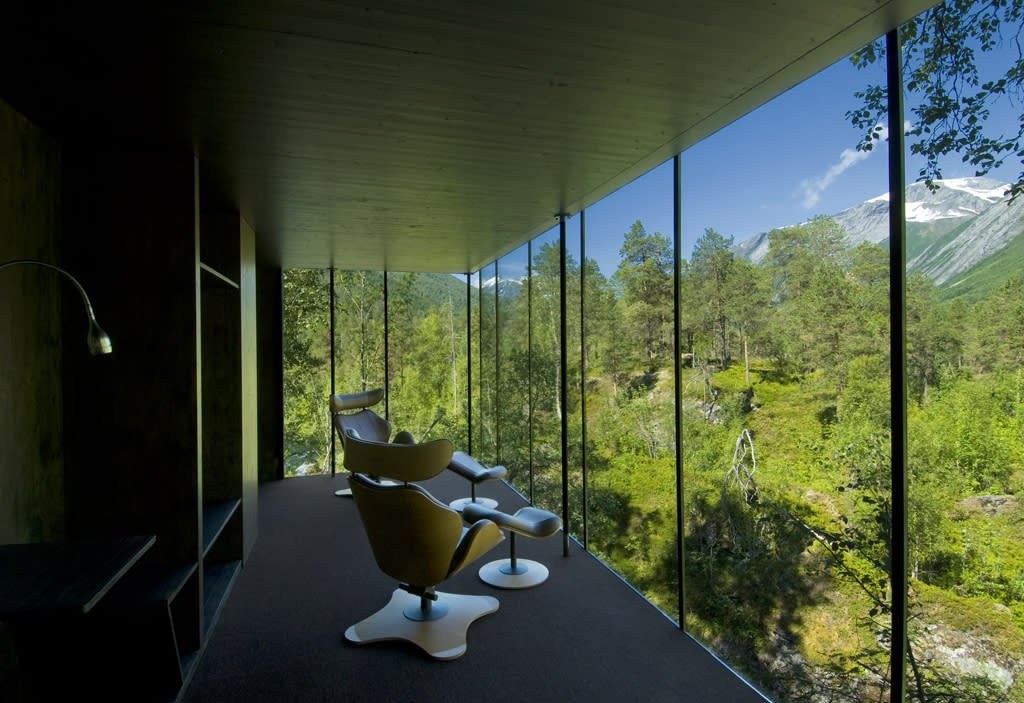
Juvet Landscape Hotel practices an architectural restraint that keeps the surrounding terrain as the primary subject. Nine timber-and-glass cabins sit discreetly in a forested river valley, with one or two walls replaced by floor-to-ceiling glazing so interiors read as carefully composed frames. Furniture placement and structure are calibrated to assign a specific view — a river bend, a stand of birch, a valley slope — rather than offer a generic panorama. The result is a quietly sophisticated, design-forward retreat where minimal intervention heightens the sense of place.
Best For
The hotel is best for travelers seeking an intimate, design-led escape in raw nature: couples on romantic getaways or honeymoons, guests pursuing wellness and quiet, and weekend visitors who prize architecture as much as scenery. Its remote setting in Valldal and distinctive cabins draw international visitors specifically for the experience of being placed in a single, compositionally considered view. If you value seclusion, thoughtful design, and direct contact with a river valley landscape, Juvet is purpose-built for that kind of stay.
Stay Tips
There are only nine cabins, so book well in advance and expect limited availability. The property sits about ninety minutes inland from Ålesund and is most easily reached by car along the fjord roads, so plan ground transport accordingly. When reserving, note that each cabin’s glazing is oriented to a particular view — river bend, birch stand, or valley slope — so if a specific landscape matter to you, inquire about cabin orientation at booking. Keep arrangements simple: the architecture and setting are the primary draw.
Venue details
Ambiance
Minimalist Scandi-noir interiors with dark tones and warm lighting focus attention on panoramic nature views through floor-to-ceiling glass, complemented by candlelit communal dining in a rustic barn.
Tags
Vibe
Best For
Experience
Amenities
View
About the Stay
- Rooms
- 10
- Property Style
- Architectural Landscape Integration with Freestanding Glass Cabins
- Design Style
- Minimalist Scandinavian with Natural Materials and Panoramic Glass Walls
Know before you go
Know Before You Go
- Getting there
- Alstad 24, 6210 Valldal
Planning details
Location
Recognition and awards
Also consider
Also Consider
- Hotel Union Øye, Notable alternative
- Storfjord Hotel, Notable alternative
- Hotel Brosundet, Notable alternative
- Walaker Hotel, Notable alternative
- Britannia Hotel, Notable alternative
Hotel context
How It Compares
Choose Juvet Landscape Hotel when the room and setting are the main event. Hotel Union Øye is the better cross-shop for travellers who want heritage atmosphere, while Storfjord Hotel is the cleaner alternative for a polished rural stay with a more classic lodge feel.
Hotel Brosundet makes more sense if Ålesund access and a town base matter more than retreat energy. Walaker Hotel is the stronger pick for a traditional Norwegian hotel mood, while Britannia Hotel is the practical splurge for guests who want city luxury, broader service depth, and fewer rural logistics.
Booking difficulty is the reason to keep backups ready. If Juvet is unavailable, Storfjord is the closest nature-led substitute; if the trip needs restaurants, shops, and easier movement, Hotel Brosundet or Britannia will be less restrictive.
Explore Valldal
Around this place
Discover more on Pearl
Unlock the full Juvet Landscape Hotel guide in Pearl, including awards, comparisons, FAQs, planning details, and nearby places.
Compare Juvet Landscape Hotel
| Venue | Location | Awards |
|---|---|---|
| Juvet Landscape Hotel | Valldal | Michelin 1 Key 20252025 Michelin 1 Key |
| Hotel Union Øye | Norangsfjorden | No published awards |
| Storfjord Hotel | Glomset | 2026 Mr & Mrs Smith Luxury Hotels2026 Relais Chateaux Hotels2025 Michelin 2 Keys2025 Relais Chateaux Award |
| Hotel Brosundet | Ålesund | 2026 Mr & Mrs Smith Luxury Hotels2025 Michelin 1 Key |
| Walaker Hotel | Solvorn | 2025 Michelin 2 Keys |
| Britannia Hotel | Trondheim | Leading Hotels of the World 20262025 Michelin 1 Key |



How Juvet Landscape Hotel Valldal compares with similar nearby venues.
FAQ
Frequently Asked Questions
How is the pool and spa at Juvet Landscape Hotel?
Pool and spa details should be confirmed directly. Juvet Landscape Hotel is in Valldal and has Michelin 1 Key recognition for 2025, so guests should confirm any wellness facilities before booking.
How is the location of Juvet Landscape Hotel?
Juvet Landscape Hotel is in Valldal. If you want a different Norway hotel context, Britannia Hotel, Hotel Brosundet, Storfjord Hotel, Hotel Union Øye, and Walaker Hotel are separate options to compare depending on the trip.
Is Juvet Landscape Hotel family-friendly?
Family-specific details should be confirmed directly. Before booking, check with Juvet Landscape Hotel whether the current setup, policies, and room arrangements fit your party.
How is the dining at Juvet Landscape Hotel?
Dining details should be confirmed directly. If dining is central to the trip, check current meal options with the hotel and compare with other Valldal dining generically rather than assuming a specific restaurant format.
Which room category is best at Juvet Landscape Hotel?
Specific room-category details should be confirmed directly. Choose only after checking the hotel's current room descriptions, availability, and policies.