

Vocabolo Moscatelli Boutique Hotel & Restaurant
Umbertide
Hotel in Umbertide, Italy
 Book with Pearl
The Read
Medieval Monastery, Contemporary Interior
Why go
Choose Vocabolo Moscatelli Boutique Hotel & Restaurant for a quiet, design-led Umbrian stay where the setting does more of the work than resort programming. The Michelin 1 Key and Design Hotels recognition make it credible for a celebration, but families should book it for calm rather than constant entertainment.
About Vocabolo Moscatelli Boutique Hotel & Restaurant
Is Vocabolo Moscatelli Boutique Hotel & Restaurant worth booking for a stay in Umbertide? Yes, if the confirmed signals that matter to you are its recognition and its setting in Umbertide. The profile is intentionally narrow: smart casual dress code, Michelin 1 Key recognition in 2024, 2026 Design Hotels membership, and a Mr & Mrs Smith Seal of Approval for 2026.
Because the confirmed public facts are limited, the safest way to evaluate the property is not by assuming specific facilities, cuisine, room types, service formats, or activities. Treat it as Vocabolo Moscatelli Boutique Hotel & Restaurant in Umbertide with strong recognition signals, then confirm any practical requirements directly before booking.
A recognized Umbertide stay with limited confirmed practical detail
The strongest booking case is recognition: Michelin awarded it 1 Key in 2024, and it is listed as a 2026 Design Hotels member, with a Mr & Mrs Smith Seal of Approval for 2026. Those signals are useful, but they do not confirm room categories, dining format, facilities, or service structure in the data provided here.
That makes the decision fairly clear. Book it when the property itself and its Umbertide location are central to the trip. Do not book it on the assumption that facilities, menus, room layouts, transport arrangements, or activity planning will be available. If those details matter, confirm them directly before committing.
Families and groups should confirm practical needs directly
For a family or group stay, the profile does not confirm kids' clubs, large-room guarantees, or on-site family programming. Travelers should verify those needs directly rather than assuming they are part of the stay.
Travelers comparing the stay with other premium options may also look at Castello di Reschio, Tenuta di Murlo, Villa di Piazzano, La Corte Dei Papi, and Monastero di Cortona Hotel & Spa before committing. Those are useful comparison points, but Vocabolo Moscatelli Boutique Hotel & Restaurant should be judged on its own confirmed recognition and Umbertide location.
Use our full Umbertide hotels guide for the hotel short list, then pair the stay with our full Umbertide restaurants guide, our full Umbertide bars guide, our full Umbertide wineries guide, and our full Umbertide experiences guide if the trip needs more structure.
Planning details
- Location
- Via del Refari 2 Calzolaro di, 06019 Umbertide PG
- Website
- vocabolomoscatelli.com
- Phone
- +39 075 545 5815
The take
The Take
The Vibe
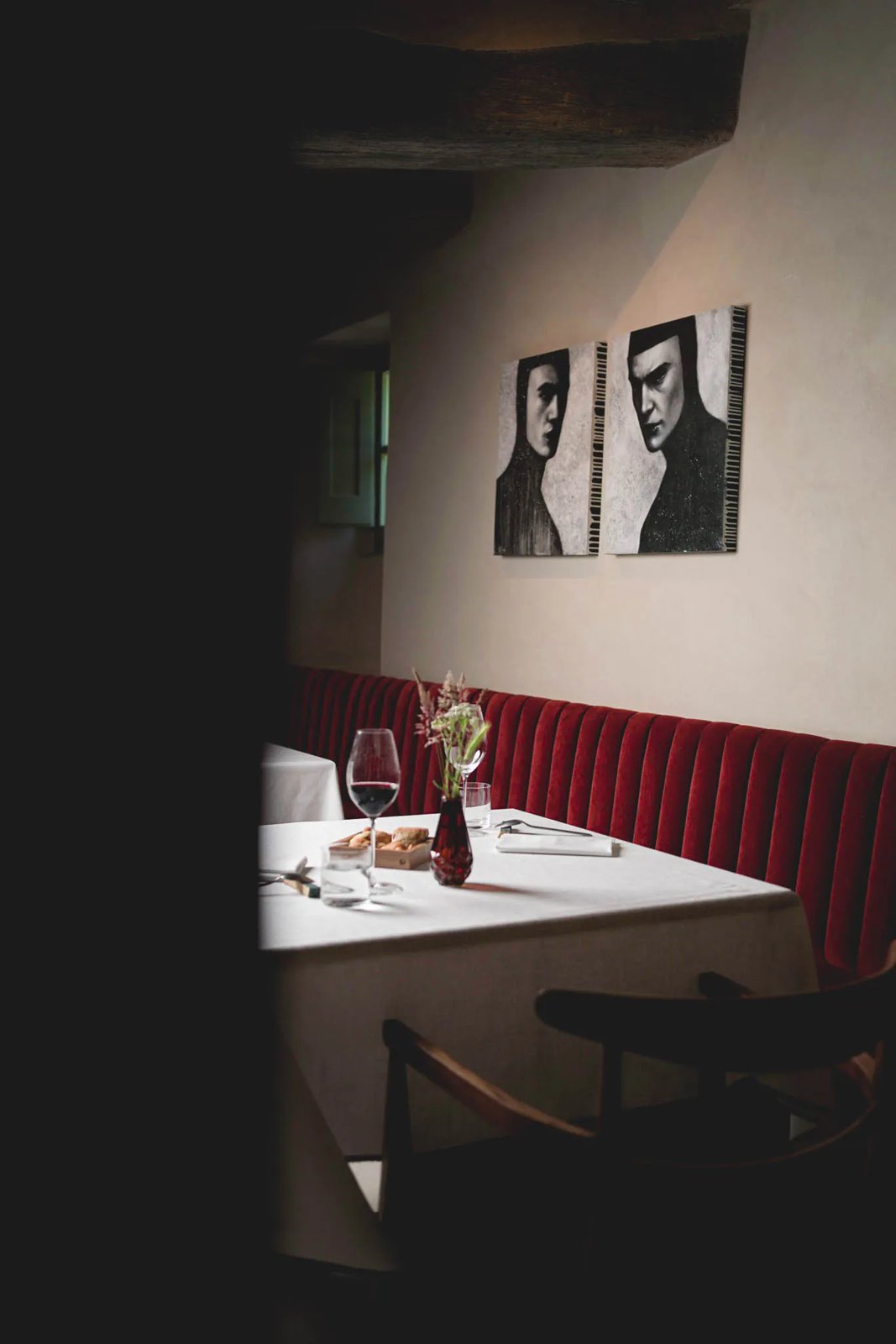
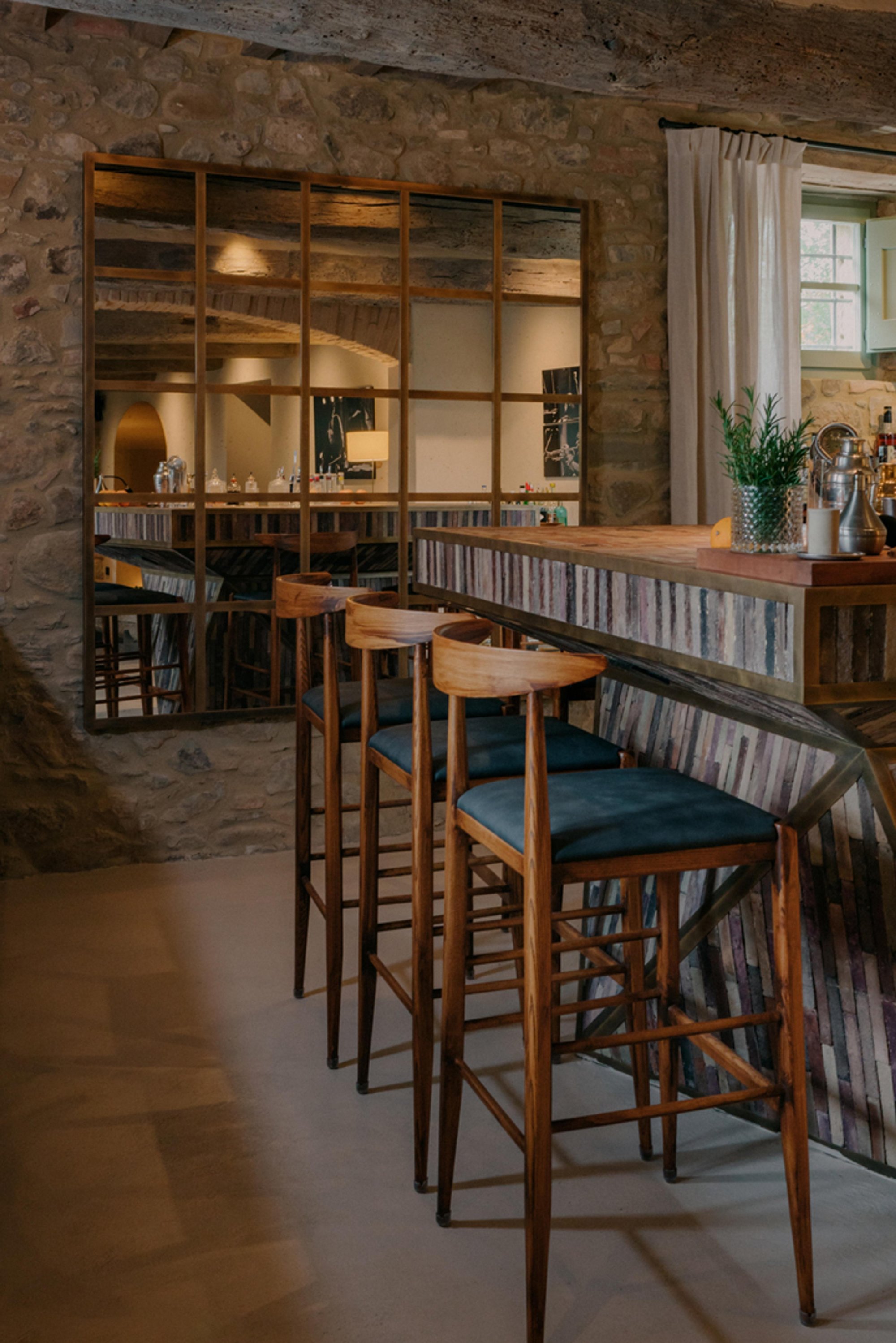
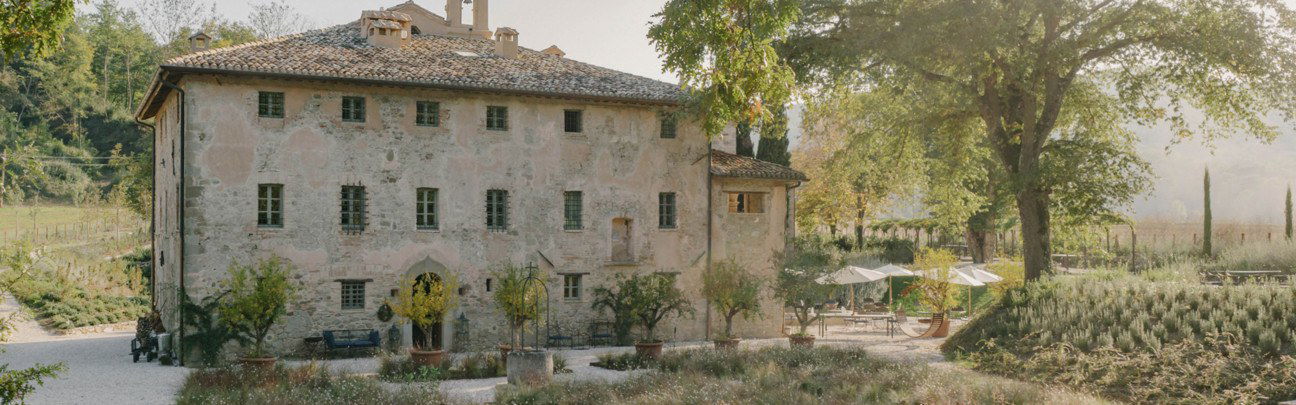
Vocabolo Moscatelli reads as a deliberate dialogue between centuries: a 12th-century monastery provides thick stone walls, vaulted ceilings and the proportional logic of monastic architecture, while interiors introduce contemporary furniture, materials and lighting. The result is an atmospheric, material-led environment that foregrounds design discipline without erasing the building’s past. With just a dozen rooms split between the original structure and a newer annex, the property feels intentionally small and considered. Perched in Umbrian hill country above Umbertide, it pairs historic gravitas with modern restraint to create a quietly scenic, design-forward escape.
Best For
This is a hotel for travelers who prize architecture and ambitious dining. The Michelin Key recognition in 2024 signals that accommodation and culinary intent are evaluated together here, so guests can expect a restaurant program that complements the intimate, design-led lodging. The twelve-room scale and hilltop monastery setting make it well suited to couples and small parties seeking a quiet, scenic weekend retreat or a romantic getaway. Evenings feel particularly apt for the full experience: the building’s atmosphere and the property’s culinary focus align most naturally with a relaxed dinner and overnight stay.
Venue details
Ambiance
Candlelit cloisters, convivial fire pit gatherings, and stylish rooms with warm earth tones create a romantic, rustic yet elegant atmosphere.
Tags
Vibe
Best For
Experience
Amenities
View
Accessibility
About the Stay
- Rooms
- 12
- Check-in
- 16:00
- Check-out
- 12:00
- Property Style
- Reimagined 12th Century Monastery with Mid Century Italian Style and Artisanal Details
- Design Style
- Mid Century Modern Blended with Rustic Italian Craftsmanship and Colorful Handmade Tiles
Know before you go
Know Before You Go
- Getting there
- Via del Refari 2 Calzolaro di, 06019 Umbertide PG
Planning details
Location
Via del Refari 2 Calzolaro di, 06019 Umbertide PG · Directions
Recognition and awards
Also consider
Also Consider
- Castello di Reschio, Notable alternative
- Tenuta di Murlo, Notable alternative
- Villa di Piazzano, Notable alternative
- La Corte Dei Papi, Notable alternative
- Monastero di Cortona Hotel & Spa, Notable alternative
Hotel context
How it compares with nearby countryside hotels
Castello di Reschio is the bigger statement choice: better for travelers who want a grand estate feel and are comfortable planning around tougher availability. Vocabolo Moscatelli Boutique Hotel & Restaurant is the more intimate pick, better for a quieter celebration or a family stay where calm matters more than scale.
Tenuta di Murlo should be on the list for travelers who want more of an estate-style countryside setup, while Villa di Piazzano is a sensible cross-shop if the trip can lean toward the Cortona side. Choose Vocabolo Moscatelli when the priority is boutique design recognition and a softer, quieter mood near Umbertide.
La Corte Dei Papi and Monastero di Cortona Hotel & Spa are better comparisons for travelers weighing Umbria against nearby Tuscan stays. If availability is tight here, those two make sense for a similar special-occasion brief, while Castello di Reschio is the splurge-style alternative.
Explore Umbertide
Around this place
Discover more on Pearl
Unlock the full Vocabolo Moscatelli Boutique Hotel & Restaurant guide in Pearl, including awards, comparisons, FAQs, planning details, and nearby places.
Compare Vocabolo Moscatelli Boutique Hotel & Restaurant
| Venue | Location | Awards |
|---|---|---|
| Vocabolo Moscatelli Boutique Hotel & Restaurant | Umbertide | 2026 Design Hotels Collection2026 Mr & Mrs Smith Luxury Hotels2026 Michelin 1 KeyMichelin 1 Key 20252025 Michelin 1 Key2024 Michelin 1 Key |
| Castello di Reschio | Lisciano Niccone | 2026 World’s 50 Best Hotels 51-100 · #952026 Virtuoso Luxury Hotel Collection2026 La Liste Top Hotels2026 Michelin 3 Keys2025 World’s 50 Best Hotels · #812025 Michelin 3 Keys2025 Conde Nast Hotels Gold ListSmall Luxury Hotels Member 20252024 World's 50 Best Hotels · #42 |
| Tenuta di Murlo | Perugia | No published awards |
| Villa di Piazzano | Cortona | 2025 Michelin Selected HotelsSmall Luxury Hotels Member 2025 |
| La Corte Dei Papi | Cortona | No published awards |
| Monastero di Cortona Hotel & Spa | Cortona | 2026 Michelin 1 Key2025 Michelin 1 Key |








How Vocabolo Moscatelli Umbertide compares with similar nearby venues.
FAQ
Frequently Asked Questions
How does Vocabolo Moscatelli Boutique Hotel & Restaurant compare to other premium hotels?
It stands out on confirmed recognition: Michelin 1 Key in 2024, 2026 Design Hotels membership, and a Mr & Mrs Smith Seal of Approval for 2026. Travelers may also compare Castello di Reschio, Monastero di Cortona Hotel & Spa, Villa di Piazzano, La Corte Dei Papi, and Tenuta di Murlo when deciding which style of stay best fits the trip.
How is the location of Vocabolo Moscatelli Boutique Hotel & Restaurant?
Vocabolo Moscatelli Boutique Hotel & Restaurant is in Umbertide. The data does not support a more specific location description here, so confirm transport and arrival plans directly before travel.
Do loyalty programs work at Vocabolo Moscatelli Boutique Hotel & Restaurant?
The recognition signals are the 2024 Michelin 1 Key, 2026 Design Hotels membership, and Mr & Mrs Smith Seal of Approval for 2026. The data does not confirm a loyalty-points setup, so check booking terms directly if that matters.