




Six Senses Bhutan
Thimphu
Hotel in Thimphu, Bhutan
 Book with Pearl
The Read
Five-Lodge Kingdom Circuit
Why go
Book Six Senses Bhutan for a high-touch Thimphu stay where service reliability matters more than city-center convenience or value hunting. The recognition stack is strong, including Michelin 1 Key, Forbes 4-Star, La Liste Top Hotels, and Robb Report placement, so the premium makes the most sense for celebrations, first-time Bhutan trips, and guests who want the hotel to manage the pace.
About Six Senses Bhutan
Bhutan luxury travel is not a quick city-break decision; it rewards travelers who want the hotel choice to carry real weight, not just provide a room in Thimphu. Consider Six Senses Bhutan if the occasion calls for a high-end stay with a strong record of luxury-hotel recognition, especially when overall confidence matters more than chasing the lowest nightly rate.
The case for booking is strongest if Thimphu is part of a wider Bhutan itinerary and the hotel is being chosen as a premium base in the capital. Its recognition includes Michelin 1 Key, La Liste Top Hotels, Forbes 4-Star, Robb Report, Mr & Mrs Smith, and Virtuoso recognition. For a business-heavy trip where practical requirements come first, compare it carefully with The Postcard Dewa, Thimphu and Zhiwaling Ascent before committing.
Choose it when recognition matters more than a basic city stay
The strongest reason to stay here is confidence in the overall positioning: Six Senses Bhutan has recognition from Michelin, La Liste, Forbes, Robb Report, Mr & Mrs Smith, and Virtuoso. That makes it a natural candidate for travelers who want a premium Thimphu hotel choice rather than a simple place to sleep.
This is not the obvious value play in Thimphu. Travelers mainly comparing price and basic lodging should cross-shop The Postcard Dewa, Thimphu or Zhiwaling Ascent. The premium makes more sense when the trip needs a higher-end setting and the reassurance of a recognized luxury hotel.
Better for special trips than purely practical stays
For a special occasion, this is an easy yes if the budget allows. The Thimphu setting can work for travelers who want the capital as part of a broader Bhutan trip. For business travel, the recommendation is narrower: useful when a premium hotel setting matters, less convincing for travelers who only need a straightforward base.
Dining should be treated as part of the hotel experience rather than the sole reason to book. Review the cuisine format, chef, menu structure, and pricing directly before booking. If the priority is independent restaurant-hopping, use a full Thimphu restaurants guide alongside a full Thimphu hotels guide before locking in the stay.
Who should cross-shop before paying the premium
Cross-shop if the trip is more exploratory than celebratory. COMO Uma, Bhutan is a natural alternative for travelers comparing established luxury Bhutan hotels, while Bhutan Spirit Sanctuary makes sense for guests putting retreat atmosphere first. If Paro is the stronger anchor for the itinerary, Six Senses Paro may be the better match.
The practical verdict: book this for a high-stakes Bhutan stay where recognition and a Thimphu base justify the premium. Skip it if the trip is mainly about price efficiency, a tightly scheduled itinerary, or using the hotel only as a place to sleep between activities. For broader planning, compare other Thimphu dining, hotels, and experiences to decide whether the capital should be the main base or one stop in a wider route.
Part of
Six Senses37 locations on PearlPlanning details
- Location
- Chunimeding, Babesa, Chang Gewog, Thimphu
- Website
- sixsenses.com/en/hotels-resorts/asia-the-pacific/bhutan/bhutan
- Phone
- +975 2 350 773
The take
The Take
The Vibe
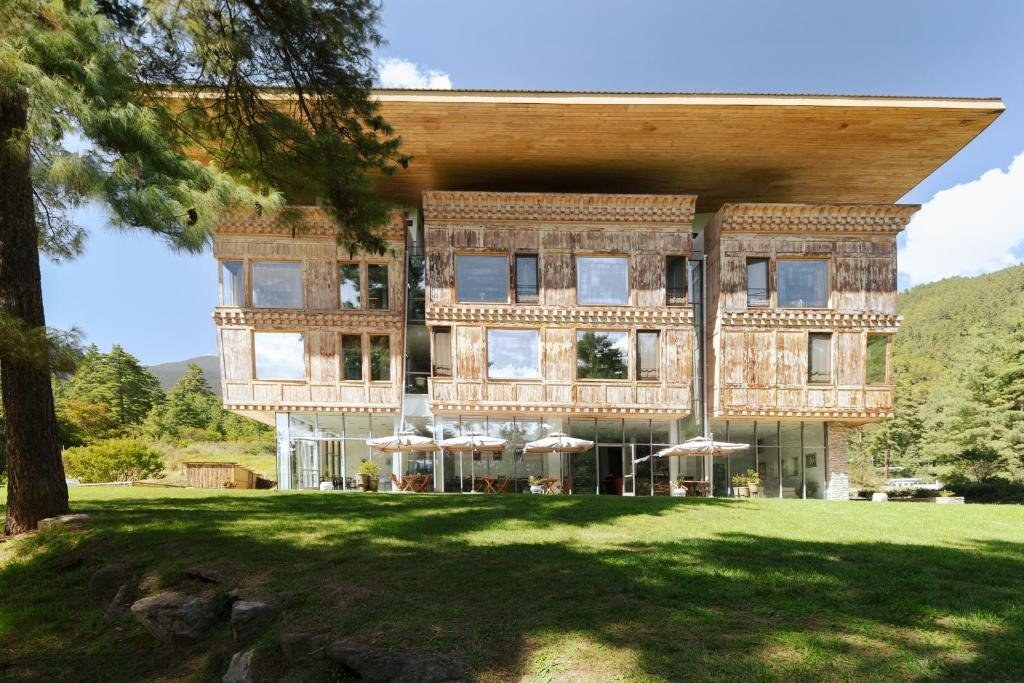
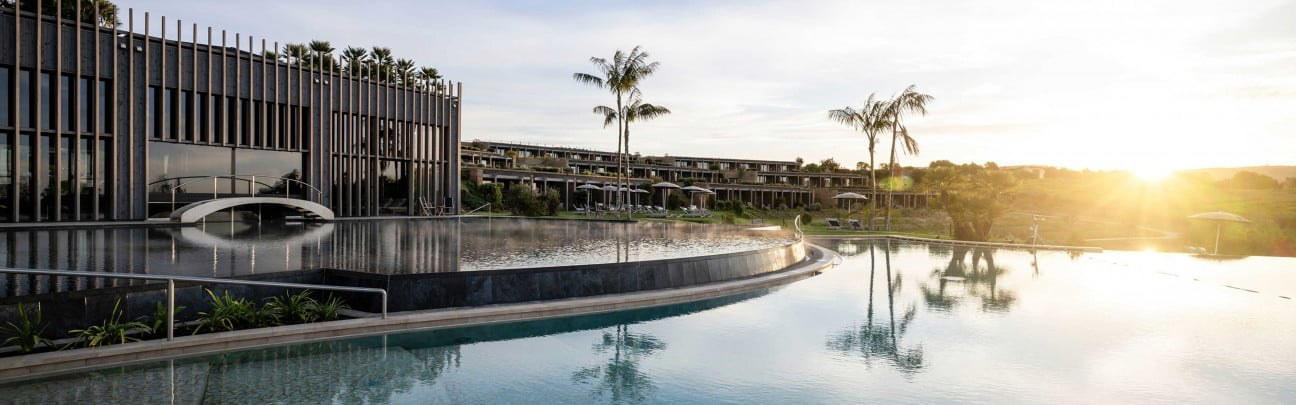
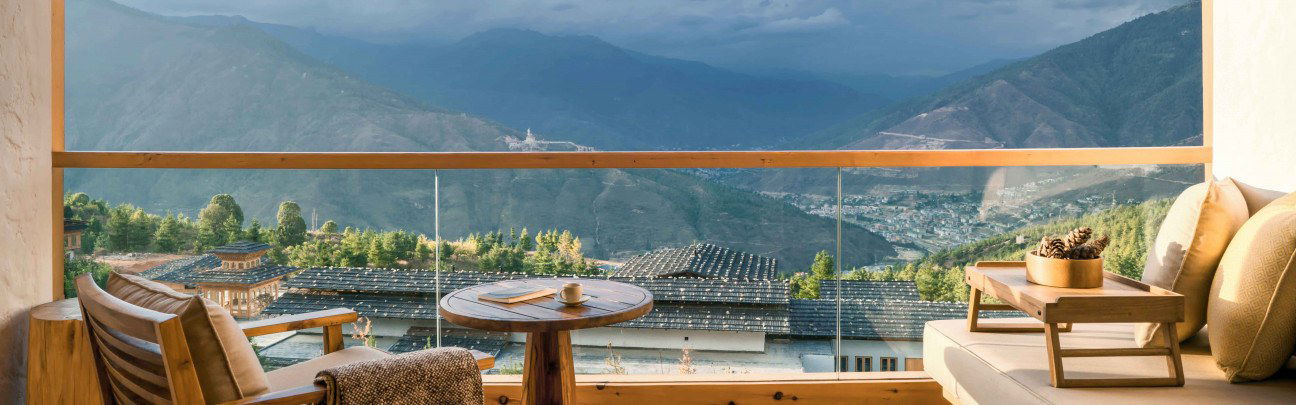
Six Senses Thimphu reads like an architectural statement set high above the valley. Perched at roughly 8,695 feet, the lodges sit above the treeline with outdoor ponds that catch the sky’s reflection, and the approach line gives the property a deliberate, almost ceremonial presence. Rather than a single building, the hotel is five distinct lodges that reinterpret Bhutanese vernacular—rammed earth or stone walls, sloped timber rooflines and carved wooden window frames—so the overall impression is both purposeful and sculpted. The setting and design combine to create a resolutely memorable, quietly monumental mountain retreat.
Best For
This is a hotel for travelers who prize architecture, landscape and a curated national itinerary. Six Senses Bhutan is arranged as five lodges across different valleys, so it suits guests who want a multi-site exploration of Bhutan’s ecological and cultural variety rather than a single-base stay. Its elevated hilltop siting and wide views toward Thimphu make it well suited to couples and adults seeking a contemplative, design-focused retreat. The property’s scale and intention also fit special occasions that lean on setting and sequence—stays built around place and perspective rather than just local services.
Stay Tips
Treat Six Senses Thimphu as part of a sequence: the property is explicitly designed as multiple lodges that respond to different valleys, so plan an itinerary that includes movement between locations if you want the full concept. Allow time at each lodge to appreciate the architecture—rammed earth and carved timber details—and the site planning, from the ponds that reflect the sky to the approach views toward Thimphu. Because much of the appeal is visual and contextual, prioritize experiences that let you observe and move through the landscape rather than a single, static base.
Venue details
Ambiance
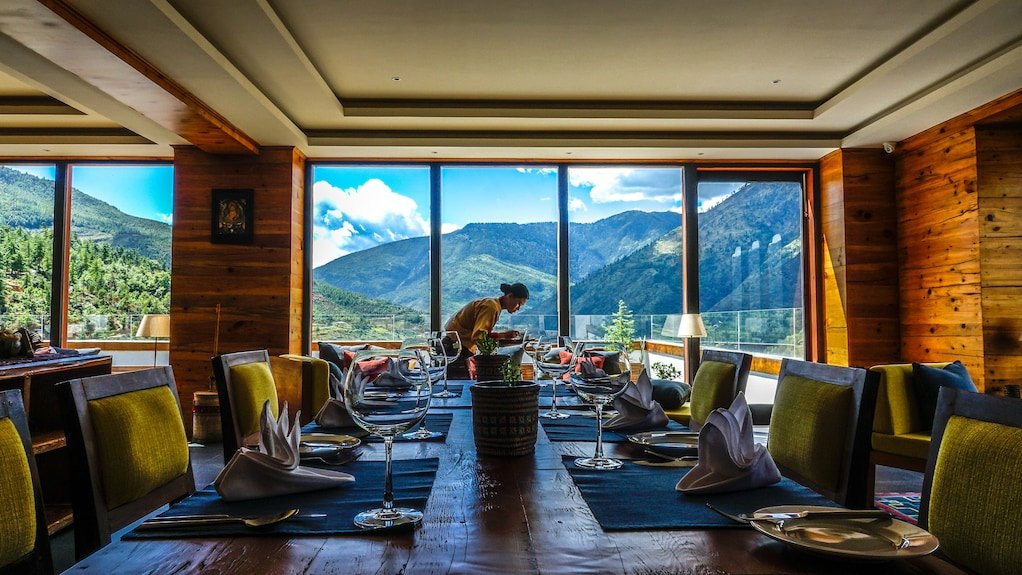
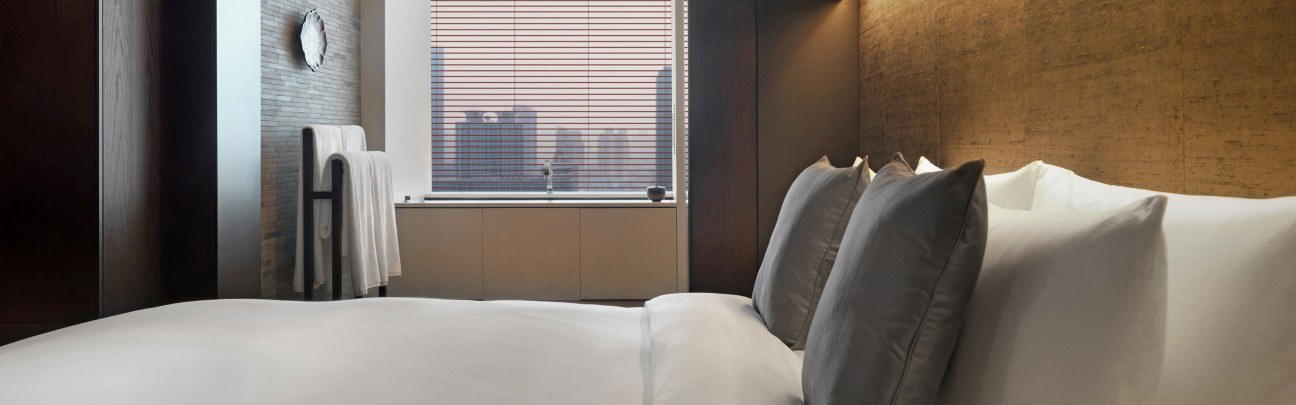
Serene and light-filled with natural timber, stone, wood-burning stoves, and panoramic valley views through enormous windows, creating a tranquil, harmonious retreat.
Tags
Vibe
Best For
Experience
Amenities
View
Accessibility
About the Stay
- Rooms
- 25
- Property Style
- Rustic Luxury Palace in the Sky on Mountain Hillside
- Design Style
- Bhutanese Inspired with Natural Timber, Stone, Wood Paneling, and Heritage Elements
Know before you go
Know Before You Go
- Getting there
- Chunimeding, Babesa, Chang Gewog, Thimphu
Planning details
Location
Chunimeding, Babesa, Chang Gewog, Thimphu · Directions
sixsenses.com/en/hotels-resorts/asia-the-pacific/bhutan/bhutan




Also consider
Also Consider
- The Postcard Dewa, Thimphu, Notable alternative
- Zhiwaling Ascent, Notable alternative
- COMO Uma, Bhutan, Notable alternative
- Bhutan Spirit Sanctuary, Notable alternative
- Six Senses Paro, Notable alternative
Hotel context
How It Compares
Six Senses Bhutan is the splurge choice in Thimphu if service structure and international luxury consistency matter more than price efficiency. The Postcard Dewa, Thimphu and Zhiwaling Ascent are the more practical cross-shops for travelers who want a Thimphu base without committing to the same level of resort-led experience.
Against COMO Uma, Bhutan and Bhutan Spirit Sanctuary, the decision is about itinerary shape. Choose Six Senses Bhutan when the capital is a meaningful stop and the stay needs polished handling. Choose the others when the trip is more retreat-led or when the hotel setting matters more than Thimphu access.
Six Senses Paro is the cleanest comparison for guests already sold on the Six Senses style. Pick the Thimphu property when the capital is central to the trip; pick Paro when arrivals, departures, or valley time are the stronger anchor.
Explore Thimphu
Around this place
Discover more on Pearl
Unlock the full Six Senses Bhutan guide in Pearl, including awards, comparisons, FAQs, planning details, and nearby places.
Compare Six Senses Bhutan
| Venue | Location | Awards |
|---|---|---|
| Six Senses Bhutan | Thimphu | 2026 Virtuoso Luxury Hotel Collection2026 Forbes 4-Star2026 Mr & Mrs Smith Luxury Hotels2026 La Liste Top Hotels2025 Robb Report The 50 Greatest Luxury Hotels on Earth · #48Michelin 1 Key 20252025 Michelin 1 Key |
| The Postcard Dewa, Thimphu | Thimphu | No published awards |
| Zhiwaling Ascent | Thimphu | Tablet Hotels Top 40 New Hotels 2025 · #342025 Michelin Selected Hotels |
| COMO Uma, Bhutan | Paro | No published awards |
| Bhutan Spirit Sanctuary | Shaba | 2026 Mr & Mrs Smith Luxury HotelsSmall Luxury Hotels Member 2025 |
| Six Senses Paro | Paro | No published awards |



How Six Senses Bhutan Thimphu compares with similar nearby venues.
FAQ
Frequently Asked Questions
When is the best time to book Six Senses Bhutan?
Book once your travel dates and priorities are clear, especially if the stay is part of a larger Bhutan itinerary. Six Senses Bhutan is a high-end hotel in Thimphu with recognition including Michelin 1 Key and Forbes 4-Star. Compared with COMO Uma, Bhutan, this is a strong pick when the Six Senses name and a Thimphu base are central to the stay.
Is Six Senses Bhutan good for business travel?
Yes, if the trip needs a premium Thimphu base and you can justify the premium. It is less straightforward as a purely practical business choice, but it can make sense when the hotel setting itself matters. For planning, The Postcard Dewa, Thimphu may be a useful comparison.
How does Six Senses Bhutan compare to other luxury hotels?
It is a clear premium option in this comparison set when you want a luxury-branded stay, supported by Michelin 1 Key, Forbes 4-Star, and Robb Report recognition. Zhiwaling Ascent and The Postcard Dewa, Thimphu are natural cross-shops if you want to compare alternatives in Thimphu, while Bhutan Spirit Sanctuary makes more sense for a retreat-focused trip. For travelers splitting time between Thimphu and Paro, Six Senses Paro is another direct comparison.
Which room category is best at Six Senses Bhutan?
Choose a room category based on your budget, length of stay, and how much time you expect to spend at the hotel. For a celebration or longer stay in Thimphu, compare categories directly with the hotel before deciding whether a higher-category room is worth the premium.
How is the location of Six Senses Bhutan?
Six Senses Bhutan is in Thimphu. Treat the location as a fit for travelers who want a luxury hotel base in the capital, and compare alternatives if your plans require a different style of stay. The Postcard Dewa, Thimphu is worth comparing if you want another Thimphu option.