










Nihi Sumba
Wanokaka, Sumba
Hotel in Sumba, Indonesia
 Book with Pearl
The Read
Wilderness-Anchored Seclusion
Why go
NIHI Sumba is a resort on Sumba island in Indonesia.
About Nihi Sumba
Verdict
If the alternative is Bali, Nihi Sumba is the splurge for travelers who want the resort to be the trip, not just a base. At a listed price of $2,495 and with only 27 rooms in the core resort data, this is a plan-far-ahead booking, especially for first-timers trying to align flights, villa availability, and on-site dining. The strongest case is not just the beach or surf access: all meals and non-alcoholic drinks are included in the rate, which makes the dining program part of the value calculation rather than an add-on.
Portrait
Sumba sits in a different travel rhythm from Bali: wilder, less built-up, and less forgiving of last-minute planning. Nihi Sumba is located at Hoba Wawi, Wanokaka, West Sumba Regency, on a large coastal site that the resort describes as 560 acres with a 2.5-kilometer Nihiwatu beach. For a first visit, that matters. This is not a hotel to use for checking off nearby restaurants every night; it is a contained resort stay where meals, activities, spa time, and transfers should be treated as one itinerary.
The dining angle is stronger than many remote luxury resorts because the rate includes all meals and non-alcoholic drinks. That does not make it cheap, but it does make the price easier to judge: a stay here works better for guests who want to eat mostly on property and avoid the friction of daily planning. The resort data names Ombak restaurant, Nio Beach Club, the Boathouse, Menara Bale, private dining pavilions, and the Beach Spa, so the setup is built for variety across a stay rather than one formal dining room doing all the work. cuisine detail is limited, but the hotel record notes Indonesian flavors, ingredients from organic gardens, and local fishermen, which is the dining story to expect rather than a city-style tasting-menu destination.
Book this for a high-budget resort trip where the dining, beach, spa, and activity schedule are meant to sit together. Do not book it if the goal is easy movement, late decisions, or a hotel that can be swapped into a Bali itinerary at the last minute. Sumba is reached by air from Bali’s Ngurah Rai International Airport to Tambolaka Airport, and the resort notes that morning domestic flights often mean an overnight in Bali for international travelers. That extra step is part of the cost, both financially and mentally.
Those credentials support the premium, but they also raise the bar. At this price, the booking makes sense for guests who will use the property fully: meals on site, spa, beach time, horseback riding, diving, fishing, or surf access. If the plan is mainly a room with a view, Cap Karoso is the more obvious Sumba cross-shop.
Ratings
- Awards: World’s 50 Best Hotels #18 (2023), #10 (2024), #56 (2025); La Liste Leading Hotels 2026, 96.5 points; Tatler Leading Hotels Asia-Pacific 2025; Leading Hotels of the World Member 2025; Star Wine List 2026.
- Guest rating:
- Scale: 27 rooms in the resort data, with villa-style privacy as the core format.
- Dining value: all meals and non-alcoholic drinks are included in the rate.
Booking
Treat availability as near impossible if specific dates matter. The room count is small, the resort is award-heavy, and the logistics are less flexible than Bali. First-timers should plan around flights before committing to a stay: international arrivals usually route through Denpasar, with onward flights to Sumba often in the morning. Private flights and helicopter transfers can be arranged by the resort, according to the hotel record, but that is a different budget conversation.
Practical details
| Hotel | Use case | Logistics | Dining angle |
|---|---|---|---|
| Nihi Sumba | High-budget, stay-on-property resort trip | Hoba Wawi, Wanokaka; fly via Bali to Sumba | Meals and non-alcoholic drinks included |
| Cap Karoso | Sumba alternative with a less all-consuming resort feel | Also a Sumba choice, better for cross-shopping before committing | Useful if dining variety outside a full-board-style setup matters |
| Desa Potato Head in Denpasar | Bali stopover before or after Sumba | Denpasar area convenience compared with remote Sumba | Better if the priority is a Bali dining and nightlife base |
| Mandapa, a Ritz-Carlton Reserve in Ubud | Luxury Bali resort without the Sumba flight layer | Ubud is easier to combine with a broader Bali itinerary | Choose if service infrastructure matters more than remoteness |
For wider planning, use our full Sumba hotels guide, our full Sumba restaurants guide, our full Sumba bars guide, our full Sumba wineries guide, and our full Sumba experiences guide. If the trip may stay in Indonesia but not Sumba, compare Potato Head Suites & Studios in Seminyak, Soori Bali in Tabanan, Hoshinoya Bali in Tampaksiring, AYANA Resort Bali in Jimbaran, Umana Bali, LXR Hotels & Resorts in Ungasan, Sofitel Bali Nusa Dua Beach Resort in Nusa Dua, Amarterra Villas Resort Bali Nusa Dua, Autograph Collection in Bali, Hotel Komune and Beach Club Bali in Gianyar, Berawa Village in Badung, Camaya Bamboo Houses in Selat, Bambu Indah in Banjar Badung, Banyan Tree Bintan in Bintan, Cempedak Island in Bintan Regency, and InterContinental Jakarta Pondok Indah in Jakarta. For a benchmark outside Indonesia, compare The Fifth Avenue Hotel in New York City, Cheval Blanc Paris in Paris, and Hotel Sacher Wien in Vienna.
Pearl picks
First-timers should pair Sumba with one practical Bali stop rather than stacking multiple remote hotels. For that role, Desa Potato Head in Denpasar or Potato Head Suites & Studios in Seminyak keeps the trip easier before or after the Sumba flight.
Planning details
- Location
- Hoba Wawi, Wanokaka, West Sumba Regency, East Nusa Tenggara
- Website
- nihi.com
- Phone
- +62 361 757149
The take
The Take
The Vibe
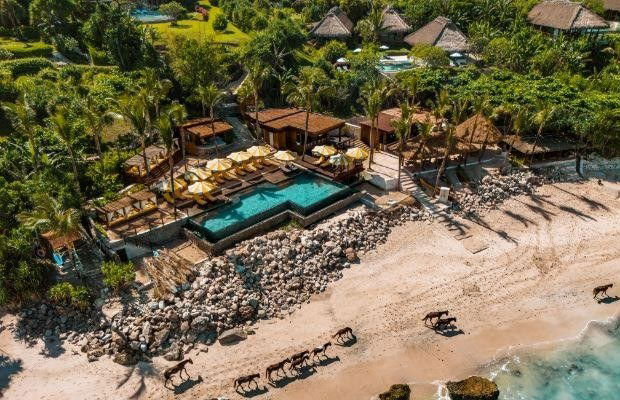
Nihi Sumba presents itself as a deliberately low-density, design-forward coastal retreat where place and materials matter. Villas are embedded into cliffs and tree lines, built from timber, thatch and stone, and most open onto private terraces with Indian Ocean views. The property’s sweeping acreage and private 2.5-kilometre beach feel expansive while the resort footprint remains compressed, so privacy and quiet take precedence over spectacle. International recognition and high service standards sit alongside a tactile, locally grounded aesthetic, producing a serene, intimate resort that reads as refined and quietly rooted in its setting.
Best For
The resort is best for travelers seeking a secluded luxury escape that foregrounds nature and locality. Its private beachfront villas and expansive grounds make it a strong fit for couples on a honeymoon or romantic getaway, families wanting space and privacy, and guests focused on wellness and restorative time. The all-inclusive dining framework and on-site food sourcing also support multi-day stays where dining is part of the experience rather than an afterthought. The property’s emphasis on low density and private terraces favors guests who prioritize solitude and ocean views.
Stay Tips
Dining at the resort centers on a direct connection between garden and sea. Guests should expect menus that draw on an on-site organic garden and a network of local fishermen who deliver daily catch to the beach, and the property runs multiple restaurant formats to showcase that sourcing. Because the resort operates premium all-inclusive dining formats, visitors can sample different restaurant offerings across their stay; look for garden-driven vegetable preparations and fresh, beach-caught fish to get the clearest sense of the kitchen’s sourcing philosophy.
Venue details
Ambiance
Serene and natural with open-air design, featuring traditional architecture integrated into lush jungle and beachfront settings, creating an intimate connection to the landscape.
Tags
Vibe
Best For
Experience
Amenities
View
About the Stay
- Rooms
- 19
- Check-in
- 15:00
- Check-out
- 11:00
- Property Style
- Luxury Barefoot Resort Blending Contemporary Comfort with Traditional Indonesian Architecture and Natural Landscape Integration.
- Design Style
- Organic Modernism with Individually Furnished Villas Featuring Natural Materials, Ocean Views, and Seamless Indoor Outdoor Living Spaces.
Know before you go
Know Before You Go
- Getting there
- Hoba Wawi, Wanokaka, West Sumba Regency, East Nusa Tenggara
Planning details
Location
Recognition and awards







Hotel context
How It Compares
Nihi Sumba is the high-budget, hard-to-book choice in Sumba. The listed $2,495 price, small room count, and awards record put it in a different lane from Cap Karoso, which is the more practical cross-shop for travelers who want Sumba without making the resort the whole trip.
For value, the key detail is that all meals and non-alcoholic drinks are included at Nihi Sumba. That helps if the plan is to stay on property, use the beach and spa, and avoid daily dining decisions. If the goal is a looser hotel base with more independent movement, Cap Karoso is easier to justify.
Compared with Bali peers such as Mandapa, a Ritz-Carlton Reserve in Ubud or Soori Bali in Tabanan, Nihi Sumba asks more from the traveler before arrival: extra flight planning, tighter availability, and less room for impulse changes. Choose it for remoteness and a contained resort rhythm; choose Bali if ease, access, and schedule control matter more.
Explore Sumba
Around this place
Discover more on Pearl
Unlock the full Nihi Sumba guide in Pearl, including awards, comparisons, FAQs, planning details, and nearby places.
FAQ
Frequently Asked Questions
How is the pool and spa at Nihi Sumba?
Book it for the spa only if the rest of the resort setup matters to you too, because the case here is the full-stay experience at 560+ acres and 27 villas, not a day-spa stop. The open-air treatment pavilions make more sense for guests staying on property than for quick wellness add-ons.
How is the location of Nihi Sumba?
The location is the point: Hoba Wawi in West Sumba is remote, with a private-beach setting and a 400 km west-of-Bali position that makes this a destination stay, not a quick detour. It is far less convenient than Bali hotels, but that is exactly why it works for travelers who want isolation.
How is the dining at Nihi Sumba?
Expect resort dining that is broad rather than chef-driven, with three restaurants and all meals plus non-alcoholic drinks included in the rate. That makes pricing easier to read than many remote resorts, and it is more practical than booking a separate meal-heavy stay in Bali.
How does Nihi Sumba compare to nearby hotels?
Nihi Sumba is the move if the trip is about space, privacy, and surf access; nearby Bali resorts are easier, but they do not offer the same remote-island feel. Compared with a place like Desa Potato Head in Denpasar, Nihi is far less convenient and far more of a full-escape booking.
Which room category is best at Nihi Sumba?
The villas are the sensible pick here, because the property has 27 villas and the whole resort is built around privacy and views rather than standard hotel rooms. If the trip is for two, prioritize the most private villa tier you can justify at the quoted $2,495 starting price.
Is Nihi Sumba good for business travel?
No, this is a poor fit for business travel unless the trip is intentionally remote and low-meeting. The address in West Sumba, the private-charter style logistics, and the resort format make it better for leisure stays than working trips.
Do loyalty programs work at Nihi Sumba?
Treat loyalty value as secondary, because the draw here is the resort itself plus memberships and recognition like Leading Hotels of the World and Tatler Asia-Pacific 2025 listing status. If loyalty earning is the priority, a larger chain hotel in Bali will usually be the smarter play.