


Samode Palace
Samode
Hotel in Samode, India
 Book with Pearl
The Read
Mughal-Rajput Palace Immersion
Why go
Samode Palace is worth booking for a slower Rajasthan palace stay where atmosphere and service rhythm matter more than city convenience. Cross-shop Jaipur hotels if the trip depends on meetings, dining variety, or loyalty benefits; choose this if the hotel itself is the point.
About Samode Palace
Samode Palace is a luxury hotel in Samode with a smart casual dress code and notable recognition from major travel publications. Robb Report placed Samode Palace at #30 on its 2025 list of The 50 Greatest Luxury Hotels on Earth, and Conde Nast included it on the 2026 Gold List.
Samode Palace is known for its location, dress code, and recognition. Travelers should confirm details regarding facilities, dining, room categories, pricing, or service format directly.
A palace stay with luxury recognition
A strong reason to consider Samode Palace is its recognition from luxury travel authorities: Robb Report placed it at #30 on its 2025 list of The 50 Greatest Luxury Hotels on Earth, and Conde Nast included it on the 2026 Gold List.
For travelers comparing options, Samode Palace can be considered alongside Alila Fort Bishangarh, Raffles Jaipur, The Leela Palace Jaipur, The Raj Palace, and Trident, Jaipur. The key distinction is simple: Samode Palace is in Samode, so compare it with other hotels based on the location and stay style that best fit the trip.
Who should book, and who should compare alternatives
Samode Palace is best assessed as a luxury hotel in Samode with recognition and a smart casual dress code. Travelers should confirm details about business facilities, family amenities, restaurants, room categories, pricing, or wellness features directly before booking.
If Samode is the desired base, Samode Palace is the relevant choice. If another location or a different hotel style is preferred, compare it with Alila Fort Bishangarh, Raffles Jaipur, The Leela Palace Jaipur, The Raj Palace, or Trident, Jaipur.
Planning details
- Location
- Village Samode, Tehsil, Chomu, Samod, Rajasthan 303806
- Website
- samode.com/samode-palace
- Phone
- +91 141 263 1397
The take
The Take
The Vibe
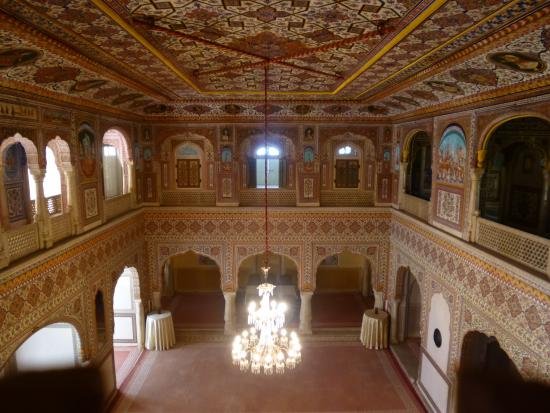
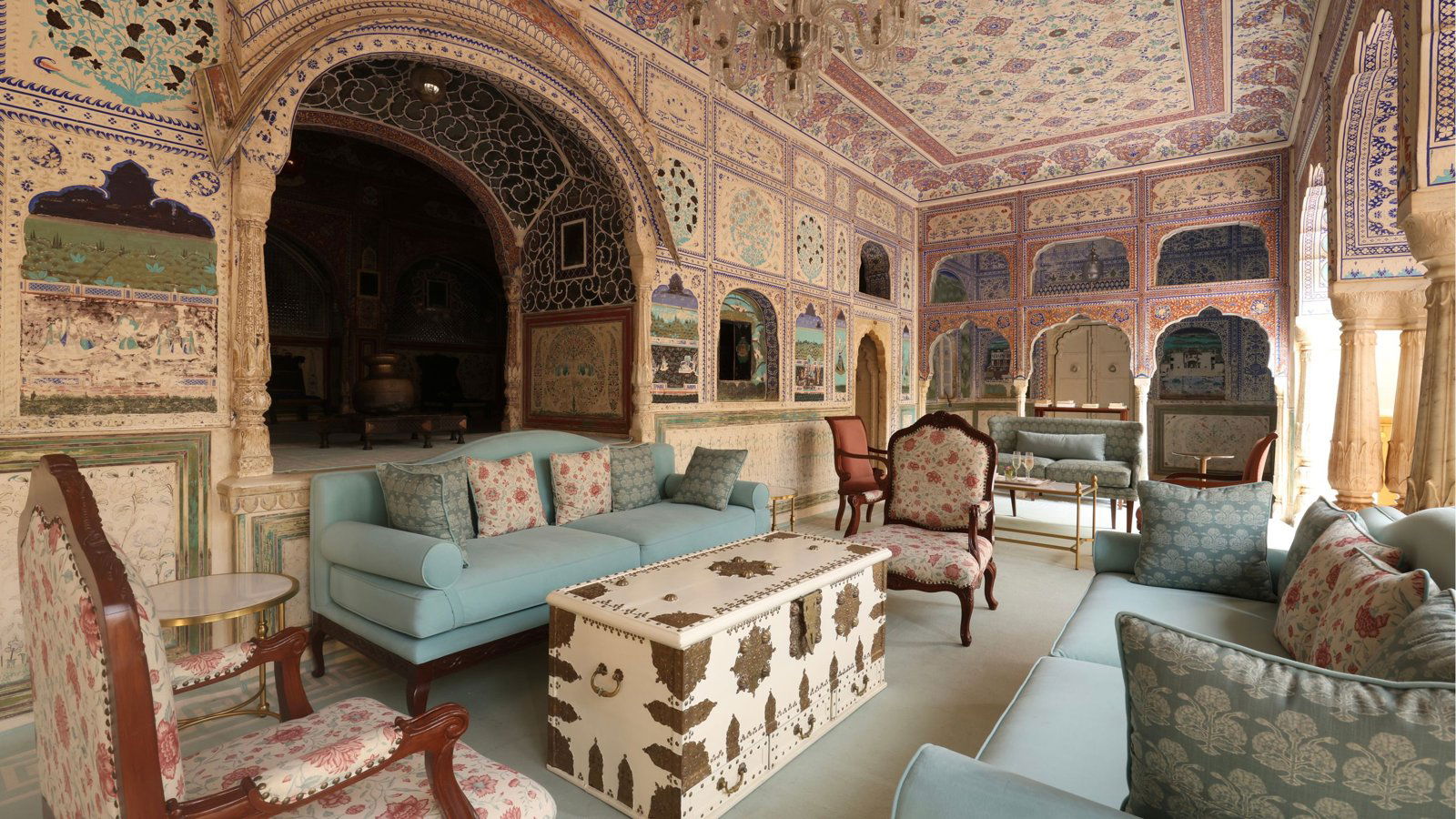
Samode Palace reads like a living architectural manuscript: a 475-year-old fortified residence where Mughal decorative tradition and Rajasthani craft collide across frescoed chambers, inlaid mirror work and carved stone screens. The Sheesh Mahal — a mirror-work chamber — anchors the interior vocabulary, fracturing and multiplying light in a way that foregrounds craft over contemporary design. The building’s layered courtyards and compact approach from the village emphasize its status as a working royal complex rather than a modern hospitality brand; guests encounter rooms and public spaces that feel embedded in history rather than staged for tourism.
Best For
Samode Palace is best for travelers who prize history and atmosphere over slick, contemporary hotel trappings. Its remote setting roughly 40 kilometres north of Jaipur and its palace-scale architecture make it a natural fit for honeymooners, anniversary trips and destination weddings already associated with the property. Celebrations and romantic escapes benefit from long, leisurely stays that allow time to explore the courtyards, mirror-work chambers and frescoed interiors. The property suits guests seeking immersion in Rajasthani craft traditions and the sensory drama of heritage rooms rather than a city-center convenience stay.
Venue details
Ambiance
Regal and serene with opulent lighting from mirror work, vibrant hand-painted murals, and peaceful courtyards overlooking the Aravalli mountains.
Tags
Vibe
Best For
Experience
Amenities
View
Accessibility
About the Stay
- Rooms
- 43
- Check-in
- 14:00
- Check-out
- 12:00
- Property Style
- Heritage Palace Blending Rajputana and Indo Saracenic Opulence
- Design Style
- Indo Saracenic with Mughal Arches, Vibrant Murals, Four Poster Beds, and Rich Fabrics
Know before you go
Know Before You Go
- Getting there
- Village Samode, Tehsil, Chomu, Samod, Rajasthan 303806
Planning details
Location
Village Samode, Tehsil, Chomu, Samod, Rajasthan 303806 · Directions
Recognition and awards


Also consider
Where to look if it is not the right fit
Choose The Leela Palace Jaipur if the trip needs Jaipur access, larger-hotel systems, and easier logistics. Choose Trident, Jaipur if value and city convenience matter more than palace atmosphere.
Hotel context
How it compares with nearby palace hotels
Samode Palace is the stronger choice if the brief is a quieter heritage stay outside Jaipur, with luxury recognition that supports the splurge. Alila Fort Bishangarh is the cleaner cross-shop for travelers who want a fort-hotel format with a more contemporary resort feel, while The Leela Palace Jaipur and Raffles Jaipur make more sense when Jaipur access and large-hotel infrastructure matter.
For value and practicality, Trident, Jaipur is the safer pick: easier for city movement, likely less ceremony, and better suited to travelers who will spend more time outside the hotel. The Raj Palace is the closer comparison for travelers who want a palace identity in Jaipur itself; Samode Palace is better when the quieter out-of-city setting is a benefit rather than a compromise.
Booking difficulty is listed as easy for Samode Palace, so it is not only a fallback when Jaipur's more visible palace hotels are full. It is the right first choice for a stay built around ambience and service pacing, while the Jaipur peers are better for dense itineraries, dining variety, and shorter transfers.
Explore Samode
Around this place
Discover more on Pearl
Unlock the full Samode Palace guide in Pearl, including awards, comparisons, FAQs, planning details, and nearby places.
Compare Samode Palace
| Venue | Location | Awards |
|---|---|---|
| Samode Palace | Samode | Conde Nast Gold List 20262025 Robb Report The 50 Greatest Luxury Hotels on Earth · #302025 Michelin Selected Hotels |
| Alila Fort Bishangarh | Manoharpur | 2026 La Liste Top Hotels2025 Michelin Selected Hotels |
| The Leela Palace Jaipur | Jaipur | 2026 Virtuoso Luxury Hotel Collection2026 La Liste Top Hotels2026 Michelin 2 Keys2025 Michelin 2 KeysPreferred Hotels Member 2025 |
| Raffles Jaipur | Jaipur | 100 Most Incredible Hotels in the World · 20262026 Virtuoso Luxury Hotel Collection2026 Michelin 2 Keys2025 AFAR Best New Hotels2025 Michelin 2 Keys |
| Trident, Jaipur | Jaipur | No published awards |
| The Raj Palace | Jaipur | Small Luxury Hotels Member 2025 |








How Samode Palace compares with similar nearby venues.
FAQ
Frequently Asked Questions
How is the pool and spa at Samode Palace?
Details about the pool and spa should be confirmed directly with the hotel. Samode Palace is in Samode, has a smart casual dress code, and has recognition from Robb Report's 2025 list of The 50 Greatest Luxury Hotels on Earth and the 2026 Conde Nast Gold List.
Is Samode Palace good for business travel?
Suitability for business travel should be confirmed directly with the hotel. The hotel's location is Samode, so travelers with meeting or transport needs should check logistics directly before booking.
How does Samode Palace compare to other luxury hotels?
Samode Palace is a recognized luxury hotel in Samode. For comparison, travelers may also look at Alila Fort Bishangarh, Raffles Jaipur, The Leela Palace Jaipur, The Raj Palace, or Trident, Jaipur, depending on the location and hotel style they prefer.
Do loyalty programs work at Samode Palace?
Details regarding loyalty programs should be confirmed directly with the hotel. If points, status, or redemption value matter, confirm those terms directly with the hotel or booking channel before reserving.
Which room category is best at Samode Palace?
Guidance on room categories is not available. Choose a room only after checking the hotel's current room descriptions, inclusions, and booking terms directly.
Is Samode Palace family-friendly?
Details regarding family amenities and policies should be confirmed directly with Samode Palace. Families should confirm room setup, policies, and any required services directly with Samode Palace before booking.