
Hotel in Paris, France
Les Jardins du Marais
350ptsCourtyard-Scale Industrial Conversion

About Les Jardins du Marais
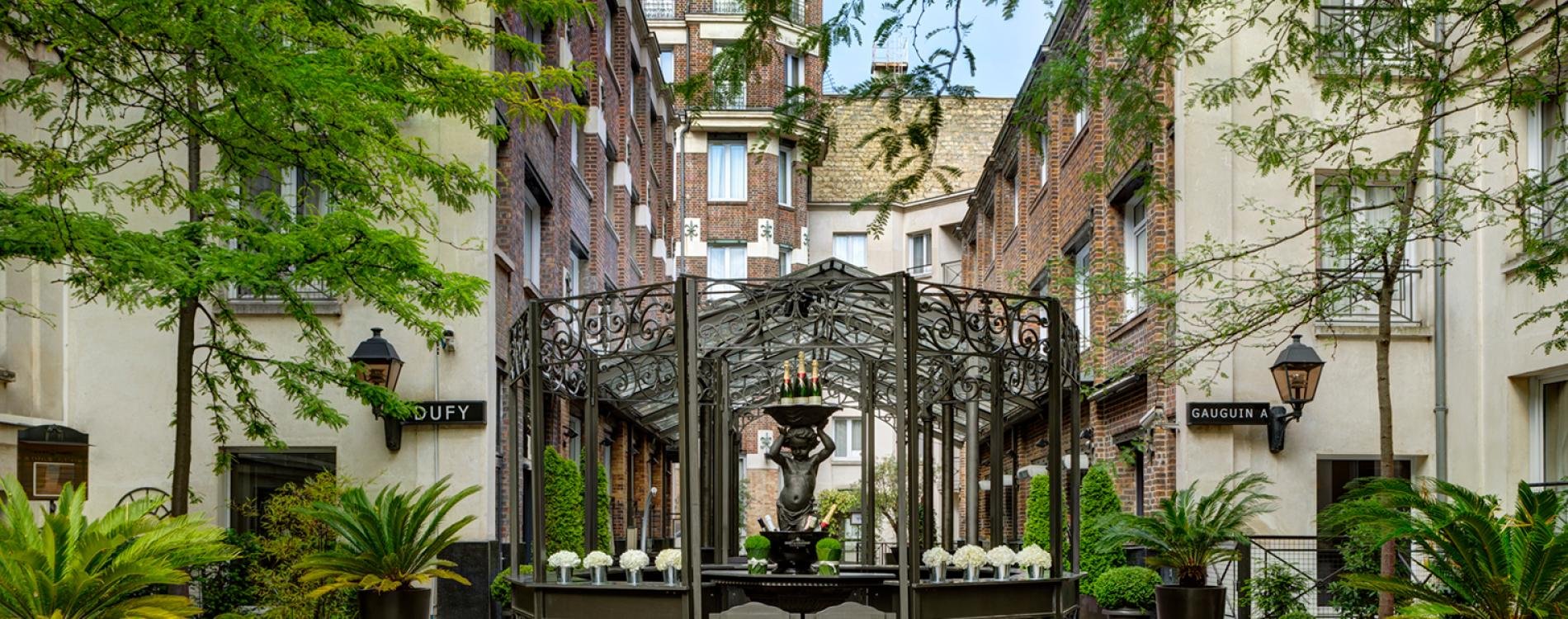
A 263-room hotel on Rue Amelot in the 11th arrondissement, Les Jardins du Marais occupies a converted industrial complex that positions it firmly in the design-forward, neighbourhood-rooted tier of Paris accommodation. Where the grand palace hotels of the 8th anchor themselves to ceremony, this address trades on scale, courtyard space, and proximity to the galleries and restaurants of the Oberkampf and Bastille corridors.
The 11th Arrondissement and Where Les Jardins du Marais Fits
Paris hotel geography has long been divided along a familiar axis: the palace addresses of the 8th and 1st arrondissements, where Cheval Blanc Paris, Hotel Plaza Athénée, Le Bristol Paris, and Hôtel de Crillon define a tier of ceremony-driven luxury, and everywhere else. That binary has blurred considerably over the past decade. The eastern arrondissements, and the 11th in particular, have attracted a different kind of hotel: larger in room count, less reliant on gilded interiors, and positioned to serve guests whose primary interest is the neighbourhood rather than a marble lobby as destination in itself.
Les Jardins du Marais, at 74 Rue Amelot, sits in that second category. With 263 rooms spread across a converted industrial complex, it represents the format that emerged in Paris after the Marais and Oberkampf corridors consolidated their status as serious dining and cultural districts. The hotel's scale alone distinguishes it from the boutique properties typical of the area, while its address keeps it within walking distance of the Place de la Bastille, the Canal Saint-Martin axis, and the dense concentration of contemporary galleries and wine bars that define the 11th's character today.
Scale, Courtyards, and the Industrial Conversion Format
Industrial conversions occupy a specific position in European hotel development. Where a palace hotel derives authority from its original civic or aristocratic function, a converted workshop or warehouse trades on volume, raw architectural texture, and the spatial generosity that older residential or commercial buildings rarely offer. Les Jardins du Marais, with its courtyard structure and 263-room count, belongs to this format, which has been executed at varying levels of ambition across Paris, London, and Berlin over the past two decades.
At this scale, the courtyard becomes the social infrastructure. Rather than a single lobby functioning as the gathering point, the distributed layout of a converted complex creates multiple zones: outdoor space in warmer months, internal passages that orient guests between wings, and a sense of horizontal spread that contrasts sharply with the vertical compression of a traditional Haussmann-era hotel. For guests arriving from the concentrated ceremony of addresses like La Réserve Paris or Le Meurice, the spatial logic here requires a brief recalibration.
The Wine Angle: Neighbourhood Context Over Cellar Ceremony
Paris wine culture has been reshaping itself for roughly fifteen years. The sommelier-as-authority model that defined the palace hotel dining rooms, where a deep classical cellar was curated by a senior figure with decades of Burgundy and Bordeaux expertise, has not disappeared, but it now coexists with a different model rooted in the city's eastern arrondissements. The 11th and the surrounding streets have become the operational base for a generation of wine professionals and natural wine advocates who have redefined what a serious wine list looks like in an informal setting.
For guests staying at Les Jardins du Marais, this neighbourhood context is directly useful. The Rue de Charonne and Rue Oberkampf corridors, both accessible on foot from Rue Amelot, contain some of the most considered wine programmes in the city, operated by venues that prioritise grower Champagnes, Loire Valley Chenin Blanc, and low-intervention Burgundy in formats that require no dress code and no reservation weeks in advance. This is a different competitive peer set than the cellar-first formality of the Four Seasons George V or Airelles Château de Versailles, and it reflects a genuine shift in where Paris wine authority now resides.
Guests using the hotel as a base for serious wine exploration in Paris will find the 11th a more productive starting point than any of the palace-adjacent arrondissements. The density of wine-focused restaurants and bars within a fifteen-minute walk is among the highest in the city, and the format, counter seating, open cellars visible from the dining room, lists organised by producer rather than appellation, rewards the kind of informed engagement that becomes tedious in more formal environments.
Positioning Against the Paris Hotel Market
At 263 rooms, Les Jardins du Marais operates at a scale that separates it from the sub-100-key design hotels and the palace addresses alike. This places it closer in format, if not necessarily in finish, to larger Paris properties that serve a mix of leisure and corporate demand. The address in the 11th means it competes for guests who have already decided that proximity to the city's contemporary dining and cultural scene matters more than proximity to the Louvre or the Champs-Élysées.
The comparison set worth knowing is not Hôtel de Crillon or Hotel Plaza Athénée but rather the mid-to-upper tier of Paris hotels that have positioned themselves in neighbourhoods with a strong local identity. Soho House Paris, which operates a members-and-guests model nearby, represents one version of that strategy. Les Jardins du Marais represents a more conventional hotel approach at larger scale, without the membership architecture.
For context on France's broader luxury hotel offering, properties such as Les Sources de Caudalie in Bordeaux, Domaine Les Crayères in Reims, Baumanière Les Baux-de-Provence, and La Réserve Ramatuelle illustrate how regional France has developed an alternative to the Paris palace model. Hotel Du Cap-Eden-Roc in Cap d'Antibes, The Maybourne Riviera, Villa La Coste, and Cheval Blanc Courchevel each anchor themselves to a landscape and a season in ways that a city hotel cannot replicate. Les Jardins du Marais competes on a different axis: urban density, neighbourhood access, and room count that supports a flexible booking approach. See our full Paris restaurants guide for dining context across the arrondissements.
Practical Planning
Know Before You Go
- Address: 74 Rue Amelot, 75011 Paris
- Room Count: 263 rooms across a converted industrial complex
- Arrondissement: 11th, between Bastille and Oberkampf
- Nearest Metro: Saint-Sébastien-Froissart (line 8) or Chemin Vert (line 8)
- Leading For: Guests prioritising access to the 11th's dining, wine bar, and gallery scene over proximity to the Right Bank palace corridor
- Booking: Contact the hotel directly; phone and website details not confirmed at time of publication
Frequently Asked Questions
Is Les Jardins du Marais more formal or casual?
By Paris standards, the 11th arrondissement operates on the casual end of the spectrum. The neighbourhood's restaurants and bars are almost entirely reservation-optional or counter-format, and the hotel's industrial-conversion architecture signals a departure from palace-hotel ceremony. Guests arriving from more formal addresses in the city, such as Le Bristol Paris or Four Seasons George V, will notice the difference in register immediately. That is largely the point.
Which room category should I book at Les Jardins du Marais?
With 263 rooms distributed across a courtyard complex, the property offers more variation in orientation and layout than a standard tower hotel. Rooms facing the interior courtyard tend to trade street noise for a quieter aspect, which matters in this part of the 11th. Specific room category details were not available at time of publication; the hotel's reservations team will have current options. For comparison properties with published room tier structures, La Réserve Paris and Airelles Château de Versailles provide a benchmark for what detailed tier differentiation looks like at the leading of the Paris market.
What is Les Jardins du Marais leading at?
Scale and location in combination. A 263-room property on Rue Amelot gives guests both a flexible booking window (large inventory means last-minute availability is more realistic than at smaller design hotels) and immediate access to what is arguably the most active dining and wine corridor in Paris right now. The 11th's concentration of serious independent restaurants, grower-Champagne bars, and natural wine lists within walking distance represents real value for guests whose Paris agenda is food and drink-driven. For broader France context, properties like Royal Champagne Hotel and Spa in Champillon, Hôtel and Spa du Castellet, and La Bastide de Gordes each do something similar in their respective regions: anchor a hotel in a place with genuine local food and drink identity rather than manufacturing it from scratch. Also worth noting for international reference: Aman New York, The Fifth Avenue Hotel, and Aman Venice each demonstrate how a city hotel can build identity around neighbourhood proximity and architectural character rather than brand scale alone, which is the same strategic logic at work here.
Recognized By

More hotels in Paris
- 42 Av. Gabriel42 Av. Gabriel sits in one of Paris's most competitive hotel corridors, steps from the Champs-Élysées gardens in the 8th arrondissement. Full pricing and awards data are not yet confirmed, so book direct and verify upgrade eligibility at reservation. For verified alternatives nearby, see Le Bristol Paris, Hôtel de Crillon, or La Réserve Paris.
- Auberge FloraAuberge Flora is a boutique hotel in Paris's 11th arrondissement, offering a neighbourhood-embedded alternative to the palace-district properties at a lower price point. It books easily, sits close to the Marais and Bastille, and suits travellers who want a design-forward base rather than full concierge service. A practical choice if location flexibility and value matter more than brand prestige.
Related editorial
- Best Fine Dining Restaurants in ParisFrom three-Michelin-star icons to the next generation of Parisian chefs pushing boundaries, these are the restaurants that define fine dining in the world's culinary capital.
- Best Luxury Hotels in RomeFrom rooftop terraces overlooking ancient ruins to Michelin-starred hotel dining, these are the luxury hotels that make Rome unforgettable.
- Best Cocktail Bars in KyotoFrom sleek lounges to hidden speakeasies, Kyoto's cocktail scene blends Japanese precision with global influence in ways you won't find anywhere else.
Save or rate Les Jardins du Marais on Pearl
Keep this venue in your Pearl passport, rate it after you visit, and track it alongside every other place you collect.